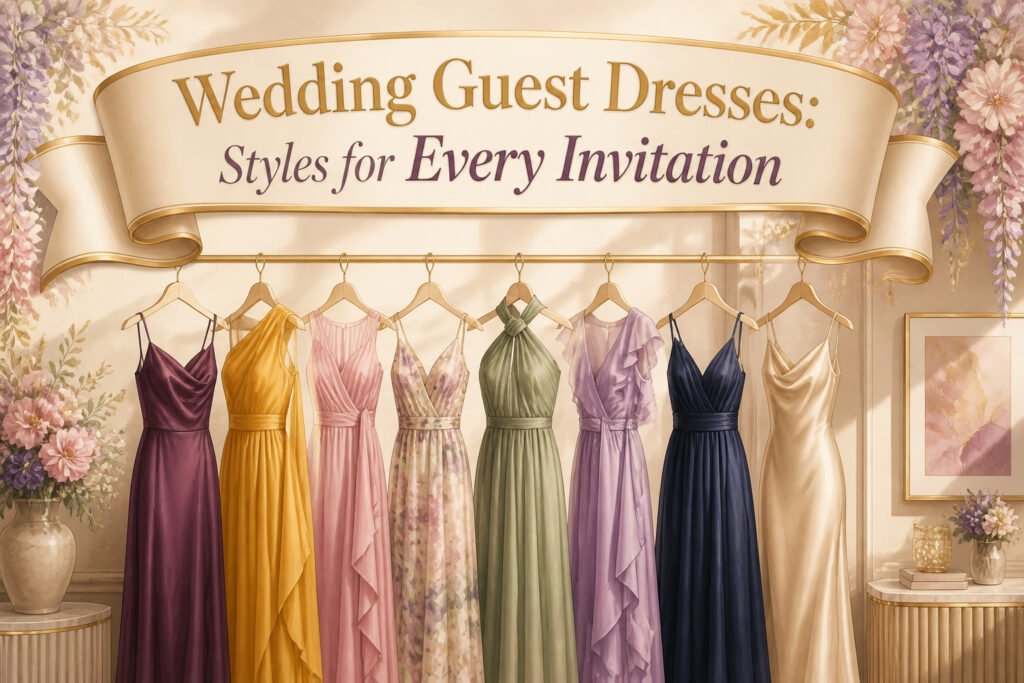
Wedding guest dresses are the outfit you wear to someone else’s formal ceremony, and the only real mistake is treating every invitation the same.
A black-tie wedding demands floor-length silk that grazes the ankle, not a cocktail hem that hovers above it.
The Jillian Silk Dress at €448 and the Lilibeth at €398 both hit that mark, but the €50 gap buys a different drape and seven colorways instead of five.
1. Black Tie Dresses
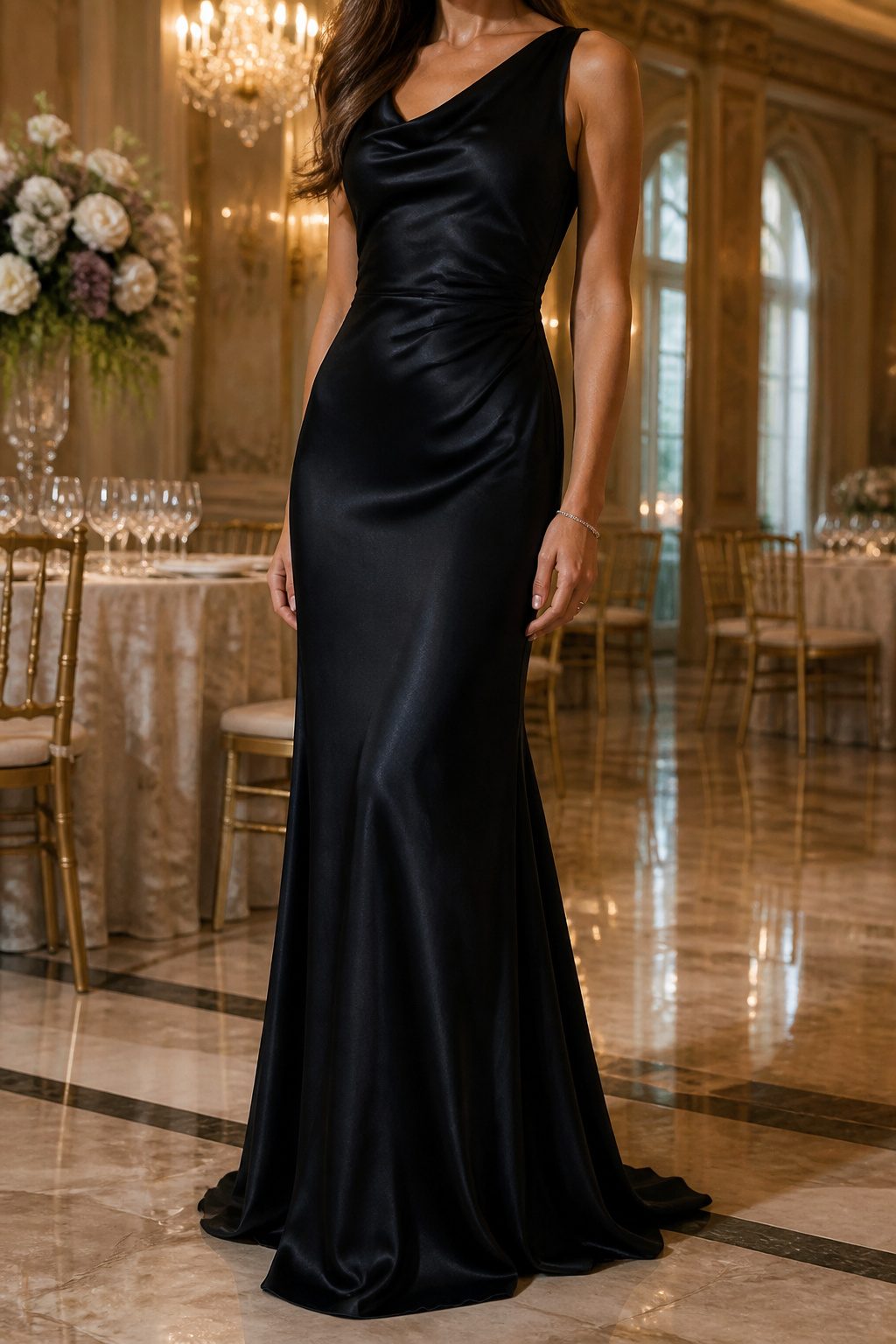
Floor length is the line you do not cross for black tie, and silk is the fabric that keeps the formality from looking rented.
The Lilibeth Silk Dress, Jillian Silk Dress, and Oren Silk Dress all hit that mark, each running to the ankle or floor in weights that move properly under evening light rather than clinging or stiffening.
The Jillian runs €448, the Lilibeth and Oren both sit at €398, and between them they cover twelve color options total.
What separates these from a cocktail dress is not just the extra fabric but the silhouette: a refined cut that does not need a train or a thigh slit to register as dressed up.
A black-tie wedding guest dress should graze the floor, not hover above it, and the fabric should look like it belongs under chandeliers rather than office fluorescents.
The Oren and Lilibeth share that €398 price point with the same silk construction, so the choice comes down to neckline and which of their six or five colors reads right for the season and the wedding’s tone.
The Jillian’s higher price buys a slightly different drape and seven colorways, including some that work better for fall and winter evening events.
2. Floral Dresses
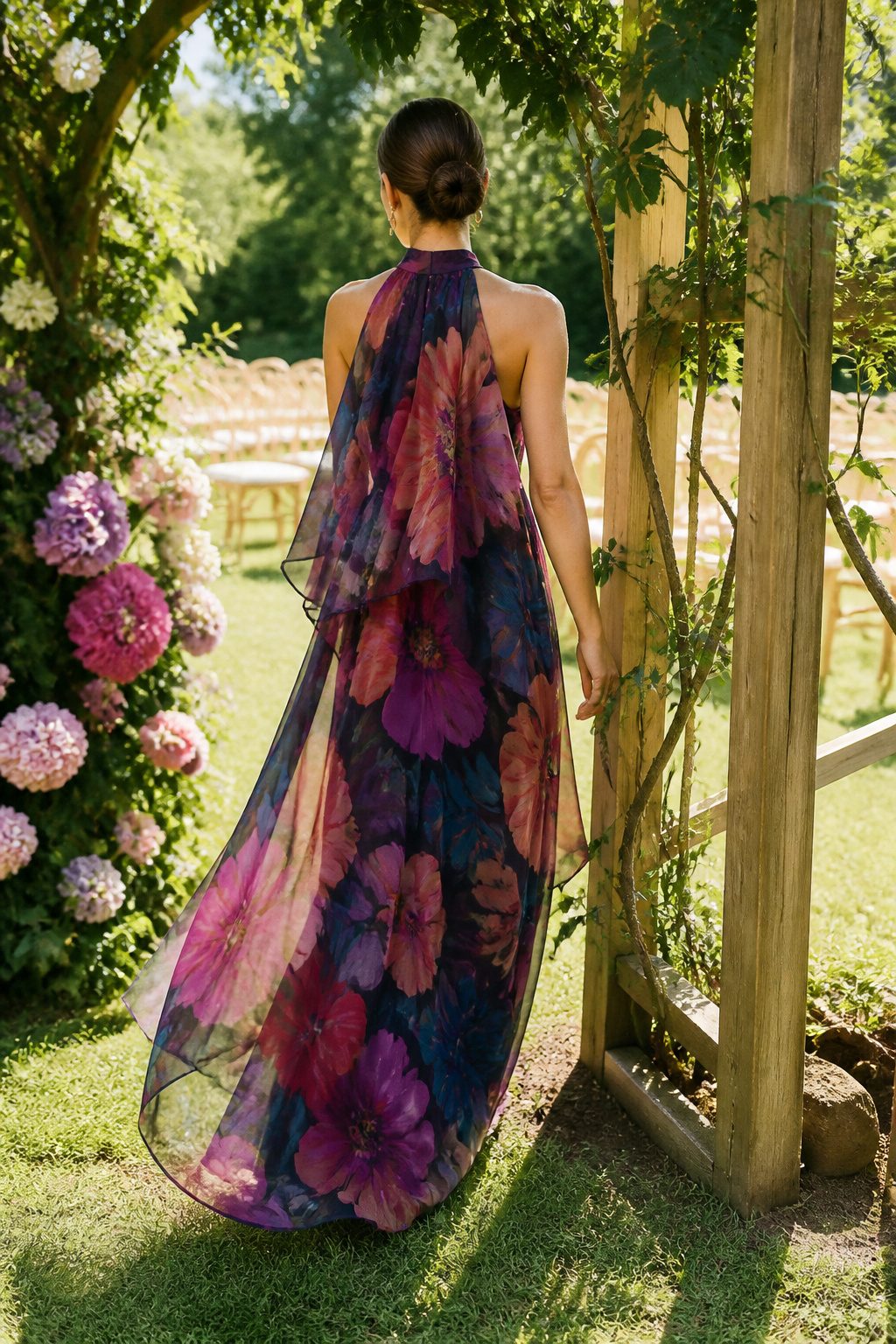
A floral print reads differently depending on how much of it the eye takes in at once.
The scale of the print and how dense the color sits are what move a dress from garden-party casual to something that holds up at an evening reception.
Small, scattered blooms on a light ground feel airy and daytime; oversized blossoms packed tight with saturated color carry more weight and more formality.
The Rida Silk Chiffon Dress, priced at €498 and offered in three colors, sits in that useful middle space.
Silk chiffon gives it the drape and sheen that photographs well, while the floral treatment can shift depending on which colorway you choose. Chiffon itself leans spring and summer, though the right color density can push it into early fall.
Color density matters as much as print size. A black base with jewel-toned flowers reads dressier than the same print on cream.
If the invitation says "cocktail" and the wedding runs into the evening, look for the darker ground and the larger-scale pattern.
For a daytime outdoor ceremony, the reverse holds: lighter ground, smaller repeat, and let the chiffon move rather than the print shout.
3. Long Dresses
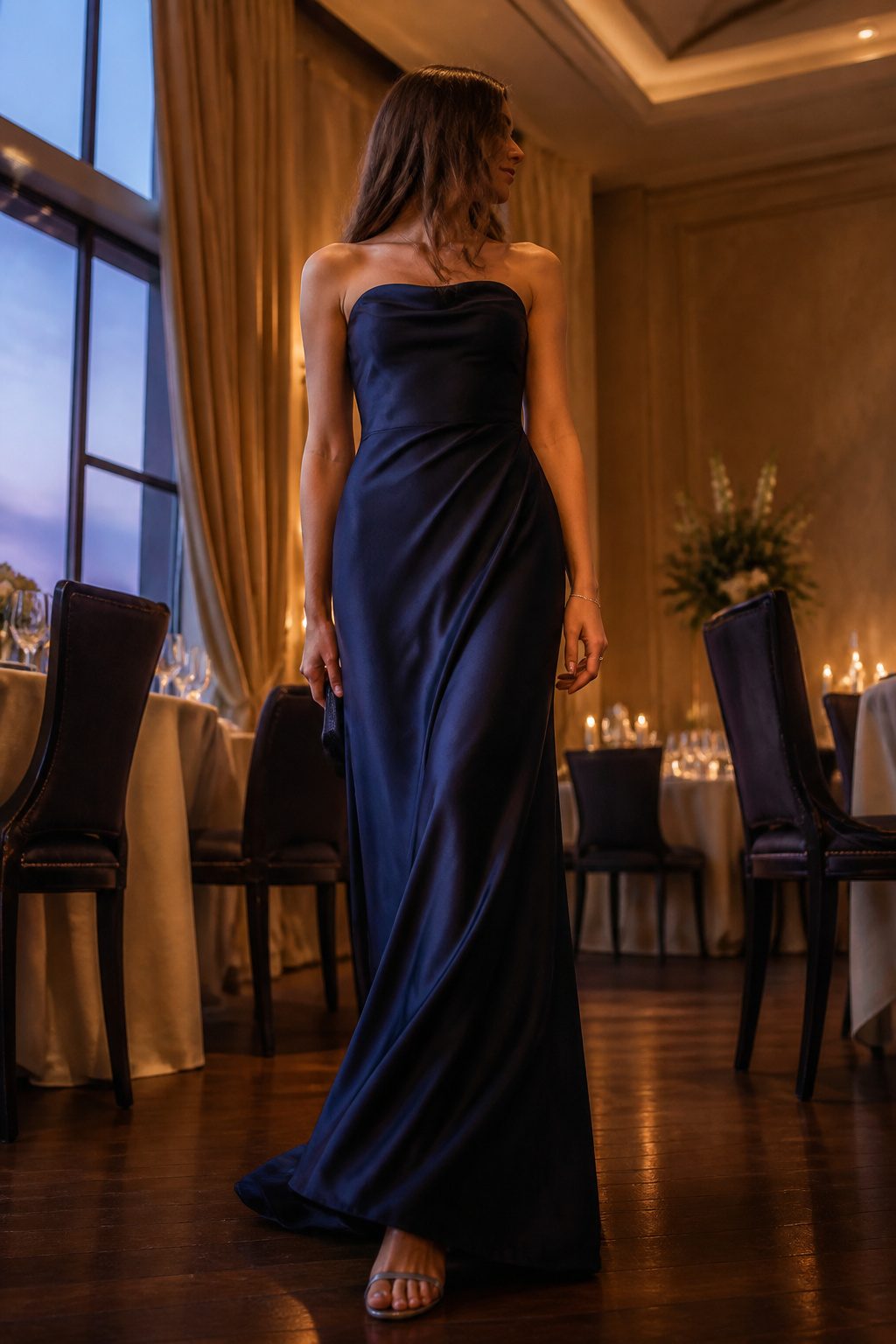
Floor-length dresses carry more weight than most guests realize. The hemline you choose signals how you read the invitation, and getting it wrong means either looking underdressed or fighting fabric all night.
The Caila Silk Dress at €448 sits right where this decision matters. Silk drapes differently than polyester chiffon, so the skirt moves instead of clumping when you walk.
That matters more than the color choice between its two options.
Midi length wins for outdoor weddings and any venue with stairs or grass. A full-length hem dragging through a garden party collects dirt and creates a tripping hazard on uneven ground.
Indoor evening receptions are where the extra fabric earns its place, and even then, the heel height has to match.
Three-inch heels or higher keep the hemline clearing the floor; anything shorter and the silk pools at your ankles, which reads as a sizing mistake rather than a style choice.
Two inches of clearance between hem and floor is the workable minimum. Less than that, and every step becomes a calculation.
More than four inches, and the dress starts looking like it belongs to someone taller. The Caila’s cut assumes standard proportions, so altering the length is almost unavoidable if you’re outside the 5’6" to 5’9" range.
4. Short Dresses
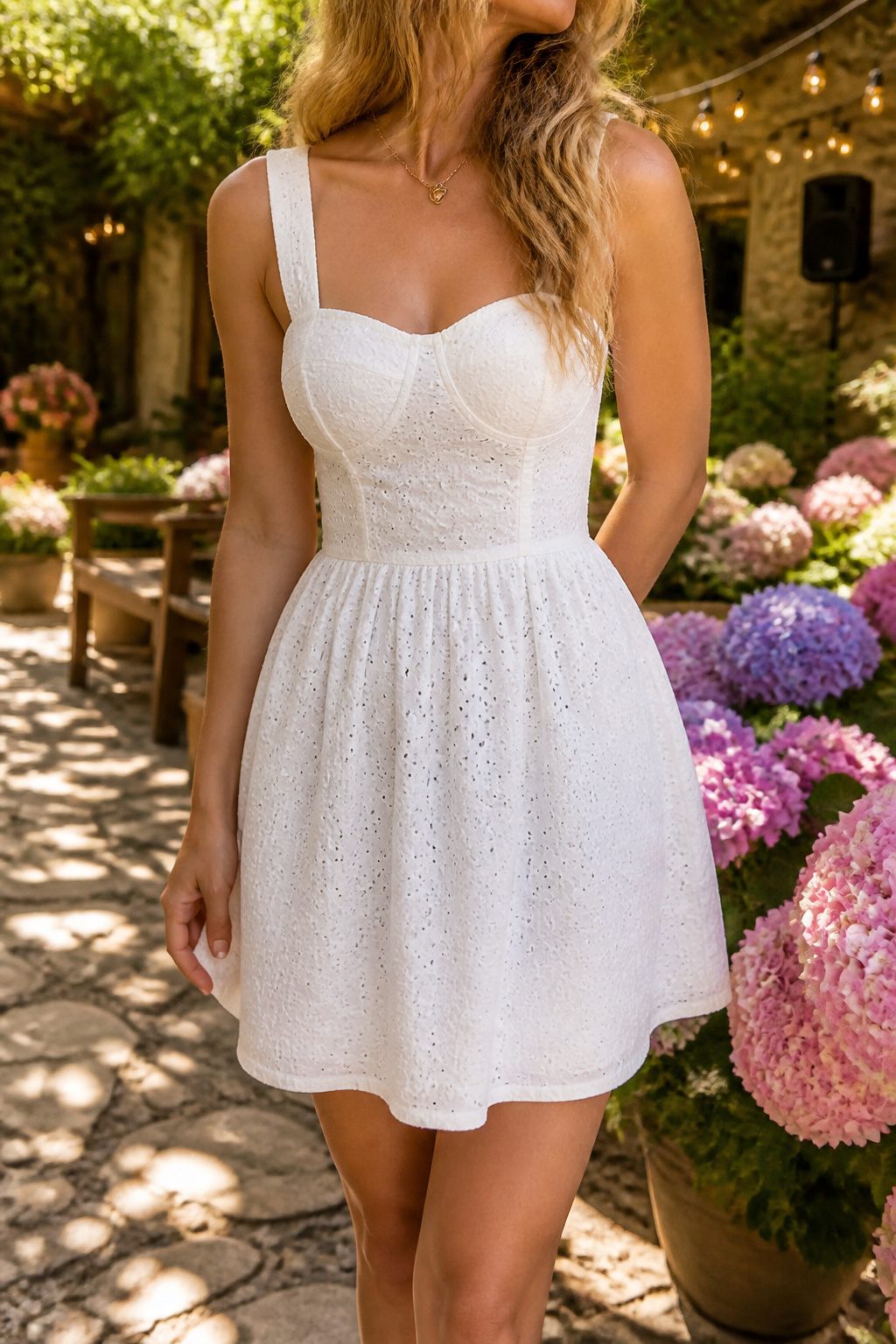
Short wedding guest dresses sit above the knee or right at it, a distinction that matters more than most people think. The hem should fall mid-thigh at the shortest; anything higher reads nightclub, not nuptials.
A cotton eyelet dress or a structured linen shift in that length works for a garden ceremony, a beach signing, or any invitation that says "casual" or "cocktail" without the word "formal" attached.
Summer heat is where these dresses earn their keep.
Full-length satin at an outdoor July wedding traps humidity against your legs; a knee-length cut in a breathable weave lets air move and keeps you from disappearing into the bathroom to blot your neck.
The tradeoff is coverage: bare legs in direct sun for two hours of vows and photos means sunscreen or a hat you might not have planned on.
Not every ceremony can handle short.
A church wedding with a full mass, an evening reception in a ballroom, anything with a black-tie code or a mother of the bride in floor-length silk, these are signals to stay at or below the knee at minimum.
The invitation’s venue and start time tell you more than the printed dress code sometimes. A 5 p.m. start at a downtown hotel wants more fabric than a 2 p.m. backyard gathering, even if both say "semi-formal."
What convinced me, reading through dozens of these outfit breakdowns, is that the safest short dress has a slightly structured bodice or a defined waist.
Without that architecture, the casual length can tip into looking like you forgot to dress up. A line that nips in at the waist or a wrap closure that sits flat across the ribs gives the shape some intention.
Pair it with a heel or a polished flat, not the sandals you wear to run errands, and the length stops being the whole story.
5. Two-Piece Dresses
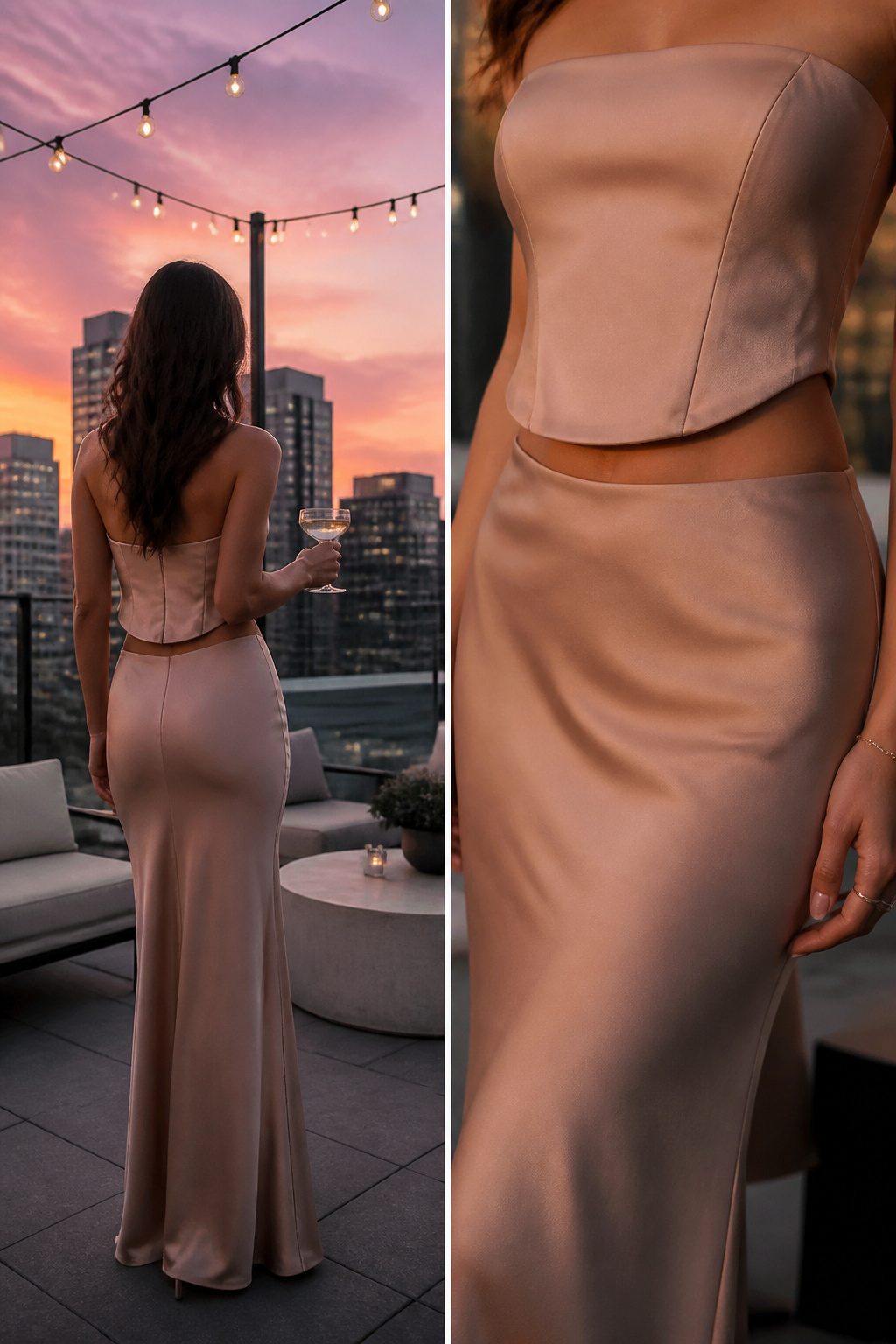
A two-piece set reads current the way a single dress rarely does, and the pairing only works when the eye can tell it was meant to go together.
The Melanie Two Piece from Reformation runs € 498 to € 548 depending on colorway, and the matching top and skirt share fabric weight, drape, and dye lot so they look like a unit rather than an accident.
The real win comes after the wedding: the skirt works with a tucked-in sweater for dinner, the top with trousers for the office.
To keep separates from looking mismatched, match at least two of three things: texture, color intensity, and proportion.
A crisp silk skirt with a matte crepe top in the same shade still clashes; two satins in slightly different blues read as intentional.
6. Casual Dresses
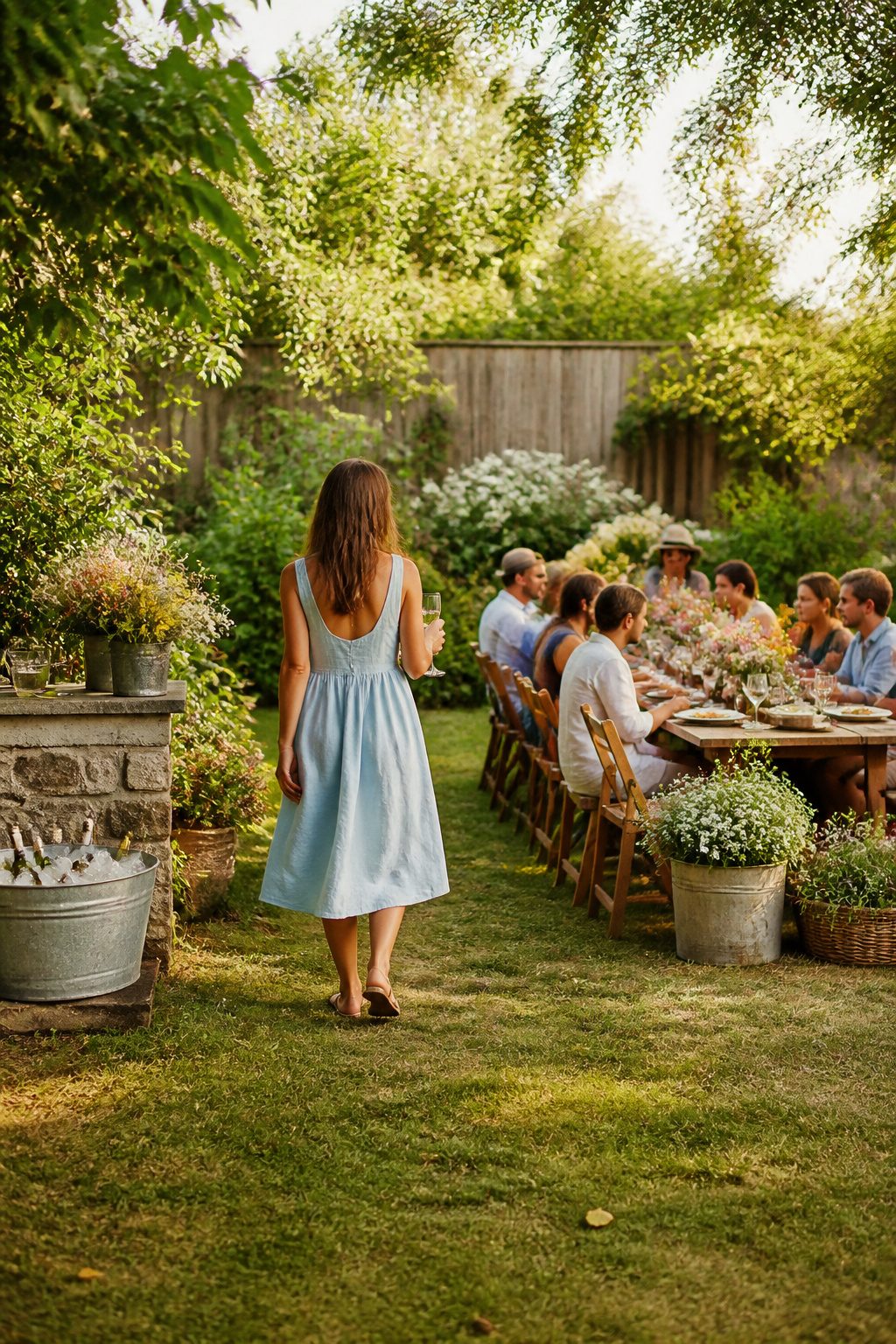
A backyard ceremony in July calls for something that breathes. Linen and cotton blends work better than anything synthetic out here, because the sweat shows on polyester before the vows are even done.
The hem should hit somewhere between mid-thigh and just below the knee; shorter than that starts reading like you forgot the occasion, longer starts fighting with the grass.
Sandals are fine for beach or lawn, but the sole matters more than the strap style. A stacked leather heel sinks into turf, so a flat or a low wedge saves you the awkward sinking walk back from the ceremony.
The line between casual and underdressed sits at fabric weight and finishing.
A cotton sundress with a defined waist and some structure through the shoulders reads intentional; the same print in a baggy shift with raw edges reads like you grabbed it from the laundry pile.
For brunch weddings, a sleeveless crepe dress in a solid color bridges the gap neatly. It moves from mimosas to dancing without looking like you tried too hard for the hour or too little for the venue.
The mistake most guests make here is dressing for the meal instead of the milestone. A casual wedding is still a wedding; the camera finds you either way.
7. Sustainable Options
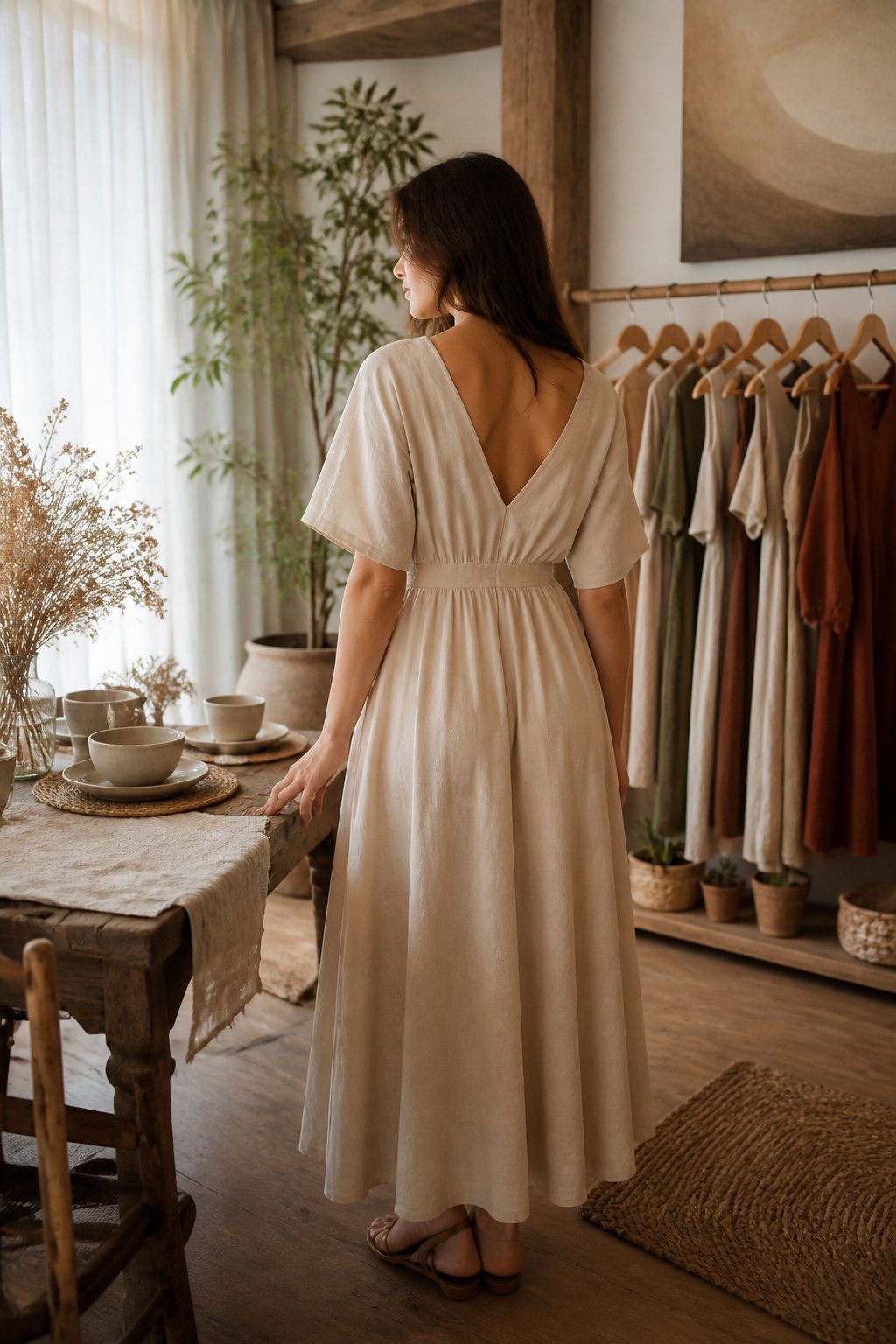
Organic cotton and linen wedding guest dresses carry certifications like GOTS or OEKO-TEX, which mean the fibers were grown without synthetic pesticides and the dyeing process was monitored for harmful chemicals.
Those labels add cost, sometimes 30–50% above conventional fabric prices, so a $180 dress becomes $240 for the same cut.
Deadstock fabrics, the leftover rolls from other production runs, skip the growing stage entirely and often land at lower price points, though the color or print selection is whatever the warehouse already holds.
The brands doing this well, like Reformation or Christy Dawn, build their entire line around these materials, while larger retailers might offer one or two "conscious" capsules that sell out fast.
Renting a sustainably made dress for a single wedding is another path, and services like Rent the Runway now tag their eco options clearly.
The real tradeoff is between ethics and access: a size-inclusive range in deadstock is harder to maintain because each fabric batch is limited, and small sustainable labels often stop at size 12 or 14.
If you wear above that, the field narrows sharply, which is a flaw in the market, not in your search.
My own approach has been to buy one well-made piece in a neutral cut I can wear to multiple weddings, then vary it with shoes or a wrap, rather than chasing a new dress for every invitation.
Reading the Dress Code
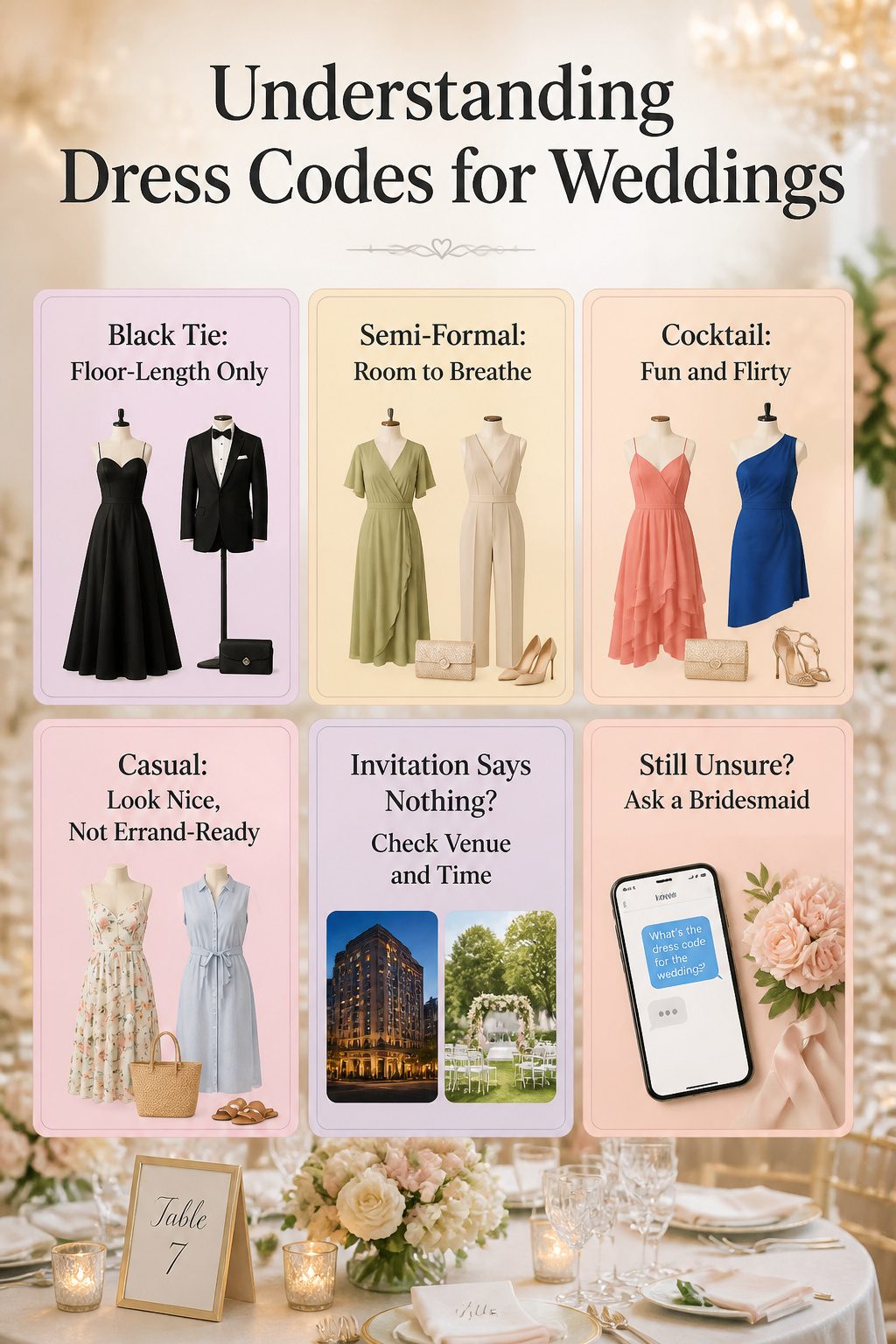
The words on the invitation matter more than most guests realize. "Black tie" means floor-length, period, and showing up in a cocktail dress makes you the person everyone side-eyes in the group photo.
Semi-formal gives you room to breathe: a dressy midi or a tailored jumpsuit works, though the line between semi-formal and cocktail blurs enough that I usually pack a clutch that dresses things up just in case.
Cocktail itself is where wedding guest dresses get genuinely fun: shorter hemlines, bolder colors, fabrics with some movement.
Casual weddings trip people up because the couple still wants you to look nice; sundress territory, but not the one you wear to run errands.
When the invitation says nothing at all, the venue and time of day tell you plenty. An evening wedding at a downtown hotel calls for something structured and dark.
A noon ceremony outdoors in June practically dresses you itself.
I once guessed wrong on a blank invitation, showed up overdressed to a backyard potluck wedding, and spent the reception kicking myself in satin heels while everyone else was in linen. Now I text a bridesmaid if I’m uncertain.
Someone in the wedding party has already fielded that question a dozen times.
Fabric by Season
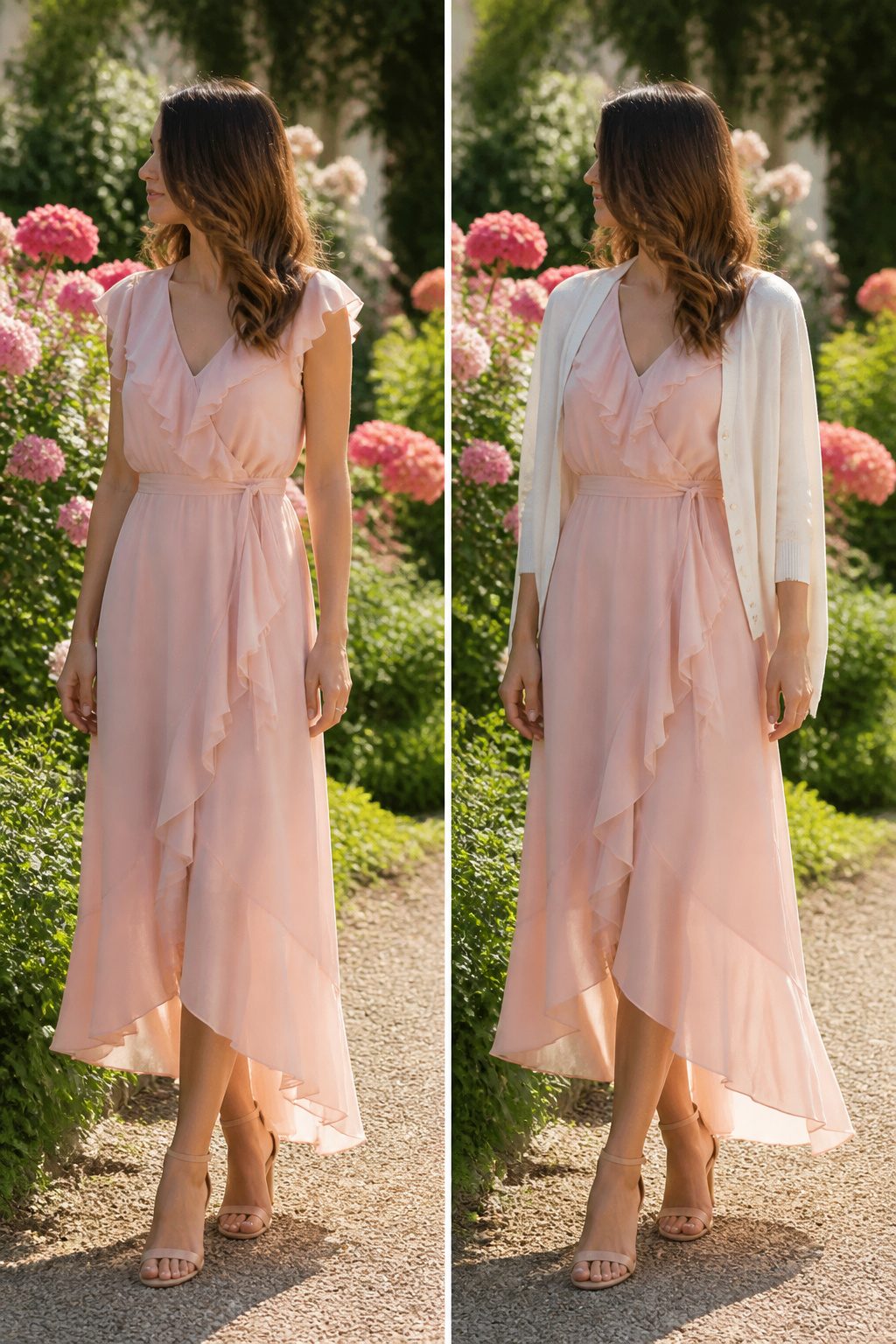
Silk and satin read as elegant in fall and winter because the weight of the fabric holds its shape against heavier coats and the dimmer light.
Chiffon and cotton work for spring and summer because they let air move; a breeze actually registers on your skin instead of stopping at the dress. The mistake is wearing silk in July.
It traps heat, clings the moment you step outside, and shows every damp spot by the time you reach the ceremony.
Chiffon in January is just as wrong: the thin layers offer no warmth, the skirt floats up instead of falling, and the whole look feels borrowed from the wrong season.
Wool blends belong with the cold-weather group, adding structure that cotton simply cannot manage once the temperature drops.
Color Rules That Stick
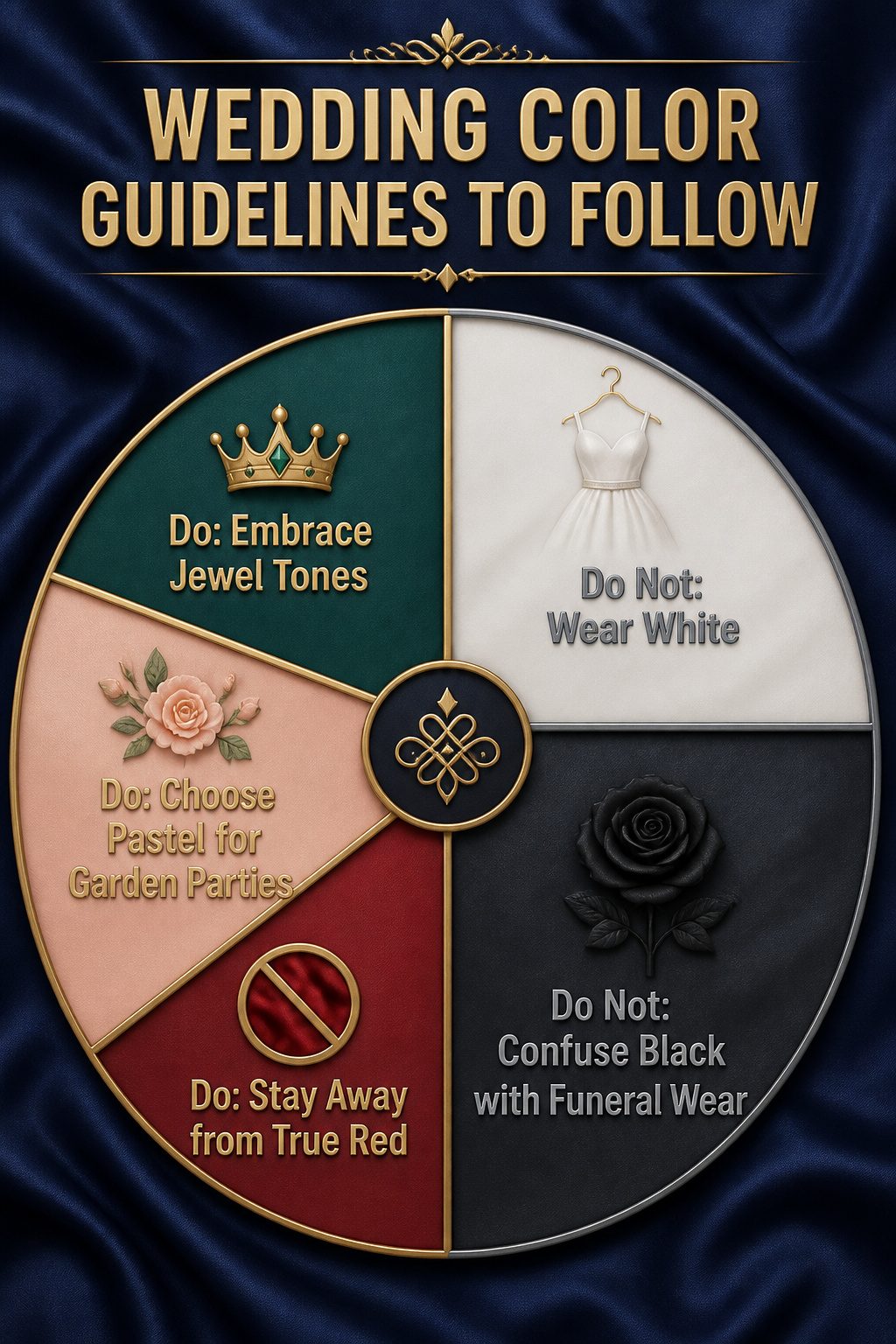
White at a wedding still reads as a power move, and not the flattering kind.
The bride owns that color for the day; stepping into it signals either ignorance or intent, neither of which earns you a welcome back at the next family gathering.
Black used to carry funeral baggage, but somewhere around the late nineties it flipped into sleek default territory, especially for evening ceremonies where it photographs clean and pairs with any metal.
Reading the wedding palette without cloning a bridesmaid takes attention, not detective work. Stationery and venue style hint at the tone: jewel tones suit formal settings, pastels read garden-party, and saturated neons tend to fight the photographer’s white balance.
The one color that reliably photographs badly is true red under mixed indoor lighting, where it blooms into a hot pink smear on digital sensors.
I learned that squinting at a friend’s reception gallery, every crimson dress turned into a cautionary blob.
Finding Your Fit
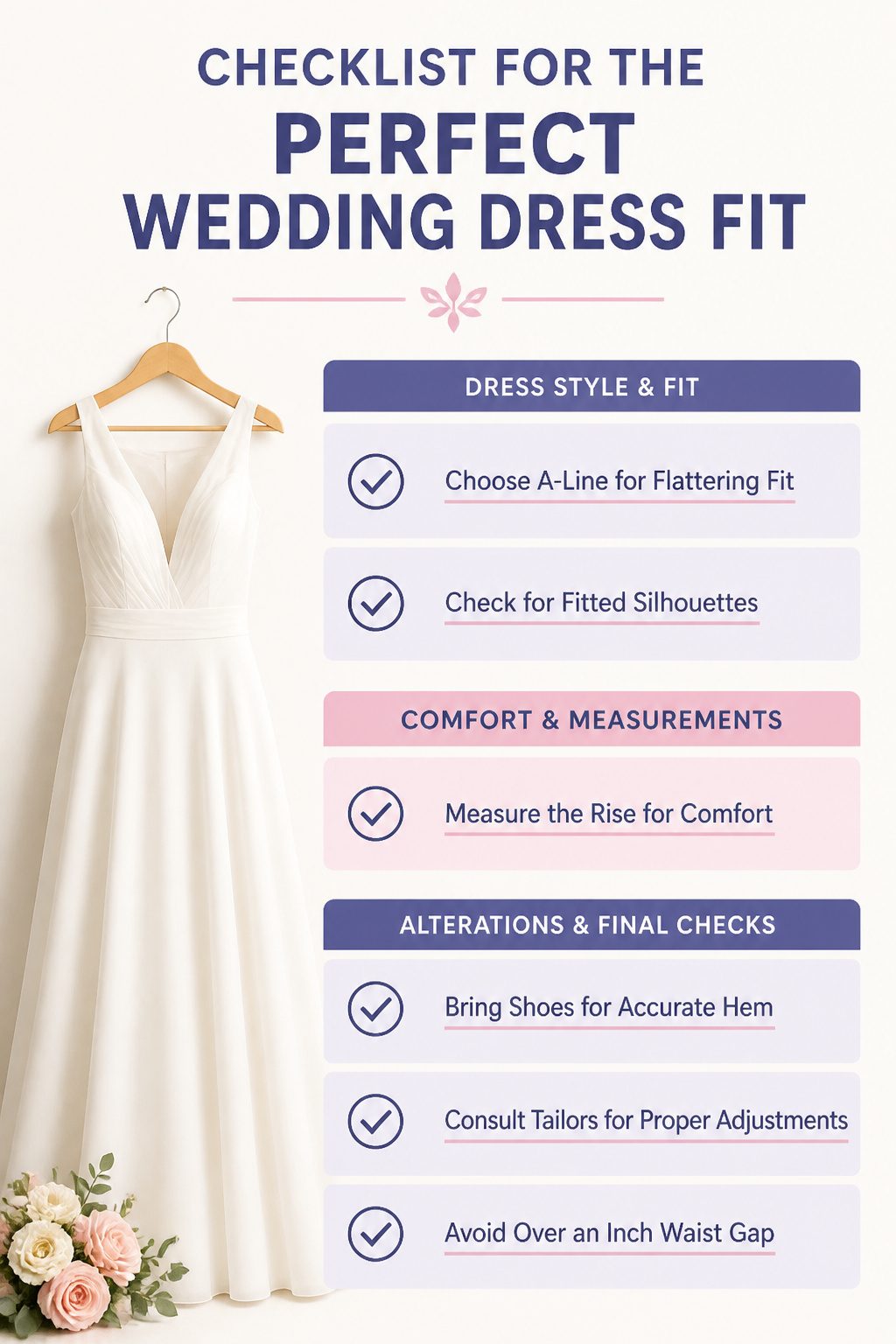
A-line dresses earn their reputation at wedding guest dresses because the shape does the work for you. The fabric skims from shoulder to hem without clinging, so the same cut reads elegant on broader hips, straighter frames, and everything between.
Fitted silhouettes shine when you want structure, but they demand honesty about where the fabric lands. A sheath that looks sharp standing can bunch at the waist the moment you sit for salad and speeches.
The measurement that matters most for seated comfort is the rise, or the distance from your natural waist to where the dress hem hits mid-thigh. Too short, and you’re tugging through the whole toast.
Too long, and the fabric pools under the chair, creasing where you need it smooth. Three inches above the knee usually clears the seat without riding up.
Tailors fix what the rack got wrong, but only if you ask the right questions. Bring the shoes you’ll wear, since heel height changes where the hem falls.
Ask them to pin while you’re sitting, not just standing. Most shops charge $15–25 for a simple hem, but taking in a bodice runs higher, and some lined dresses need the lining adjusted separately.
If the waist gap is more than an inch, the cut itself is probably wrong for your proportions, and no alteration saves it.
Accessories That Finish It
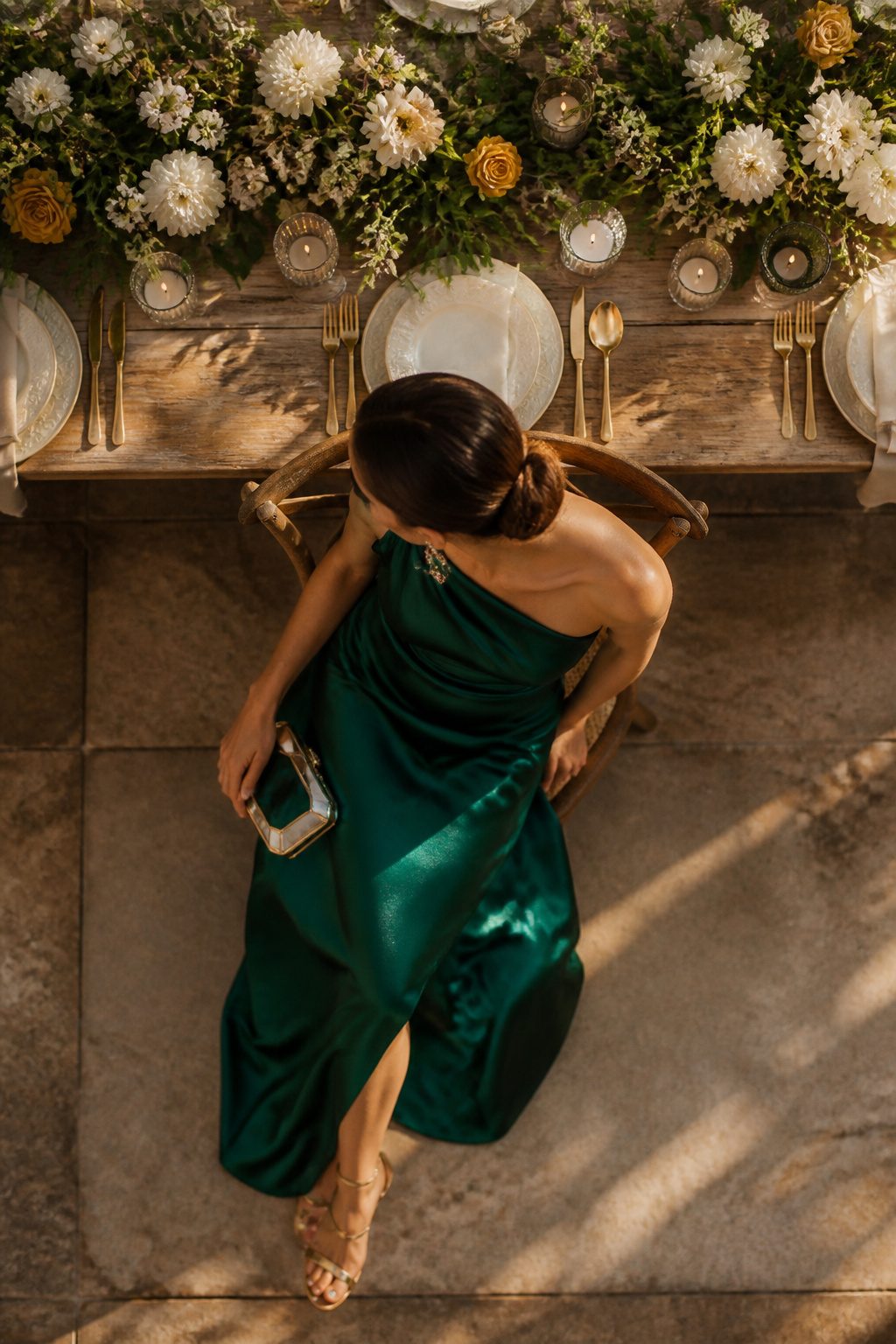
A heavy satin gown needs a shoe with real structure, not a flimsy sandal that disappears under the weight.
At my cousin’s wedding last June, I learned this the hard way: I paired a jewel-neck crepe dress with chandelier earrings, a stacked bracelet, and a beaded clutch, and every photo looks like I was trying to win a contest rather than attend a ceremony.
One statement piece beats three competing ones every time.
For a deep neckline, that single piece is usually a pendant or drop earring that draws the eye down; for a high neck, it is almost always an interesting shoe or an oversized clutch.
Fabric weight matters more than color matching.
A lightweight chiffon calls for delicate jewelry and a small bag that does not pull the silhouette off balance, while a structured brocade can handle a substantial heel and a box clutch with some hardware.
The bag should fit your actual essentials, not your theoretical ones. I spent that reception with my phone, lipstick, and keys sliding around a bag sized for a camera I never carry.
Now I test the fit at home: if it does not close comfortably over what I truly need, I swap it before I leave.
Frequently Asked Questions
What should I wear to a black tie wedding?
Wear a floor-length dress that grazes the ankle or floor, made from silk that moves properly under evening light.
A refined cut that does not need a train or thigh slit to register as formal is the standard, and the fabric should look like it belongs under chandeliers rather than office fluorescents.
Can I wear white to a wedding?
No. White still reads as a power move that signals either ignorance or intent, neither of which earns you a welcome back at the next family gathering. The bride owns that color for the day.
What fabrics are best for wedding guest dresses?
Silk and satin work for fall and winter because the weight holds its shape against heavier coats and dimmer light. Chiffon and cotton suit spring and summer because they let air move and a breeze actually registers on your skin.
Wool blends add structure in cold weather, while linen breathes for outdoor July ceremonies.
How do I choose the right dress for a wedding?
Read the invitation’s words first: black tie means floor-length, semi-formal gives room for a dressy midi or tailored jumpsuit, cocktail allows shorter hemlines and bolder colors, and casual still means a sundress with structure, not the one you wear to run errands.
When the invitation says nothing, let the venue and start time decide: an evening downtown hotel calls for something structured and dark, while a noon outdoor ceremony in June practically dresses you itself.