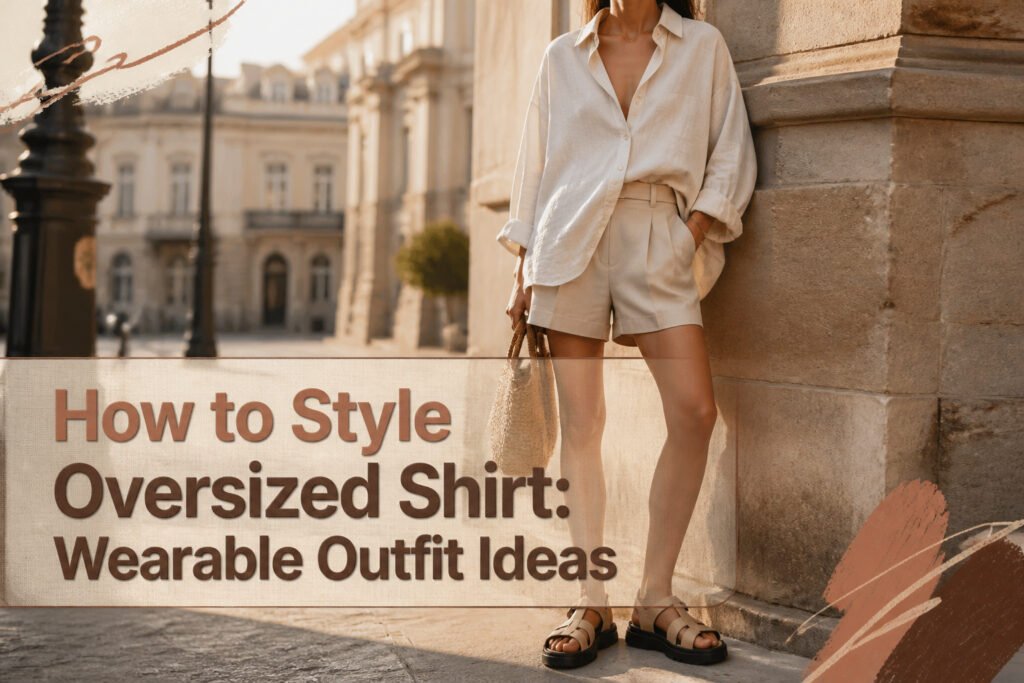
Fifteen outfits that actually work, and none of them require more than a good oversized shirt and the patience to tuck it right. The mistake most people make starts at the shoulder seam: let that seam drop more than two inches past your natural shoulder, and the volume turns from structure into costume. A heavy oxford holds the half-tuck with jeans without looking like you forgot to finish dressing; line-dry it cold and the seam stays put.
1. With Denim Shorts
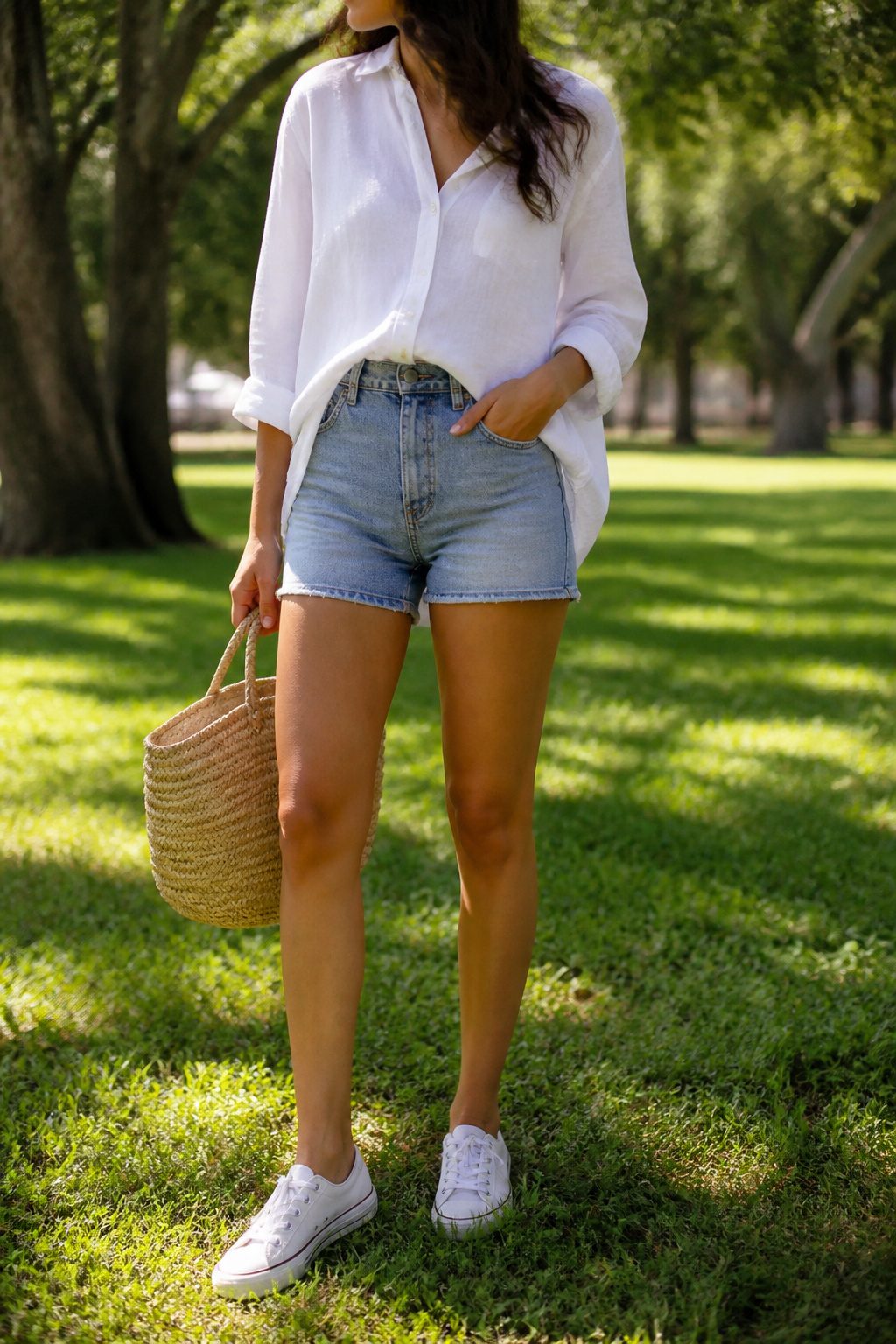
Denim shorts and an oversized shirt are the warm-weather pairing that keeps volume from swallowing a smaller frame. The trick is a shorter inseam, roughly mid-thigh, so the leg shows enough skin to counterbalance the shirt’s boxiness. A four-inch inseam works better than Bermuda length here; the latter fights the top half instead of complementing it.
Tucking is where this look lives or dies. A full tuck into high-rise shorts gives you that blouson waistline, but on a hot day the half-tuck reads easier: front hem in, back loose, one side slightly deeper than the other. The asymmetric version, one side tucked and the other free with a few buttons undone, takes about thirty seconds and looks intentional. Untucked works only if the shirt hits mid-hip or higher; anything longer and the silhouette turns into a tent.
Fabric weight matters in this equation. A lightweight cotton or linen shirt breathes and drapes instead of holding its shape like cardboard. That fluidity is what makes the proportions feel relaxed rather than sloppy.
2. For Back to Work
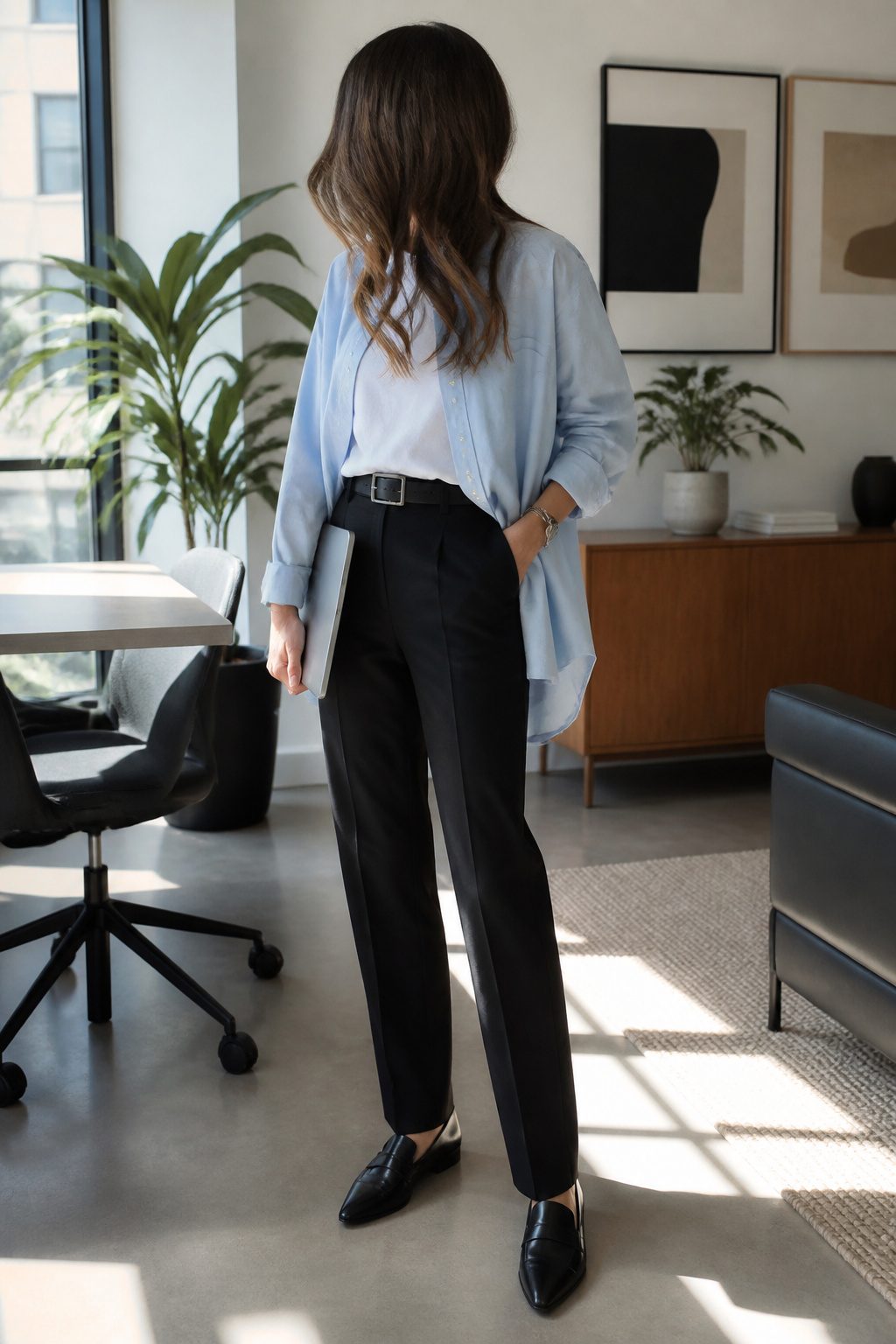
The line between relaxed and sloppy at the office sits right at your waist. A fitted white tee underneath keeps the shape clean, and tailored trousers do the heavy lifting of making the oversized layer read as intentional rather than borrowed. I learned this the hard way after showing up to a Monday meeting in wide-leg pants and a draped shirt that swallowed me whole; the look said weekend, not work.
The shirt itself needs to be crisp, not soft and rumpled. Lightweight, airy fabrics layer without bulk, and a slim black belt at the waist adds just enough structure. Strappy flats finish it without fighting the proportions. Partial or full tuck is the move here: pull the shirt out just a little after tucking to keep it from looking stiff. One side tucked, back tucked, or the full front in, depending on how formal the day demands. The balance is always the same: fitted underneath, structured below, and the oversized piece doing its job on top without drifting into sleepwear territory.
3. As a Dress
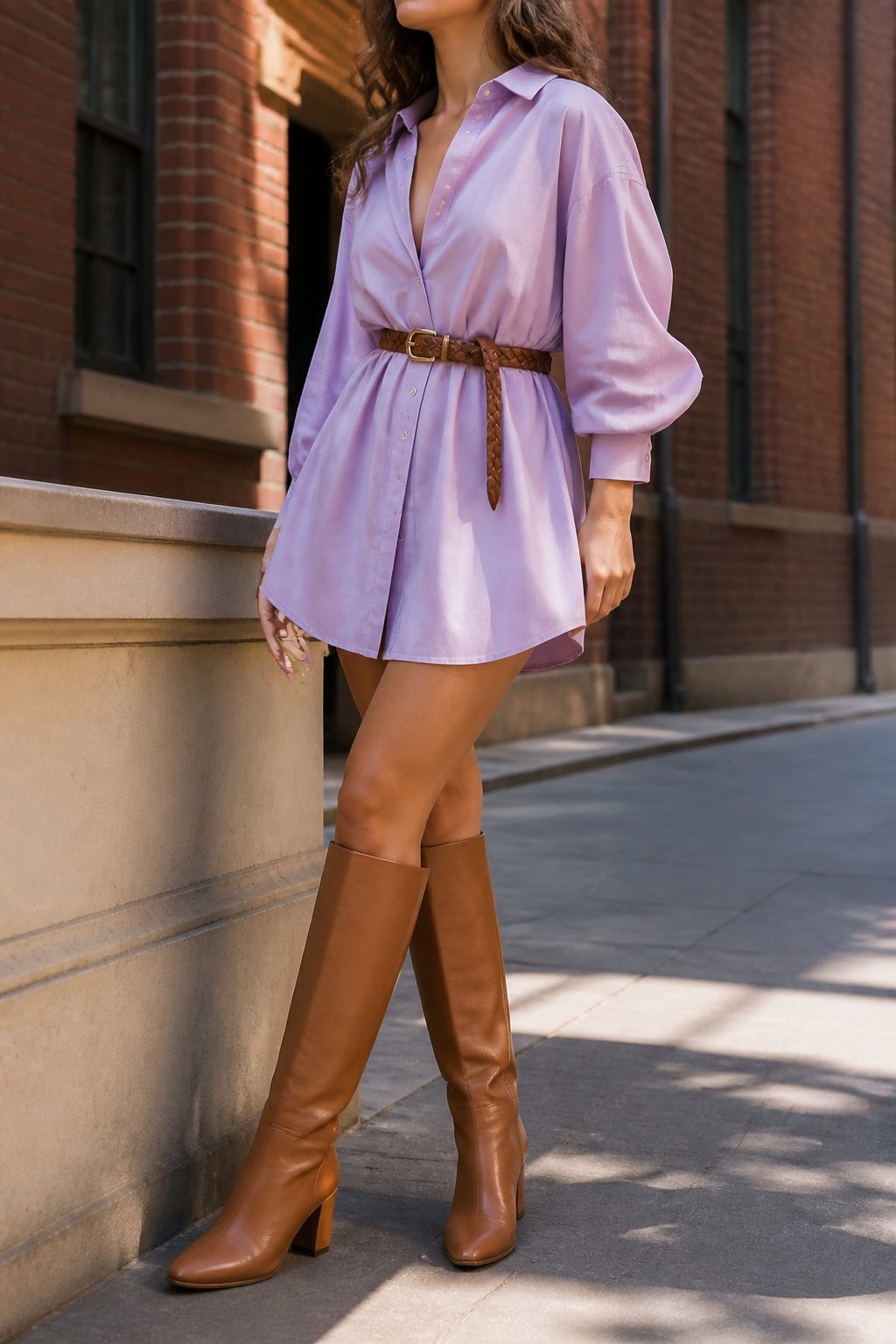
The oversized-shirt-as-dress move works when the hem hits mid-thigh or lower, anything shorter risks a wardrobe malfunction with every reach. Fabric weight matters more than most people expect; a bit of stretch helps the material cling to your shape instead of hanging like a sack, and heavier cotton or linen blends keep the silhouette structured rather than collapsible.
A belt saves the whole look from the tent effect, but placement is the detail that separates intentional from accidental. Cinch it at the natural waist, not the hips, to create the longest possible leg line and keep the shirt’s volume above and below in balance. Knee-high boots finish the proportion play, their height meeting the hem so your leg isn’t broken into too many segments.
Rolled sleeves keep a boxy cut from swallowing you whole; off-the-shoulder styling adds a feminine counterweight to the menswear origin of most shirts. Woven leather or a metal-buckle belt in tortoiseshell reads as deliberate accessory rather than afterthought. The look demands confidence in the wearing, the kind that comes from knowing the mechanics are right.
4. With Jeans
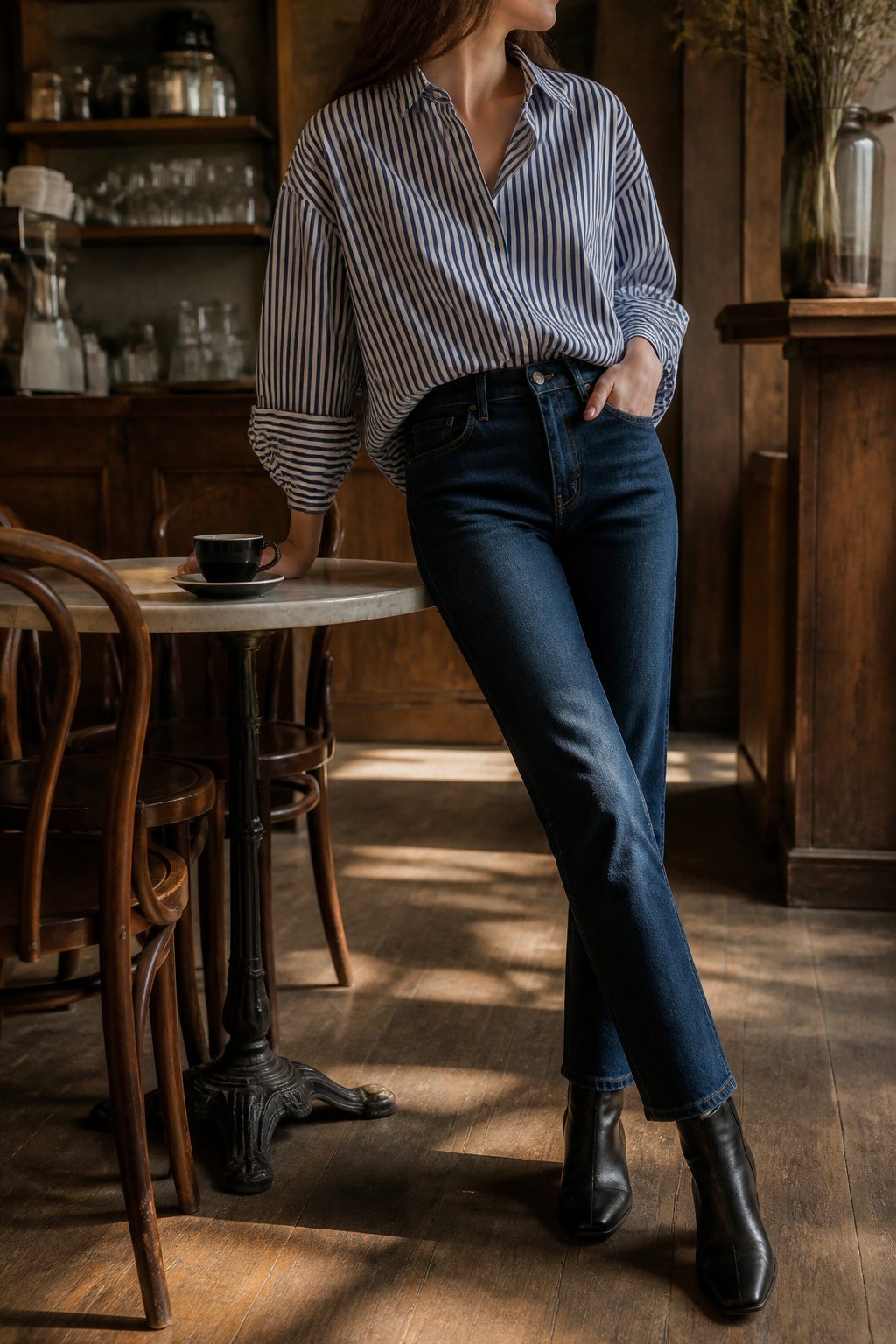
The oversized shirt and jeans pairing only looks accidental when the proportions sit at random. A straight-leg wash with a clean hem, something closer to what reads as intentional denim rather than whatever was nearest the door, gives the shirt a frame to fall against. Darker washes hold their own against white or striped cotton; lighter ones need the shirt to carry more weight, a heavier Oxford or a stripe with real contrast.
Shoes shift the register fast. Smart flats keep it office-adjacent, boots add height that balances the volume up top, sneakers work but only if the jeans are cropped enough to show ankle and avoid the swallowed silhouette.
The front-tuck is the move that saves this from looking like you borrowed someone else’s closet. Tuck a fist-sized gather at the front center or off to one side, let the back hang free. For a crisper line, try the asymmetric version: one side tucked to the waistband, the other loose with a few buttons undone. The blouson effect at the waist is what makes the oversize look chosen rather than inherited. A belt over the tuck, especially with high-waisted denim, cinches the shape and breaks the shirt’s horizontal sweep. I’ve seen the full front-tuck attempted; it fights the shirt’s cut and usually bulks at the waistband. The partial tuck respects what the shirt wants to do while still giving you a shape.
5. With Cycling Shorts
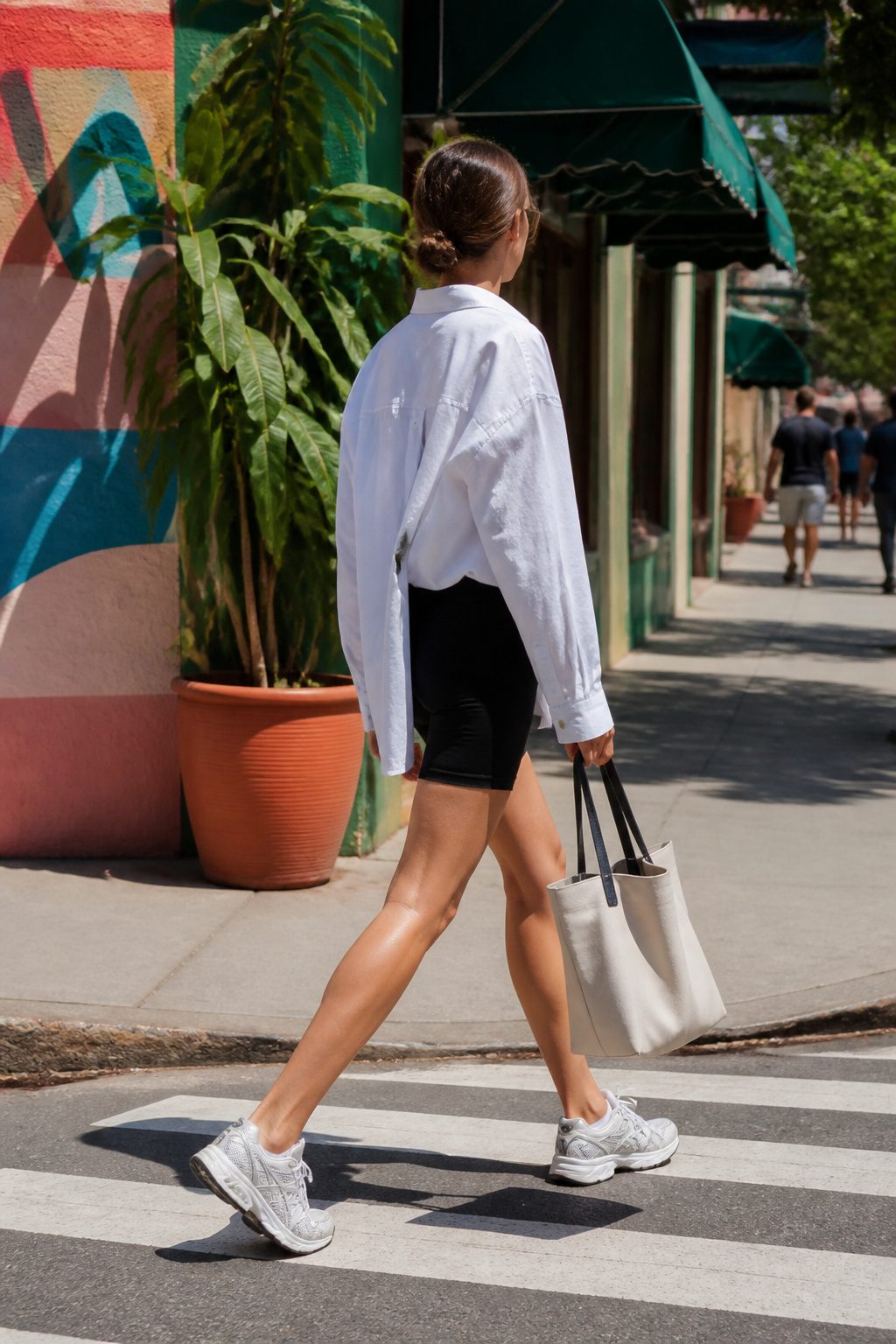
Cycling shorts need a shirt that hits mid-thigh or just above the knee. Anything longer and the proportions start to look accidental, like you forgot pants; anything shorter and you lose the deliberate layering effect that makes this combination work.
The shorts themselves should end at mid-thigh, not grazing the knee. That length keeps the leg line clean without the bunching that happens when fabric meets fabric at the same point.
Structured cotton holds the shape here in a way rayon or silk will not. A crisp poplin or lightweight oxford keeps the shoulders defined and the hem flat, so the silhouette reads intentional rather than slept-in. Flowing fabrics collapse against the shorts and turn the whole look into a shapeless t-shirt dress by accident. I learned that distinction the hard way after trying a drapey viscose version that looked fine on the hanger and costume-y everywhere else.
Tuck a small front corner or do a half-tuck at the center waist to give yourself a waistline without breaking the relaxed proportion. Leave the buttons fastened to the collar; an open placket with this much ease starts to read sloppy rather than sporty.
6. Belted
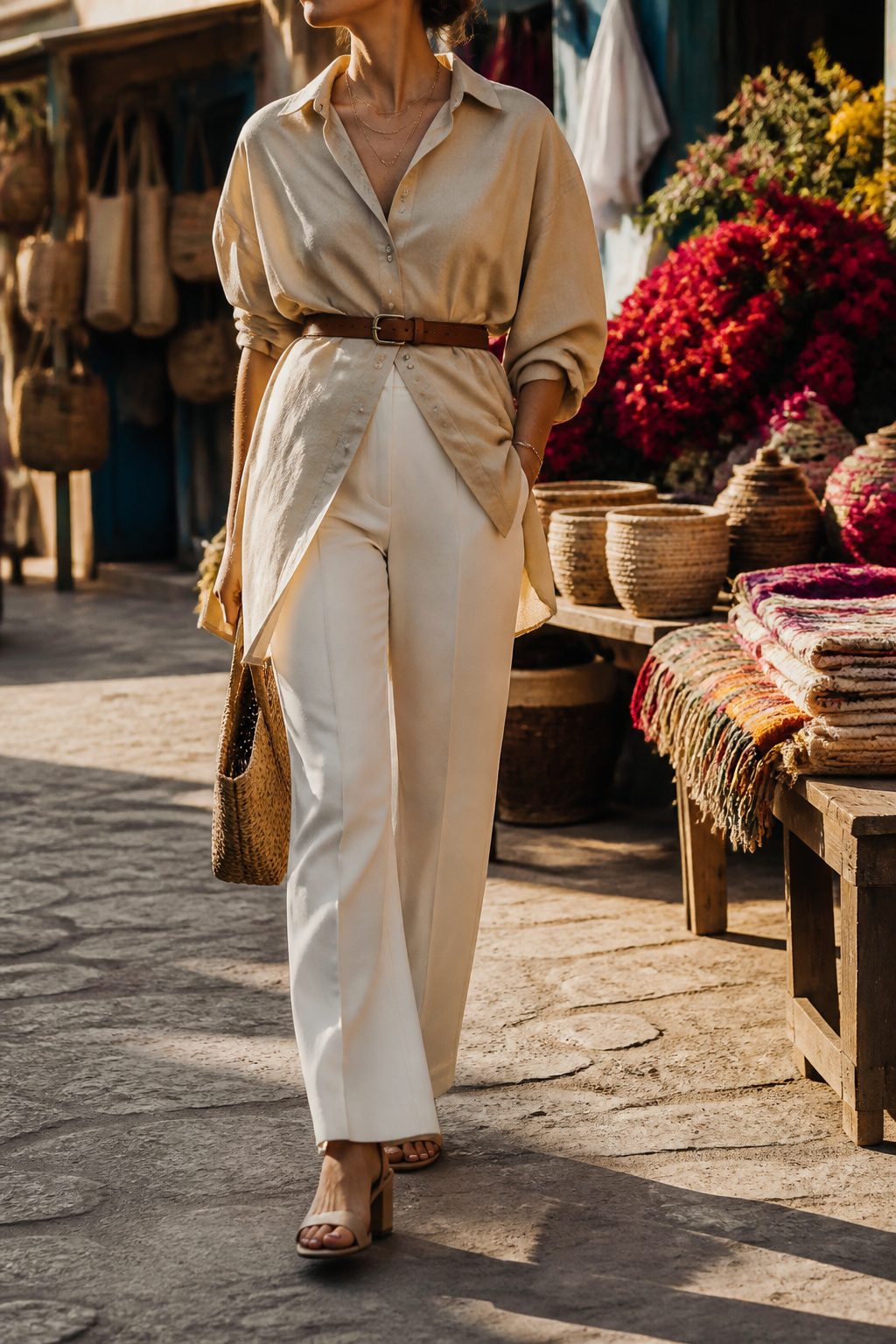
A belt turns an oversized shirt from a shapeless drape into something with architecture, but the wrong belt width fights the fabric instead of working with it. A belt between one and two inches wide sits cleanly against most shirt hems without creating a shelf above or below the waistband. Anything wider starts to compete with the shirt’s own lines, and anything thinner can disappear under the extra material.
Placement matters more than most people expect. Cinching at the natural waist gives the longest leg line, but sliding the belt up toward the ribcage shortens the torso and emphasizes volume in the hips. The shirt’s fabric decides which placement works. Woven or leather belts hold their shape against a crisp cotton button-down, while a stretchier shirt dress needs the belt to sit lower so the fabric below can skim rather than bunch. Stiff fabrics belt cleanly; soft, drapey ones need the belt tighter than feels right at first, because they settle and loosen within an hour of wearing.
The back knot trick works when you want the waist definition without the accessory. Flip the shirt inside out, gather the excess at the back, and secure it with a hair tie before turning it right side out. The knot stays hidden and the front falls flat, which is useful on days when a leather belt feels like too much.
7. Layered with a Vest
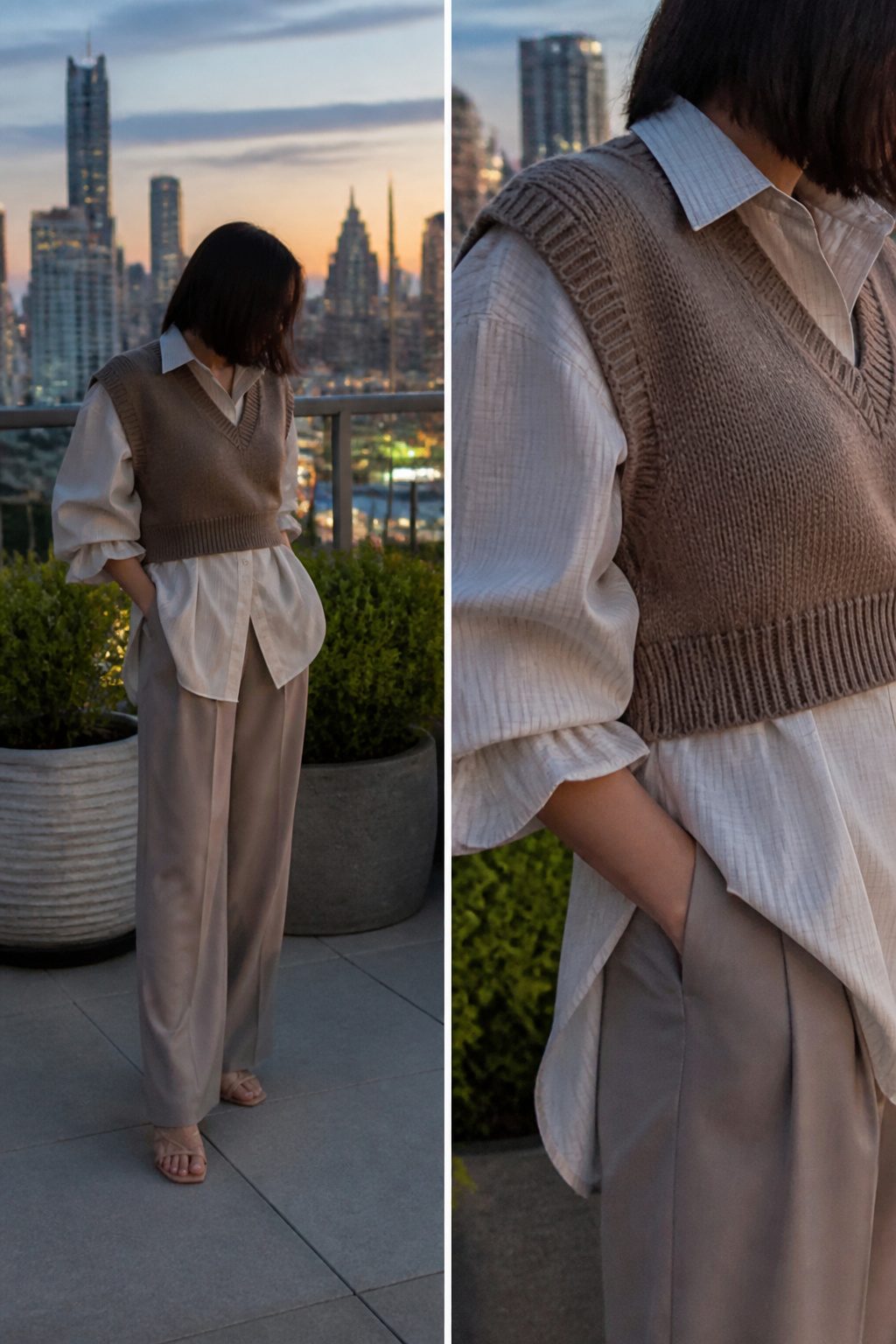
A shorter sweater or vest on top of an oversized shirt redraws the silhouette entirely. The shirt’s volume stays, but the eye registers the cropped line of the vest as the waist, which keeps the look from turning shapeless. The vest needs to hit noticeably higher than the shirt hem, ideally several inches above it, or the layering reads as accidental bulk rather than intentional proportion play. I tried this once with a vest that landed only an inch or two shorter than the shirt underneath, and the result was a straight column with no visible break. The fix was swapping in a true cropped style that ended right at my natural waist, leaving the shirt tails to do their long-line thing below.
Vogue put the principle plainly:
The key to wearing a big button-up often lies in the layers—and experimenting with size… adding extra pieces like a shorter sweater on top, that subtly emphasizes your waistline.
That emphasis is the whole point. A miniskirt or slim trousers underneath keeps the lower half from competing, and tights with a long coat carry it into cold weather without hiding the ratio you just built.
8. Buttoned and Breezy
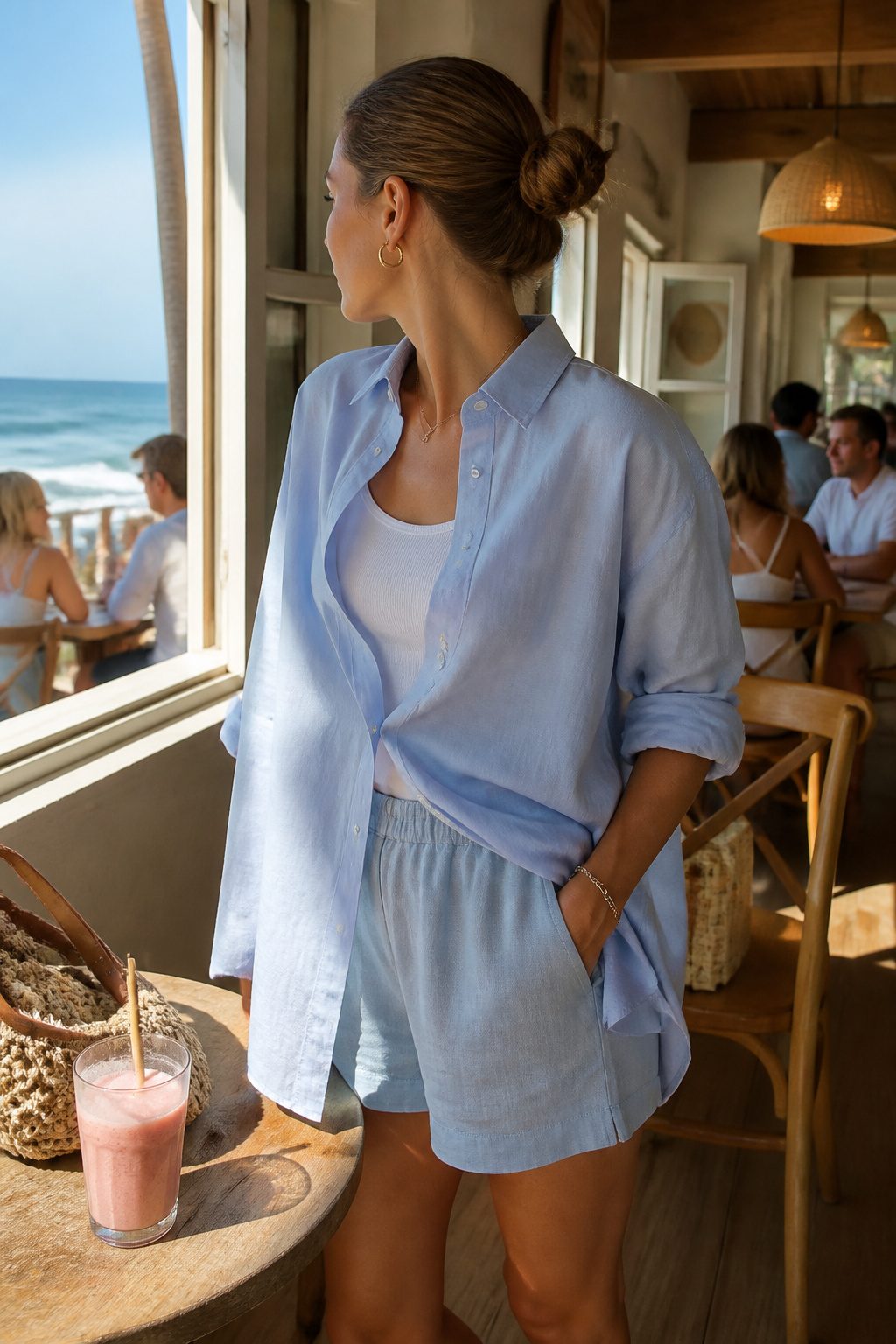
An oversized button-down works two ways, and the difference is whether you commit or coast. Wear it open with a fitted tank underneath when you want the volume without the shapelessness. The sources lean toward a sleek white tank for this, and it makes sense: the eye reads the narrow line of the tank as your silhouette, while the shirt frames it. I have seen this go wrong when the tank is too loose and the whole thing reads accidental, like you threw on whatever was clean.
Fully buttoned is a different proposition. The passages suggest sizing down if the brand runs large, or sizing up if the fit is not relaxed enough. A too-big shirt swallows you; too small looks like you borrowed it. When you do button it, the tuck matters. A full tuck into fitted trousers pulls it toward formal. A partial tuck, pulled out just a little, keeps it casual but intentional.
What shows underneath should always be a choice. A crop top or patterned tank worn open is deliberate layering. A camisole strap or bra band peeking through a buttoned gap is not. The line is control: if you can name what is underneath before you leave the house, you are probably on the right side of it.
9. Tied in a Knot
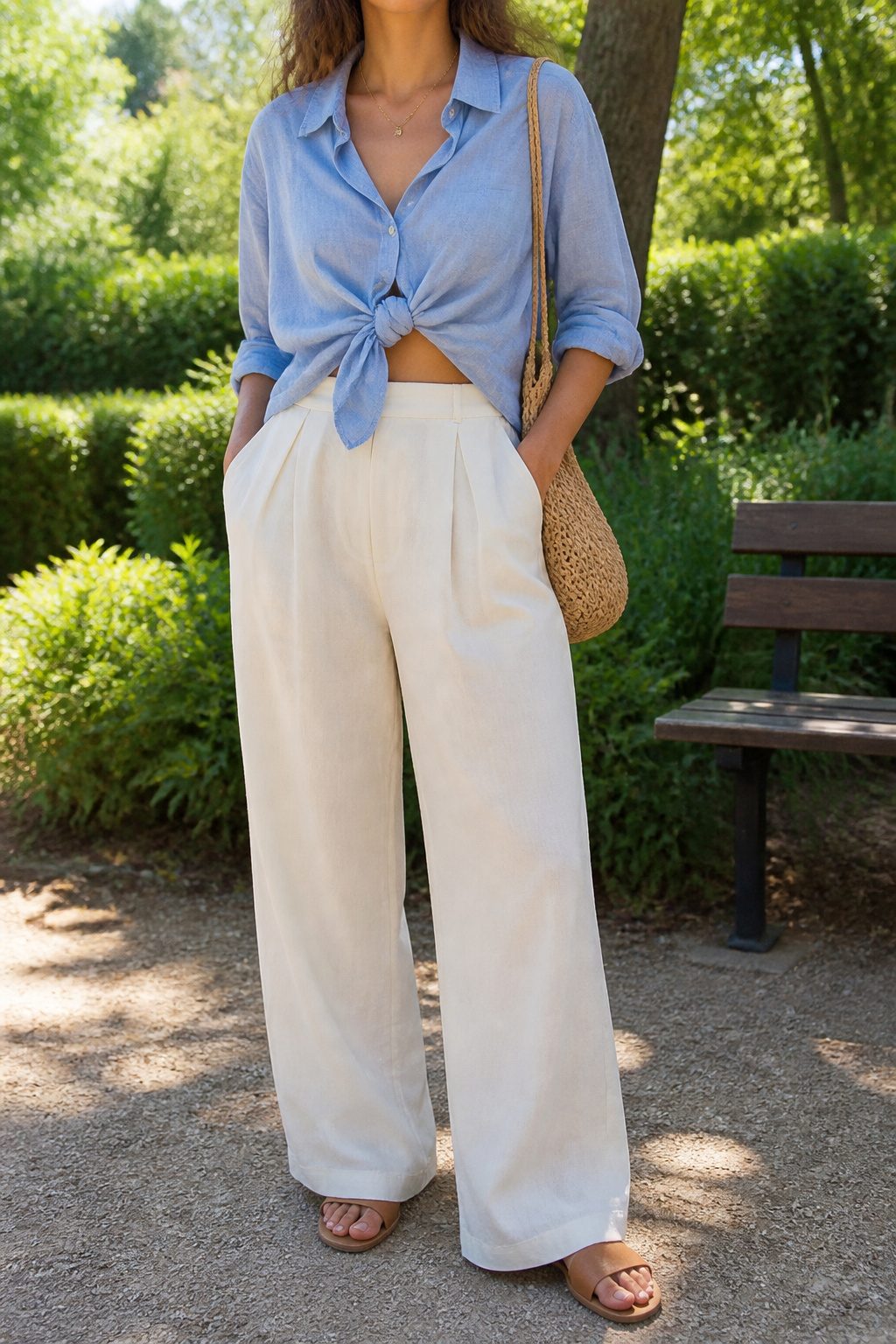
A front knot turns an oversized shirt into a crop without scissors. Gather the excess fabric at center hem, twist it into a rope, and loop it into a knot you can tighten against your waist. The higher you place it, the shorter the crop; at navel height you get coverage that still reads as a shirt rather than a top.
The side knot sits lower and slimmer, which matters for high-waisted bottoms that already hit at the natural waist. Twist and tie at one hip, then let the loose tail hang or tuck it behind the band of your jeans. Either way, the leftover fabric above the knot creates a blouson effect that hides the shape underneath.
A clear elastic band slipped over the twisted fabric before you knot will keep the hold through a full day of wear, especially on cotton or linen that slips against itself. Without it, retying by lunch is common. The under-bra method is another route: fold the hem up and tuck it beneath your bra band for a cropped look with no knot at all, though it shifts more with movement.
10. Tucked Under a Bra
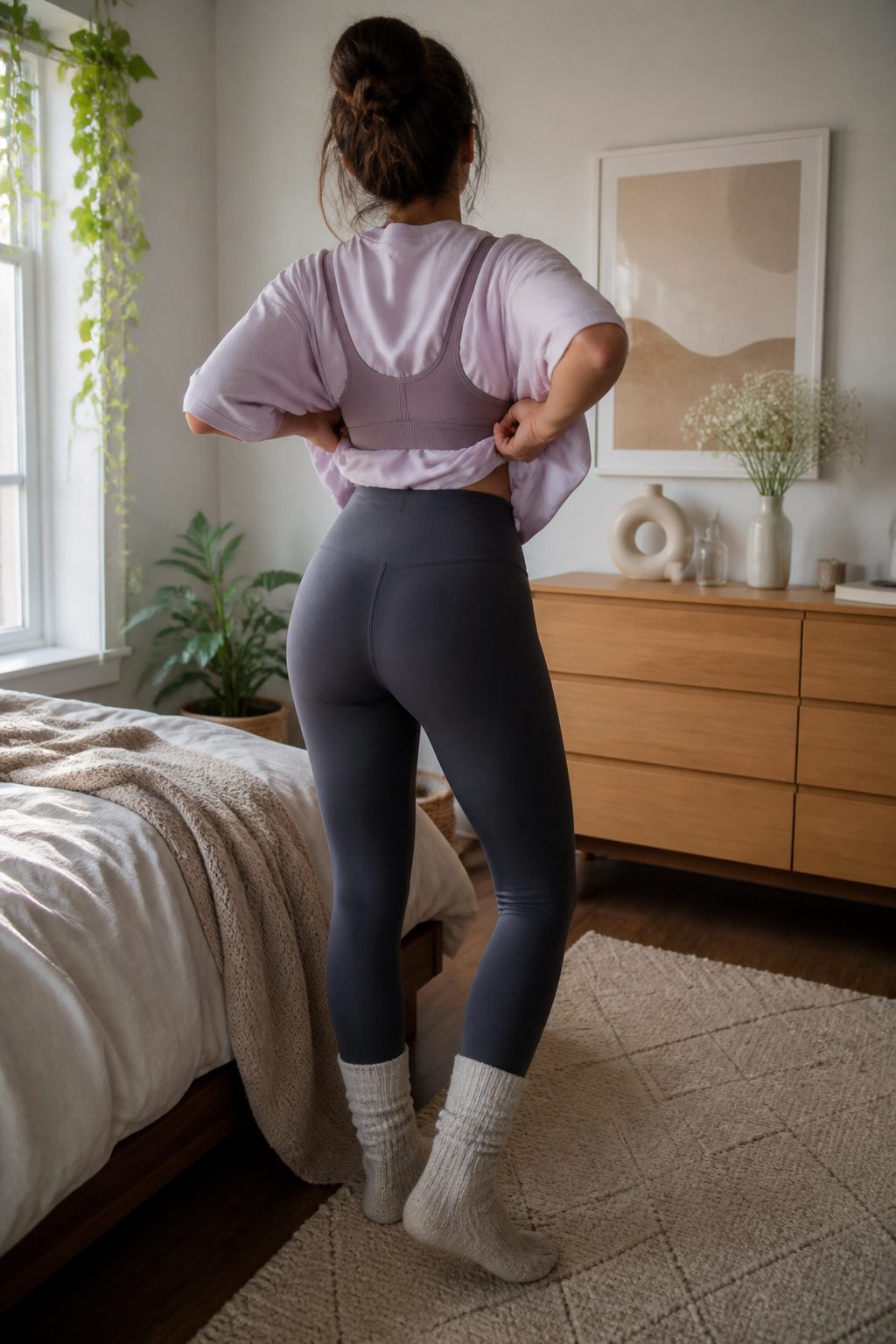
The bra-tuck method hides the hem under the bra band instead of tying a knot or leaving fabric loose. A sports bra with a wide, flat band works best here, since a thin strap will dig in and show lines through the shirt. Fold the front hem up once or twice, then slip that folded edge under the band so it sits flat against the ribs.
Where the fabric lands matters. The shirt should blouse out above the bra line and fall free below it, hitting somewhere between the bottom of the ribcage and the top of the waistband on high-waisted leggings or jeans. Too high and the ruching looks forced; too low and the cropped effect disappears.
The messy tuck the sources describe is the point, not a mistake to fix. The slight bunching at the front reads as intentional volume rather than a half-finished job. I find this works better on cotton or jersey that holds a fold than on silk or anything slippery, which fights the tuck and rides up within an hour. The whole thing takes about fifteen seconds, which is why it stuck for me as a morning shortcut.
11. With High-Waisted Jeans
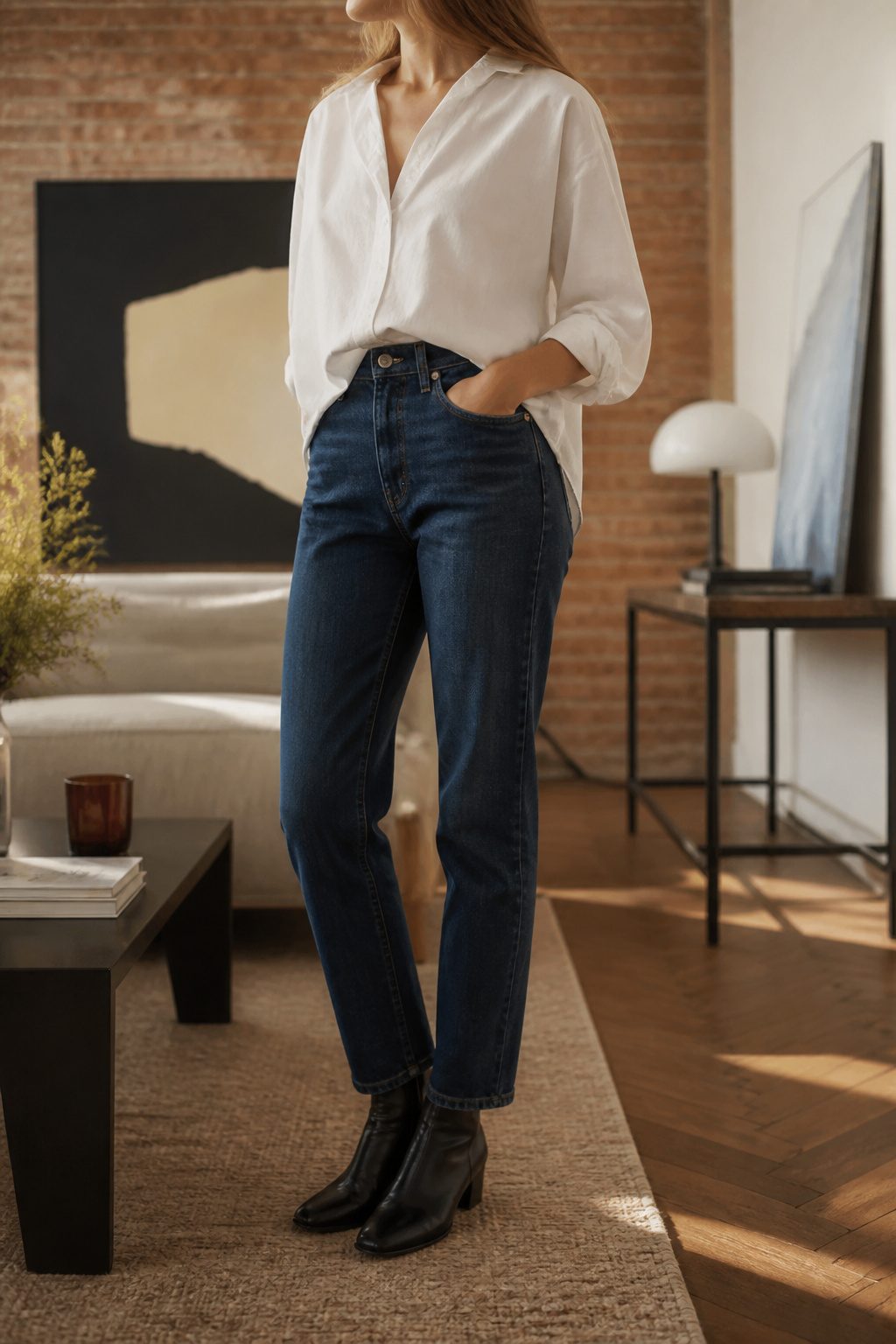
High-waisted denim gives an oversized shirt somewhere to land. The waistband sits at the natural waist, which means the volume above it reads as intentional rather than accidental. I’ve found the tuck depth matters more than most people think: a full tuck can look stiff, while leaving the back loose and gathering just the front two inches into the waistband keeps the shape blouson without the librarian effect. A belt helps if the shirt fabric is lightweight cotton or linen, where the hem might ride up; heavier denim or flannel shirts usually have enough weight to stay put on their own.
The jean rise should match the shirt length, not fight it. A shirt that hits mid-thigh needs a true high rise, 10 inches or more, to keep the proportions from feeling like two separate outfits. A cropped oversized shirt, one that barely covers the hip, works fine with a mid-rise around 9 inches because there’s less fabric to account for. I used to belt every tuck automatically, but now I skip it when the shirt tails are long enough to form a slight drape over the waistband, which softens the line in a way a cinched belt never quite manages.
12. Sporty Casual Look
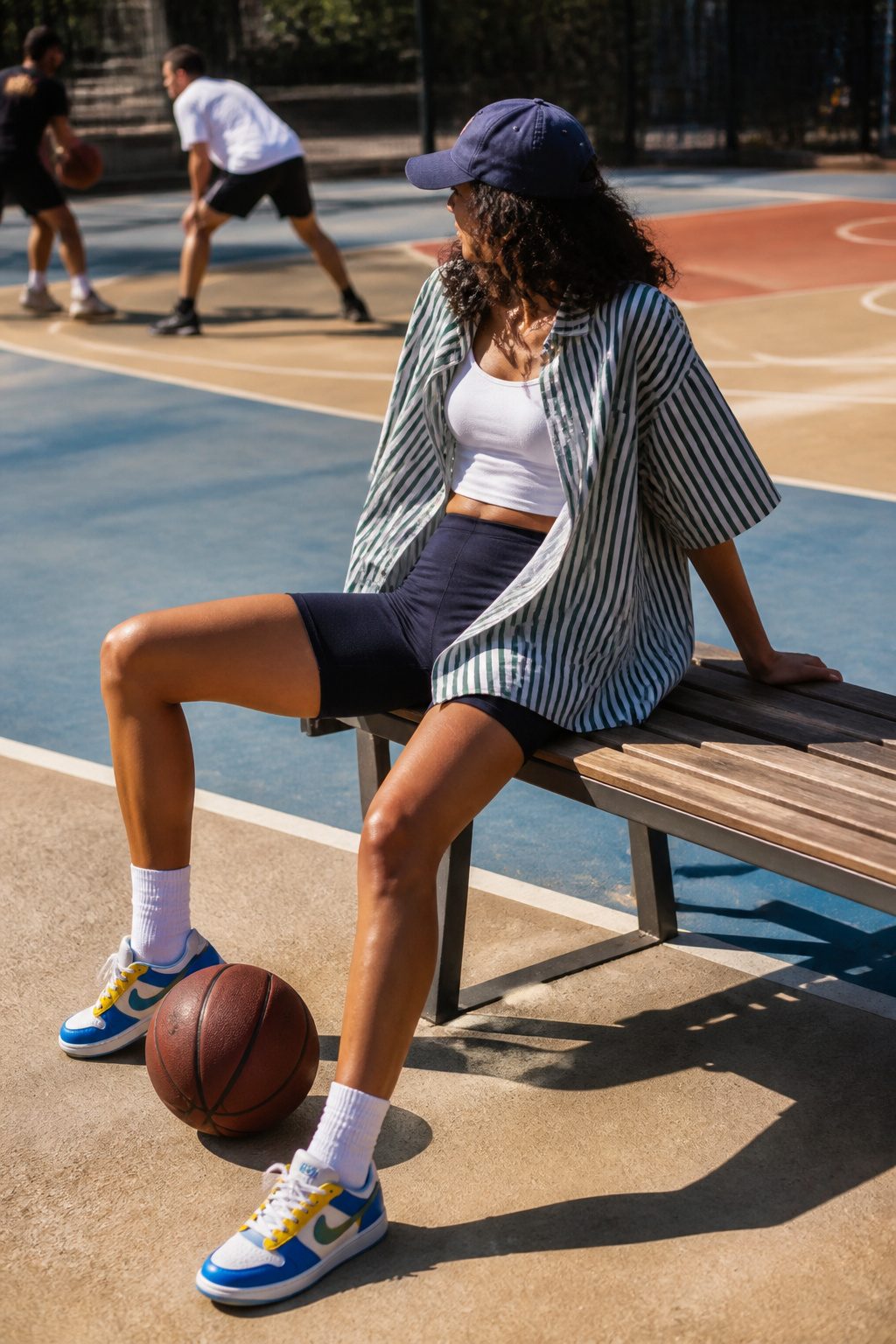
The weekend uniform runs on three things: an oversized shirt that actually breathes, bottoms that match the slouch, and sneakers that look intentional rather than whatever was by the door. Loose cotton or linen keeps the shirt from turning into a tent, and a graphic tee or baseball-style cut lands closer to athleisure than borrowed-from-dad.
Leggings or sweatpants keep the silhouette consistent; cargo trousers work if you want a little more shape. The footwear choice is where this lives or dies. Classic white sneakers are the safe play, but a chunky sneaker in a color that talks to the shirt anchors the whole thing with purpose. Matching tones, not identical ones, is the move here.
A baseball cap adds structure without trying, and a hoodie layered underneath is useful for temperature swings. Metal rings or a thin chain are enough accessory; anything more starts to fight the relaxed vibe. The line between "rolled out of bed" and "dressed for the day" is thin, and it usually comes down to whether the sneakers look chosen.
13. Monochrome Look
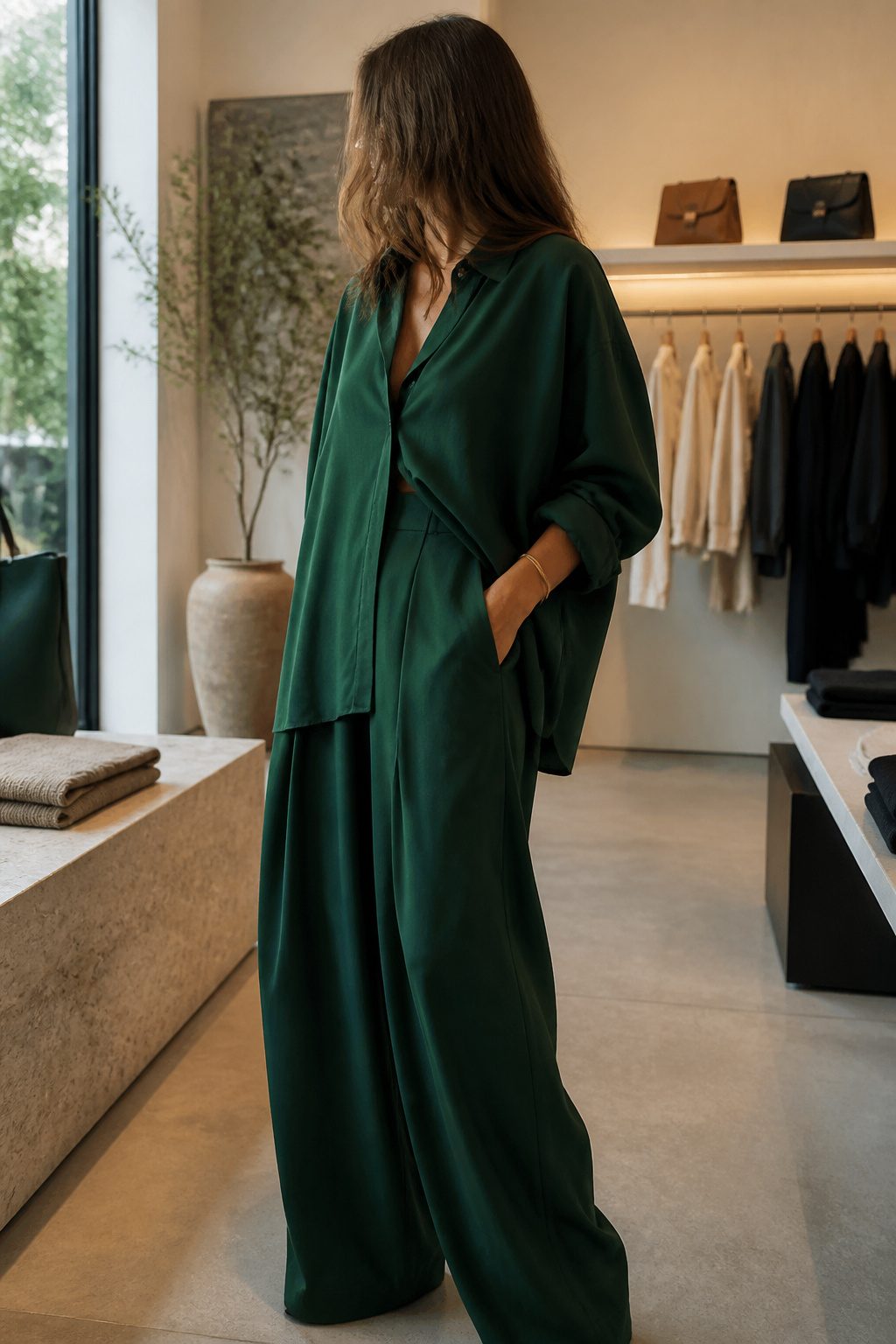
A full monochrome outfit lets the shirt’s volume do the talking. I learned this after trying to rescue a boxy white button-down with printed pants, only to watch the whole thing turn into noise. Tone matching matters more than the color itself: a pale blue oxford with sky-colored linen trousers reads as intentional, while the same shirt against navy breaks the spell entirely.
Fabric contrast keeps one-color dressing from going flat. A crisp cotton shirt against fluid silk pants, or a slubbed linen top with crisp poplin bottoms, gives the eye something to travel through without leaving the palette. The mistake is matching textures too, which turns you into a swatch rather than a person.
One different piece, kept small, usually works better than strict purity. A tan leather belt with an all-cream look, or black loafers interrupting head-to-toe gray, grounds the shape rather than distracting from it. The exception is formal moments, where uninterrupted color carries more force. In daily wear, that single break keeps the outfit from feeling like a uniform you forgot to take off.
14. Boho Vibe

Linen and cotton carry the boho mood better than crisp poplin ever will. The weave relaxes after one wash, softens at the collar, and keeps that rumpled drape that reads as lived-in rather than sloppy. I learned this the hard way with a stiff cotton-poplin shirt that held its press like a uniform and killed the whole look.
The silhouette needs room on room: pair the shirt with a maxi skirt or wide-leg palazzos so the eye travels in one long vertical line rather than stopping at a tight hem. An oversized linen shirt with ethnic-inspired motifs, flowers or geometrical shapes, does the heaviest lifting here.
For accessories, weight matters more than sparkle. Beaded necklaces and bangles add the low jangle that signals this style, and a fringed scarf at the hip breaks the line just enough. A wide-brimmed hat finishes it, though the brim width should match the pant volume: flares call for a broader sweep, while a maxi skirt can handle a medium crown without tipping into costume. Earthy tones, green, blue, and brown, keep the palette grounded.
15. With Wide-Leg or Flare Pants
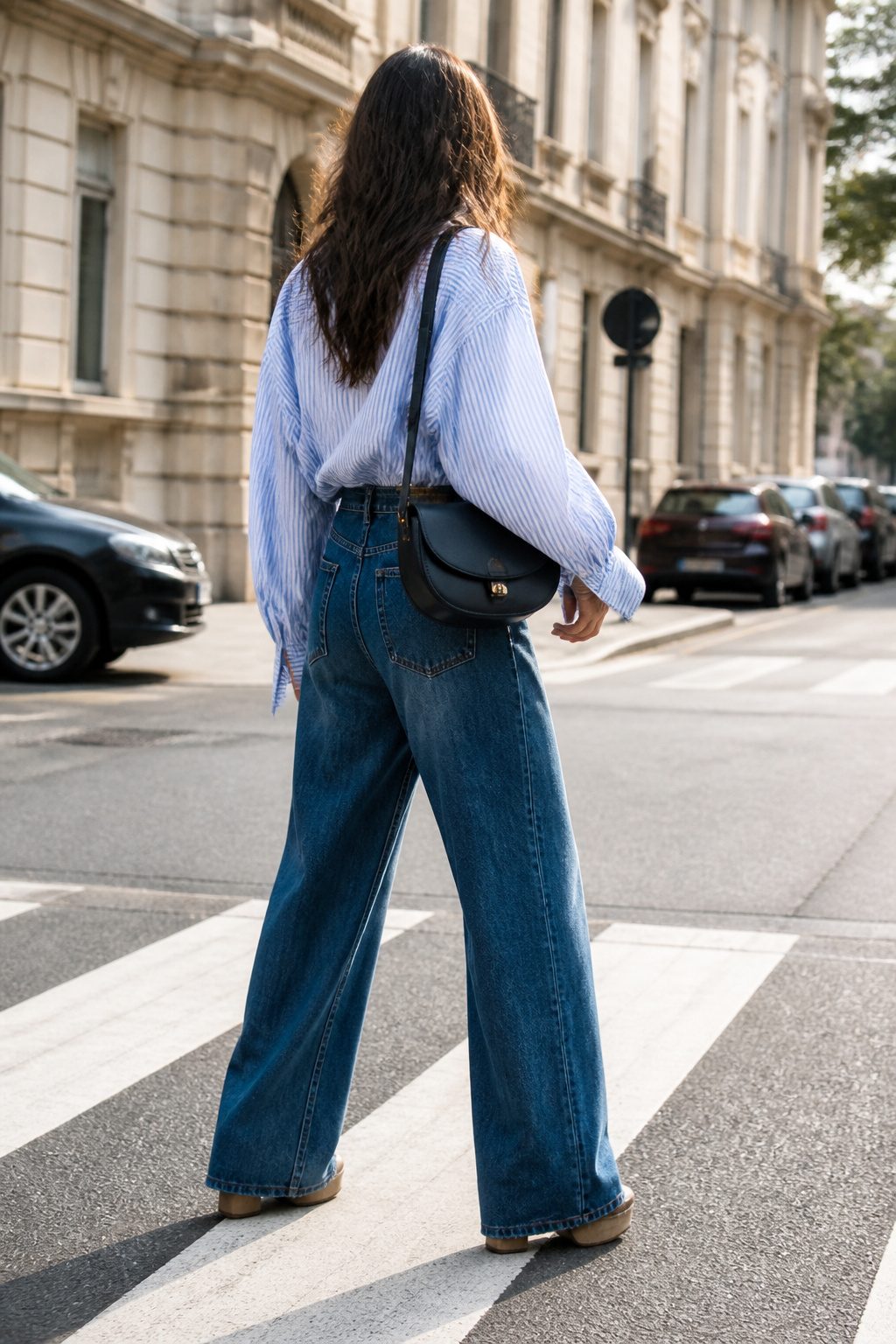
Wide-leg or flare pants are the natural companion for an oversized shirt, but the pairing only works if you control where the volume lands. I learned this after a few mornings of looking like I was wearing a tent rather than an outfit. The fix is in the hem lengths and where the shirt breaks.
Tuck the shirt into structured wide-leg jeans so the waistband gives you a fixed horizontal line. The shirt should end at or just below that waistband, never mid-thigh unless you are deliberately going for a drop-waist silhouette. With flares, the pant hem should nearly graze the floor, which means the shoe matters: a heel between one and two inches keeps the break clean without looking like you are waiting for a flood. A flat shoe works only if the pant was cut for it, and most are not.
Another way to wear this is open over a fitted tank, the way the shirt becomes a jacket layer rather than a blouse. The tank gives the eye a narrow vertical, and the open shirt adds the volume on the sides where you want movement, not bulk. The trousers underneath can be as flowing as you like because the inner layer is doing the shaping work.
Either approach keeps the fabric from swallowing your frame. The mistake is letting both pieces hang loose with no anchor at the waist or the neckline.
Choosing the Right Shirt
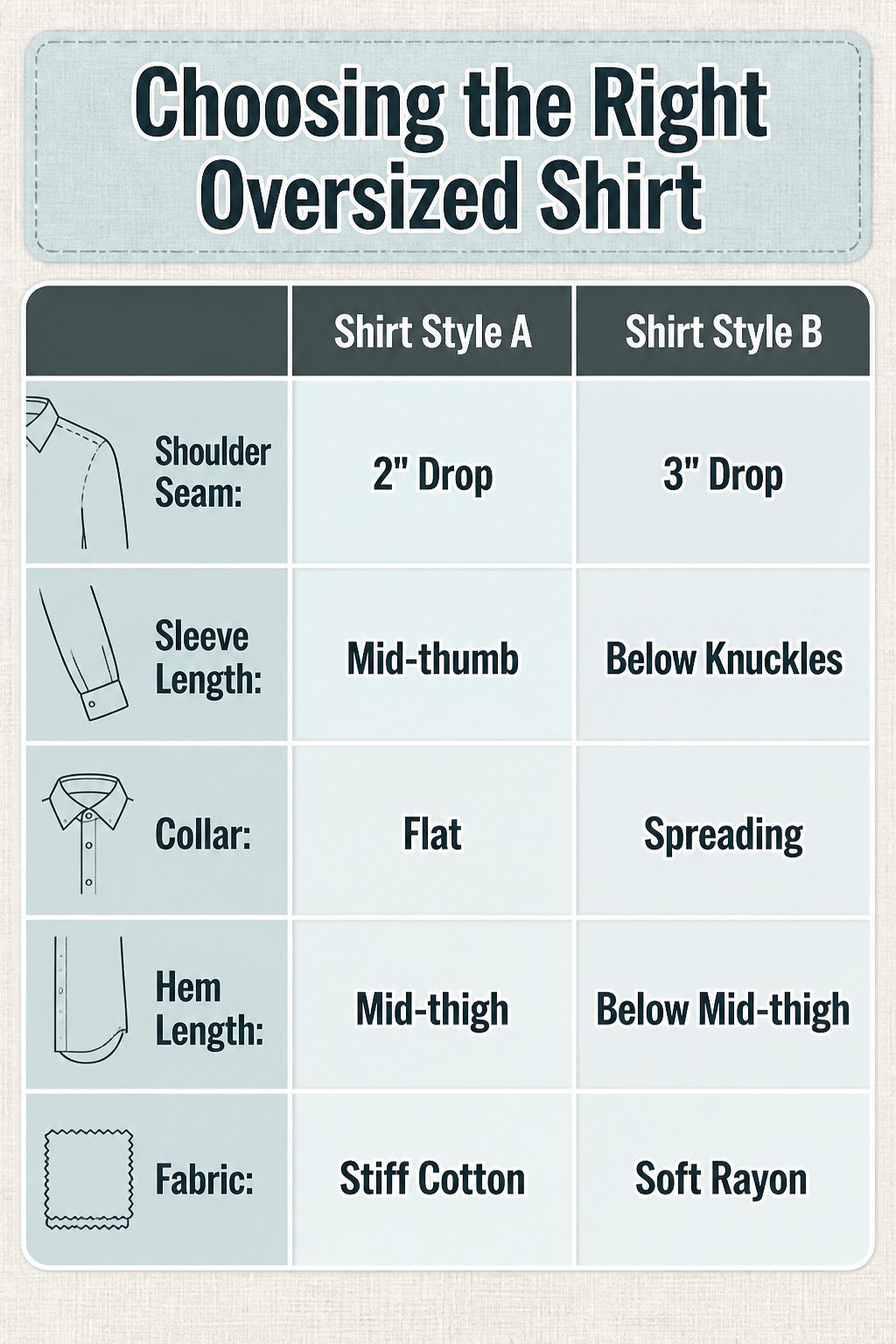
A dropped shoulder seam sitting two inches past your natural shoulder is usually the sweet spot; anything lower starts to swallow a smaller frame whole. Sleeve length tells you whether a shirt was designed oversized or just bought too large: intentional cuts hit at mid-thumb or just above the wrist bone when your arms hang straight, while a sleeve puddling past the knuckles means the proportions were never meant to fall that way. For narrower shoulders, a collar that sits flat without spreading past the clavicle keeps the volume from looking borrowed. Broader frames can carry more fabric through the torso, but watch for the hem dropping below mid-thigh; that length shifts the silhouette from structured to tent-like on most bodies. The fabric itself matters as much as the cut. Stiff cotton holds its shape and adds authority to the excess cloth; soft rayon or washed silk collapses against the body and reads as accidental. Try the shirt on and reach forward: the back should pull slightly but not gap, a sign there is enough room for movement without so much drape that the shape disappears.
Fabrics and Textures
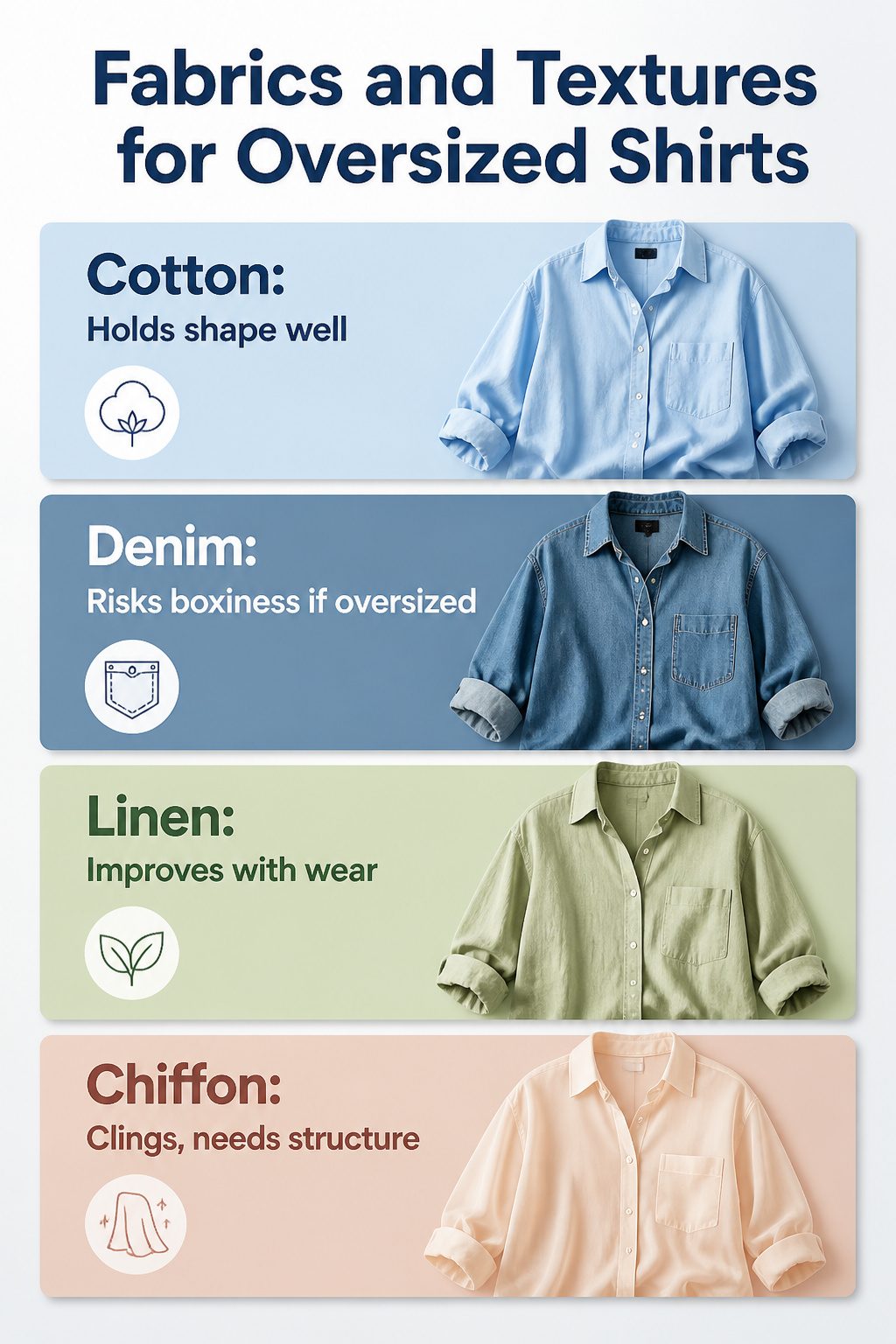
Cotton holds the shape you give it, which makes an oversized cut feel intentional rather than sloppy. A heavy oxford or poplin will keep that structured half-tuck with jeans from looking like you forgot to finish dressing, and it survives the dryer without turning into something that only works as a beach cover-up. Cold water and a shake before line-drying keeps the shoulder seam where it belongs; once that seam drops past the natural shoulder, the shirt starts reading as borrowed instead of bought.
Denim shirts are the exception that proves the rule. The fabric is already stiff, so going oversized risks boxiness that swallows smaller frames whole. What works is sizing up just one notch in a lighter wash or a softer, broken-in weave, then rolling the sleeves hard to show some wrist and break the silhouette. Machine drying beats the softness into denim faster, but the trade is shrinkage that turns a purposeful oversize into an accidental crop.
Linen was built for this. The fiber gets softer and drapier with every wash, which means an oversized linen shirt actually improves over a season of wear. The wrinkling is the point, not a flaw; a linen tent shirt over cycling shorts or tucked loosely into wide-leg pants looks considered because the fabric tells everyone you chose the rumple. Dry flat while it’s still damp and the collar won’t curl into a tube.
Chiffon and other sheer weaves behave like the opposite of cotton. Gravity does the styling; the shirt wants to fall straight down and cling where it lands. An oversized chiffon blouse works belted or half-tucked to give the fabric an anchor point, otherwise it floats into maternity territory fast. Hand-washing preserves the float, and a steamer beats an iron for keeping the hem from going wavy.
Accessorizing
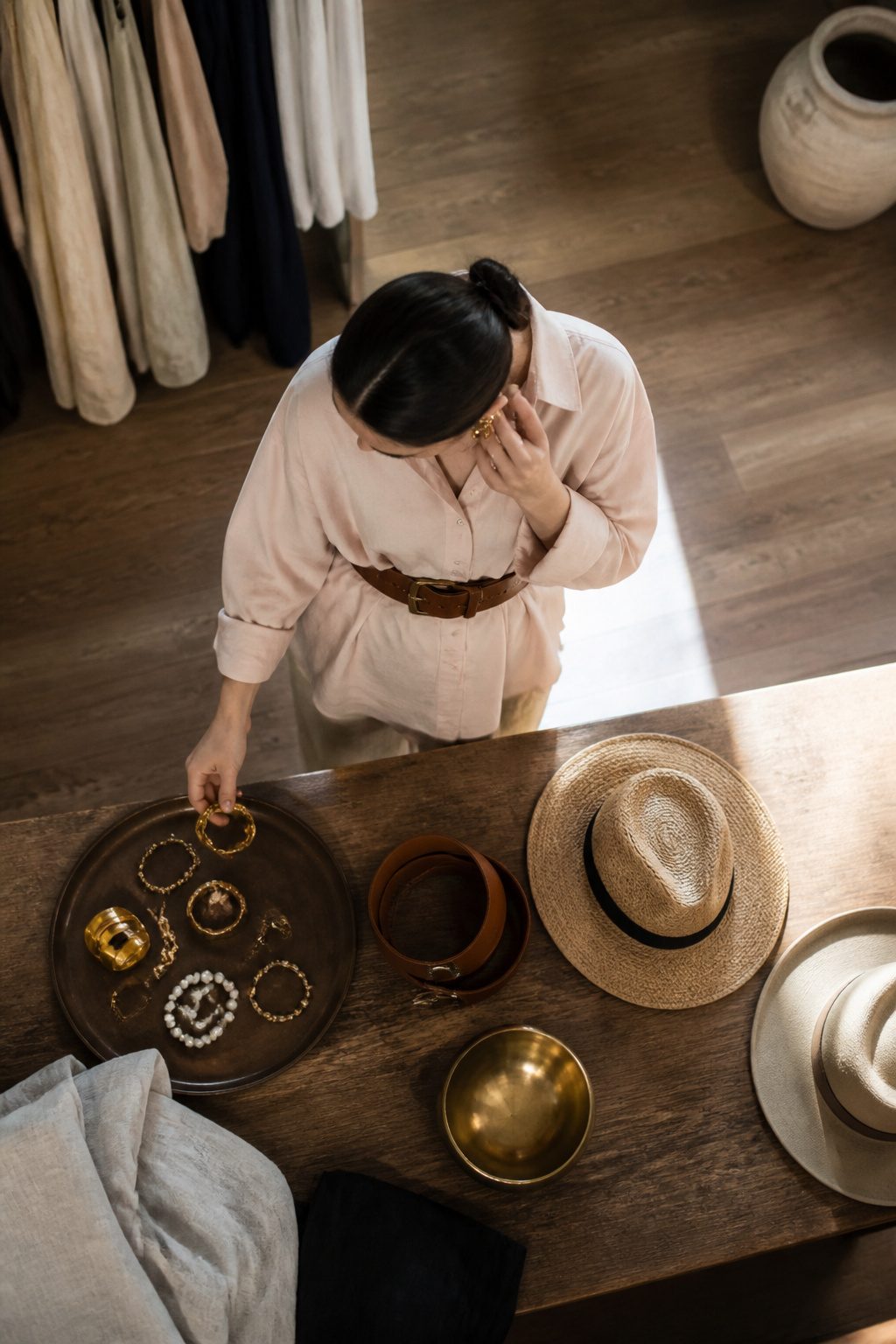
A wide leather belt cinched at the natural waist does more than add interest; it turns a shapeless tent into something with architecture. I learned this after trying half a dozen other fixes first. The belt creates a clear line the eye can follow, while a long pendant necklace on top only competes for attention and drags the silhouette down.
Hats work the opposite way. A structured fedora or clean bucket hat adds vertical lift without touching the shirt itself, so the volume stays intact where you want it. The mistake is choosing anything too floppy or wide-brimmed; the fabric already has enough movement, and the two fight each other.
Statement earrings, though, are the piece that outperforms expectations. Something solid in metal or resin draws attention upward to the collarbone and face, which is exactly where an oversized shirt leaves its most deliberate negative space. A cuff bracelet or stacked rings at the same time is overkill; the ears do the work alone.
Shape versus distraction comes down to location. Accessories that sit at the waist or near the face define boundaries. Anything that hangs in between, like a long scarf or crossbody bag slung low, just adds bulk where there is already plenty.
Frequently Asked Questions
How to style an oversized shirt?
Pair it with fitted bottoms to balance the silhouette. Skinny jeans, leggings, or high-waisted denim work well, and a partial or half-tuck keeps the volume from swallowing your frame. For a smarter look, layer over a fitted white tee with tailored trousers and a slim belt.
How to wear an oversized shirt as a dress?
Choose a shirt with a hem that hits mid-thigh or lower, and add a belt cinched at your natural waist to avoid the tent effect. Knee-high boots finish the proportion, and a bit of stretch in the fabric helps the material skim your shape rather than hang like a sack.
How to style an oversized shirt for work?
Layer a fitted white tee underneath and wear tailored trousers with a crisp, lightweight shirt. A slim black belt at the waist and strappy flats keep it office-appropriate without fighting the proportions. Partial or full tuck, pulled out slightly so it does not look stiff.