
A budget wedding in 2026 runs about $36,000 at the national average, but the couples who actually hit their numbers do one thing differently: they assign percentages to a hard ceiling, not wishful round numbers to an open-ended fund. Roughly half the budget will still go to venue, catering, and rentals no matter how tight you keep the rest. The mistake is spreading what remains evenly across every leftover category, which just makes everything feel thin.
1. Set a Budget
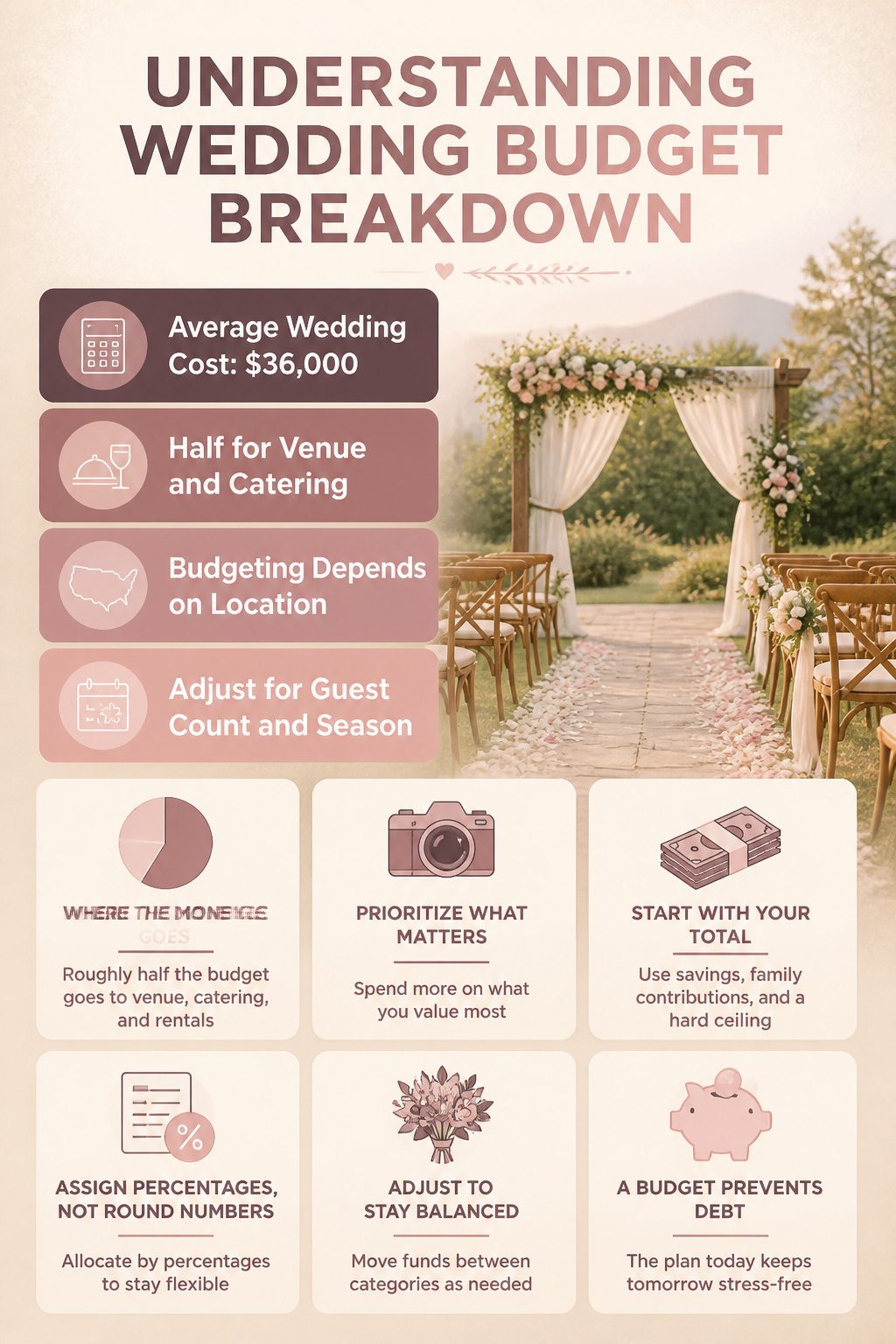
The average wedding in the United States in 2026 runs about $36,000, but that number is more of a benchmark than a target. Location shifts it hard: Rhode Island, New York, Massachusetts, and California push well above that line, while Utah, Kentucky, and Alaska sit comfortably below. The season, the guest count, and whether you want a seated dinner or a backyard gathering all bend the figure in their own directions.
The average cost of a wedding in the United States in 2026 is about $36,000. But remember: just because that number is the average, it doesn’t necessarily mean it is a realistic budget for you.
— Minted
What convinced me, reading through a dozen of these breakdowns, is that the total matters less than the split. Roughly half the budget goes to venue, catering, and rentals; the other half fragments across photography, flowers, attire, music, and the dozen small things that add up fast. Start with what you actually have: savings, family contributions, and a hard ceiling you will not cross. Then assign percentages, not wishful round numbers. If photography matters more than centerpieces, steal from the flowers column. The spreadsheet is not romantic, but it is what keeps the "budget wedding" from becoming a debt wedding.
2. Identify Priorities
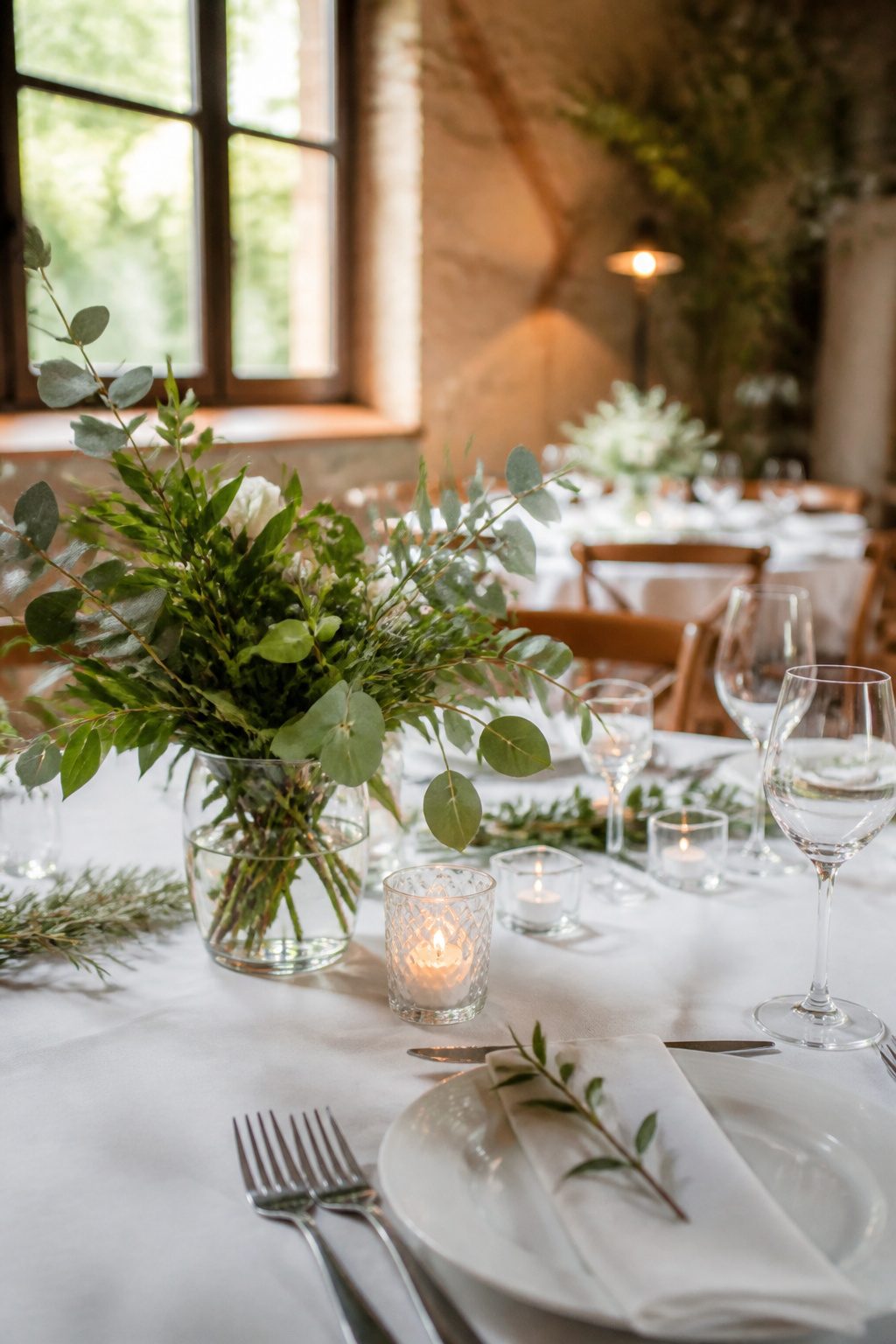
The first budget wedding I planned taught me the hard way that spreading money evenly across every category just makes everything feel thin. My cousin’s reception looked expensive because she poured most of her funds into a live band and genuinely good food, then used simple greenery and borrowed vases for the rest. Nobody left talking about the centerpieces.
Pick three non-negotiables and fund them fully. For most couples, the venue-catering-rentals block swallows roughly half the budget anyway, so that first priority often chooses itself. Photography runs about 12% and is worth the spend; it’s the only thing you keep once the night ends. Music sits around 7%, and a packed dance floor is what guests remember.
The trap is trying to trim every row equally. Cutting the 2% invitation budget to zero saves almost nothing. Shaving the 50% venue block by even 10% moves the total dramatically. WeddingWire’s 2025 data shows 74% of couples blow past their budgets, and that venue-and-catering block is usually why.
Zola’s 2026 survey found 60% of couples now say their biggest stress is managing real money against Pinterest boards. The disciplined move is reallocation, not adding funds. Decide what you’re actually copying from those posts, put money there, and scroll past the rest.
3. Trim the Guest List
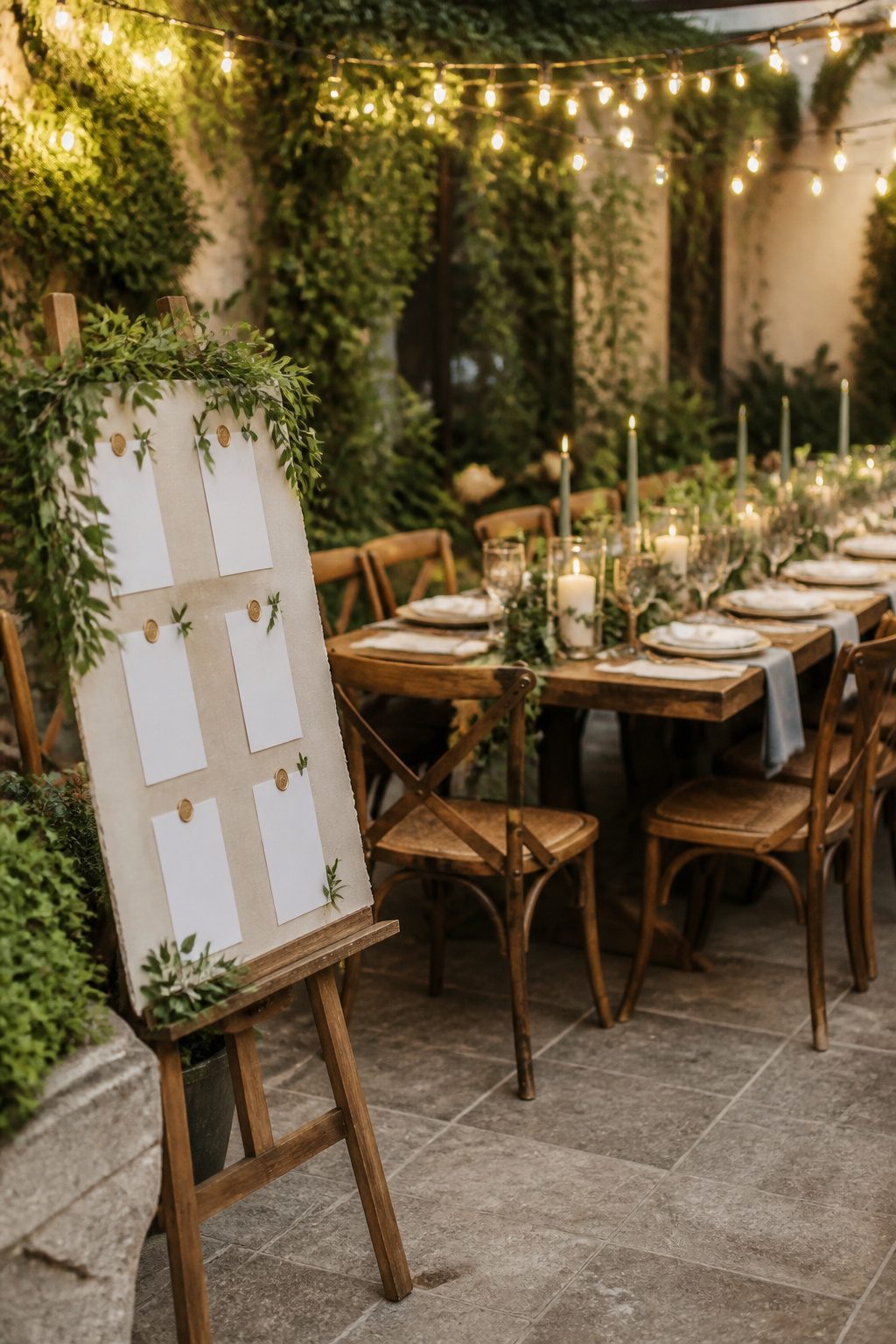
Guest count is the single most powerful number in a wedding budget. Catering, bar, rentals, cake, and favors all scale per head, so trimming the list drops a dozen costs at once. The lowest-spending weddings average 92 guests, while the highest-spending hit 141. That gap matters more than any vendor negotiation.
I started my own list by asking who I’d actually call on a hard day. The plus-ones of plus-ones, the coworkers I never see outside the office, the second cousins I’d struggle to name, those are where the budget quietly leaks. Cutting 10 to 20 names saves thousands on food, alcohol, and rentals alone.
A tighter list isn’t a sacrifice anymore. 40% of couples specifically scaled back guest counts against rising costs, and micro-weddings have grown from roughly 10% of weddings in 2013 to about 18% in 2024. The shift makes sense: fewer guests means spending more per person on the people who actually made the trip. The day feels more intimate because you’re actually spending time with everyone there, not rushing through a receiving line of strangers.
4. Choose an Affordable Venue
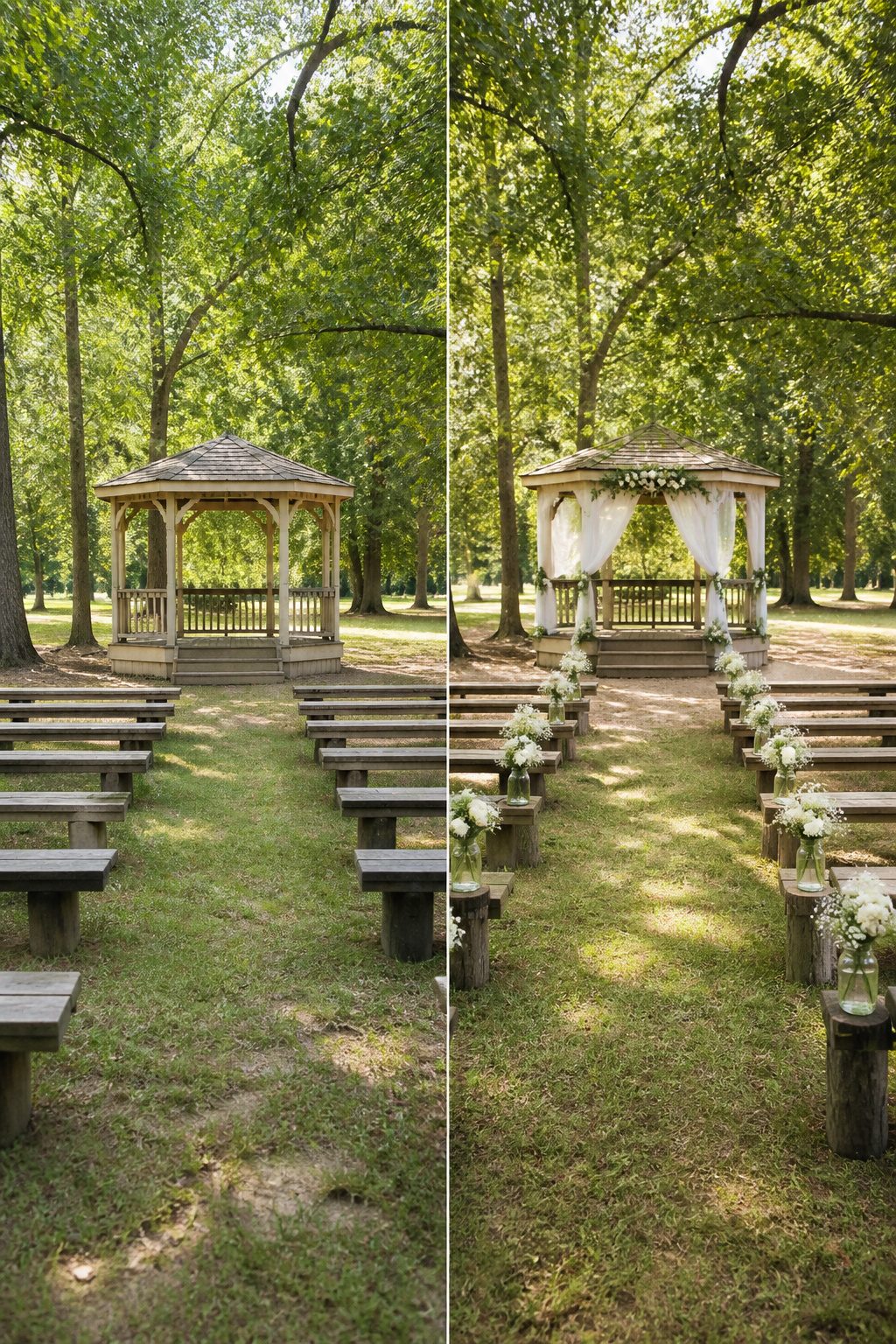
The typical wedding venue runs $6,900 to $10,300, which is why I spent the most time on this single line item when I was reading through budget breakdowns. Non-traditional spaces change that math entirely. A local park often asks only for a $100–$200 permit, and a family backyard cuts the rental fee to zero, though you will still need roughly $1,000–$3,000 for tents, lighting, and reliable setup. Community centers in some cities start near $1,500 for the day. Restaurants and breweries rarely charge a separate venue fee at all; you pay for the food and drinks, and a place with character already built in saves you decoration costs.
Timing matters as much as location. January weddings run about 9.4% below average cost, winter overall around 3% under. A Thursday drops you roughly 5.7% below peak pricing, and even Sunday saves about 1% against Saturday rates. The tradeoff is real: fewer guests can make a weekday work, and winter means planning for heaters and weather contingencies. But only about 23% of couples book November through March, which is exactly why those dates come discounted. You are buying when demand is quiet, not fighting for the same Saturday in June as everyone else.
5. Plan the Catering
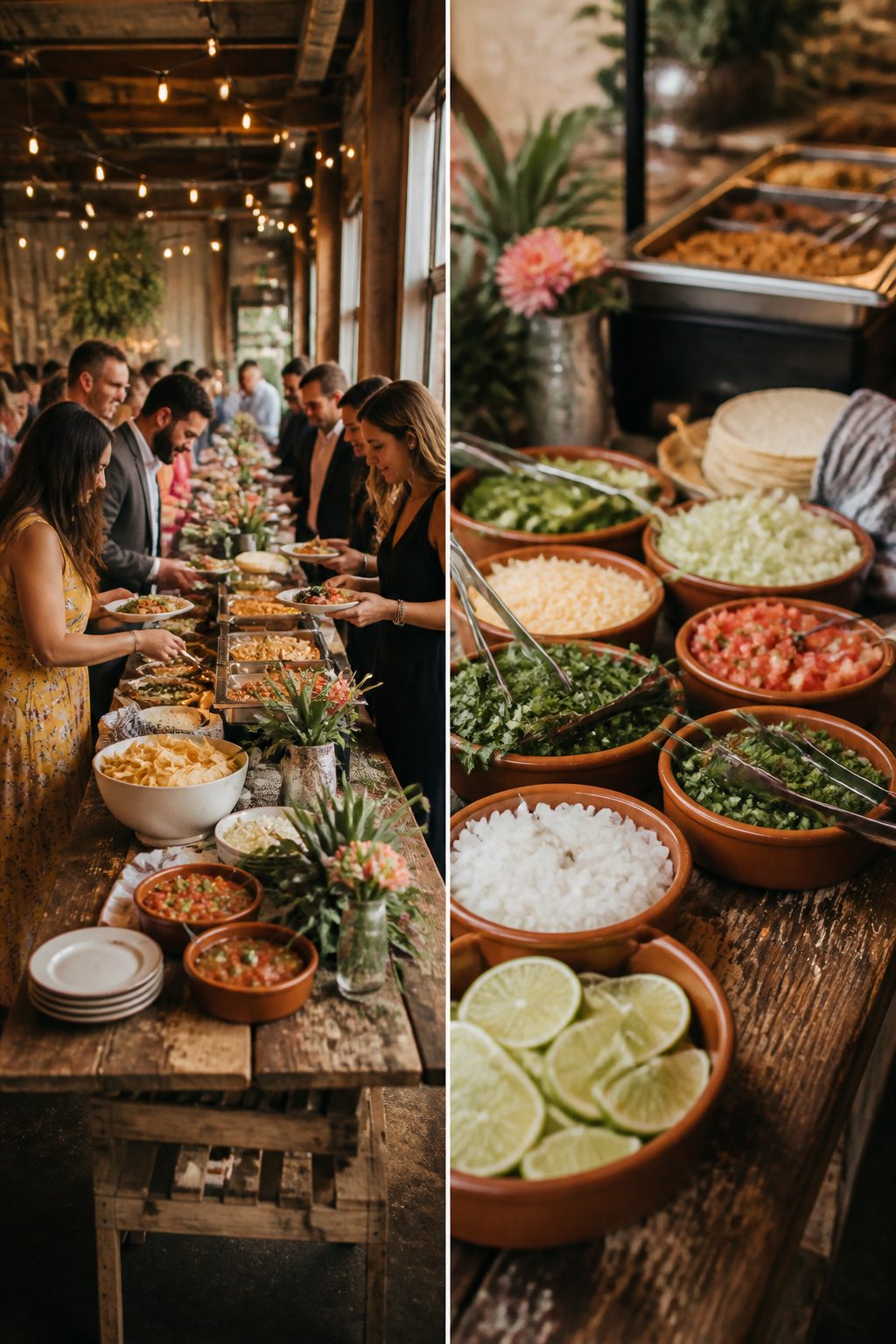
Full-service catering for fifty guests runs about $3,750, which is why the first thing to cut is the service itself. A food truck drops that to roughly $20–$40 per head, and guests remember the experience longer than they remember a plated chicken breast. Drop-off catering from a local restaurant lands in the middle at $12–$20 per person, no staff to tip. Buffets run $25–$50 per head, still well under white-tablecloth pricing, and family-style platters feel more generous, not less.
DIY stations stretch the dollar further. A taco bar feeds a hundred people for around $800 total. Pasta with build-your-own sauces, a BBQ spread with slaw and beans, or even a late-night pretzel bar instead of favors guests will leave behind: the format matters more than the food when it comes to what people actually talk about. Potlucks trade gifts for dishes and drop the bill to nearly zero, though you will want to supply the main protein yourself so the table does not end up all desserts.
6. Select Attire Wisely
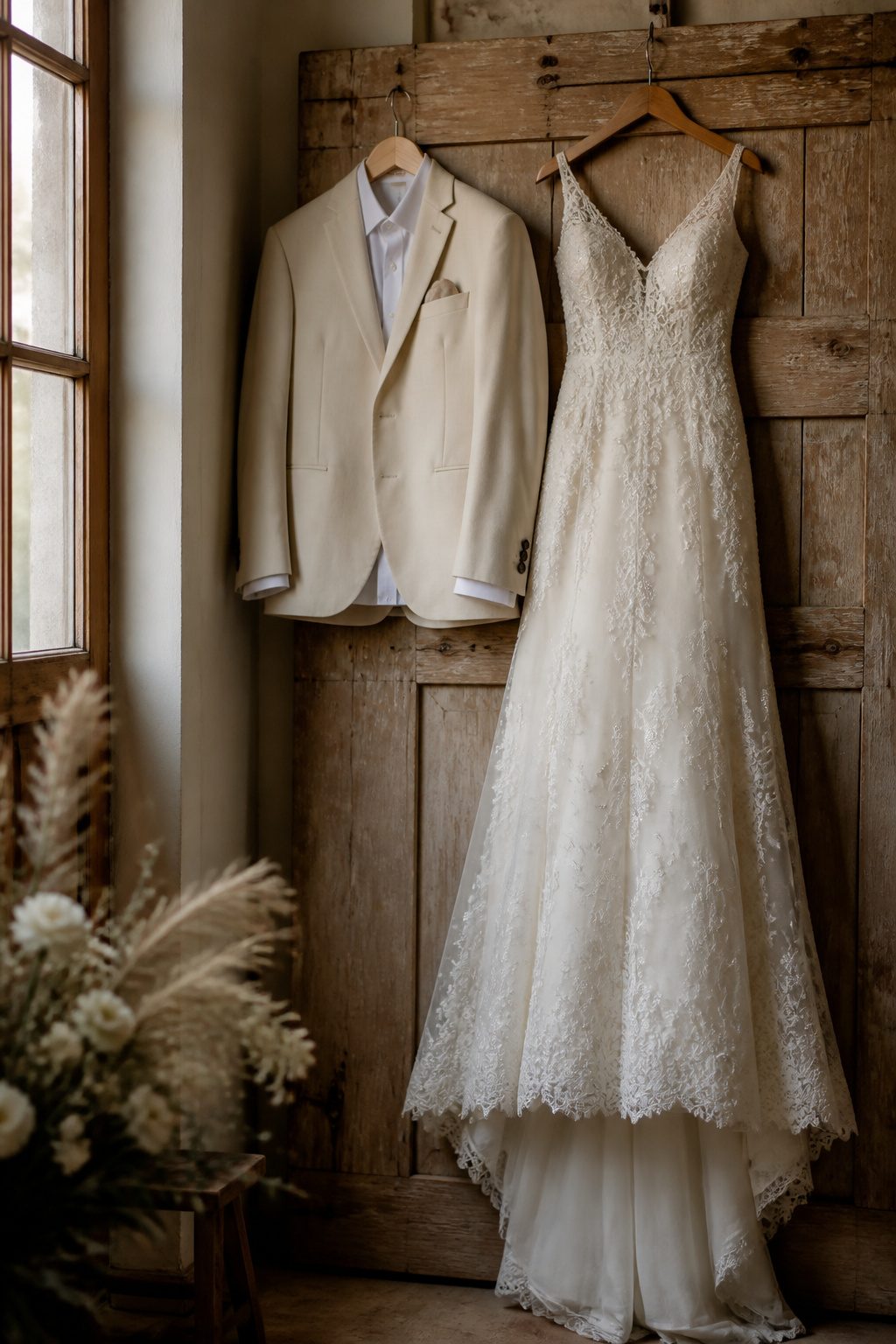
The average wedding dress costs around $1,800, which is enough to swallow most of a budget wedding’s clothing allowance in one purchase. Renting, buying secondhand, or choosing off-the-rack cuts that figure dramatically. Rental sites like Rent the Runway list designer gowns starting near $50, and you return the dress after the last dance. Secondhand marketplaces such as Nearly Newlywed and Still White sell pre-owned or sample gowns at deep discounts, sometimes never-worn. Department stores carry white dresses off-the-rack for under $200, often less on clearance, and bridal outlets like Luxe Redux move sample gowns at 10–90% off retail. David’s Bridal stocks hundreds under $500, while online shops like Azazie and Lulus run $200–$300 or lower. The same logic applies to suits and tuxedos: rent through Generation Tux or The Plunge, buy used, or grab something off-the-rack. What convinced me, reading through a dozen of these breakdowns, is that the money saved on a dress you wear once funds something guests actually remember.
7. DIY Where Possible

Some DIY projects save real money, and others quietly eat it. Paper goods are where the math actually works: printing your own table numbers or assembling favors a week ahead costs almost nothing and skips the markup. Perishable projects are the trap. Flowers, food, and anything refrigerated the night before belong to paid hands, not to a bride arranging centerpieces at midnight.
The wedding cake is where this tradeoff gets sharp. A bakery cake runs $700 to $1,100 on average, which is enough to make you consider a sheet-cake alternative or a home-kitchen experiment. A simple design with standard piping and one or two flavors is the only kind that stands a chance of beating the bakery on price. Once you add tiers, gold leaf, or multiple flavors, the ingredient list and the stress both balloon past what you saved.
Invitations split the same way. Digital printing at home or through a basic service keeps the budget under $200, which is where it sits as a percentage of most $10,000 weddings. Handmade letterpress or layered paper stock, though, costs more in materials and failed attempts than ordering would have. The rule is advance work with dry materials: yes. Day-of anything involving wilting, melting, or timing: pay someone else.
8. Hire a Photographer for Key Hours
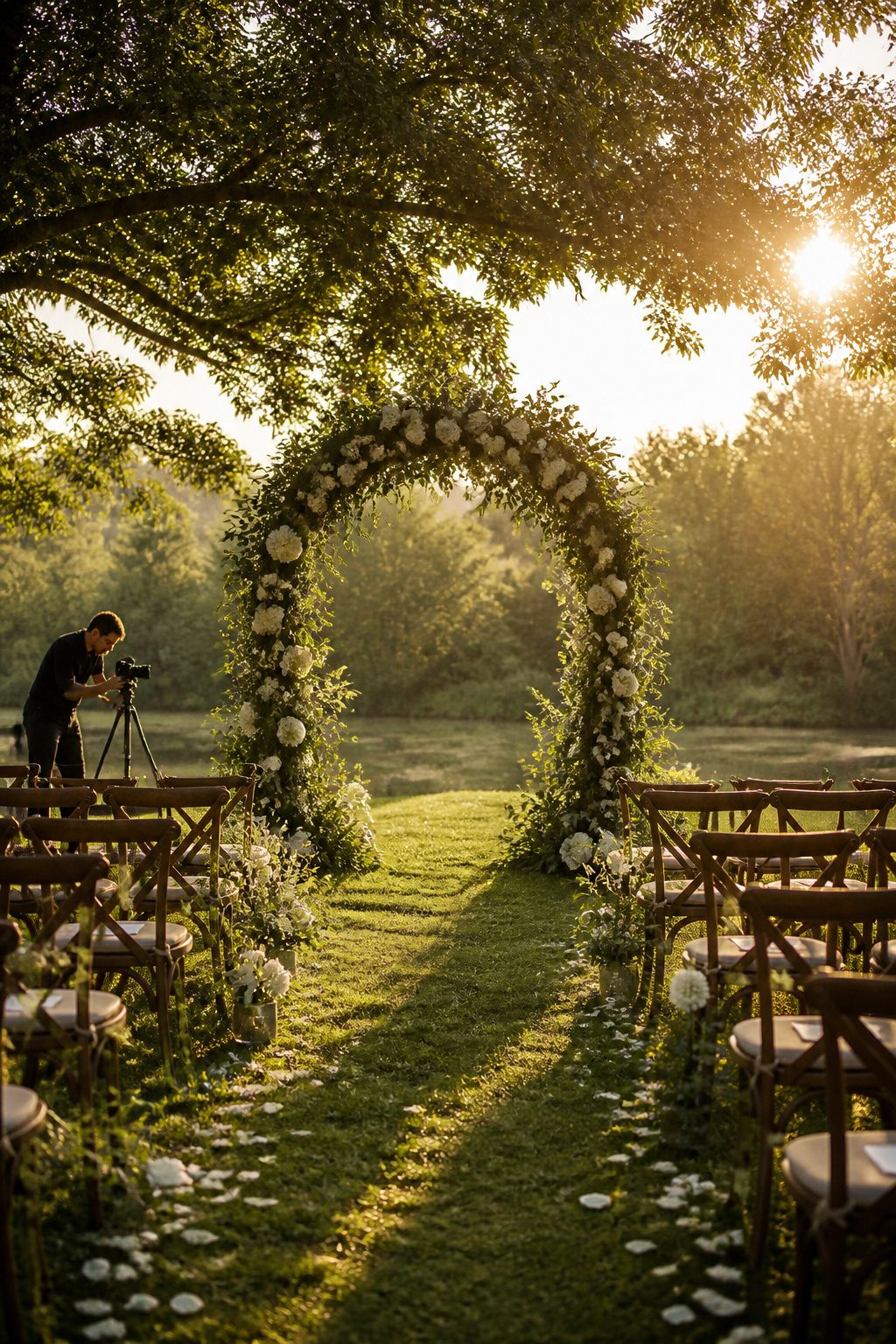
The average couple spends around $2,400 on wedding photography, but most of that bill comes from full-day coverage you may not actually need. For a budget wedding, the smarter move is booking a pro for the ceremony and the core reception moments only, then letting the late-night dancing stay in memory rather than on a memory card.
Start by mapping your day honestly. The getting-ready shots are nice to have, but the photos guests actually pull up years later are the vows, the family formals, the first dance, and the toasts. Those hours are what you pay for. Everything else, from pre-ceremony jitters to the last sparkler exit, is where the package price inflates without adding much you will revisit.
When you reach out, ask specifically for limited-hour packages or ceremony-plus-reception coverage. Many photographers already build these but do not advertise them. A student photographer, typically charging $50–$120 per hour, can cover those same key hours for closer to $1,000 total if you are comfortable with someone building their portfolio. Either way, name the moments that matter to you, get the rate locked to those hours, and do not let the conversation drift into add-ons you already decided to skip.
9. Use Digital Invitations

Printed invitations and postage run about $530 if a professional handles them, or roughly $150 in supplies if you DIY the printing, cardstock, and stamps yourself. Either way, digital invitations eliminate that entire line item and the stress of tracking down RSVPs through the mail.
Platforms like Greenvelope and Paperless Post offer designs that look far from cheap, with tracking built in so you know who opened what. Joy does this too, and it folds in guest-list management, including those plus-ones that always complicate the count. The RSVP process becomes automatic; guests click, you see it, no lost envelopes.
The risk is that digital feels cold. What fixes that is the same thing that fixes a paper invite: specifics. A line about the playlist you’re already arguing over, a note that the venue has a gravel path and the shoes to match. The medium is not the message; the detail is. If you are not ready to give up paper entirely, email your save-the-dates and send only the final invitation through the mail. You will still cut your stationery spending by more than half.
10. Plan for Unexpected Costs

A vendor contract that looked complete on first read still cost me an extra $340 the week before the wedding. Delivery fees, a cake-cutting charge I had missed, and a tip for the catering captain I had not budgeted for. That is the gap between a budget on paper and a budget that survives the event.
The fix is simpler than reading every line of fine print, though that helps too. Set aside 10% of the total budget as a dedicated miscellaneous reserve. Not a rounding error, not leftover cash, but a separate line item you treat as already spent. The sources that hold up under real planning all land on that same figure.
What actually drains it? Vendor tips run 5–15% depending on contract terms. Officiant fees sit around $350 unless a friend gets ordained online for less. Table and chair rentals for a backyard or park venue add $1.50–$6.00 per seat, and portable restrooms run $75–$150 each. Cleanup fees, corkage, marriage licenses, and local permits for noise or alcohol all queue up after the big deposits are paid.
The real protection is asking five questions before signing anything. Are setup and breakdown included? Are tables, chairs, linens, and dishware provided? Is there a service charge or corkage fee? Will I need generators, tents, or extra lighting? What are the rules on tips and delivery? Getting those answers in writing turns the 10% buffer from a hope into actual insurance.
Venue and Catering Comparison
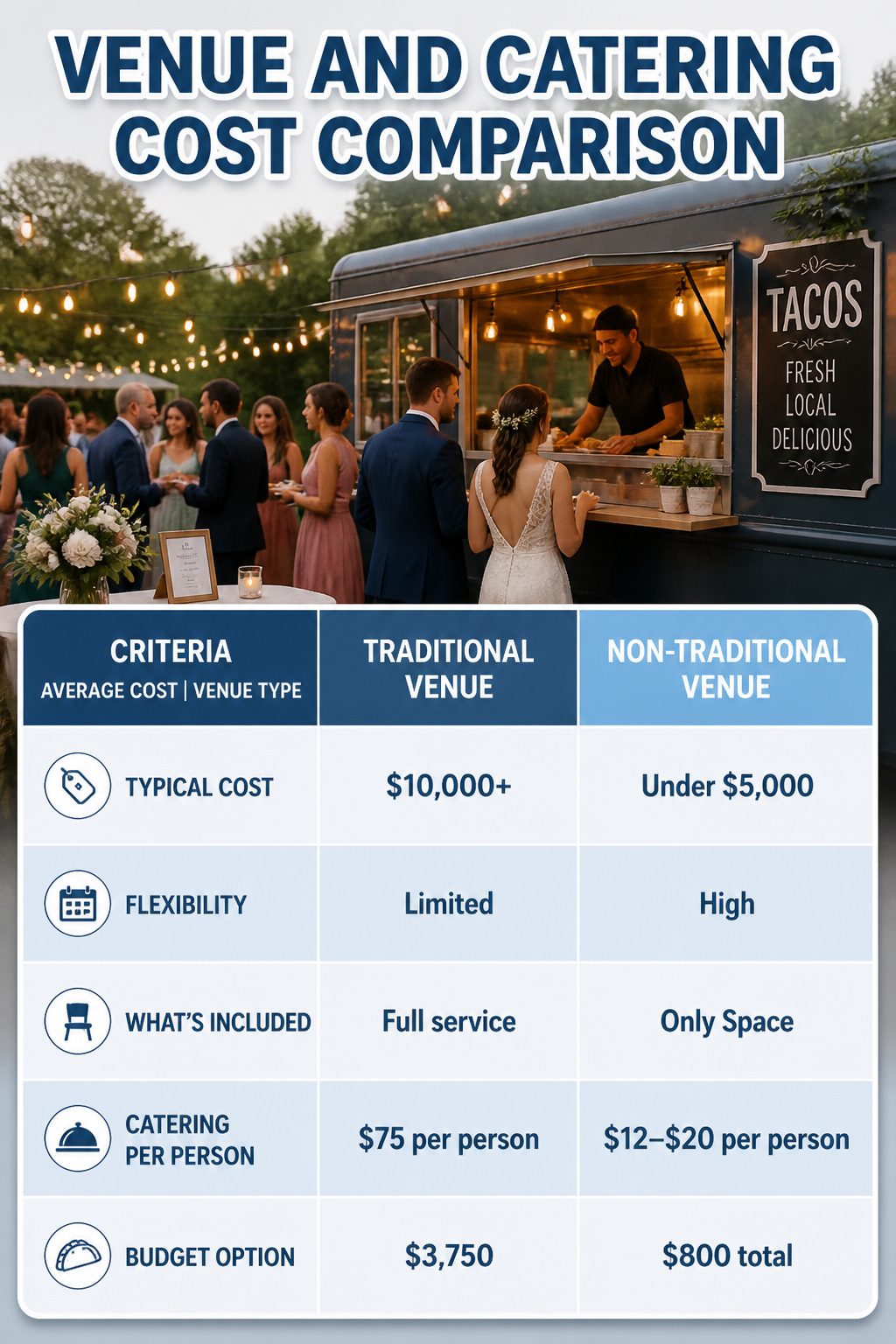
Traditional venues average $10,000 or more, which is why non-traditional spaces caught my attention when I was pricing options for a budget wedding. Parks, community halls, and even a friend’s property can drop that figure below $5,000, though you often trade built-in coordination for the savings.
| Traditional Venue | Non-Traditional Venue | |
|---|---|---|
| Typical cost | $10,000+ | Under $5,000 |
| Flexibility | Limited to vendor lists and time slots | High; bring your own vendors and schedule |
| What’s included | Tables, chairs, linens, sometimes catering coordination | Usually just the space; rentals and setup are on you |
Catering follows the same pattern. Full-service plated dinners run about $75 per person for a 50-guest wedding, which hits $3,750 before you have added anything else. Buffets drop that to roughly $25–$50 per guest with simpler setup needs. Food trucks land at $20–$40 per person and need only a parking spot and power, though lines can slow down the experience. Drop-off catering from a local restaurant runs $12–$20 per person and works best when the venue has someone to arrange the spread. The cheapest route I found: a taco bar feeding 100 people for approximately $800 total, or about $8 per head.
Attire Options Compared
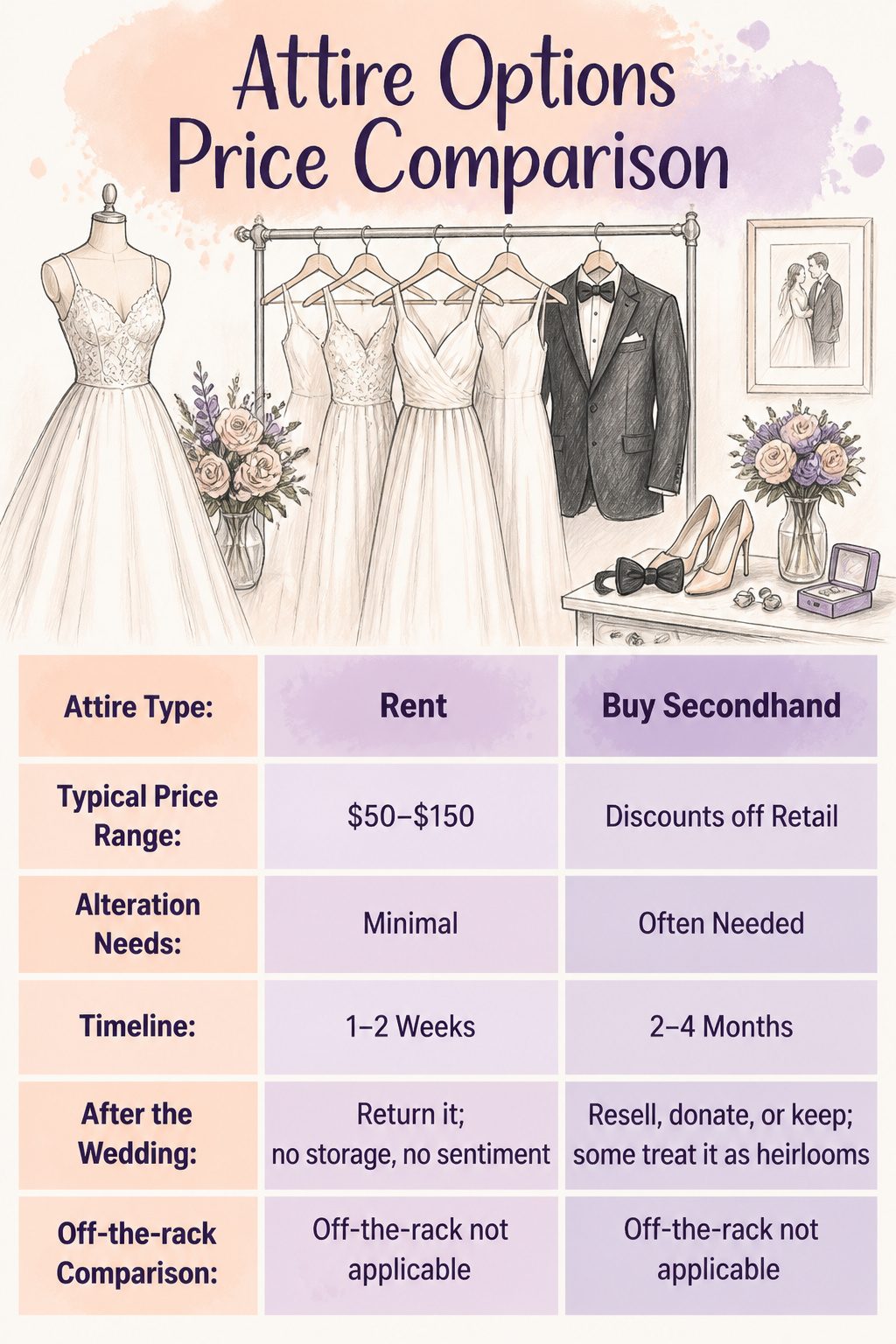
The average wedding dress runs about $1,900, and groom’s attire another $290, but those numbers collapse fast once you step outside the bridal salon. I spent an afternoon comparing three routes: renting, buying secondhand, and grabbing something off-the-rack. Each has a different rhythm of cost, timing, and what you’re stuck with afterward.
| Typical Price Range | Alteration Needs | Timeline | After the Wedding | |
|---|---|---|---|---|
| Rent | $50–$150 for gowns; tux rentals vary | Minimal; fit is standardized | 1–2 weeks ahead | Return it; no storage, no sentiment |
| Secondhand | Major discounts off retail; sample gowns 10–90% off | Often needed; prior wear or sample sizing | 2–4 months to search, buy, and alter | Resell, donate, or keep; some treat it as heirlooms |
| Off-the-rack | $50–$500 at department stores; $200–$600 at online shops like Azazie or Lulus | Usually required; bridal sizing differs from street clothes | 1–3 months; faster than custom bridal | Yours to keep, modify, or re-wear |
Renting wins on zero post-wedding clutter, which matters if your closet is already full and you are not sentimental. Secondhand demands the longest runway but lands you a designer label at a fraction; sites like Nearly Newlywed or Still White carry gowns that were worn once, or never. Off-the-rack from Lulus or Nordstrom is the fastest path and the easiest to re-wear as a white summer dress later, though the fabric and cut will read "nice party" rather than "bridal fantasy."
Seasonal and Weekday Savings
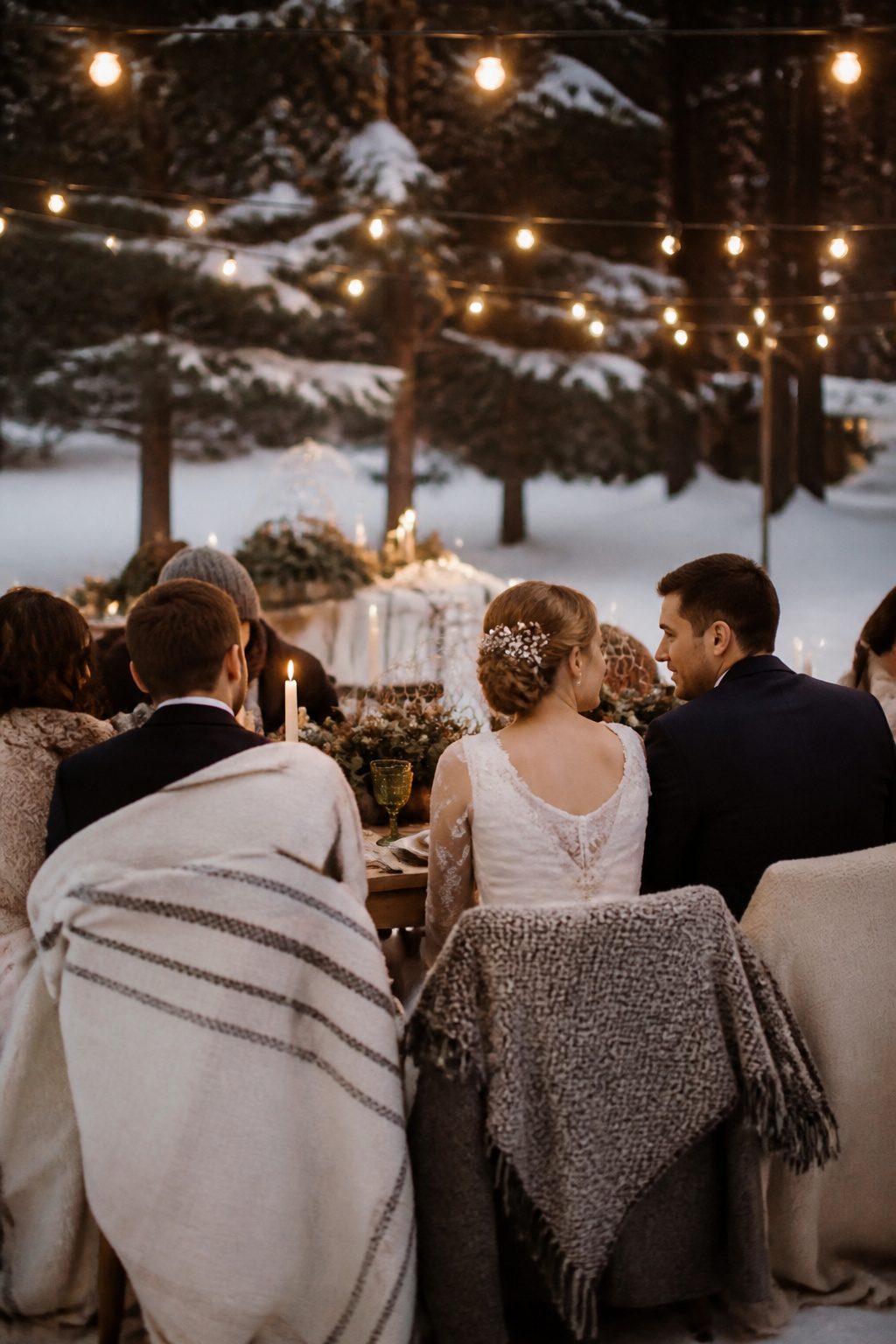
January weddings run about 9.4% below the national average, making it the single cheapest month to book. Winter overall sits roughly 3% under average pricing, and only about 23% of couples marry from November through March, which is exactly why venues get flexible. A Thursday date drops costs another 5.7% below average, while Sunday saves about 1%. Saturday and Friday remain the priciest and most booked-up days.
The real money is in what venues do not advertise. Their slowest dates, leftover from cancellations or simply never reserved, often carry steeper cuts than the public calendar shows. Calling and asking directly about "any open dates in the next few months" gets you numbers the website will not list. One couple saved around $3,000 just by switching from Saturday to Thursday.
Ask about unadvertised winter or weekday openings before you settle on a published package. Photographers, florists, and DJs negotiate more freely when their calendars are empty, and top venues that need 18–24 months notice for a June Saturday might fit you in six weeks out come February. The tradeoff is real: weekday work schedules thin attendance, and winter weather needs a backup plan. Skip Valentine’s Day or New Year’s Eve though; those spike demand and erase the off-peak discount entirely.
Borrowed and Meaningful Touches
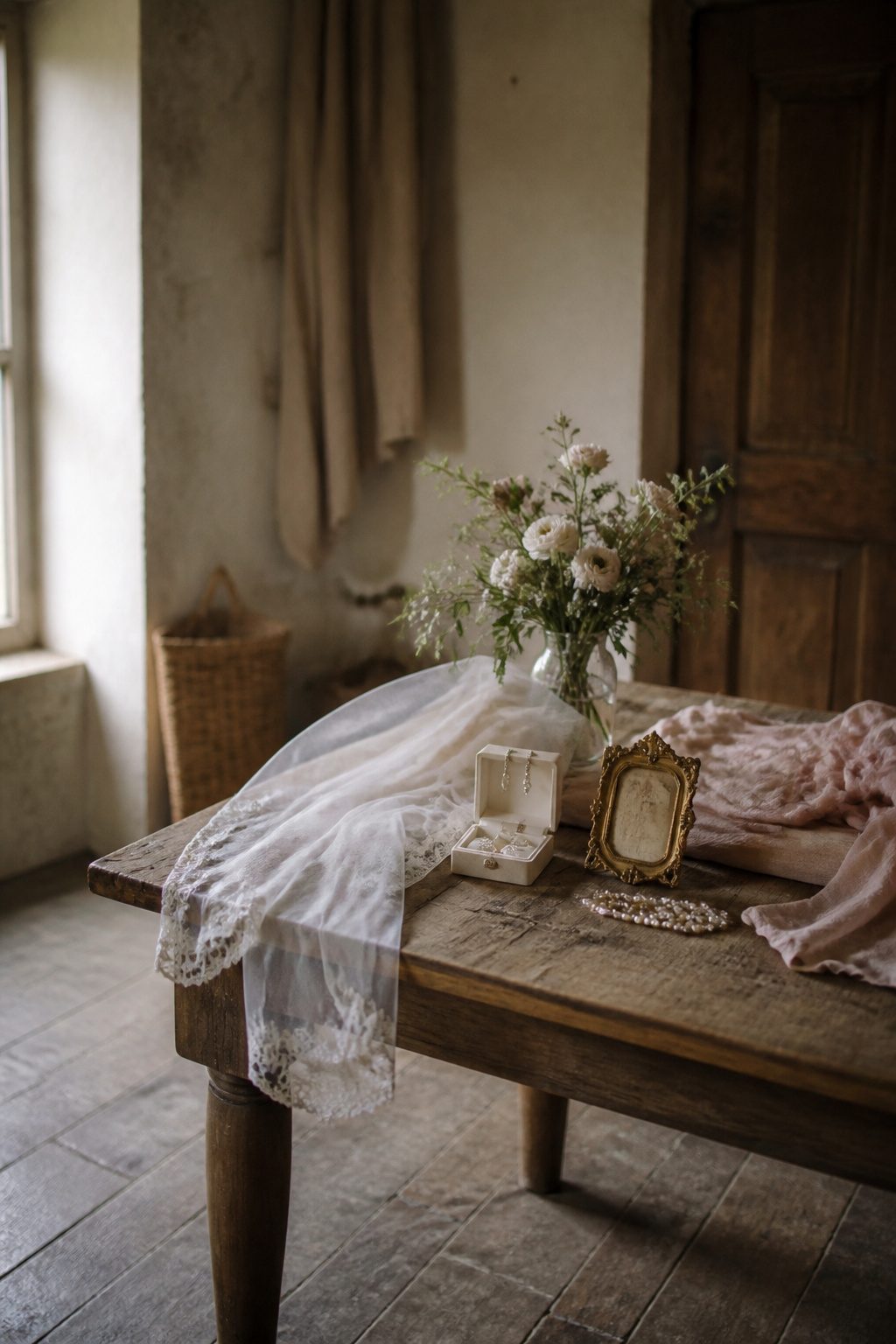
Borrowed pieces carry more weight than rented ones. My sister’s veil, my grandmother’s pearl pin, a friend’s barely-worn heels: each saved me roughly $150–$400 in accessory costs and checked the "something borrowed" box without trying. The same logic stretches to the room itself. Mismatched vintage glasses, a woven basket for programs, porcelain dishes from my aunt’s cabinet: these objects have history baked in, which no rental warehouse replicates. Do not lend anything you cannot afford to lose, though. Things break and wander off at weddings; sentimental value is the opposite of replaceable.
For favors, skip the Jordan almonds entirely. A single charitable donation on behalf of all guests, set at an amount you actually want to spend, replaces the assembly-line trinket with something that matters to you. The tax write-off is a side benefit, not the point. The point is that guests remember a cause you chose far longer than they remember a candle or a cookie.
Entertainment Without a DJ
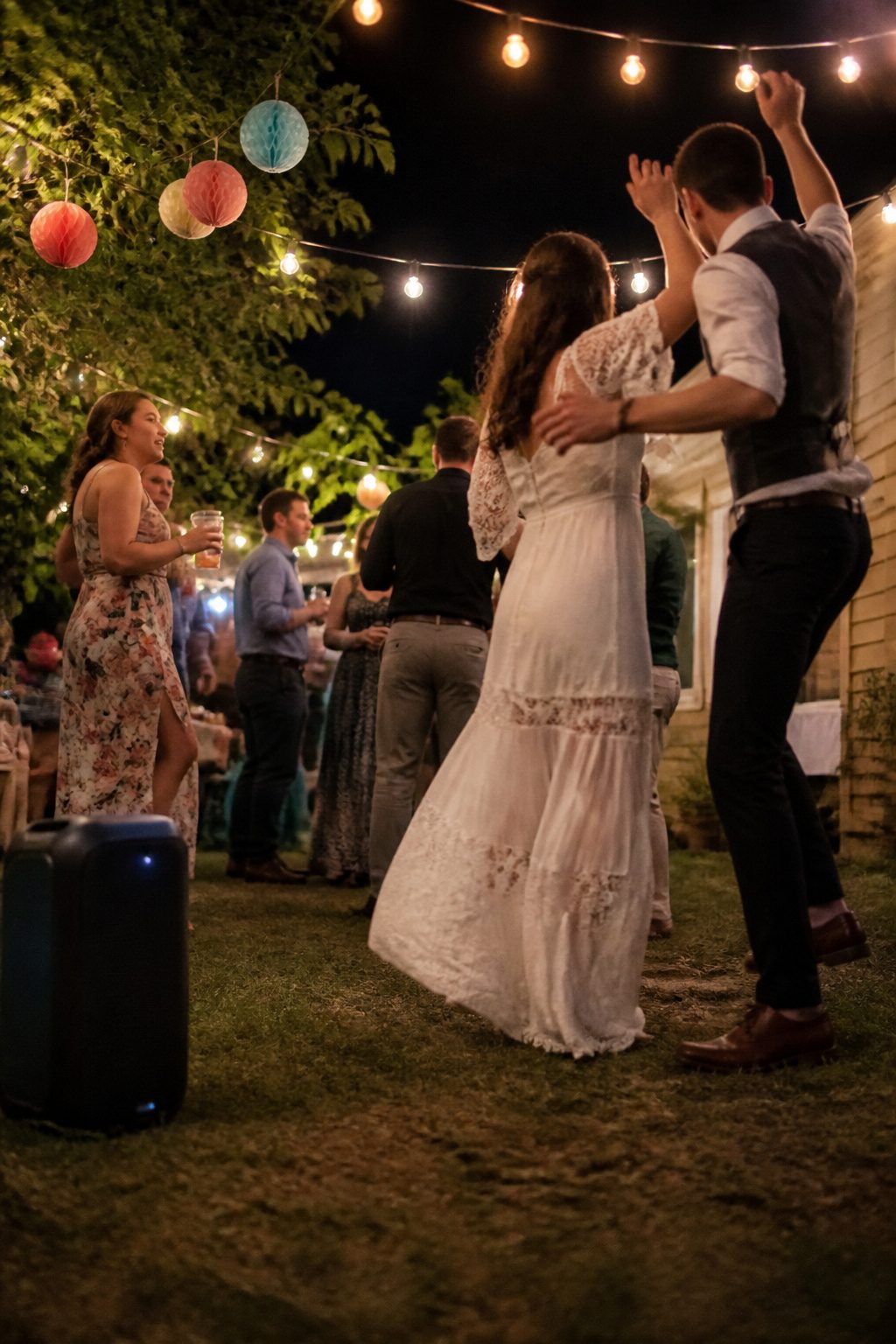
A full DJ package runs about $1,400 on average, and live bands climb closer to $4,300. For a budget wedding, that money usually belongs elsewhere.
DIY playlists cut the cost to a Spotify Premium subscription and a Bluetooth speaker or two. The trick is downloading the tracks beforehand so ads and buffering don’t kill the mood mid-toast. Assign a friend to handle announcements and keep the phone charged.
Local musicians through gig-booking sites are another middle path. Solo acts on Thumbtack typically run $100–$300 per hour, which beats a DJ package for shorter receptions. Gigsalad lists wedding bands starting around $850 for four hours, and DJs there average $400–$600 for the same block. The Bash books DJs closer to $115 an hour if you want someone to read the room without the full production.
Before committing either way, check what the venue already has. A built-in sound system saves you from renting speakers and mixers. If the space has nothing, factor rental gear into the math and test it the day before. One backup copy of the playlist, stored on a second device, has saved more than one reception when the primary phone took a dip in someone’s drink.
Frequently Asked Questions
How do you have a budget wedding without it looking cheap?
Pick a venue with built-in character so you decorate less, move to a weekday or off-season date, and trim the guest list. Then pour the savings into food, bar, and music: the three things guests actually notice. A budget wedding looks expensive when money is concentrated, not spread thin across every detail.
What is the cheapest month to get married?
January is the single cheapest month, running about 9.4% below the national average wedding cost. Winter overall sits roughly 3% under average, and only about 23% of couples book November through March, which is why venues discount those dates.
Is it cheaper to get married on a weekday than a Saturday?
Yes. Thursday weddings cost about 5.7% below average, Sunday about 1% below, while Saturday and Friday remain the priciest and most booked-up days. One couple saved around $3,000 just by switching from Saturday to Thursday.
How can I make my wedding look expensive on a budget?
Reuse your ceremony florals at the reception and choose a venue whose architecture already matches your vision so you buy fewer decorations. Redirecting even small decoration savings into better food or music does more for the guest experience than scattered upgrades.
Is an all-inclusive wedding venue cheaper than booking vendors separately?
Often, once you total every line. A low rental fee at a bare venue rarely stays low after adding chairs, linens, lighting, a licensed bartender, and setup labor. Run the all-in math before comparing, since 74% of couples still go over budget.