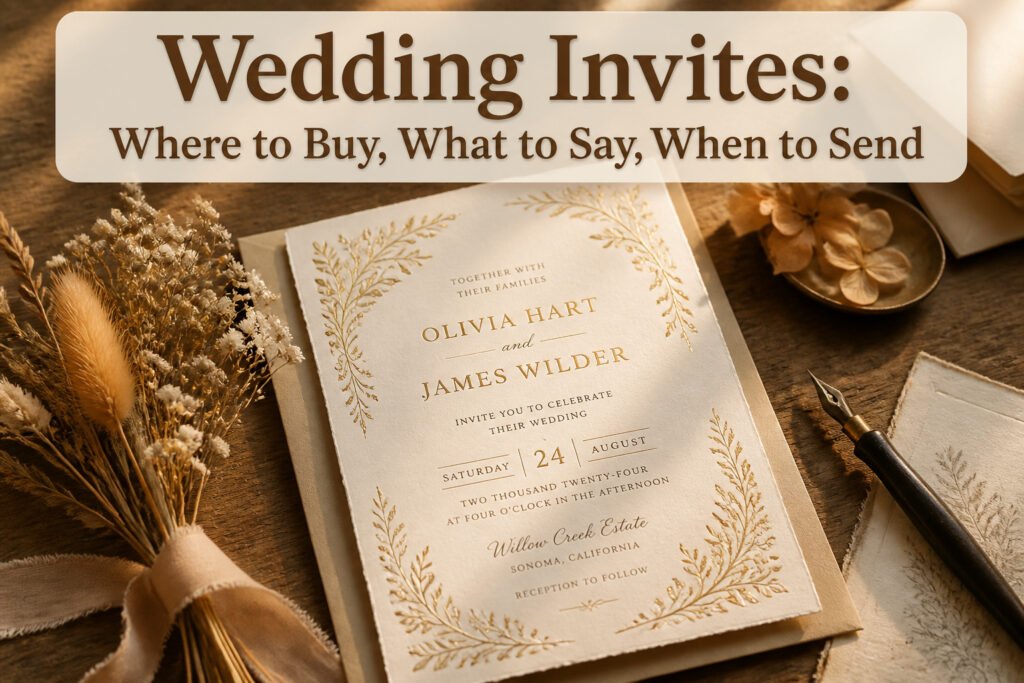
Wedding invites are the first thing guests hold before they know anything else about your day, and the gap between what you see on screen and what prints can cost you a reprint or an awkward phone call. The cheapest real customization starts around $1 per card at Vistaprint, but foil that looked subtle in the design tool turns flashy under reception light once it ships.
Minted
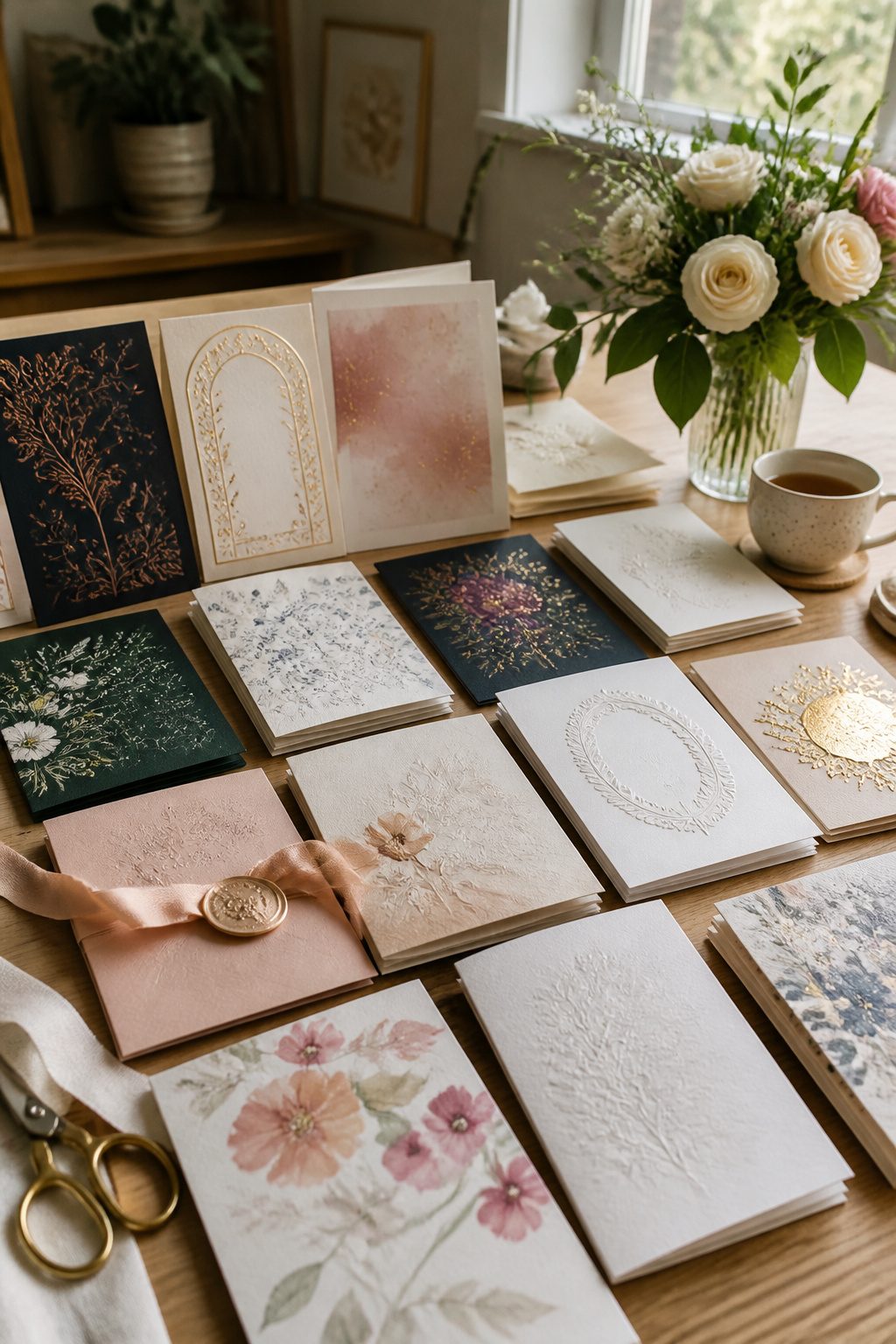
Minted runs on a designer marketplace model, which means the wedding invites come from independent artists competing in open challenges rather than from a single in-house team. That crowdsourced approach shows in the breadth of styles, from watercolor florals to modern typography, and in the fact that you can work directly with those artists if you want something fully custom.
The customization goes deep. Paper thickness, silhouette, color palette, and shimmer level all move at your direction, plus foil finishes and a full suite of matching day-of stationery, RSVP cards, belly bands, programs, and place cards. A hundred classic-size invitations start at $2.34 each, with petite sizing dropping to $2.00 at that same quantity. One stack of 100 runs under $250 total, which is where the math landed when I priced my own set last spring.
Minted also ships a free sample kit so you can feel the paper weights and see the foil in person before committing. The free recipient addressing on envelopes saves a hand-cramping evening, and a stationery expert will walk you through the design if you book the consultation. For couples who want the look of a custom designer without the custom designer invoice, the tradeoff is worth it.
Basic Invite
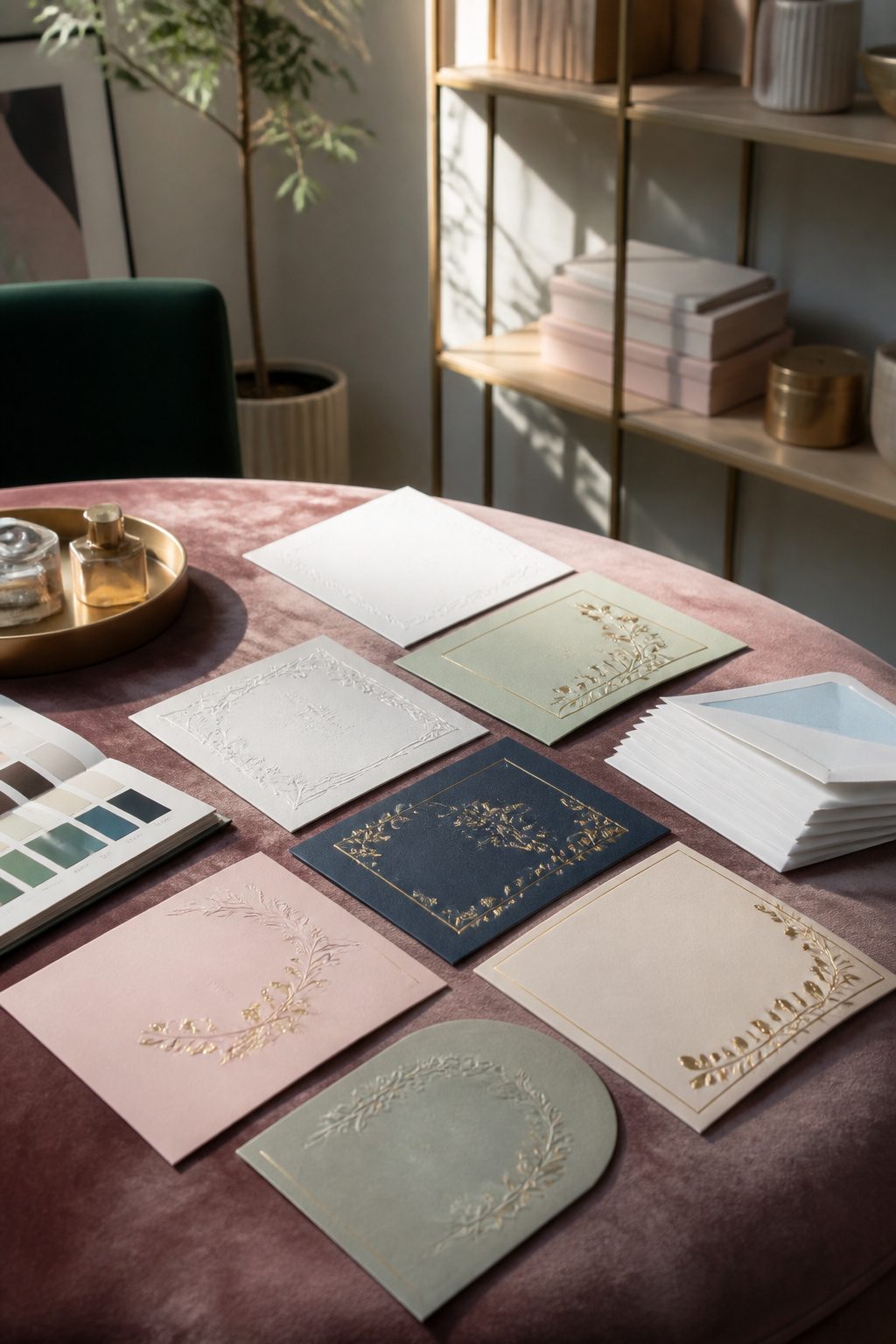
Basic Invite built its reputation on a color system that actually works for brides who know exactly what shade their bridesmaids’ dresses are. The company runs more than 180 different colors through its customization engine, and the match is precise enough that the invitation won’t clash with the rest of the paper goods. Raised foil adds texture without reading as flashy: gold, rose gold, or silver sit slightly above the card surface, and you can foil almost any element, including the couple’s names. Order a custom sample first, because the effect changes under different light.
The envelopes are peel-and-seal, which sounds minor until you’ve licked seventy of them. No glue stick, no wax, no second envelope to line. Pricing drops as the order grows, the way most printers structure it, though the exact per-card rate depends on quantity and format. The petite size starts lower than the classic, but the difference narrows at higher counts.
Vistaprint
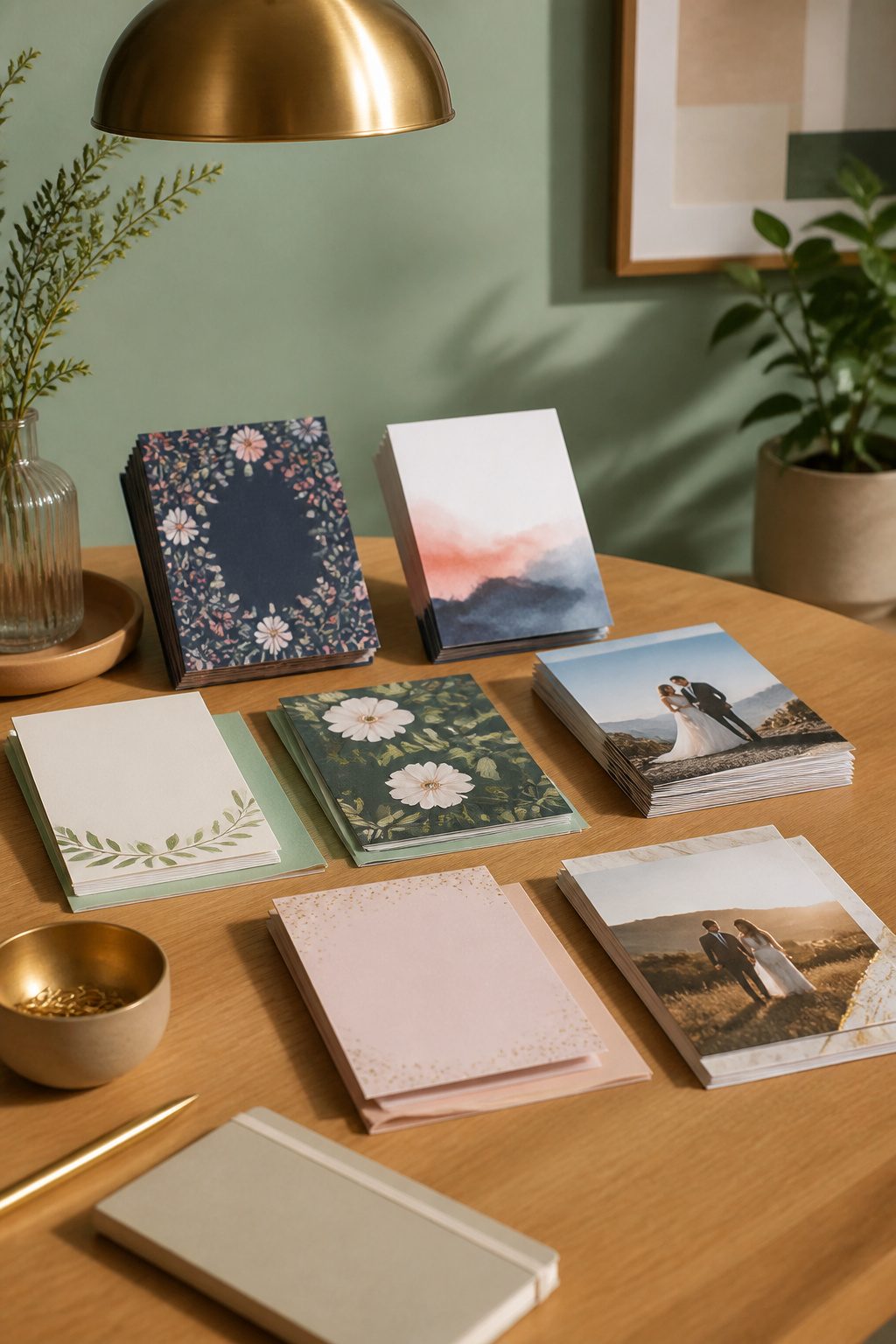
Vistaprint built its name on business cards, but the wedding invitation line is where that same $1 starting price actually buys you design control, not just a template with your names dropped in. The editor lets you swap fonts, colors, and photos until the card looks like it came from a pricier shop. I spent time clicking through the preview on a friend’s recommendation last spring, and the sample arrived thick enough that she didn’t feel the need to apologize for going budget.
At $2 for the classic styles Vogue featured, Vistaprint sits at the floor of what I’d call real customization. You can get cheaper, but usually that means accepting whatever layout the printer picked. Here you adjust the photo placement, the ink color, the wording spacing. Matching RSVPs and thank-you cards come in the same design, which keeps the suite from looking cobbled together.
The tradeoff is paper feel. The stock is fine, not memorable. For a casual outdoor wedding or a big guest list where quantity matters more than heirloom quality, that equation usually works. For fifty formal seated dinners, you might notice the difference beside a letterpressed competitor. Most couples won’t, and the money saved covers a better photographer or an extra hour of open bar.
Zola
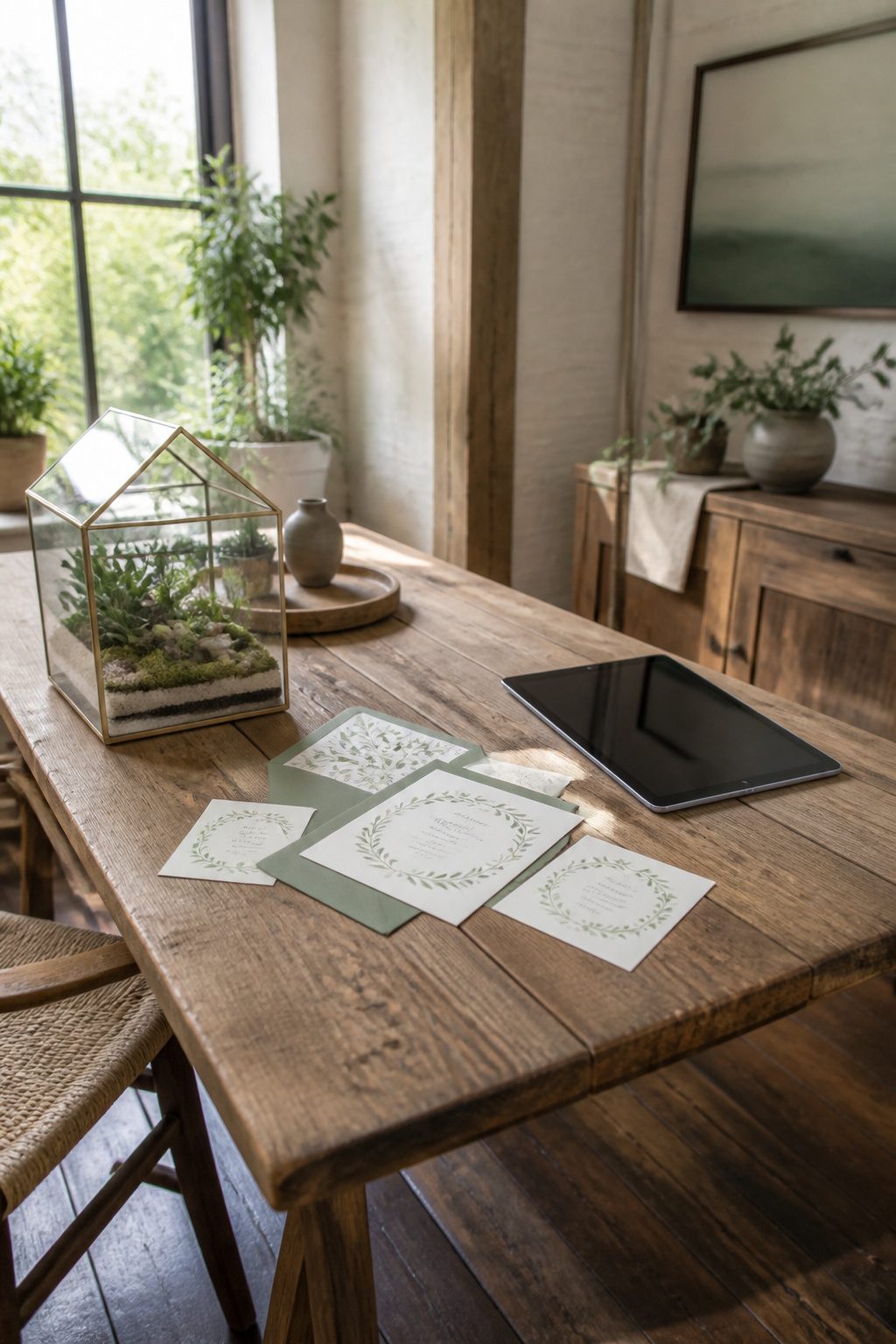
Zola built its reputation as a one-stop wedding planning shop, and the invitation side of the business benefits from that same integrated approach. Free matching envelopes ship with every order, a perk that sounds small until you price it elsewhere. Minted includes a complementary outer envelope too, but charges extra for an inner envelope or a full suite upgrade. Zola folds both the matching envelope and shipping into the base cost, which keeps the math simpler when you are already juggling venue deposits and catering quotes.
The real draw, though, is how the invitations talk to everything else on the platform. Guest list changes in the planning tool flow straight into the invitation dashboard, and RSVP data lands back in the same registry and seating chart workflow. For couples who want one login and one credit card charge instead of five, that coordination matters more than paper weight or foil options. The designs range from outdoor casual to black-tie formal, so the aesthetic coverage is there, but the practical win is time saved on data entry.
Etsy
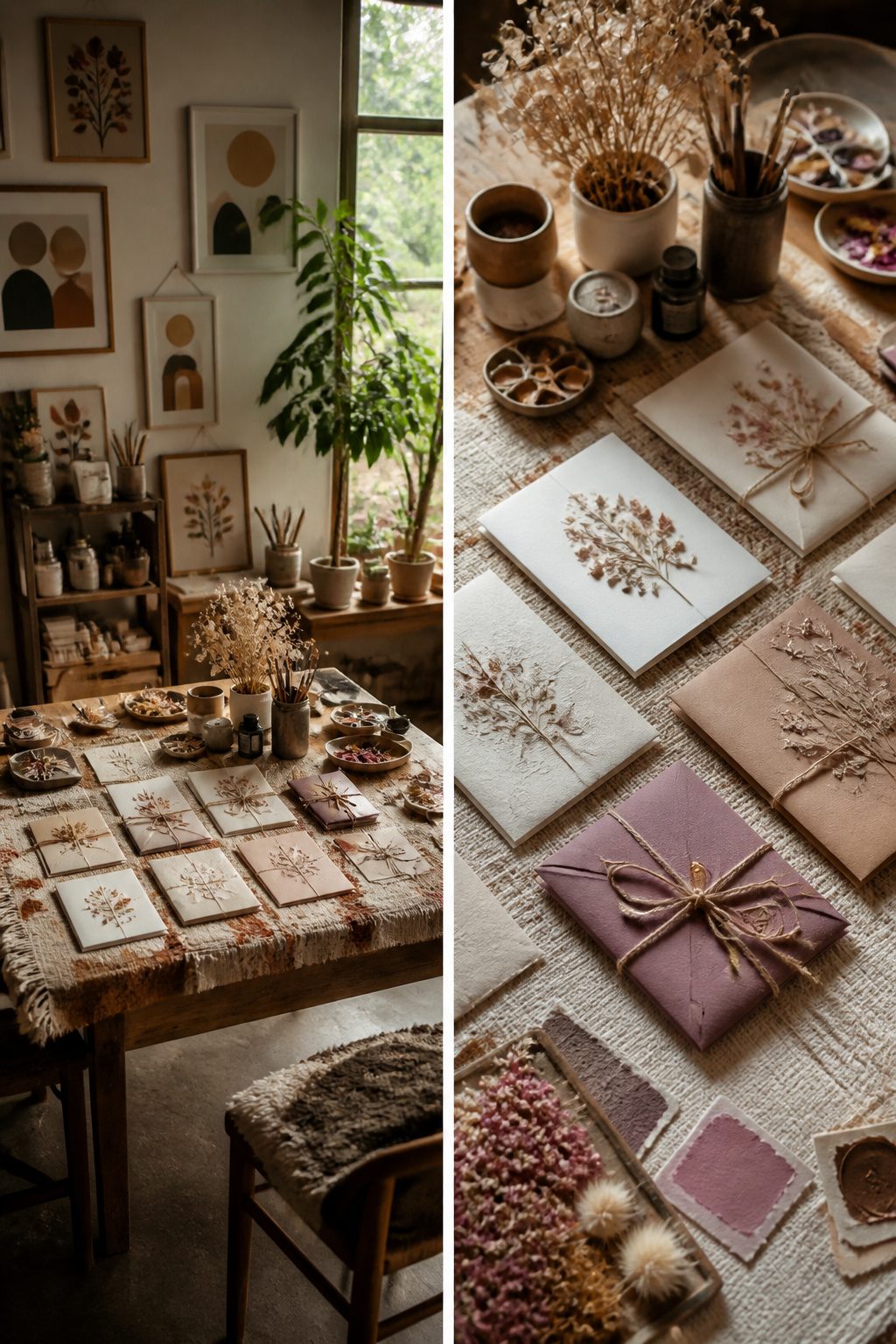
Etsy sits somewhere between a marketplace and a rabbit hole. You will find boho flower-embellished paper suites and acrylic invitations etched in gold, each one tied to a single maker working out of a spare room or a studio apartment. That direct line to the creator is the draw, and it is also the risk.
I ordered a sample set last spring that arrived with the RSVP card printed in the wrong font. The seller fixed it, but only after a three-day exchange that pushed my proofing timeline by a week. Budget two extra weeks for back-and-forth with any Etsy seller, because the same independence that produces those unique designs also means no standardized proofing system. One shop sends a PDF within 24 hours; another takes four days to respond.
The variability cuts both ways. You are not getting a template tweaked by an algorithm. You are getting a human who might hand-watercolor your envelope liners or might forget to attach the file. Check recent reviews for turnaround speed, not just star ratings, and order a physical sample before committing to the full run. The $20 to $40 that costs is cheaper than reprinting 150 invites because the foil weight looked different in person than it did on screen.
Papier
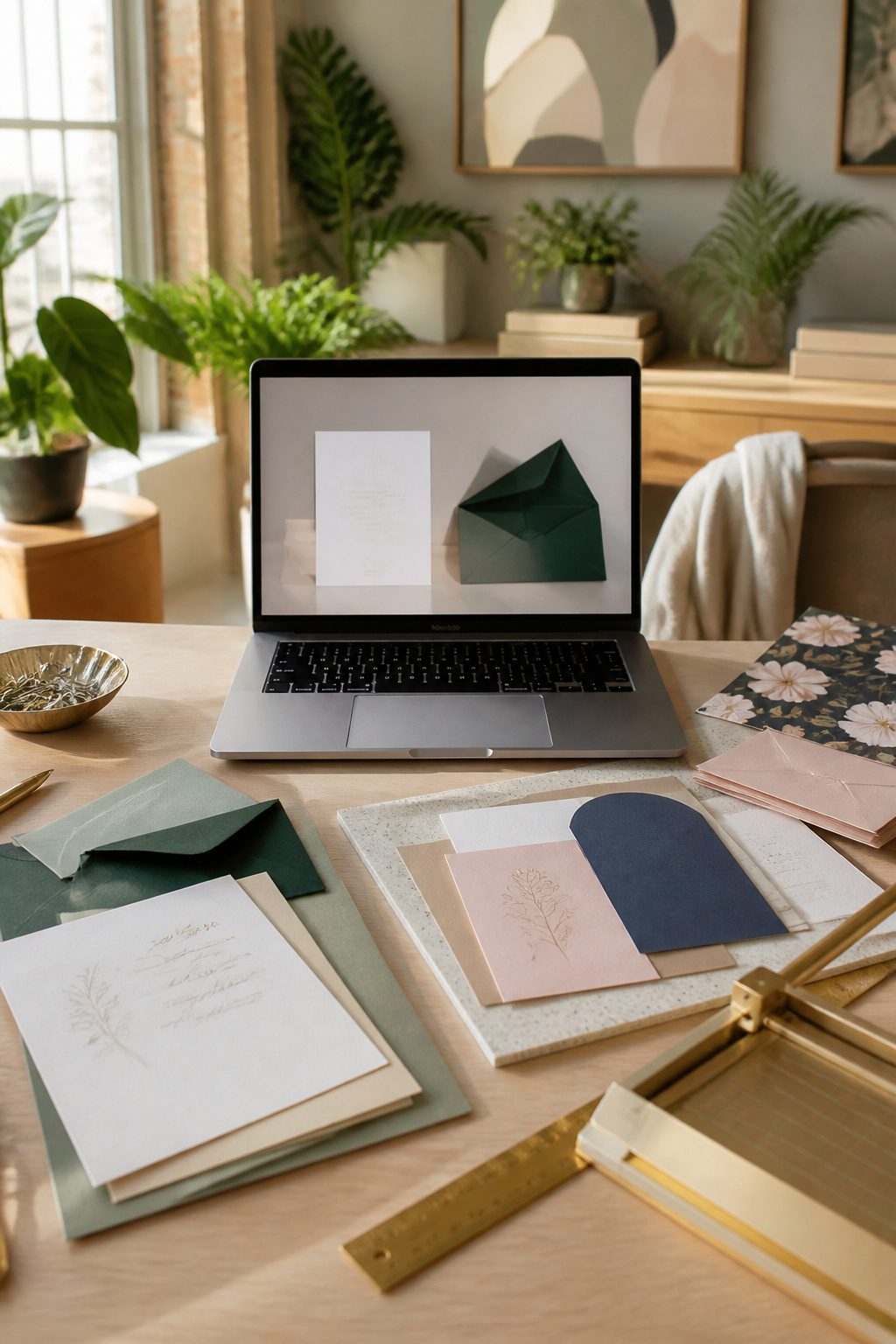
Papier sits in a useful middle space between the full custom route and the template-heavy giants. Their wedding invite collection leans stylish and modern, with a upload-your-own-design feature that matters more than it first sounds: couples who commission an illustrator or already have a finished design can skip the platform’s templates entirely and print through Papier’s system instead.
The turnaround is quick, which helps when you’re running behind on the timeline this article covers elsewhere. You won’t get the hand-holding of a Minted consultation or the one-of-one bespoke work of an Etsy artist, but you also avoid wading through thousands of near-identical layouts. The upload option is the differentiator here. If you already have a design in hand, Papier becomes a printer with good paper stock rather than a design shop you have to fight against.
Evite
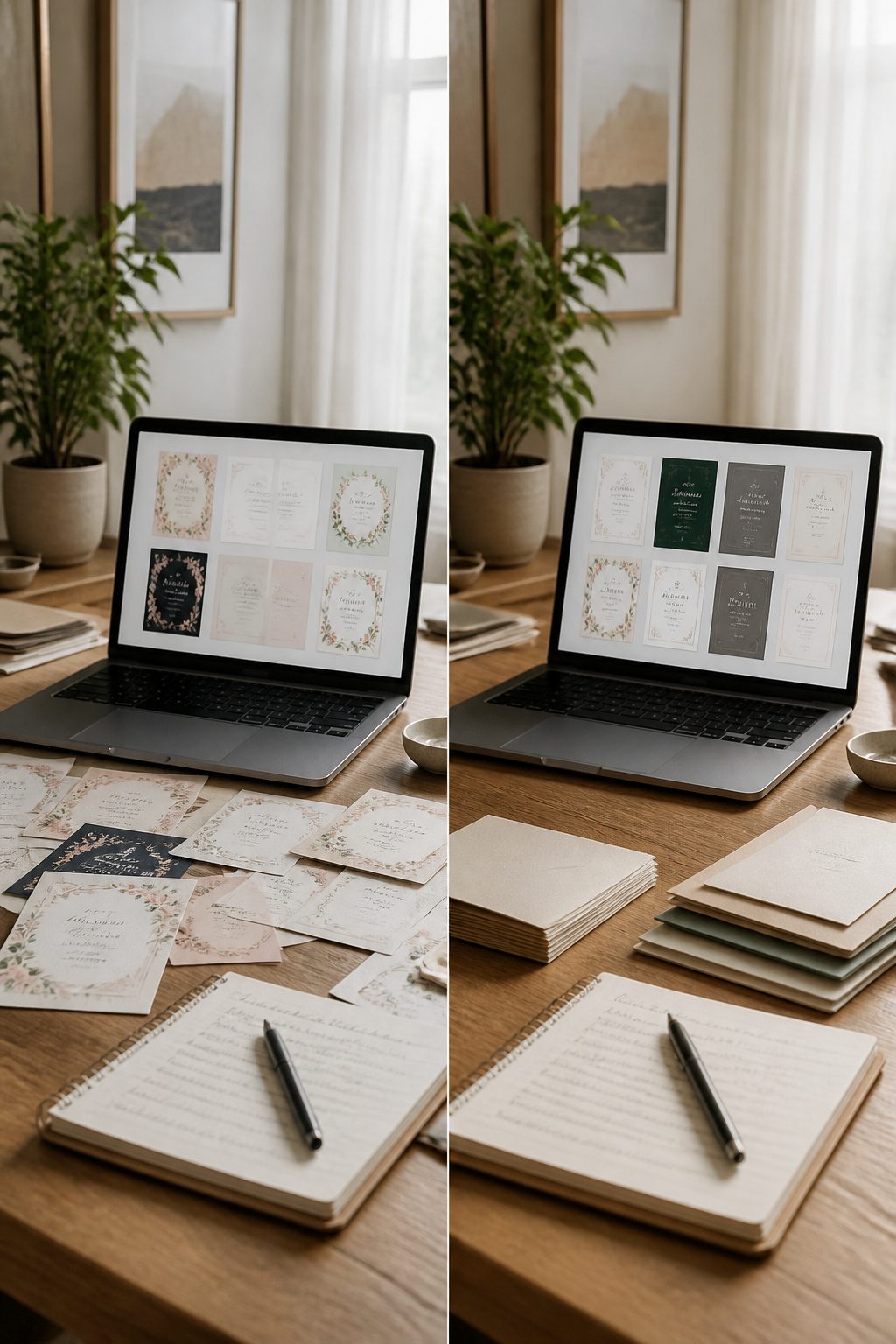
Digital wedding invites through Evite land somewhere between convenience and polish, depending on which tier you choose. The free templates cover the basics: pick a design, add your details, set an RSVP deadline, and track responses without chasing guests down for replies. The premium designs are where things get interesting. These come with digital colored envelopes, patterned liners, customizable stamps, and no ads, and they actually look like traditional printed invitations you’d receive in the mail. Prices scale with your guest list size, so a small wedding keeps the cost minimal while a larger one still runs cheaper than paper.
The real advantage shows up for anyone juggling multiple events. Evite Pro offers unlimited, ad-free custom invitations across engagement parties, showers, rehearsals, and the reception itself, all drawn from the same wedding collections so nothing clashes.
Where digital still falls short is in the keeping. A printed invitation becomes a bookmark, a pressed flower, a thing. A digital one disappears after the date passes. For guests who save these things, or for weddings where the paper itself sets the tone, that absence matters. The RSVP tracking wins on practicality; the permanence loses to paper every time.
Paperless Post
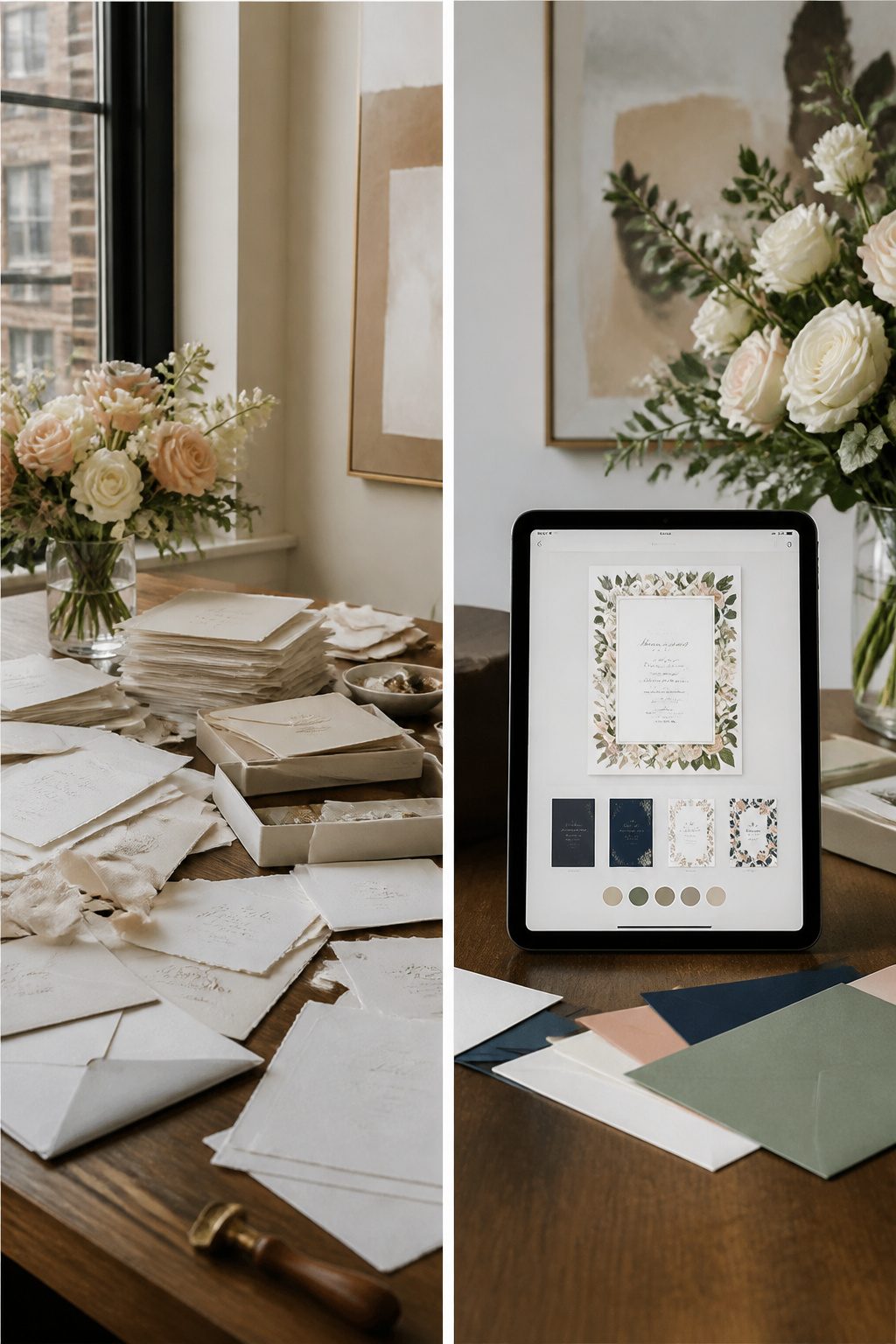
Paperless Post built its wedding line around the fact that the average cost of printed wedding invitations sits around $500, and digital sends for a fraction of that. The pricing runs on Coins per invitation, so adding a backdrop, custom stamp, or envelope liner pushes the cost up in real time and you decide where to stop.
The designs lean editorial rather than clip-art, with color, font, and photo customization that carries across matching bridal shower and bachelorette invites plus thank-you cards. RSVP tracking is built in, which matters more than it sounds: you will know who opened, who stalled, and who needs a nudge without the spreadsheet work.
Timing is the other practical win. The standard six-to-eight-week send window, or four-to-six months for destination weddings, still applies, but the actual delivery takes minutes rather than postal days. That gap matters when you are finalizing a venue or a parent list at the last minute.
Compared with Evite, Paperless Post reads as the design-forward option. Evite handles the basics; this is where you go if the invitation is part of the aesthetic and you want guests to notice before they even reply.
What Wedding Invitations Should Say
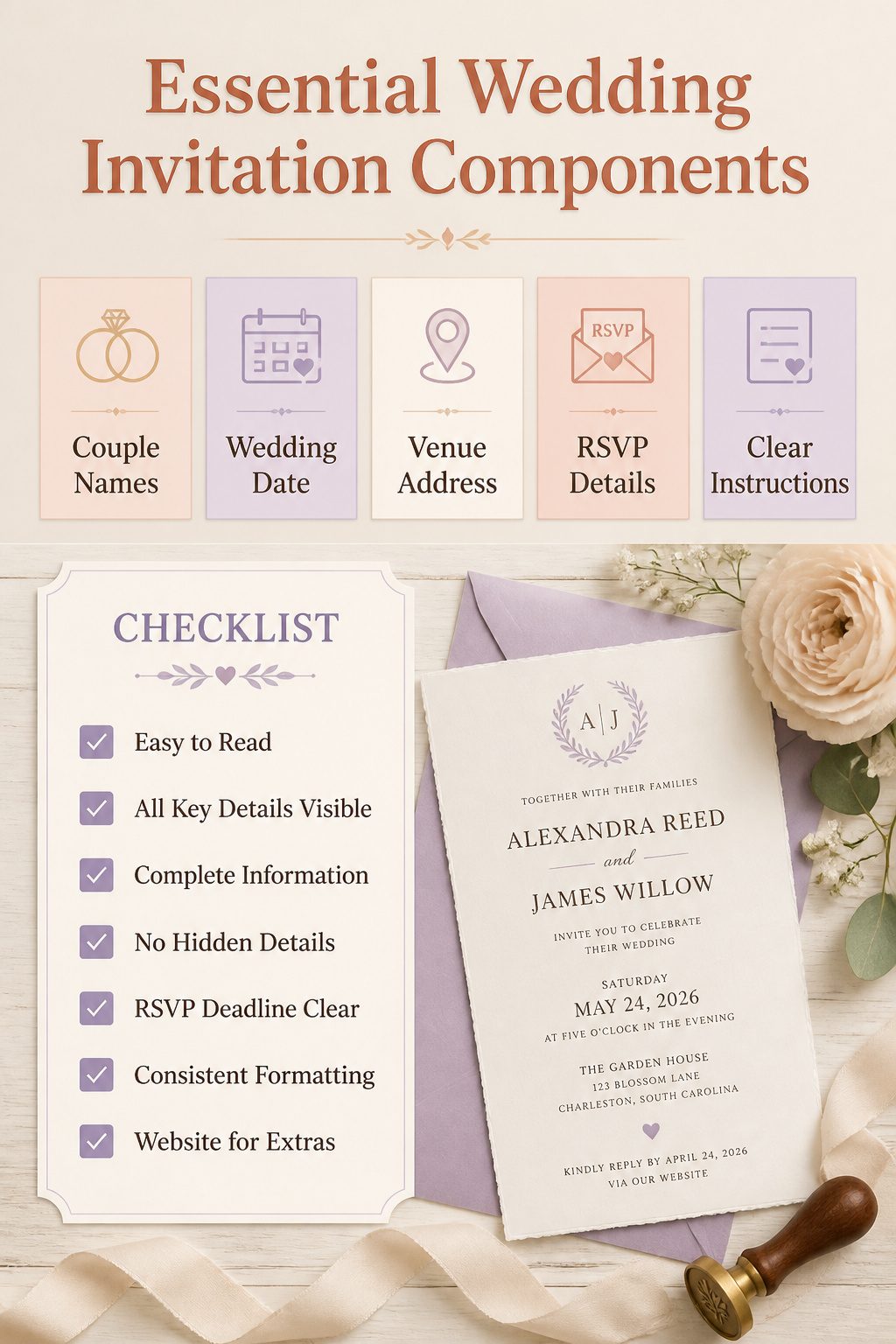
The standard wedding invitation still follows a structure that has not changed much in decades, and for good reason. The couple’s names sit at the top, followed by the date, time, and location, with RSVP information at the bottom. Guests should never have to hunt for the address or deadline. I have seen invitations that tried to get clever with layout, tucking the venue name into a corner or burying the RSVP date in fine print, and the result is always the same: confused phone calls and late responses.
Online platforms like Paperless Post make it tempting to add layers of extra information, dress code guidance, plus-one policies, even child attendance rules. That is not wrong, but it works best when the core details stay clean and the extras live in a separate enclosure or on your wedding website. The invitation itself is a navigation tool, not a briefing packet.
Vogue consulted planner Tiffany Ruiz on timing, and her advice applies to wording too: clarity beats ornament every time.
"An industry standard rule of thumb is to send your invitations at least 3 months before the wedding but I often tell my couples to send them even earlier than that, at 4 months before the wedding date."
Building in that same cushion for your guests starts with giving them information they can act on immediately, not poetry they have to decode.
When to Send Them
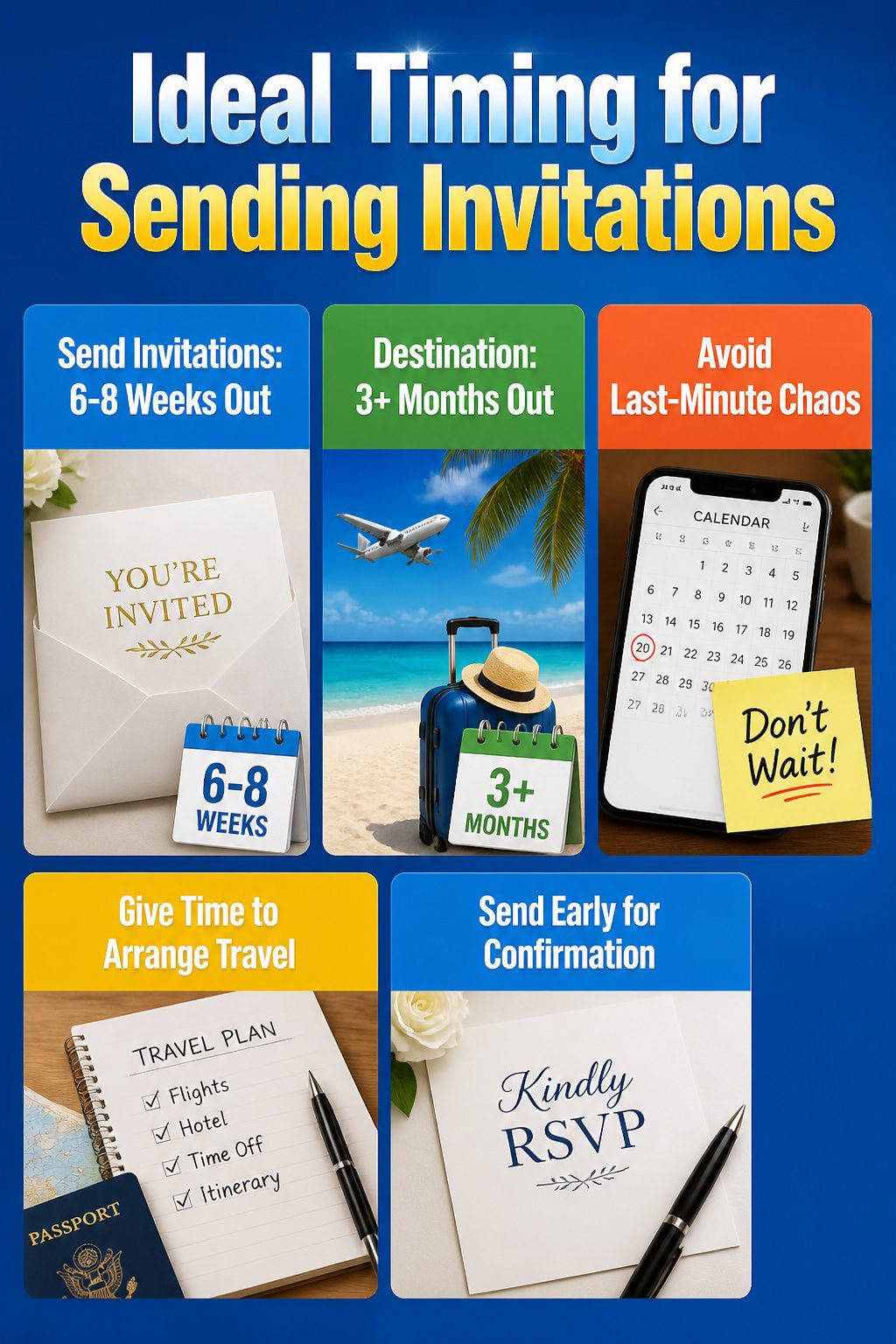
Six to eight weeks before the wedding is the standard window that actually works. Mail them earlier and guests set the fridge magnet aside until they forget why it mattered; cut it closer and you watch people book conflicting vacations while your RSVP cards sit unopened. Destination weddings need more runway, about three months, since flights and hotel blocks reward the planners who move fast and punish the ones who wait for a sign from the universe.
The real cost of missing the mark isn’t postage or reprints. It’s the phone calls, the group-text negotiations, the aunt who "didn’t realize it was that weekend" because the invite landed during her own busy season. Six to eight weeks gives people time to arrange travel without letting your date drift to the bottom of their mental pile. I’ve seen friends send at twelve weeks and still field last-minute chaos because the timing felt so distant that nobody acted; I’ve seen four-week disasters where half the list was already booked solid. The calendar math is simple. The discipline of sticking to it is what separates the weddings people attend from the ones they apologize through.
Digital or Printed
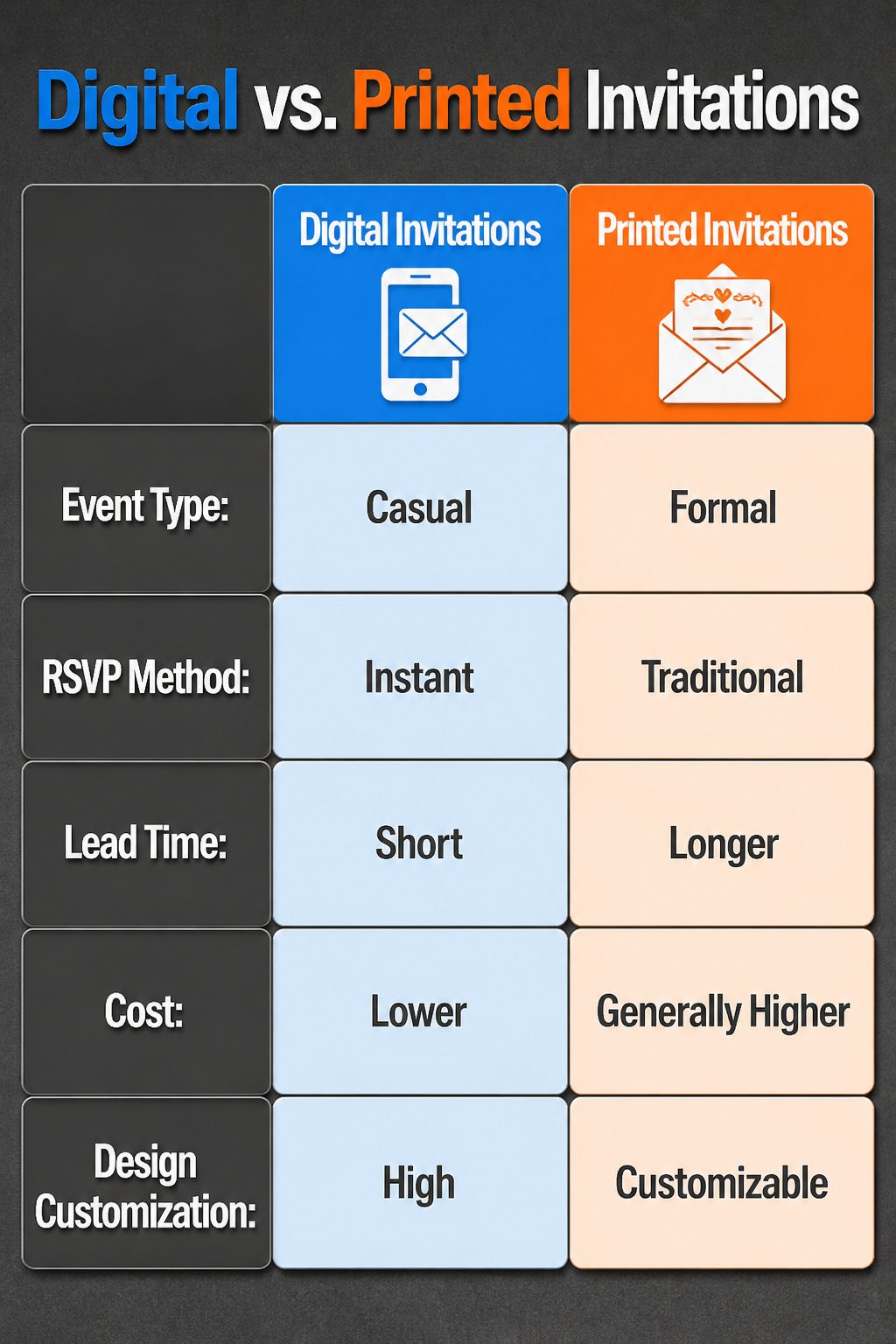
Online wedding invitations have settled into a clear split by event type. For a casual backyard reception or a city-hall celebration with thirty people, a digital invite through a platform like Paperless Post or Evite raises no eyebrows anymore. The RSVP tracking alone saves enough hassle that most guests barely notice the format. Destination weddings requiring four to six months of advance notice also lean digital naturally; the timeline is long enough that a follow-up paper reminder would be redundant, and guests need flight-booking speed more than envelope texture.
The stigma still lives, though, in anything with a religious ceremony, a black-tie dress code, or parents paying who remember paper. I have watched a bride send sleek online invites for a formal church wedding and field three confused phone calls from older relatives asking if the wedding was "still happening for real." The design was elegant; the medium read as casual because the event was not. Paperless Post offers premium digital designs with patterned envelope liners and custom stamps that mimic traditional stationery, which helps bridge that gap for semi-formal affairs. For the fully formal ones, the mimicry is not enough.
Customization Options
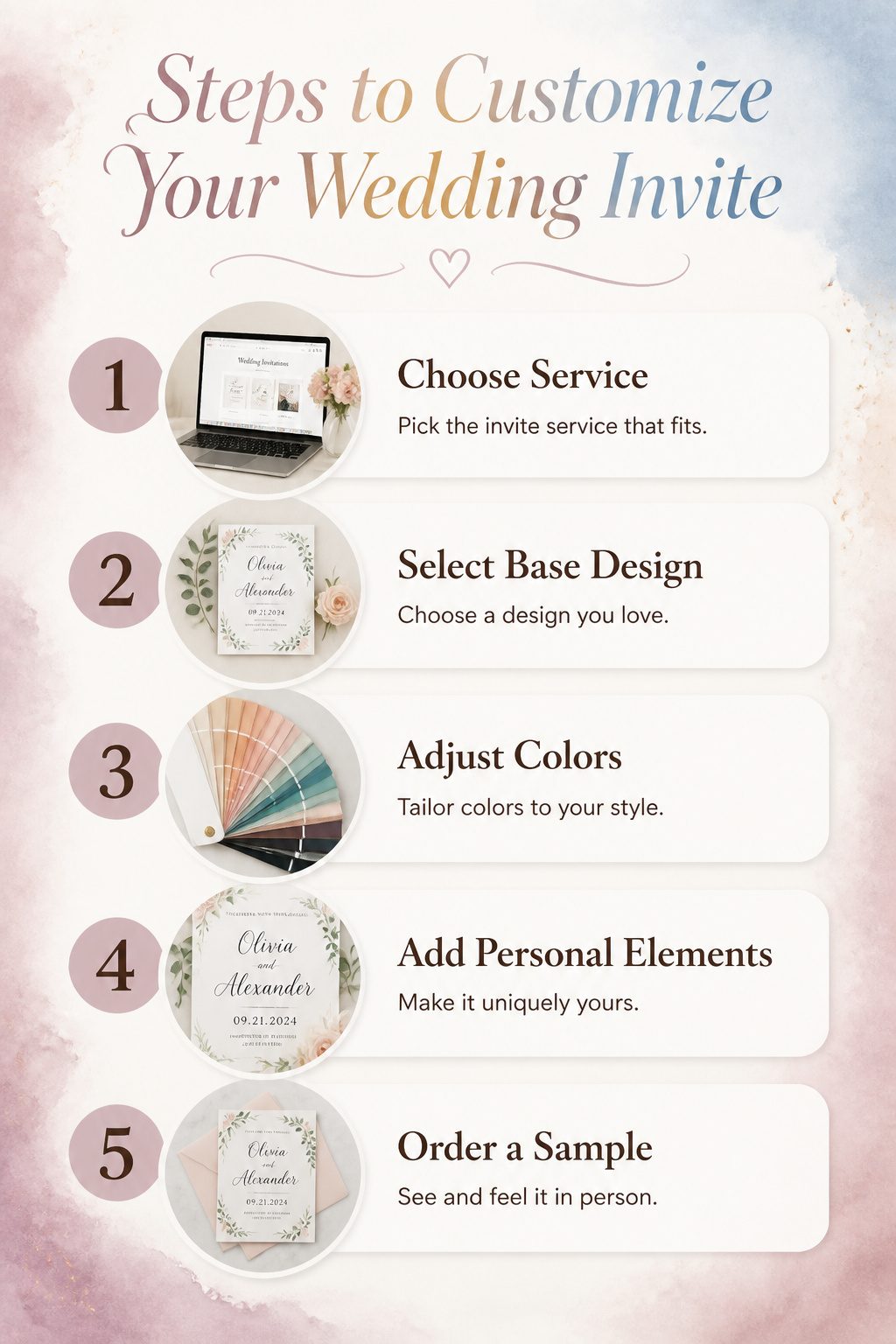
The first thing that struck me, comparing eight different wedding invite services side by side, was how wide the gap runs between "customizable" on the homepage and what actually ships to your door. Basic Invite advertises 180 colors, and that number is real: you can tweak the shade of every element, down to the envelope liner. Papier lets you upload your own design entirely, which sounds like total freedom until you see how a home-printed watercolor scans differently than studio foil. Minted offers designer hours for deeper changes, color schemes, styling, fonts, even building from scratch through their artist community.
What prints well rarely matches what glows on screen. Foil finishes that look subtle in the design tool can turn flashy under reception lighting. Dark backgrounds eat detail that looked crisp at 96 dpi. Vistaprint keeps things simpler, photos and fonts and colors, but that restraint also means fewer ways to misjudge the translation from monitor to paper.
The practical move is ordering a physical sample before you commit. Minted mails a free kit with paper options and printing types. Vistaprint shows previews, which helps, but holding the actual card reveals weight and texture no thumbnail captures. I spent an afternoon toggling between ivory and cream on one site, only to realize in person the difference vanished under evening light. The customization that matters is the kind you can verify with your hands.
Pricing Structures
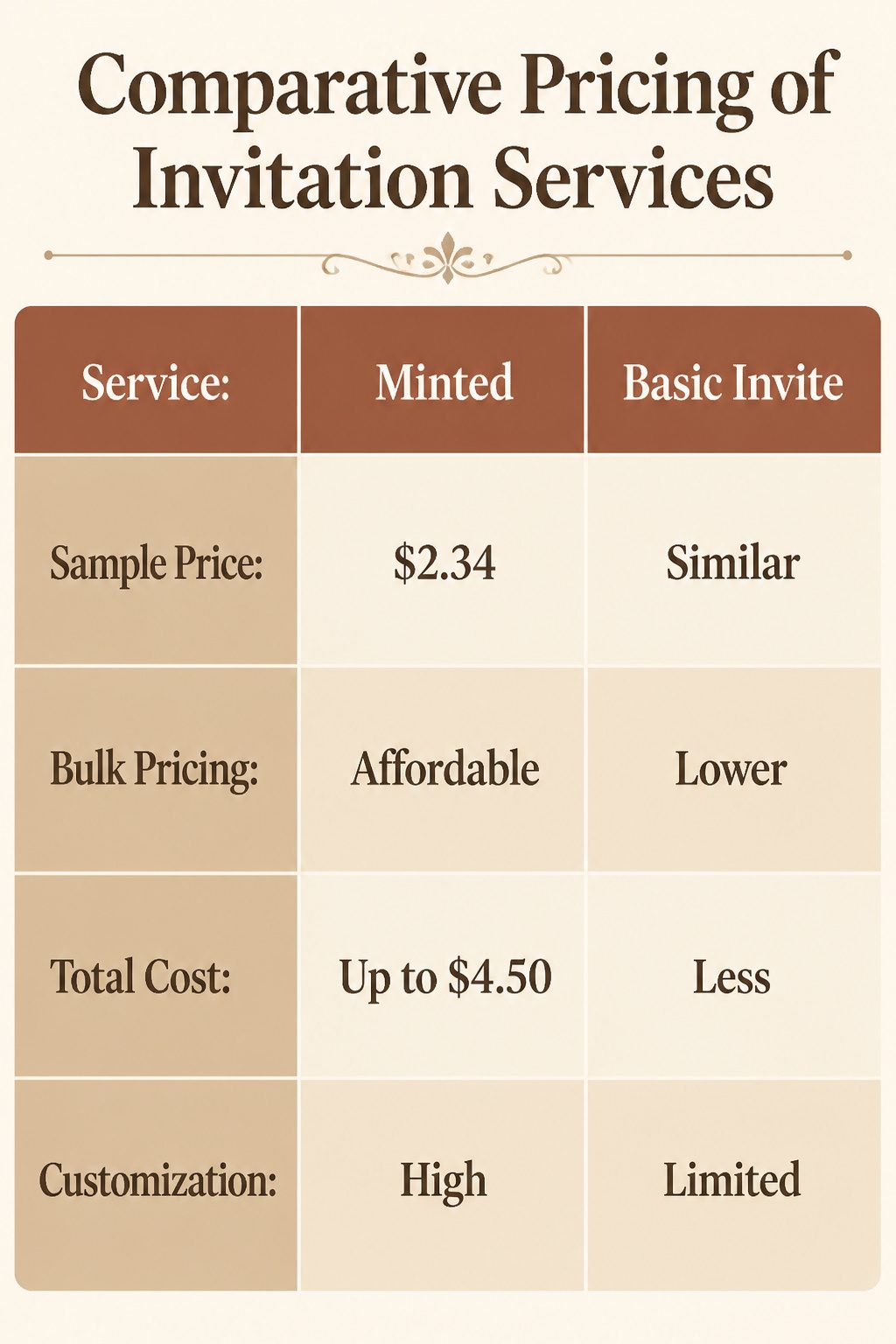
Bulk pricing for wedding invites drops fast once you cross the threshold of a real guest list. At Minted, the classic 7-by-5 card lands at $2.34 apiece for 100, and the petite 6-by-4.25 slips to $2.00. That "starts as low as" framing is doing more work than it first appears. Basic Invite runs a similar ladder, with per-unit cost sliding down as quantity climbs, though the exact rungs stay tucked behind their design tool until you build a set. Vistaprint pushes even lower, with invites floating near a dollar each in the range where most couples actually order.
The gap between the banner price and the checkout total is where these sites make their margin. Foil, envelope liners, upgraded paper stock, and RSVP cards stack quietly. What read as $2.34 each can land closer to $4.50 by the time the cart feels complete. The reviewers who flag Basic Invite as "hard to beat" also note wishing the prices were lower, which tells the story: the base design hooks you, the add-ons finish the look. My own rule, after running three carts to near-checkout, is to price the full suite before falling for the starting number.
Matching Stationery
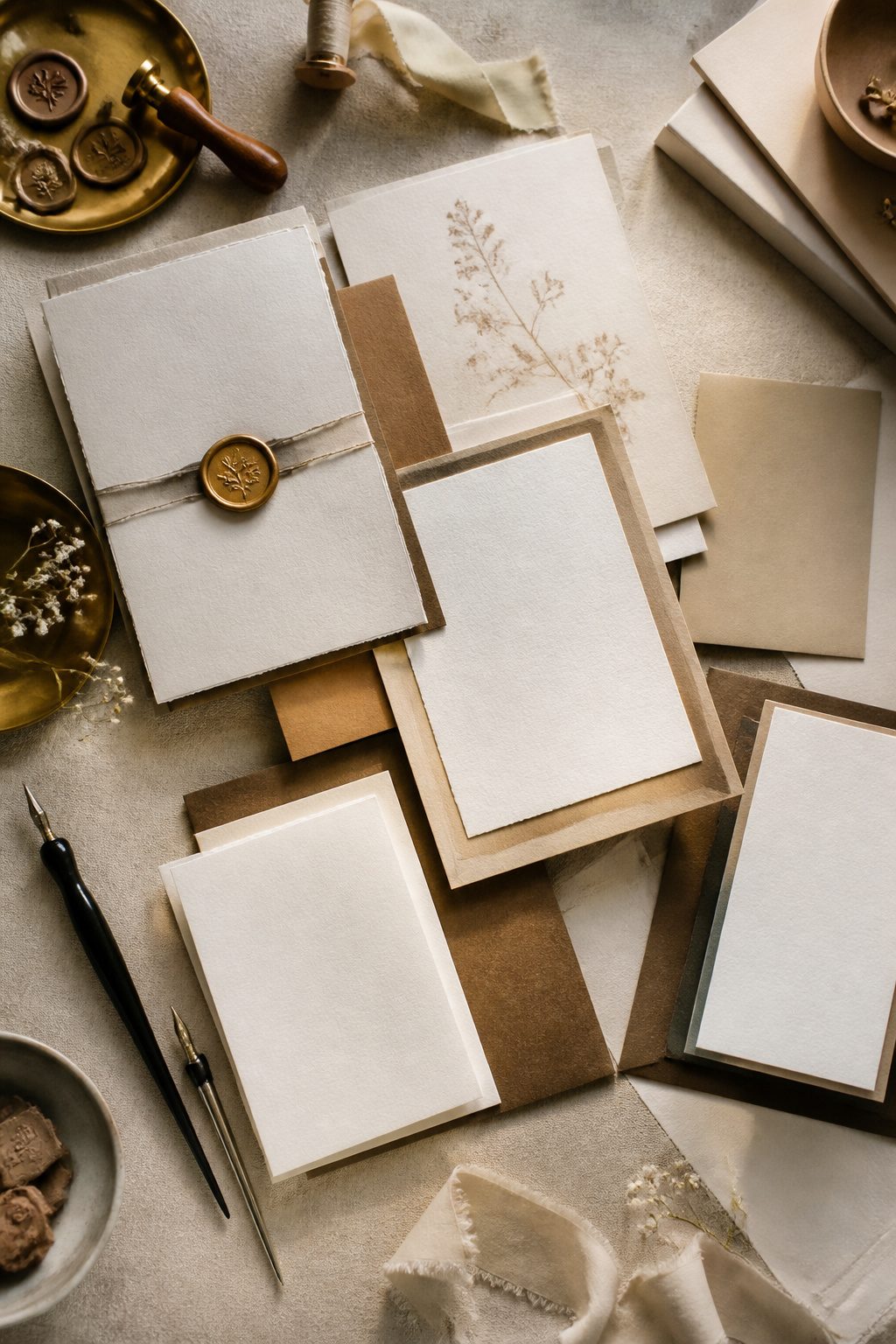
RSVP cards, thank-you notes, and day-of pieces like menus and place cards are what turn a single invitation into a full stationery suite. Minted builds this in automatically: every design has matching RSVP cards, belly bands, programs, and even wedding websites, plus free recipient addressing on the envelopes. Zola takes a simpler approach, bundling free matching envelopes and free shipping with every invitation order but leaving the rest as add-ons.
The question is whether that cohesion is worth paying for. A matching set photographs well and spares you the work of hunting down compatible designs later. But if the budget is tight, the envelope that ships free with Zola covers the piece guests handle first, and plain RSVP cards from a separate source get the job done. Free envelope matching is the easiest win; paying extra for every coordinated insert is where costs stack up fast. For my own wedding, I would have sprung for the RSVP card in the same paper and font, then skipped the matching thank-you notes in favor of something handwritten on simpler cards later. The guests notice the invitation in their hands. They rarely compare it to the note that arrives three months after the cake.
Digital vs. Printed Invitations
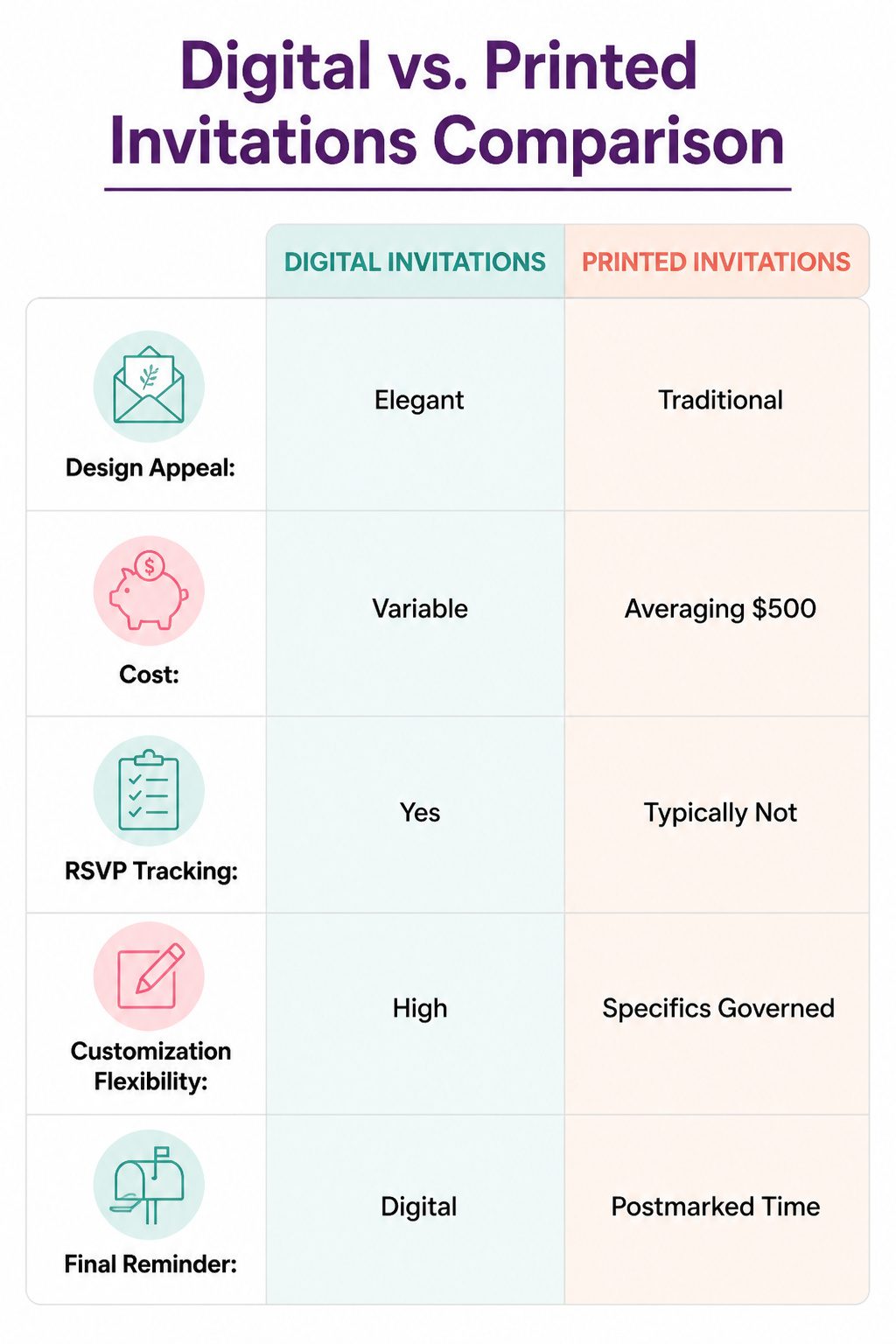
Digital wedding invites stopped feeling like a compromise somewhere around 2019. Paperless Post and Evite both now carry designs that read as traditional at first glance, with digital colored envelopes, patterned liners, and customizable stamps that mimic the weight of paper. Evite’s premium tier removes ads entirely, which matters more than you’d think for a wedding, and prices scale by guest count rather than per-piece printing.
The practical edge is RSVP tracking built into the same thread. Guests open the invite, click yes or no, and the tally updates without you chasing replies through three apps and a group chat. For destination weddings or any list requiring travel, that efficiency translates directly to headcount accuracy for caterers.
Most couples assume the choice is binary, but the better play is often sequential. A digital save-the-date at four to six months out, especially for destination weddings, lets you gauge attendance early. The formal printed invitation still lands at six to eight weeks for the ceremony itself, or you reverse it: paper for the wedding, digital for the rehearsal dinner where headcount shifts last-minute. The average printed suite runs near $500; digital coins at Paperless Post adjust feature by feature, so you pay for backdrops and liners only if you use them.
Envelope Features
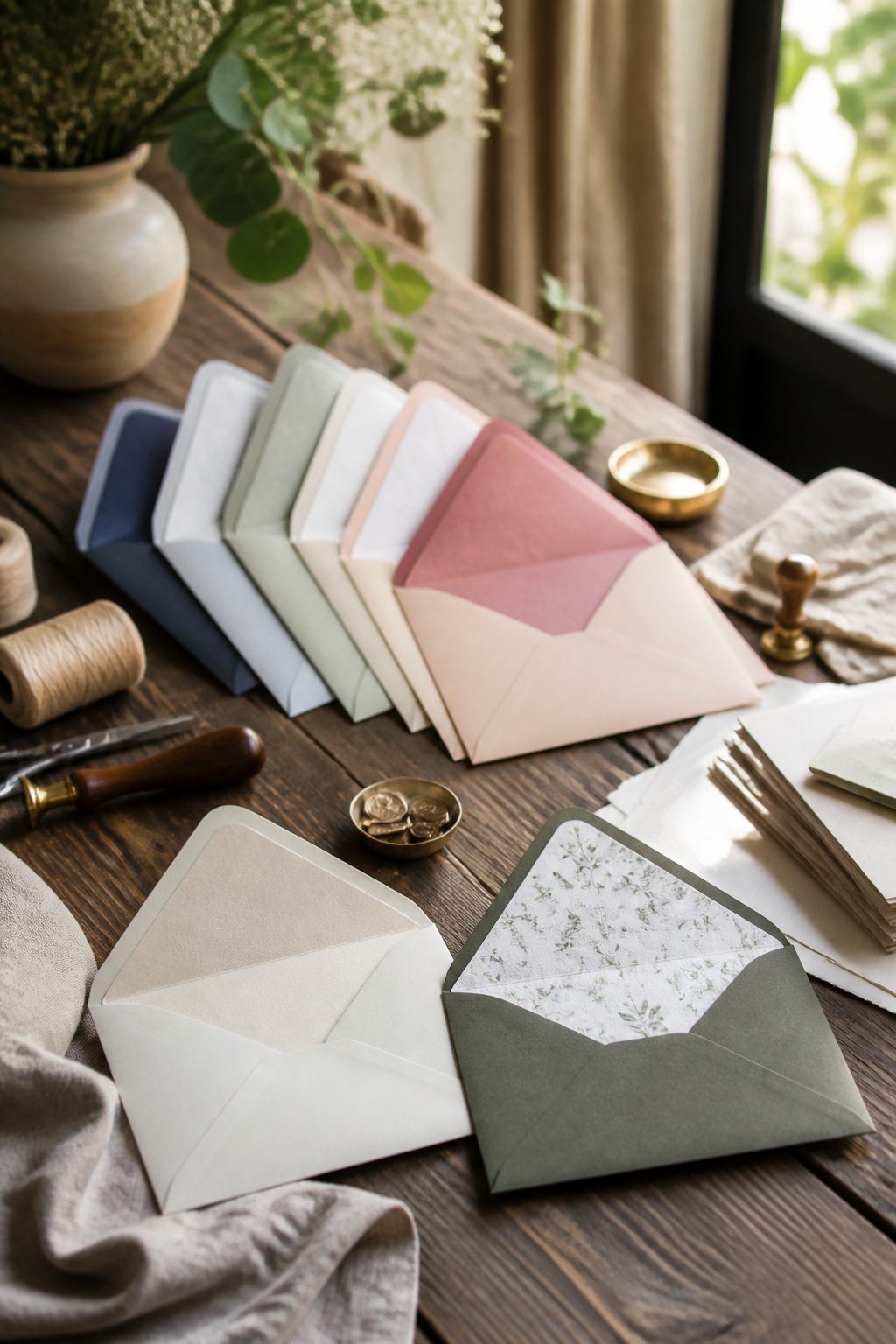
Peel and seal envelopes at Basic Invite changed how I think about assembly, because no one warns you that licking a hundred envelopes leaves you tasting adhesive for a day. Their system strips that step out entirely. Minted, meanwhile, offers an inner envelope as an add-on, the kind of detail that signals formality before a guest reads a word. The outer envelope arrives included and color-matched; the inner one costs extra but keeps the invitation pristine through mail handling. Zola bundles free matching envelopes with every order, which sounds small until you are staring at a stack of ivory cards and a drawer full of white office envelopes that clash.
What none of these sites explain well is the actual assembly. Cards, RSVP slips, direction cards, and tissue layers stack in a specific order, and the inner envelope, if you bought it, sits inside the outer like a nesting doll. The flap style and color you choose on the envelope guide matters more than couples expect; it is the first thing guests hold, and the first impression of the wedding itself.
Frequently Asked Questions
What should wedding invitations say?
Include the couple’s names, date, time, location, and RSVP details where guests can find them without hunting. Keep the core layout clean and move dress codes, plus-one rules, or other guidance to a separate enclosure or your wedding website. Clarity always beats ornament; guests need information they can act on immediately, not wording they have to decode.
When should wedding invitations be sent?
Send them six to eight weeks before the wedding, or three to four months out for destination weddings where guests need time to book flights and hotels. Mail too early and guests forget; cut it closer and you risk conflicting plans. The discipline of hitting this window matters more than the exact day you choose.
Is it acceptable to send wedding invitations online?
Yes, digital invitations work well for casual receptions, city-hall celebrations, and destination weddings where speed matters more than paper texture. Platforms like Paperless Post and Evite offer designs that mimic traditional stationery with digital envelopes, liners, and stamps. For formal religious ceremonies or black-tie events, paper still reads correctly to guests who may otherwise question whether the wedding is "real."