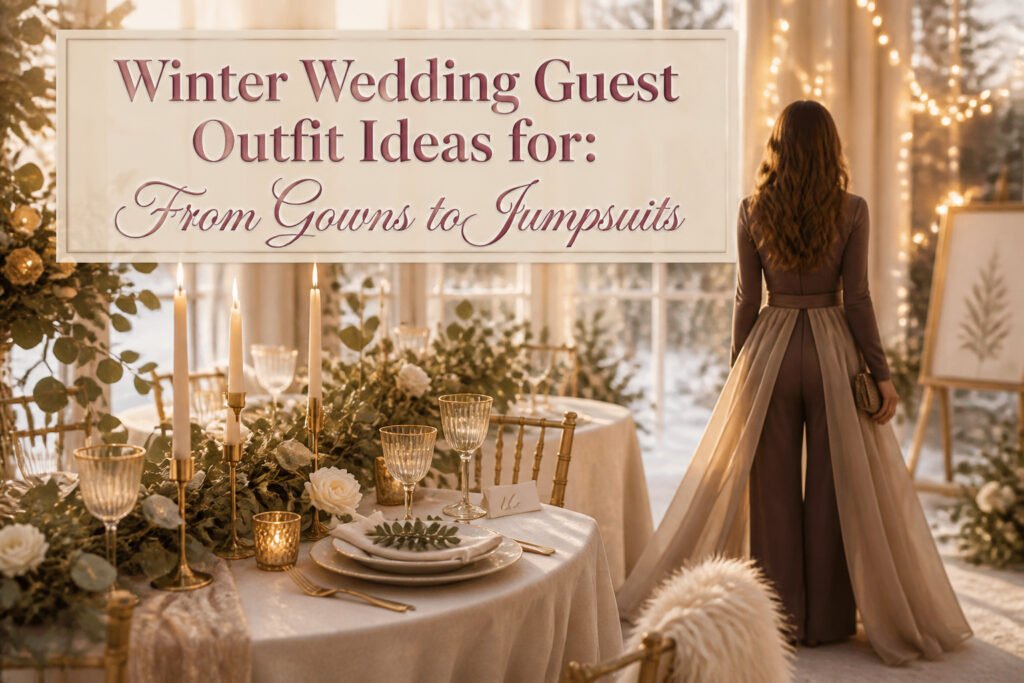
The only winter wedding guest outfit that matters is the one that matches the dress code printed on the invitation, because black-tie means floor-length velvet or silk while semi-formal lets you stop at a polished midi, and confusing the two is how you spend the evening either sweating through wool in a barn or shivering in chiffon during an outdoor portrait session. Reformation’s Camille velvet dress at roughly $300 hits exactly the overlap where a single piece works for both codes if you accessorize right.
1. Black-Tie Gowns
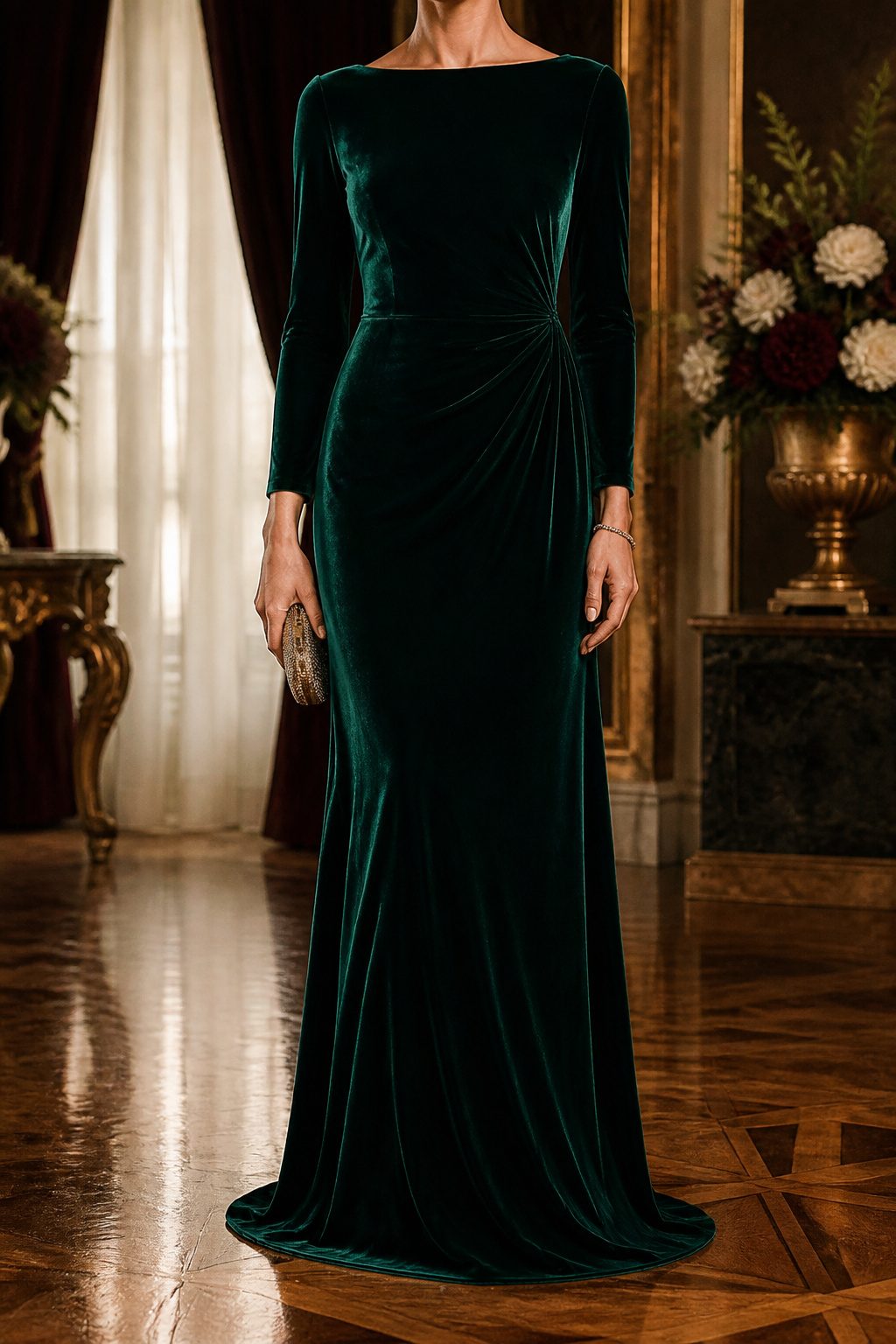
A black-tie winter wedding is one of the few occasions left that actually justifies a floor-length gown in silk, satin, or velvet. The invitation says what it means: cocktail length will read as underdressed when every other woman there is in something that grazes her shoes. Dark colors and jewel tones carry the season best, and a long sleeve or velvet wrap saves you from shivering through the outdoor portrait session the couple inevitably planned.
Reformation runs about $300–$600 for gowns that work here, and the Daniela silk gown or Camille velvet dress from their line are cut well enough to wear again if another formal invite shows up. For more inventory, Anthropologie, Nordstrom, and Neiman Marcus all carry the tier of designers that stock proper black-tie lengths rather than midi dresses stretched to look formal. A simple boat-neck silhouette in black or charcoal will outlast anything trendy, though if you want the night to feel like an event, a slight train or a shimmery fabric does the work of ten accessories.
2. Black-Tie Optional Dresses
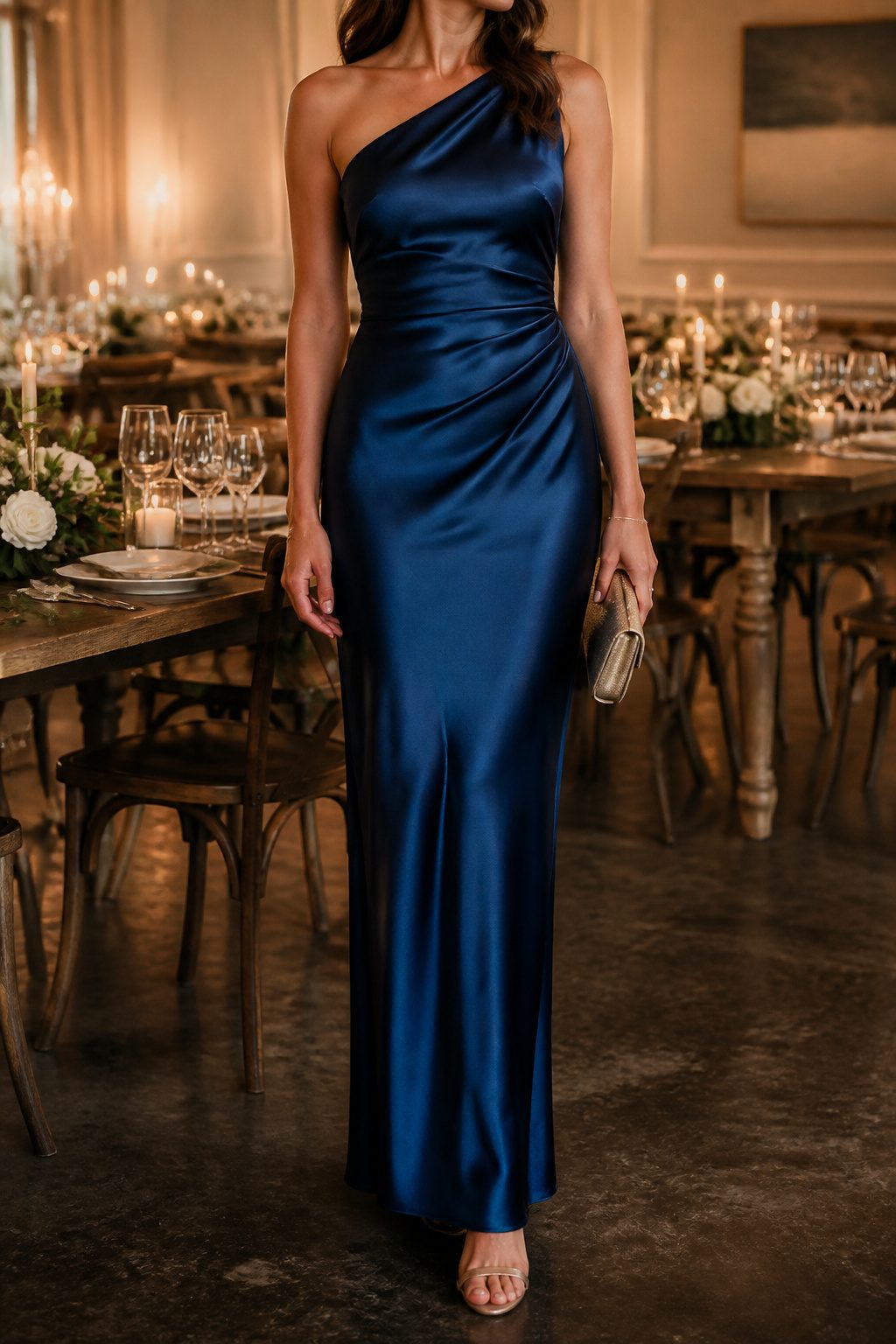
Black-tie optional sits one step below strict black-tie, and that gap is where most winter weddings actually land. A floor-length gown still reads as fully appropriate, but a chic midi or sleek column dress won’t raise eyebrows either. The flexibility is the point: satin, silk, crepe, and velvet all work here, and the fabric choice often matters more than the hemline.
For this dress code, Reformation’s evening pieces hit the mark between polished and wearable. Their silk gowns and velvet dresses run roughly $300–$600, and the construction holds up across multiple events rather than a single wear. The Camille velvet dress and Daniela silk gown are cut for exactly this territory: formal enough for a ballroom, restrained enough that you won’t feel overdressed if half the room chose cocktail length.
Revolve carries a wider price spread, starting just above $100 and climbing from there. Their mix includes international labels like L’IDEE and Atoir alongside house favorites, so the inventory turns over faster than traditional department stores. The Ashton maxi dress and Chloe gown are the picks to filter for first: long enough to satisfy the "optional" side of the code, but structured enough that they don’t read as borrowed from a stricter category.
If you’re wavering between lengths, go with the longer option. Black-tie optional is the one dress code where over-dressing carries no penalty, but showing up under-dressed means spending the evening aware of it.
3. Cocktail Dresses
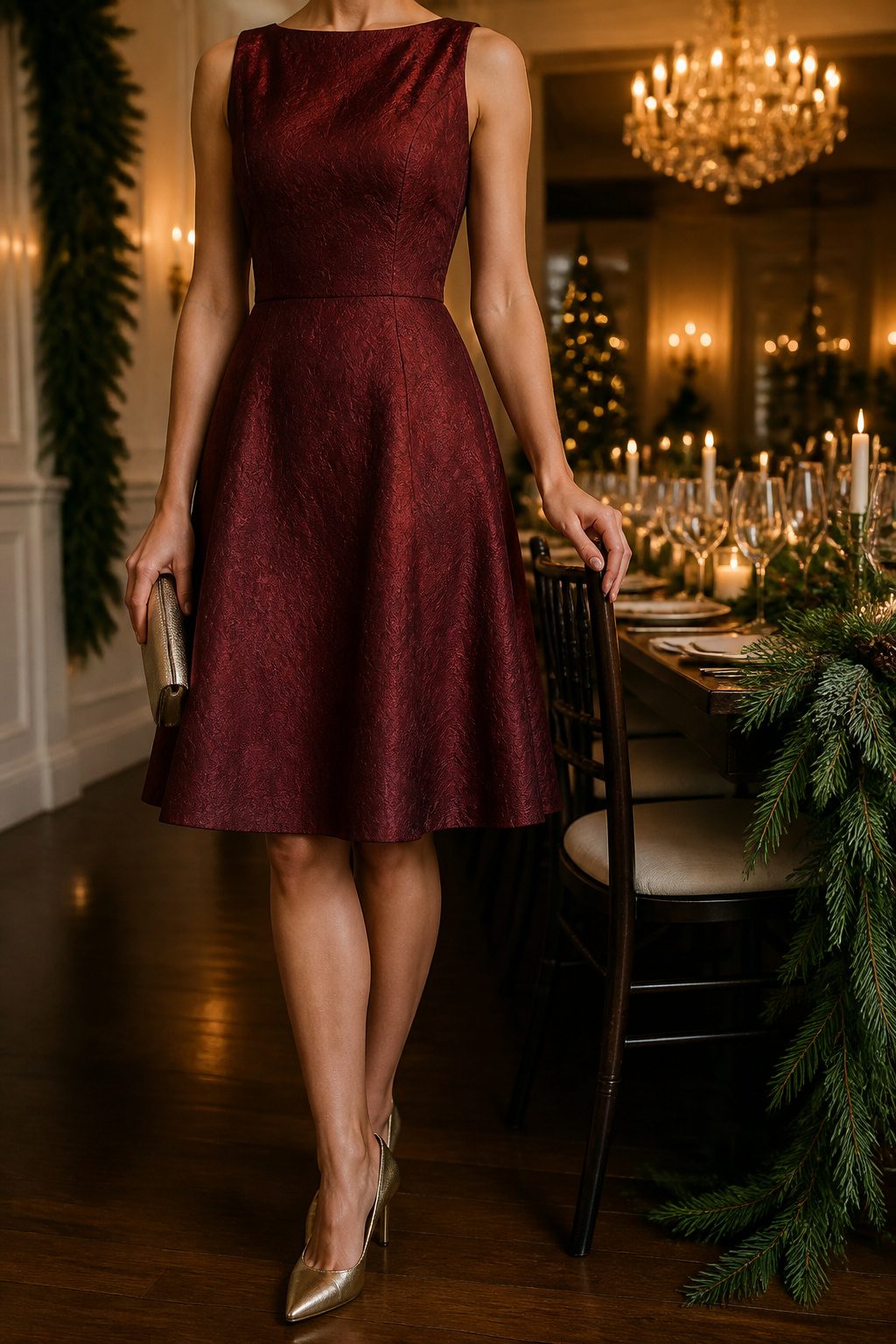
Cocktail attire lands in a useful middle ground, less rigid than black-tie but still polished enough for a wedding. Knee-length or midi is the length to aim for here; a going-out mini reads too casual for the occasion. A-line cuts, sheath silhouettes, and fit-and-flare shapes all work without drifting into gown territory. This is where you can loosen up a little compared to stricter dress codes: a dark floral print, a textured fabric, or a bolder color still feels appropriate. For a candlelit dinner wedding in a place like the Berkshires or an upstate New York estate, this level of dress fits the mood exactly. An oxblood midi, for instance, hits that balance between dressed-up and pared down. Brands like Quince, Tuckernuck, and Amanda Uprichard carry styles that get this right.
4. Semi-Formal Dresses
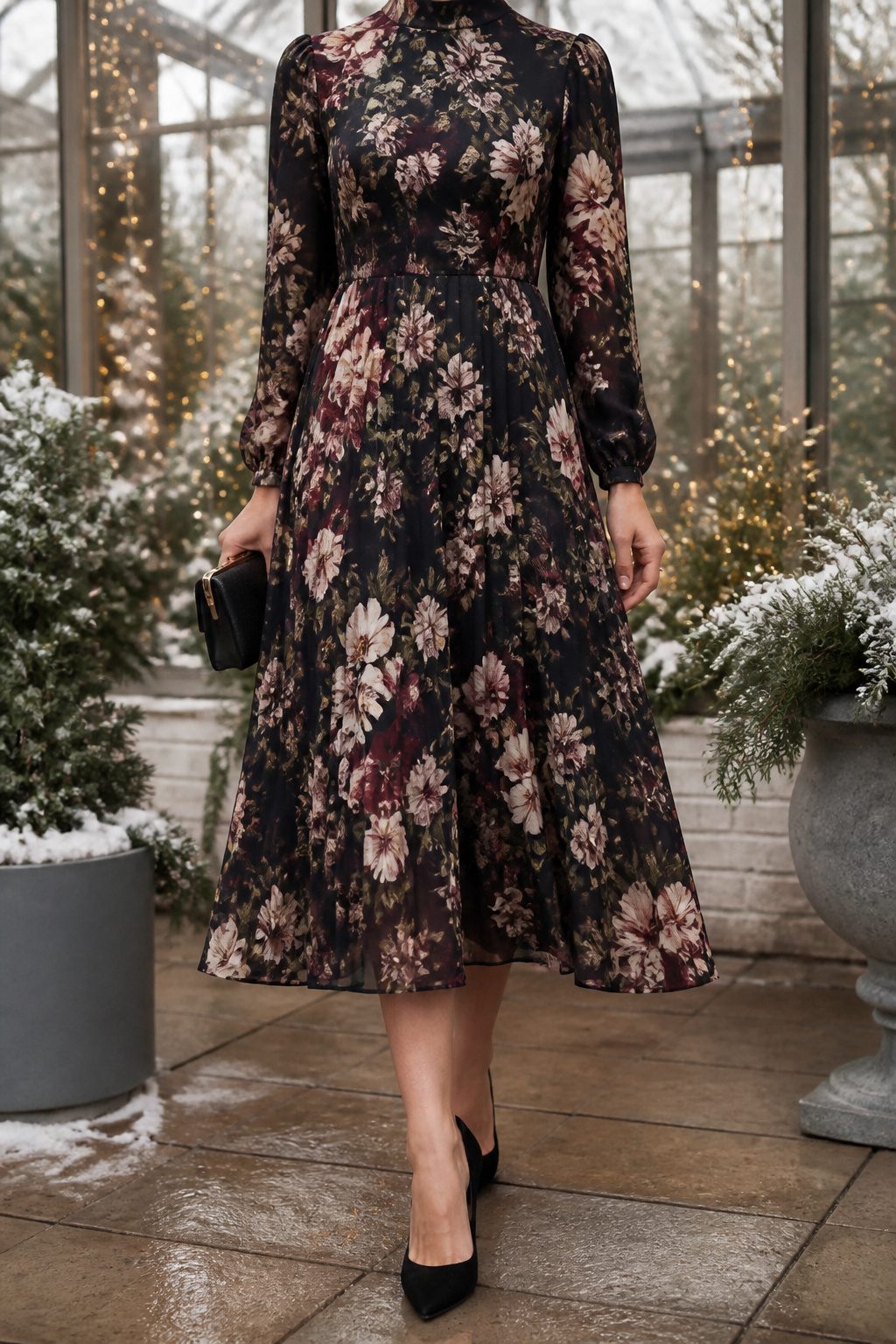
Semi-formal sits one notch below cocktail on the formality scale, and that breathing room matters more than most guests realize until they are standing in an overheated afternoon venue wishing they had skipped the floor-length gown. Knee-length to midi is the length that works here, with wrap silhouettes or a sleek long-sleeve dress reading polished without trying too hard. Crepe or even an elevated knit will pass, which is a relief when the wedding starts at two o’clock and the reception ends before the sun does. Daytime ceremonies and laid-back venues, barns or garden conservatories in winter, are where this dress code usually appears. The mistake is treating semi-formal as casual; the fabric still needs to be intentional, the cut still considered. A dark floral or subtle texture lands right, but the jersey dress you wear to brunch does not, even with heels.
5. Jumpsuits
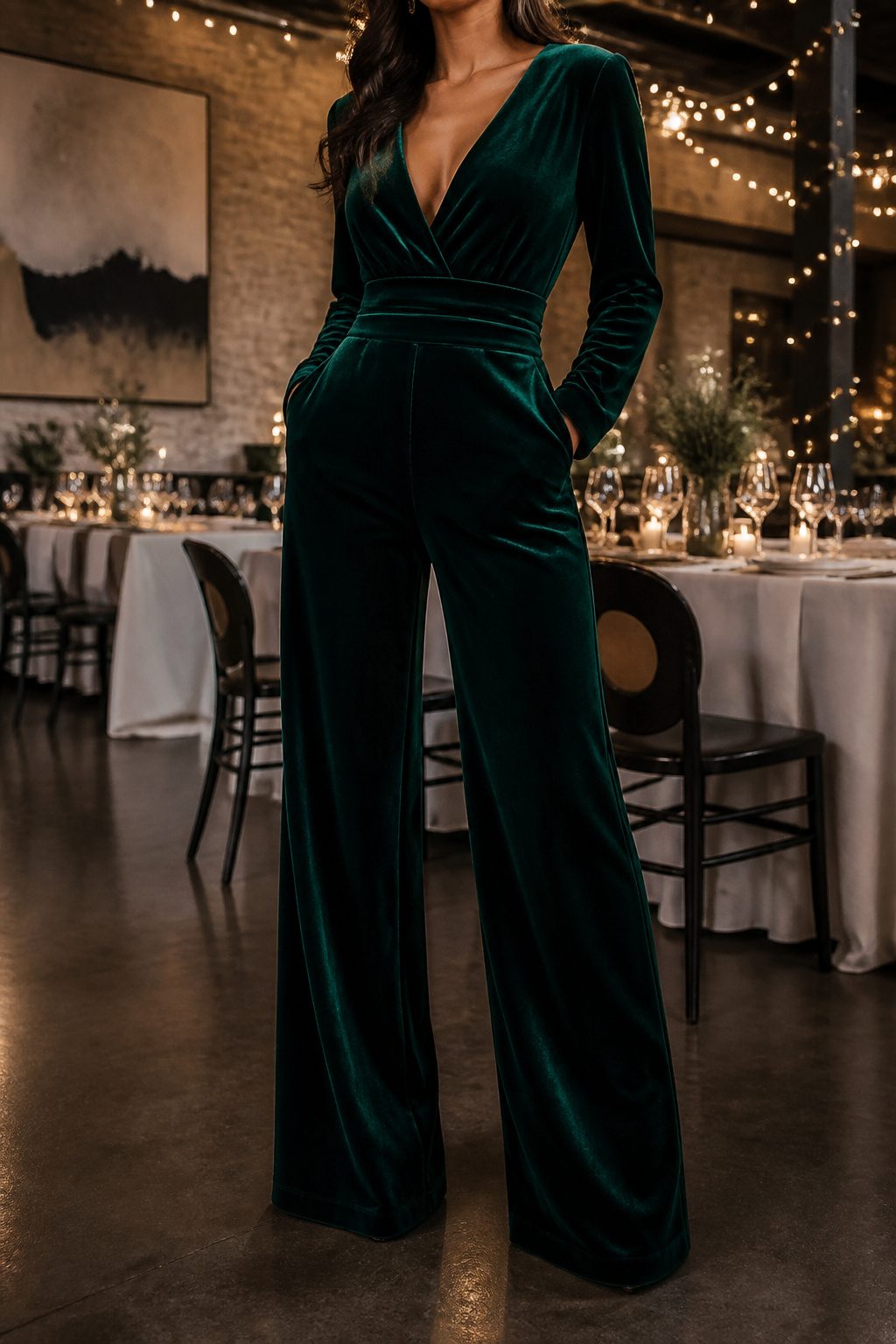
Jumpsuits rarely get their due in wedding guest guides, which is a shame, because a well-cut one solves the winter problem elegantly. The legs keep you warmer than a skirt would, and the right fabric reads just as formal as any dress. Satin, silk, crepe, and velvet all translate beautifully here, and for black-tie optional affairs, a floor-length or wide-leg silhouette in one of those materials holds its own against gowns. The trick is construction: look for a defined waist, a clean neckline, and enough structure that the piece does not collapse into lounge territory once you sit for the ceremony.
Winter weddings are the ideal excuse to lean into those richer colors, more elegant fabrics, and longer hemlines. Velvet, silks, satins, and jewel tones are pieces you will see at formal events; tailored midis and jumpsuits work beautifully for relaxed affairs.
What this means in practice: a velvet jumpsuit in emerald or burgundy carries you through a semi-formal or cocktail reception without looking like you missed the dress code memo. Add a longline tailored coat in a matching tone for the monochromatic moment that works particularly well at black-tie events, and skip anything that reads daytime office. The fabric does the heavy lifting; a crepe or satin jumpsuit in a jewel tone signals celebration in a way that plain black wool never quite manages.
6. Seasonal Fabrics
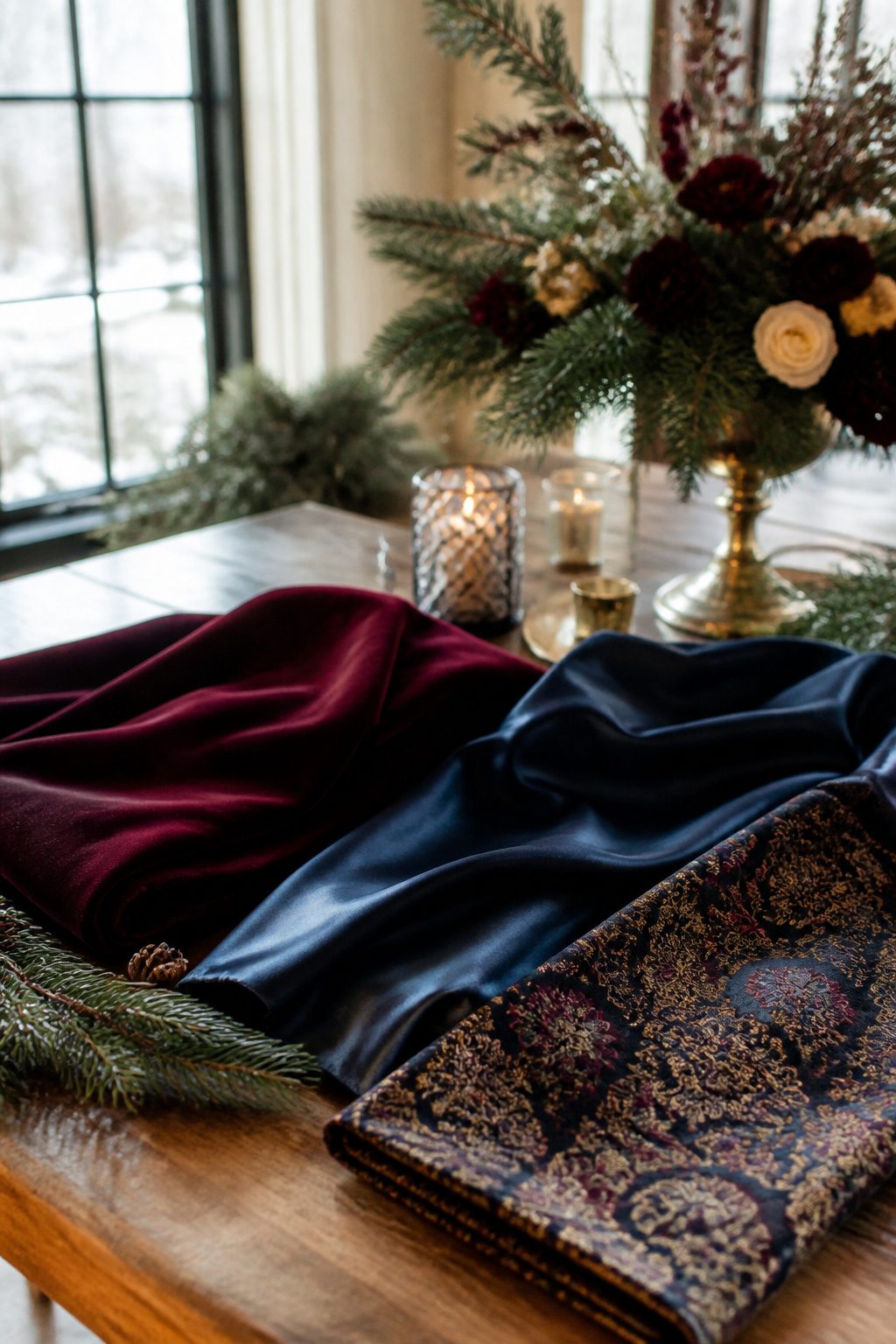
Velvet, satin, brocade, and wool carry the weight winter weddings demand. The heavier drape and natural insulation of these fabrics mean you stay warm through a long ceremony and the ride between venues without looking like you dressed for a different season entirely. Satin catches low winter light in a way chiffon never will; brocade adds texture that reads formal even in subdued colors.
What convinced me, reading through dozens of these outfit breakdowns, was how consistently the same materials appeared across every dress code level. Skip anything that reads spring-like; bold florals and garden-party prints feel out of place against bare branches and early sunsets. Darker or jewel-toned hues in these richer fabrics tend to feel more winter-appropriate than pastels or brights. When the invitation leaves you guessing, a sleek midi or maxi in a rich color is the safe bet that still looks considered.
7. Accessories for Warmth
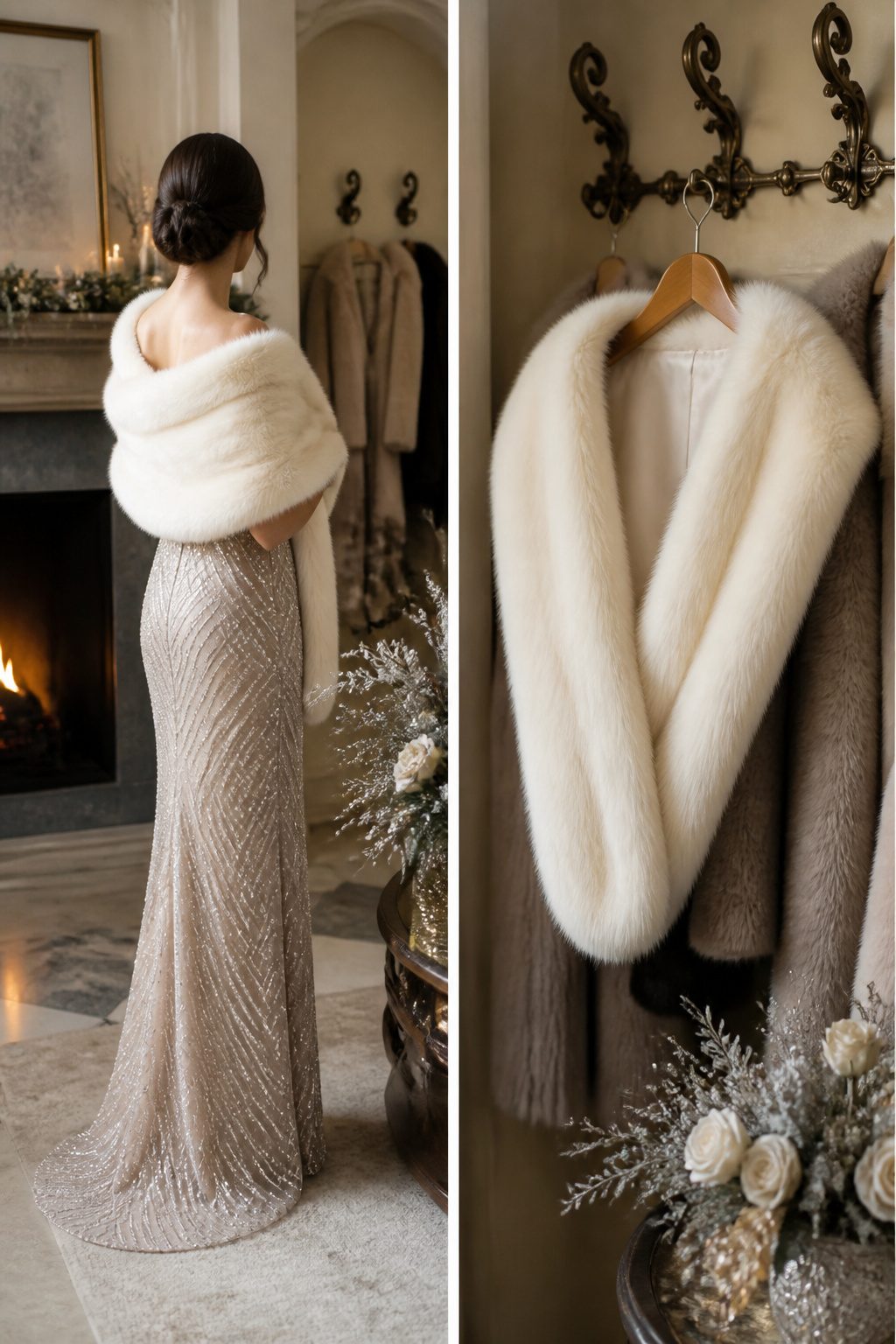
A faux-fur stole or wrap traps heat without turning the outfit into a costume piece; the texture reads formal enough for a gown but functions like a coat in a drafty church. Pashminas and boleros fill the same gap for lighter coverage, especially when the ceremony is indoors and the reception runs warm. The tailored coat is where most guests go wrong, arriving in a puffer that fights the dress underneath. A structured wool or cashmere cut that skims the silhouette, not swallows it, keeps the line intact from car to coat check. Fleece-lined tights solve the bare-leg problem in a way sheer stockings cannot; they read as normal hosiery in dim light but add a layer of insulation that matters once the sun drops. The trick is choosing one element and committing rather than piling every warm piece on at once. A wrap plus a coat plus tights turns into bulk; a wrap alone, or a coat over lined tights, keeps the shape deliberate.
Reading the Invitation
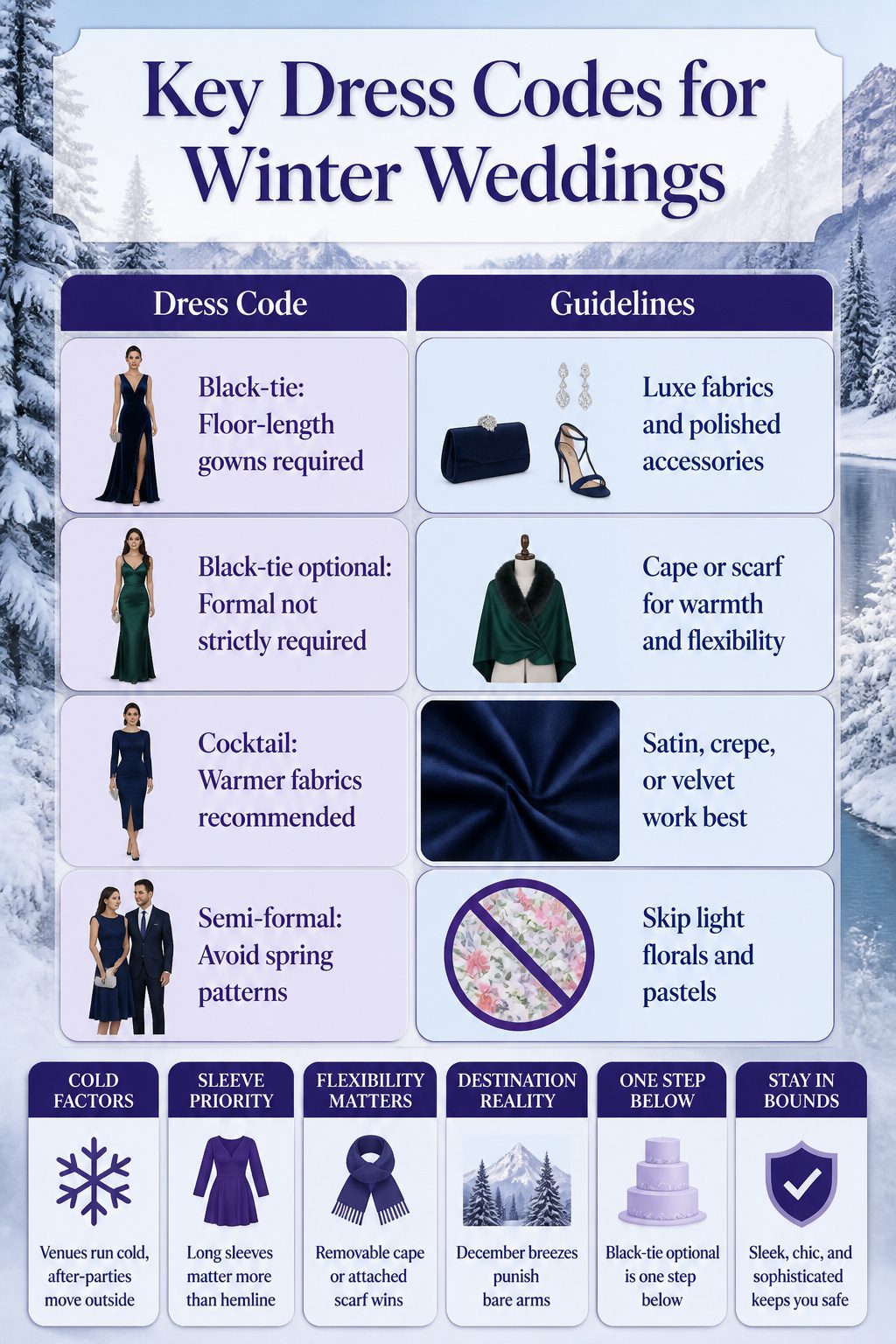
The dress code printed on a winter wedding invitation is not a suggestion; it is the single piece of information that keeps you from being the person everyone notices for the wrong reason. Black-tie means floor-length gowns in luxe fabrics like silk, satin, or velvet, with polished accessories and heels you can actually dance in. Black-tie optional gives you an out: a formal gown is welcome but not required, and a chic midi, sleek column dress, or sophisticated jumpsuit in satin, crepe, or velvet keeps you safely in bounds. The sources split on whether black-tie optional still demands floor-length; one reads it as one step below with real flexibility, another insists on a gown to avoid stress. My read: if the venue runs cold or the after-party moves outside, the removable cape or attached scarf route wins for practicality, and long sleeves matter more than hemline exactness. Cocktail and semi-formal sit lower still, though the passages do not map their boundaries precisely. For winter specifically, lean toward the warmer fabric and the longer sleeve even if the code loosens; a breezy destination cocktail hour in December punishes bare arms.
Color and Fabric Rules
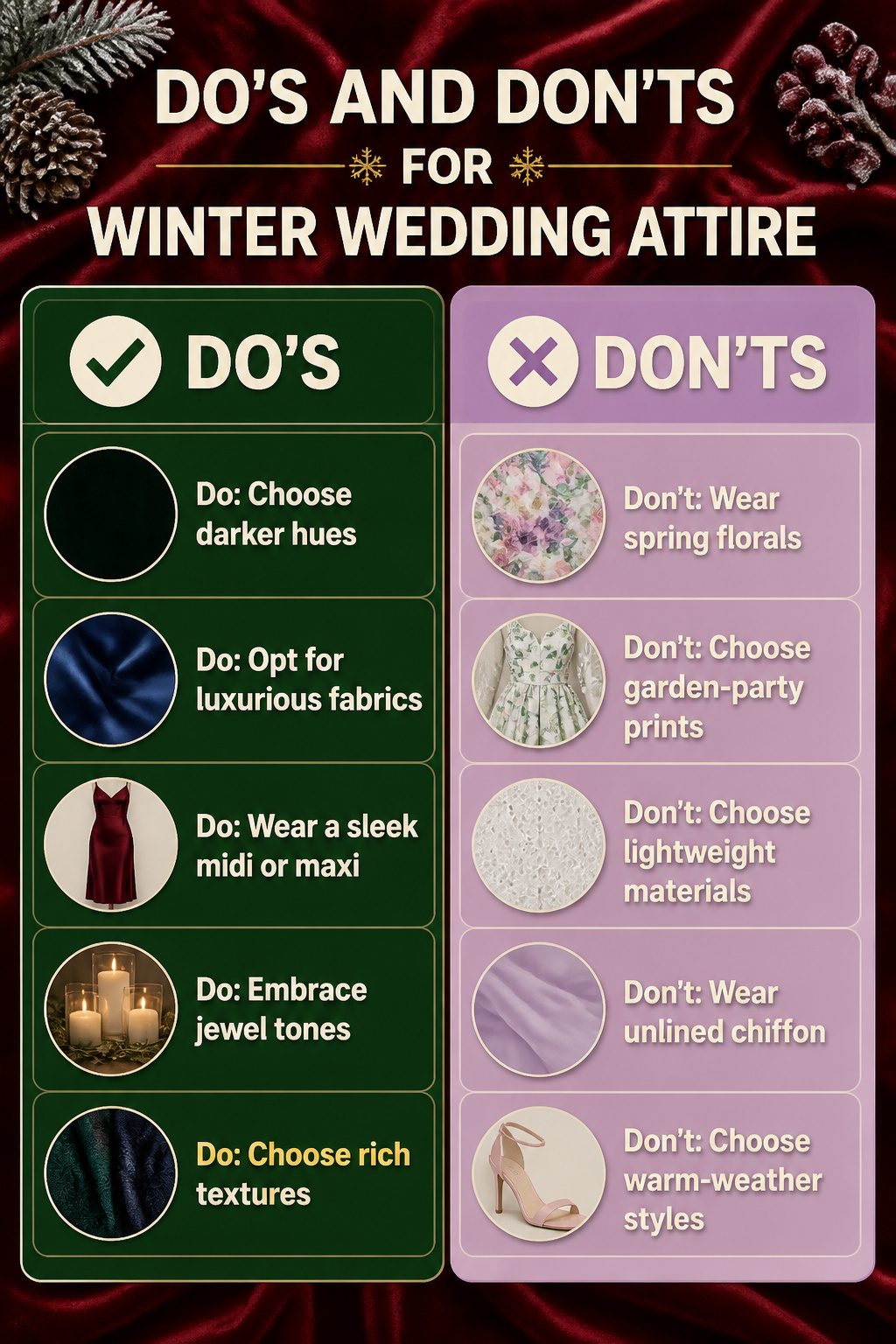
Darker hues and richer fabrics carry a winter wedding in a way that pastels simply do not. Velvet, satin, brocade, and wool read as intentional against bare branches and early sunset, while jewel-toned hues feel at home in candlelight. The same emerald or sapphire that glows in December would look borrowed in May.
What to leave behind matters as much as what to pack. Bold florals, garden-party prints, and anything that whispers spring picnic will feel out of step with the season, no matter how formal the cut. Light, airy fabrics that work for outdoor summer ceremonies, like unlined chiffon or eyelet cotton, will leave you underdressed and probably cold.
A sleek midi or maxi in a saturated color is the safest move when the invitation leaves you guessing. The fabric does the seasonal work so the silhouette does not have to.
Where to Shop
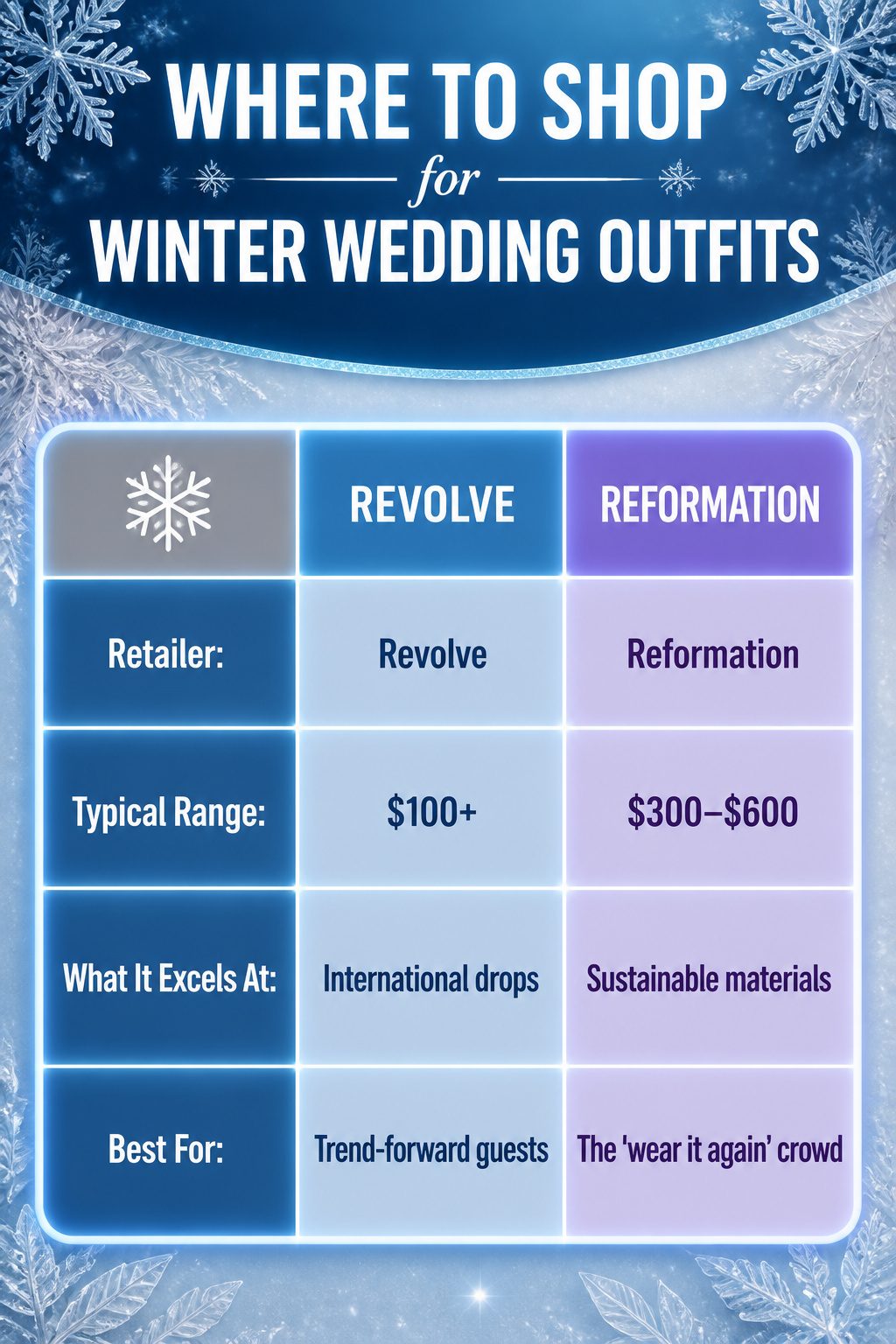
The hunt for a winter wedding guest outfit usually starts online, and five retailers keep coming up for good reason. Reformation runs $300–$600 and leans hard into sustainable fabrics with cuts that work for both ceremony and after-party dancing. Anthropologie and Nordstrom land in that middle ground where you find recognizable labels without full couture pricing. Revolve starts lower, around $100, and pulls in international brands like L’IDEE and Atoir that are harder to track down elsewhere. Neiman Marcus sits at the top, stocking Retrofête, Alice + Olivia, and the kind of statement gowns that read black-tie immediately.
| Retailer | Typical Range | What It Excels At | Best For |
|---|---|---|---|
| Revolve | $100+ | International drops, quick turnover | Trend-forward guests, tighter budgets |
| Reformation | $300–$600 | Sustainable materials, versatile cuts | The "wear it again" crowd |
| Anthropologie | Mid-range | Eclectic, romantic styling | Outdoor or rustic venues |
| Nordstrom | Wide range | Mix of contemporary and classic | Safe bets, easy returns |
| Neiman Marcus | Premium | Couture access, statement pieces | Black-tie obligations |
I filter by "guest of wedding" or event type first, then by sleeve length or fabric weight. Winter inventory turns fast, so the dress that works in November may be gone by January.
Frequently Asked Questions
What should guests wear to a winter wedding?
Guests should lean into richer colors, elegant fabrics, and longer hemlines for a winter wedding. Velvet, silk, satin, and jewel tones work well for formal events, while tailored midis and jumpsuits suit more relaxed affairs. Always check the invitation’s dress code first, since the printed code is the single piece of information that keeps you from being under- or overdressed.
What to wear over a dress for a wedding in the winter?
A tailored winter coat, wrap, shawl, or cape adds warmth without fighting your outfit. For black-tie affairs, skip casual outerwear like puffers and choose a longline tailored coat in a matching tone for a clean monochromatic look. A faux-fur stole or fleece-lined tights underneath can also keep you warm without adding bulk.
What should someone over 50 wear to a winter wedding?
Choose a dress that makes you feel confident, comfortable, and polished, with midi and maxi lengths plus a shawl for extra warmth. There are no age-specific rules; the same dress codes and fabric guidance apply. A sleek midi or maxi in a jewel tone or dark hue, with sleeves or a wrap for coverage, hits the right note for any winter ceremony.