Bump friendly dresses for 2026 run from H&M’s $40 workhorse button-fronts to Toteme’s $540 minimalist T-shirt dress, with the deciding factor being whether you need the piece to survive one pregnancy or earn its shelf space afterward.
The catch is recovery: cotton poplin that bounces back after hospital spills, sweater knits that resist sagging through a trimester, and structured shirt dresses you can belt again postpartum.
The Abercrombie & Fitch Bow Back Poplin Maxi illustrates the split, its cutout venting heat where pregnancy pools it while crisp fabric holds shape wash after wash.
1. LOFT Crepe Maxi Slip Dress
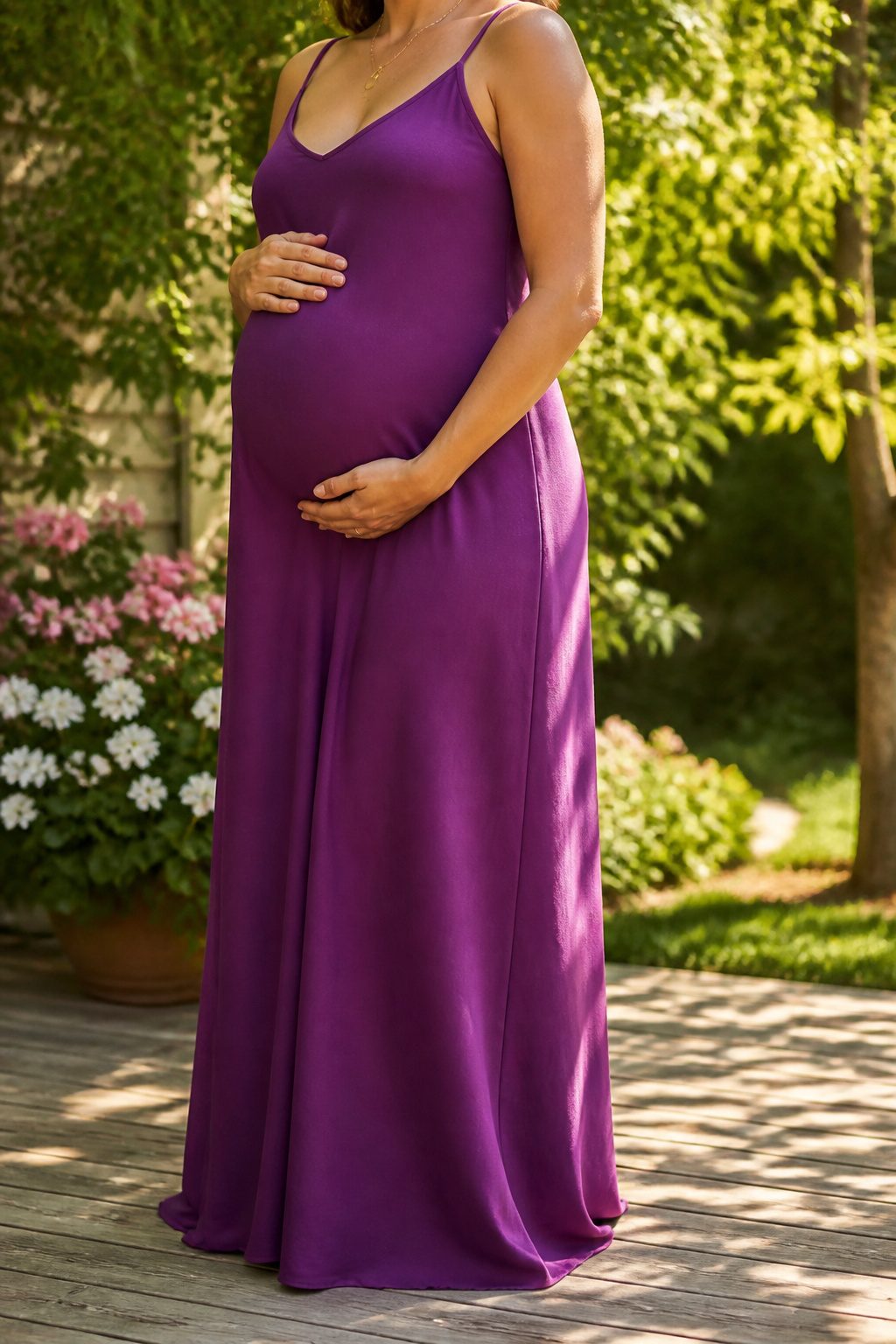
A slip dress silhouette skims the body rather than clinging to it, which makes it one of the most reliable starting points for a bump-friendly wardrobe.
The LOFT Crepe Maxi Slip Dress comes in a vibrant purple and a bright pink, both loud enough to feel like deliberate choices rather than afterthoughts.
The crepe fabric matters here. It holds enough structure to keep the dress from looking like a draped sheet, but it does not read as stiff or formal.
That balance means the dress works at twenty weeks and at thirty-five weeks without looking like two different garments.
I would treat this as the foundation piece it is. The color does the heavy lifting, so you do not need to overwork the accessories.
A single necklace or a pair of earrings and you are dressed for most occasions where "bump friendly" still has to mean "put-together."
2. LOFT Stripe Smocked Waist Button Midi Dress
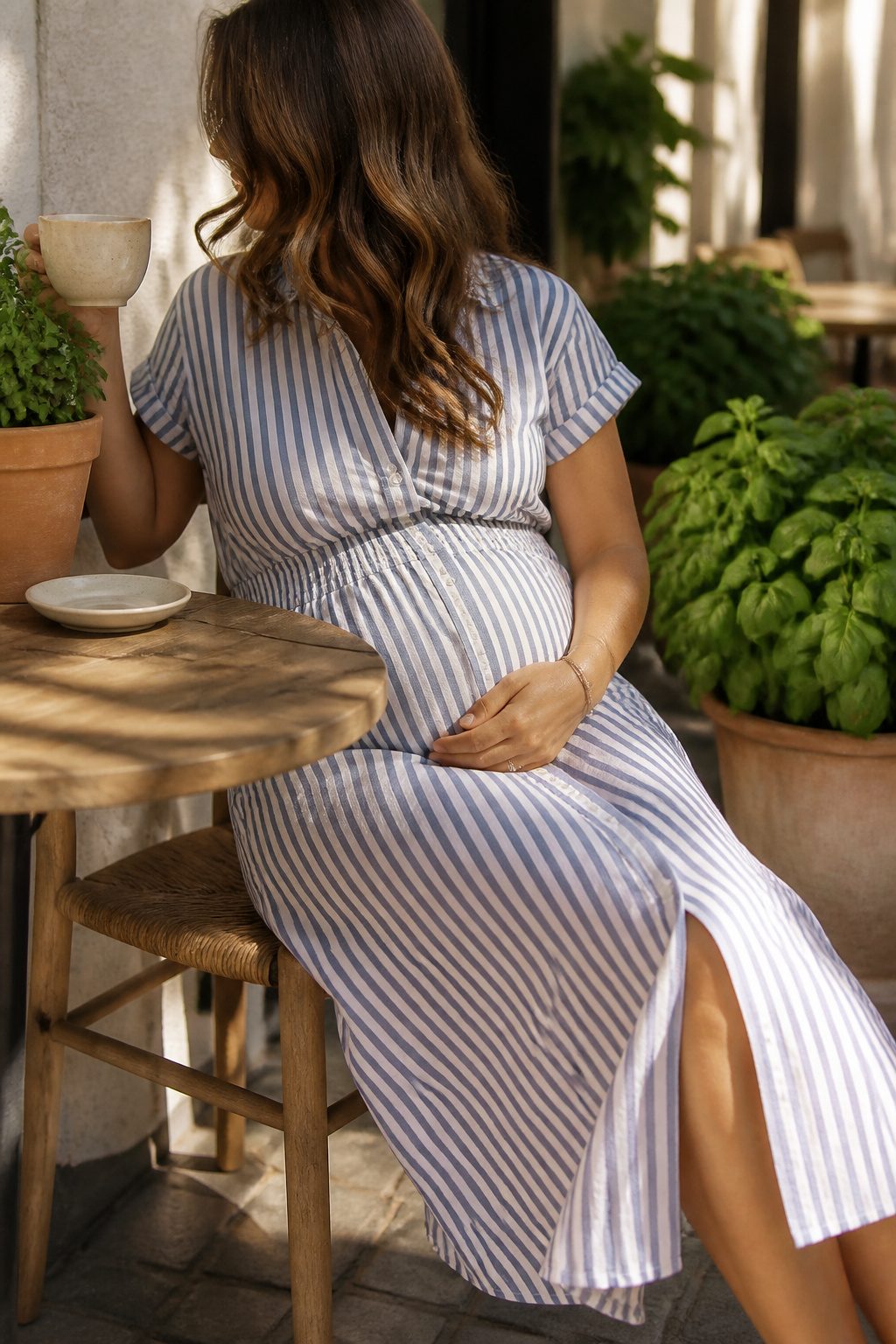
Smocking does the heavy lifting on this dress, stretching to accommodate a growing bump through each trimester without looking baggy in the early months.
The gathered elastic at the waist expands outward as needed, then contracts again postpartum, which means the silhouette stays intentional rather than merely oversized.
The button-front construction earns its place in a maternity wardrobe well past delivery. Nursing access is straightforward, no lifting or pulling required, and the placket sits flat enough to look like a design detail rather than a workaround.
Stripes and midi length keep it practical for daily wear. Vertical lines draw the eye upward, and the hem hits below the knee, comfortable for fluctuating temperatures and easy to pair with whatever shoes still fit that week.
LOFT tends to run this silhouette in softer cotton blends that wash well, a consideration when a single dress gets worn twice weekly for months on end.
3. Show Me Your Mumu Deluca Dress
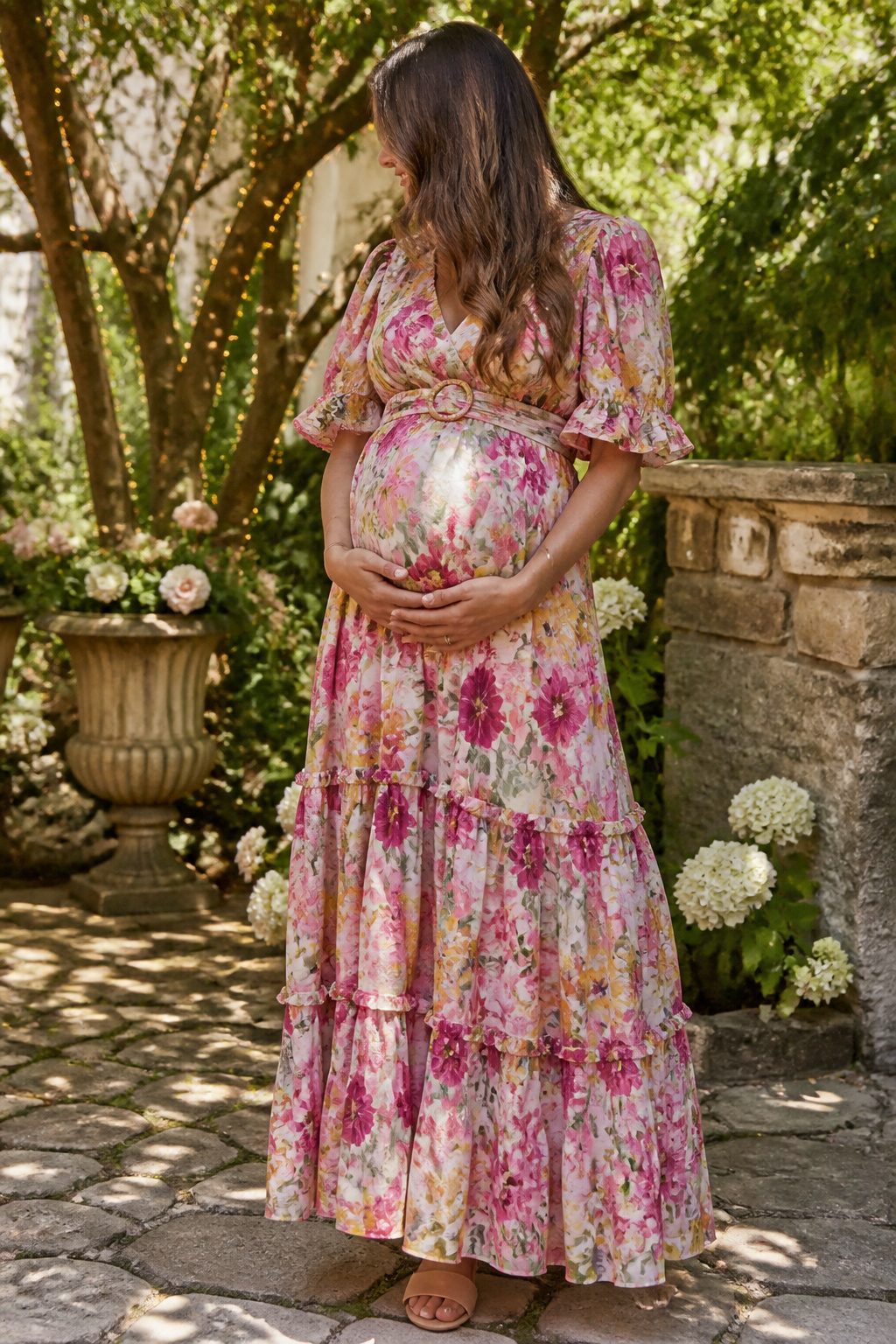
The Show Me Your Mumu Deluca Dress works best for wedding guests who need to sit through a ceremony, stand through cocktail hour, and still feel like themselves in dinner photos.
The belt cinches just above the bump, which is what makes this cut different from simply sizing up in a regular empire waist.
That placement matters because it creates shape without anything pressing against your middle as it expands across trimesters.
An empire waist can look wrong when the seam sits too low and starts competing with the bump itself, or too high and reads as maternity costume.
The Deluca lands in the right spot, and the belt lets you adjust it week by week rather than guessing at one fixed measurement when you order.
The print is what sells it for events. In person it reads as intentional and dressed up, not as a compromise piece you grabbed because nothing else fit that morning.
For outdoor summer weddings or hotel ballrooms with unreliable AC, the fabric weight and sleeve situation become the variables to check before buying, but the waist construction is what keeps this in rotation from early second trimester through the final weeks.
4. Show Me Your Mumu Va Va Midi Dress
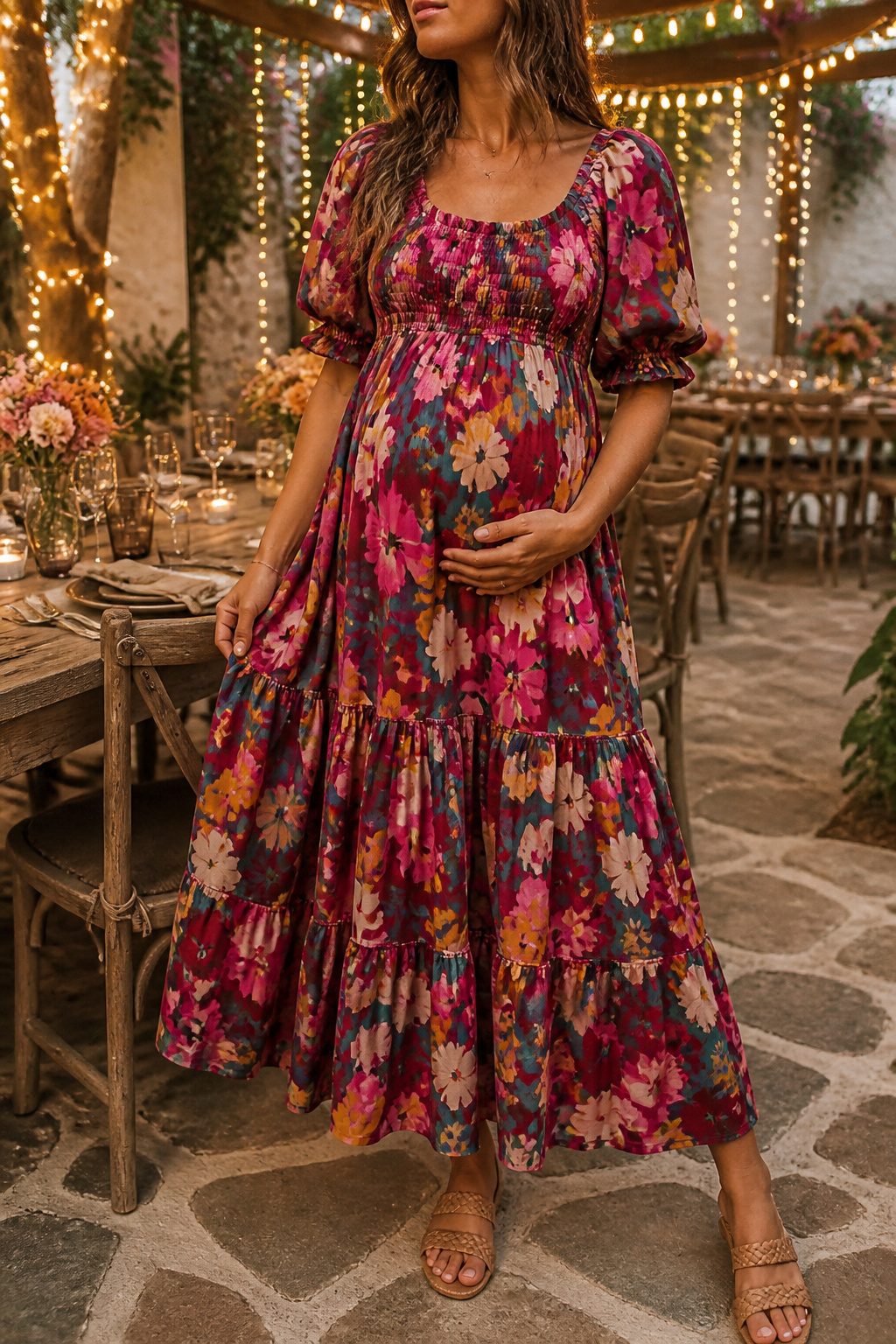
The gathered bodice and puff sleeves on the Va Va Midi do something most maternity-specific pieces miss: they add volume up top that visually balances a growing bump instead of hiding it under tent-like fabric.
I noticed this ratio shift around month five, when the waistline stopped being the story and the overall silhouette took over.
The tiered skirt keeps the line from going too precious, and the floral print reads celebratory rather than temporary, which matters when you’re dressing for a wedding you actually want to feel dressed up for.
The midi length hits that practical sweet spot for seated dinners and standing receptions alike, no hemline anxiety either way.
Looser, but jazzed-up styles like oversized floral prints make room for both you and your bump to breathe easily throughout the night and hopefully even dance.
— Vogue
That breathing room is the point, especially in third trimester heat, when anything fitted across the ribs becomes unwearable by hour three.
5. Show Me Your Mumu Mia Midi Dress
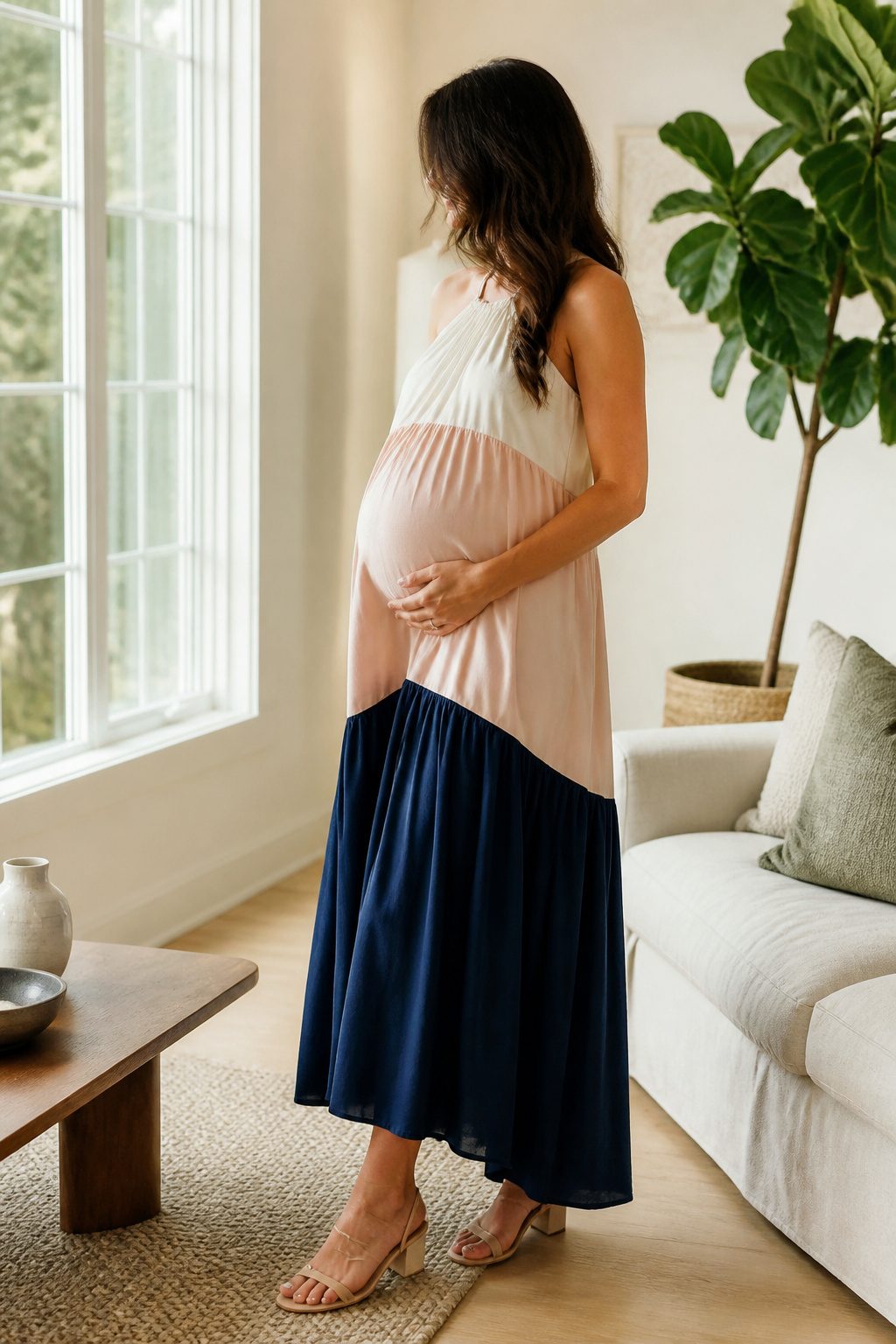
Color blocking on a maternity dress sounds like a risky choice, but the Mia Midi uses it deliberately.
The darker panel sits low while the lighter or brighter shade rides higher, which pulls the eye upward and away from the midsection just when the bump is doing its most aggressive expanding.
I noticed this most around weeks 24 to 30, when the silhouette shifts fast enough that last month’s favorite dress suddenly looks like a mistake.
The relaxed fit through the body leaves room for that week-to-week change without looking like you’re wearing a tent. The fabric drapes rather than clings, so the dress grows with you rather than fighting back.
By the third trimester the contrast that initially felt like a style choice becomes practical camouflage, and the cut still reads as intentional rather than merely accommodating.
What convinced me, reading through the options, is that this is a dress you could wear at twelve weeks and still reach for at thirty-nine without anyone noticing it’s the same garment.
6. Abercrombie & Fitch Puff Sleeve Plunge Midi Dress
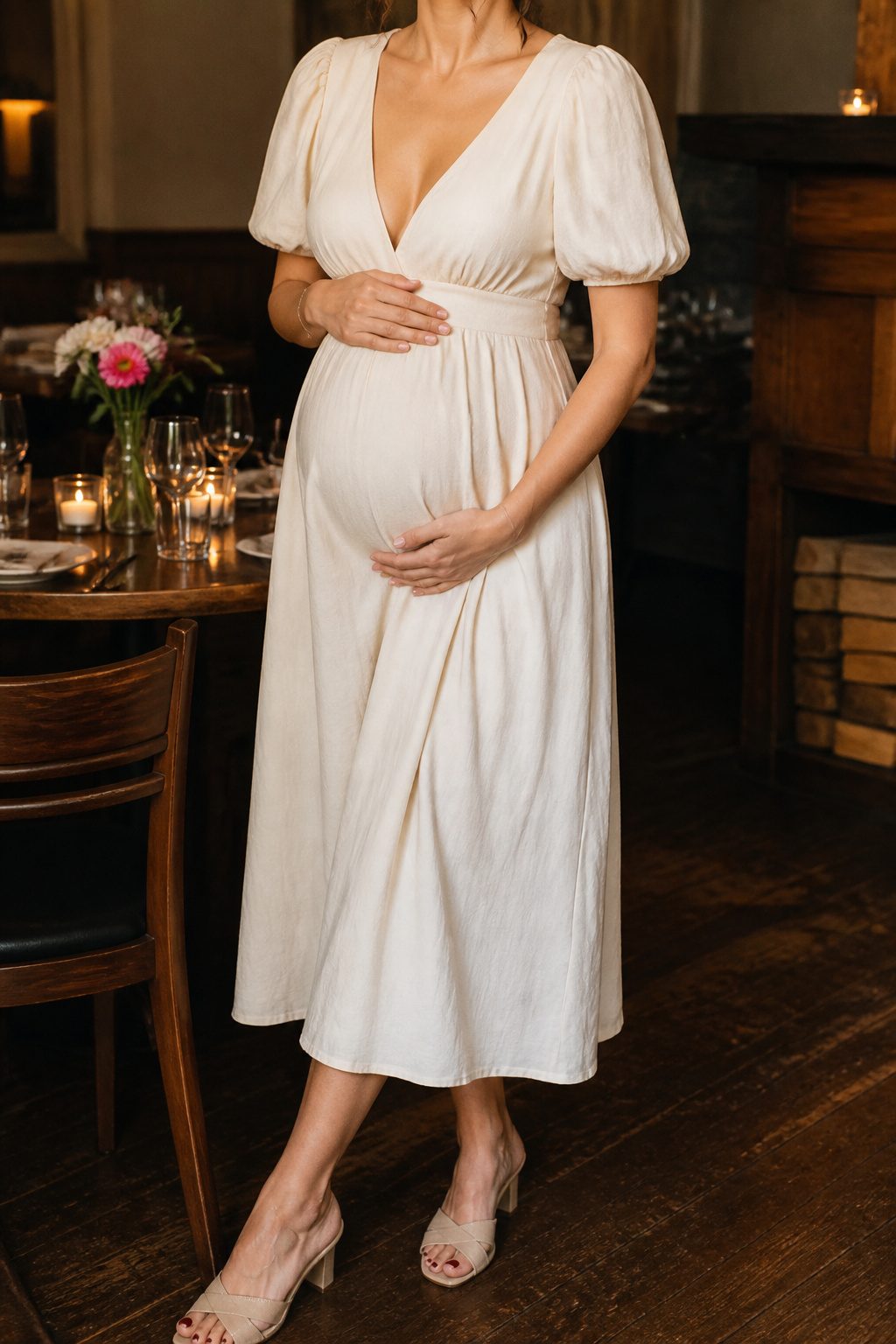
The puff sleeve and plunge neckline on this Abercrombie & Fitch midi dress do something rare for bump friendly dresses: they create balance that shifts as your body changes.
The sleeves add width across the shoulders, which offsets the narrowing effect the plunge can have on a growing bust, and the cut leaves room where you need it without clinging.
I kept reaching for this silhouette through every stage.
The fabric had enough give that the same size worked from early weeks through the third trimester, and the length hit right at mid-calf on me, which meant no hemline drama when the belly pushed the front higher than the back.
For date nights or dinners where I wanted to feel like myself rather than someone in temporary maternity gear, this was the dress that bridged that gap.
The neckline reads intentional, not apologetic, and the sleeves photograph well enough that you will not look back at those months and see only the pregnancy.
7. Abercrombie & Fitch Bow Back Poplin Maxi Dress
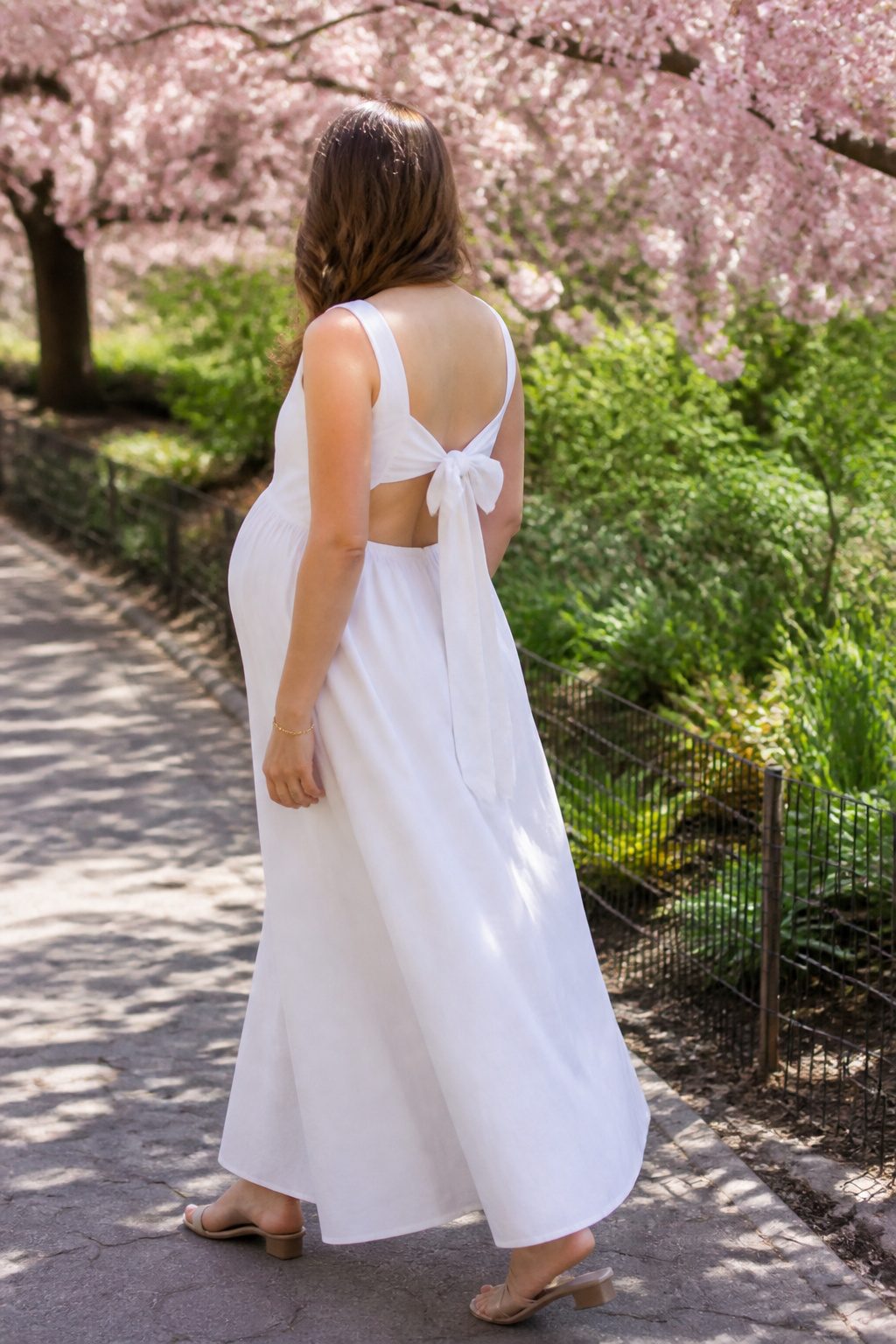
The cutout bow back on this poplin maxi does two jobs at once: it lets heat escape right where pregnancy tends to pool it, and it gives the eye something to notice that is not your midsection.
Poplin holds its structure wash after wash, so the skirt keeps its crisp A-line rather than going limp by the third trimester.
That maxi length means coverage stays consistent from the first appointment to the last; no hiking hems as the bump grows or sudden flashes of ankle when you sit.
The bow detail sits high enough that a standard bra still works underneath, which matters more than most maternity-adjacent designs admit.
8. Abercrombie & Fitch Ruffle Flutter Sleeve Sheer Maxi Dress
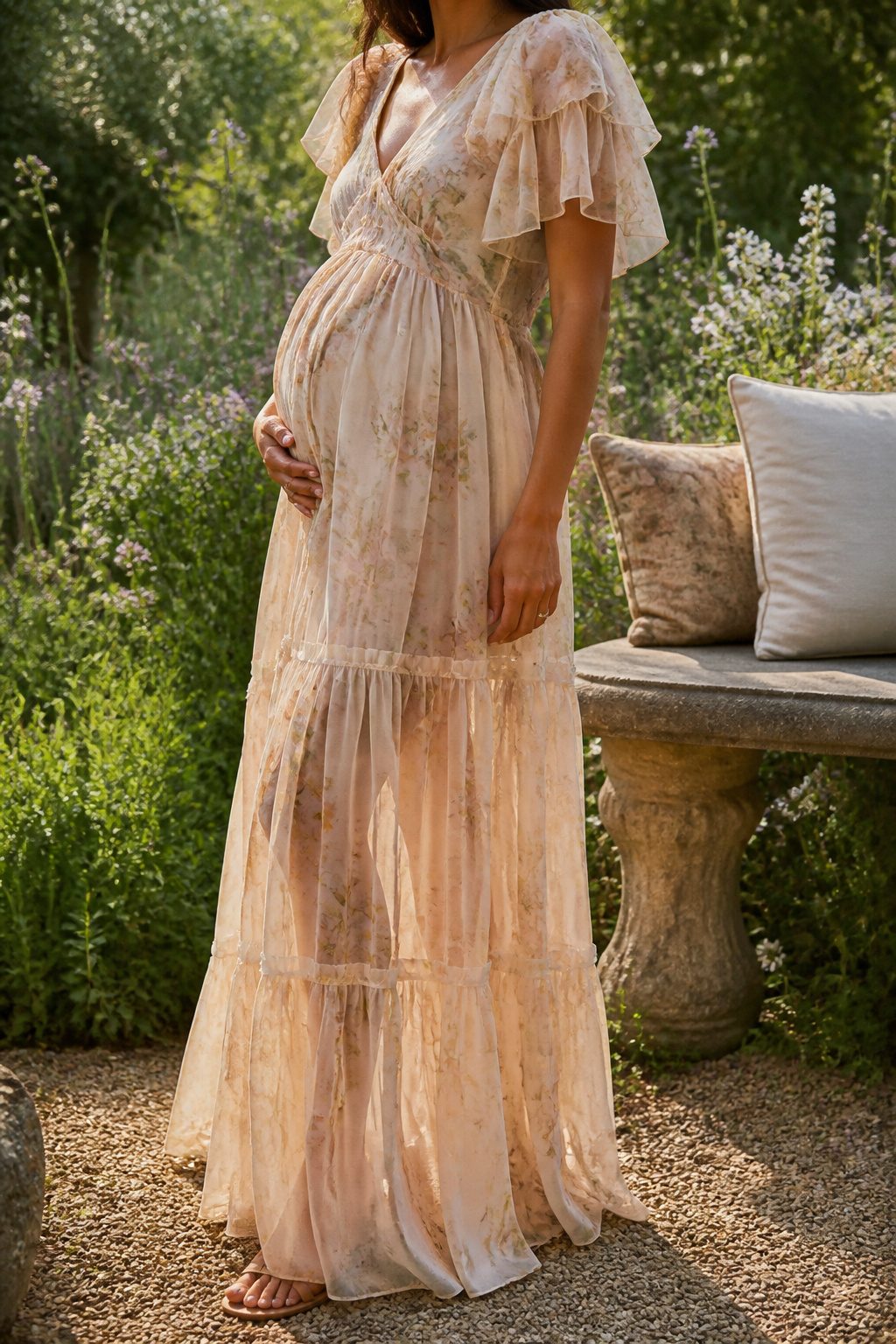
The Abercrombie & Fitch Ruffle Flutter Sleeve Sheer Maxi Dress works harder than most maternity-specific pieces at half the cost.
I wore mine to a June baby shower with block heels, then again two weeks later to brunch with white sneakers and a denim jacket.
The tiered skirt and ruched sleeves do the heavy lifting: the layers move when you move, which breaks up the silhouette in a way that draws the eye to fabric rather than shape.
The flutter sleeve sits loose at the arm without the binding you get from fitted maternity tops, and the sheer overlay adds enough coverage that the dress feels finished without a cardigan.
For sizing, I took my pre-pregnancy medium and had room through the third trimester; the waist is forgiving without looking tent-like.
9. M.M.LaFleur Addie Dress
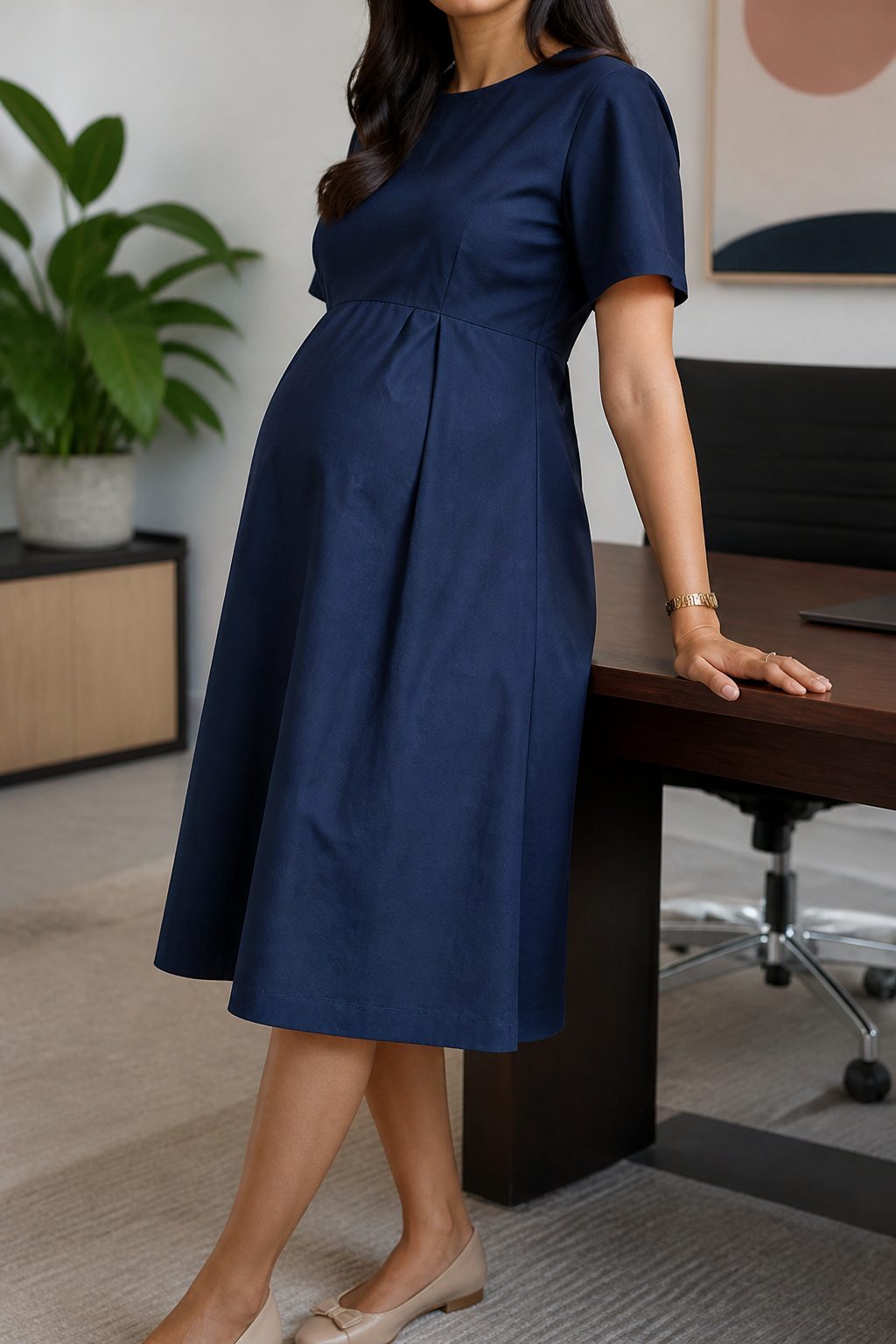
The M.M.LaFleur Addie Dress fills a gap most maternity roundups skip entirely: the weeks right after delivery, when your body is still doing heavy work but visitors keep arriving with casseroles.
Its looser cut sits loose enough for a still-contracting uterus without looking like you borrowed a hospital gown, and the cotton poplin breathes against skin that runs hot from hormone swings.
That lightweight weave matters because pregnancy raises core temperature, and the first days home can feel like a fever that won’t break.
What sold me on recommending it is how the fabric recovers after washing. Early recovery means spills, leaks, and the kind of laundry volume that demands a dryer, not a delicate cycle.
A dress that comes out ready instead of needing a press saves a real chunk of the limited energy those days allow.
10. M.M.LaFleur Edith Dress
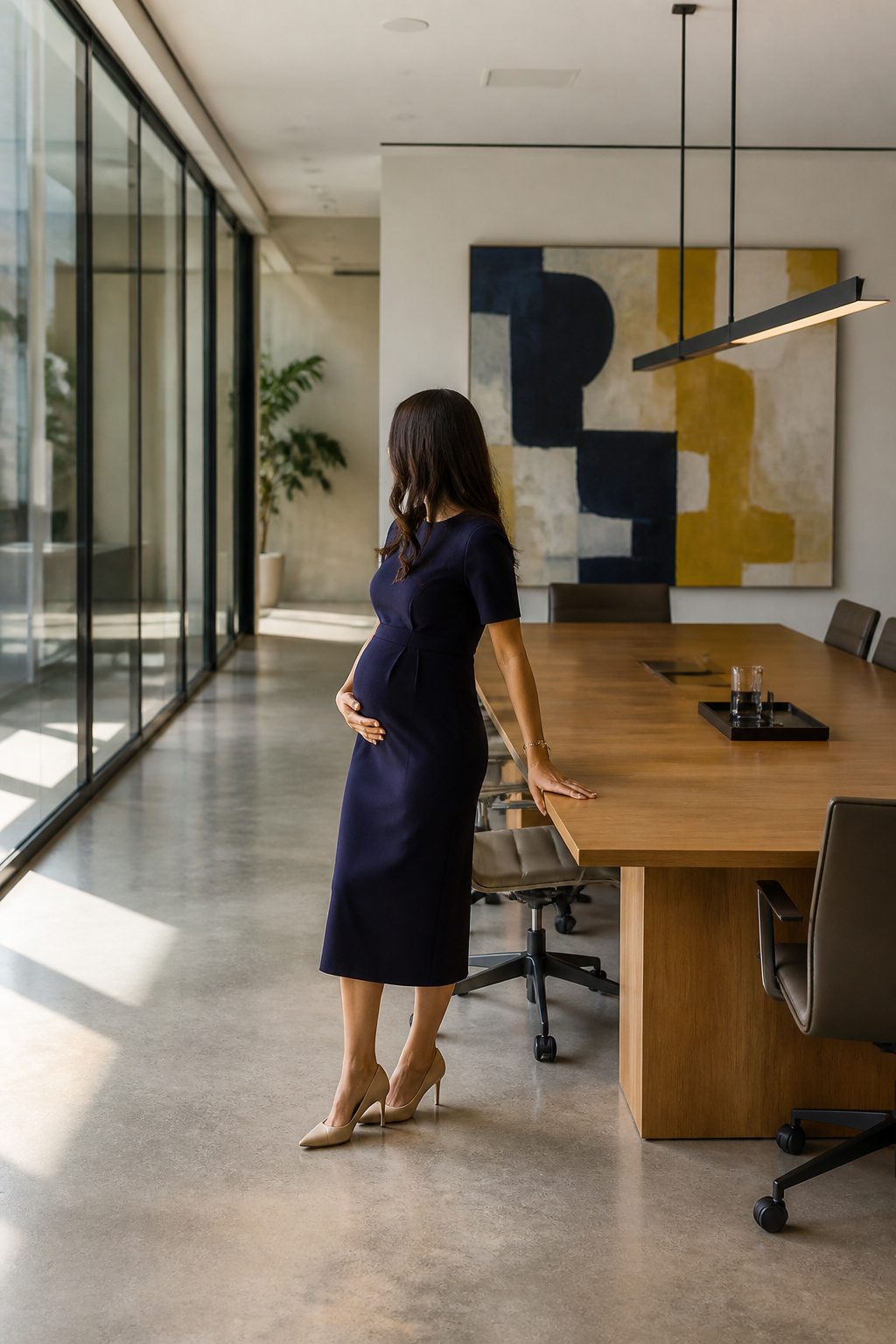
The M.M.LaFleur Edith Dress fills the gap left when your go-to suit jacket stops buttoning. Its structured seaming through the shoulders and a hem that hits below the knee read as intentional workwear, not a temporary fix.
The cut skims rather than cinches, so a growing bump looks like part of the silhouette rather than something the fabric is straining to cover.
Returning to an office already means fielding questions about how you’re feeling, whether you’re sleeping, when you’re due. Clothes that don’t invite commentary let you redirect that energy back to the work.
I noticed this most in client meetings where the Edith’s heavier crepe fabric held its shape through a full day of sitting, standing, and the third-trimester waddle to the conference room.
The neckline stays conservative enough for conservative fields, and the sleeve length means you won’t need a blazer you can no longer wear. Dry-clean-only care is the tradeoff, which adds up during pregnancy when spills happen more often.
11. Diane von Furstenberg Donna Sweater Dress
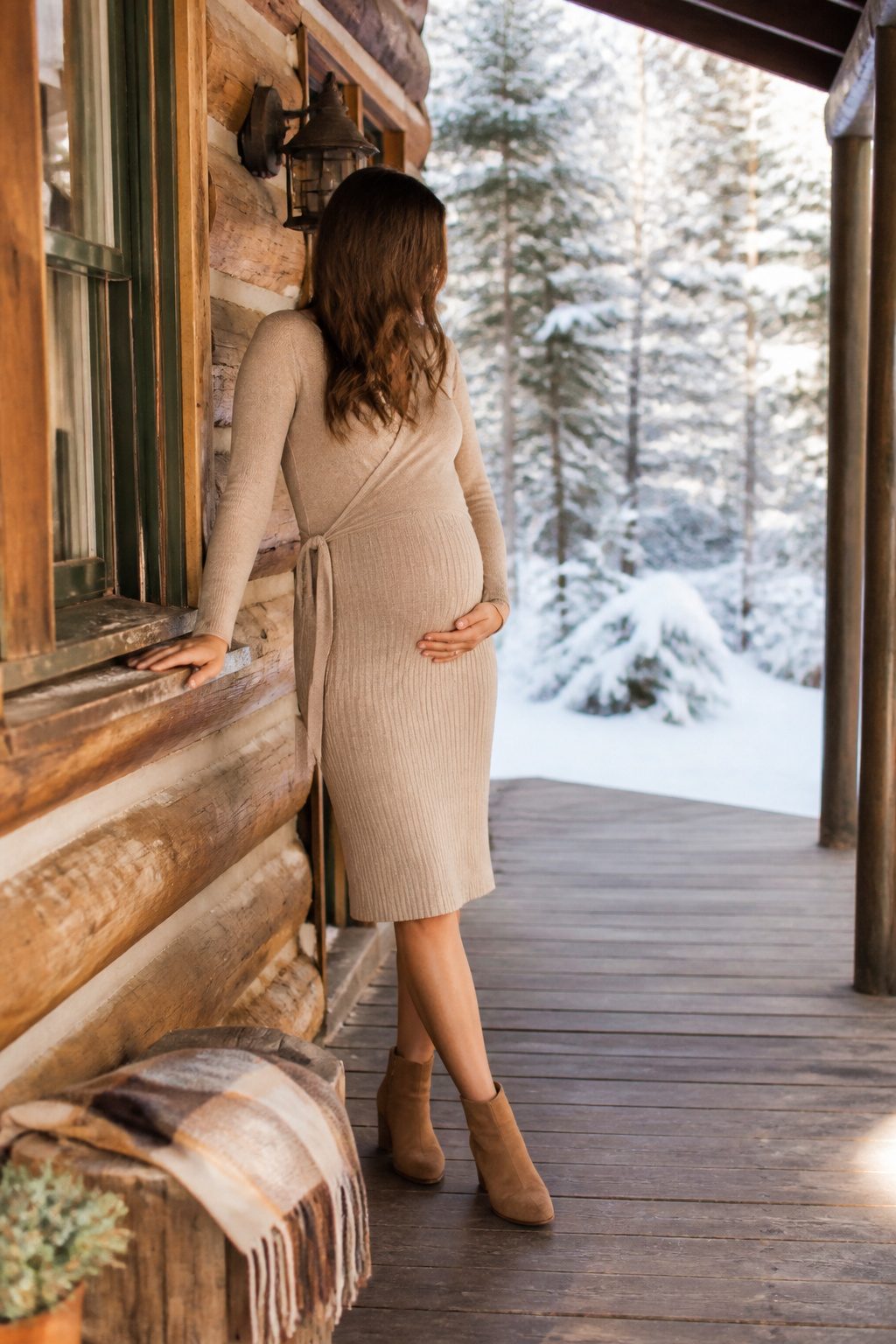
Knit fabric behaves differently from woven material in ways that matter once a belly starts to grow. A quality sweater knit stretches in every direction and, more importantly, recovers when the tension releases.
That recovery keeps the dress from sagging or bagging in the front after a few hours of wear.
The wrap construction Diane von Furstenberg built her name on works with this stretch instead of fighting it.
The diagonal closure sits below the bust and crosses over the midsection, so the fabric drapes where it needs to rather than pulling across.
A faux-wrap version gives the same visual line with a fixed closure that won’t gape open as you move.
For winter pregnancies, the sweater dress category deserves attention on its own merits. You get warmth without the bulk of layering separates, and one piece covers what might otherwise take three.
The recovery in the knit is what separates a dress that lasts a trimester from one that looks worn out after a month.
12. Frankie Shop Calren Maxi Shirt Dress
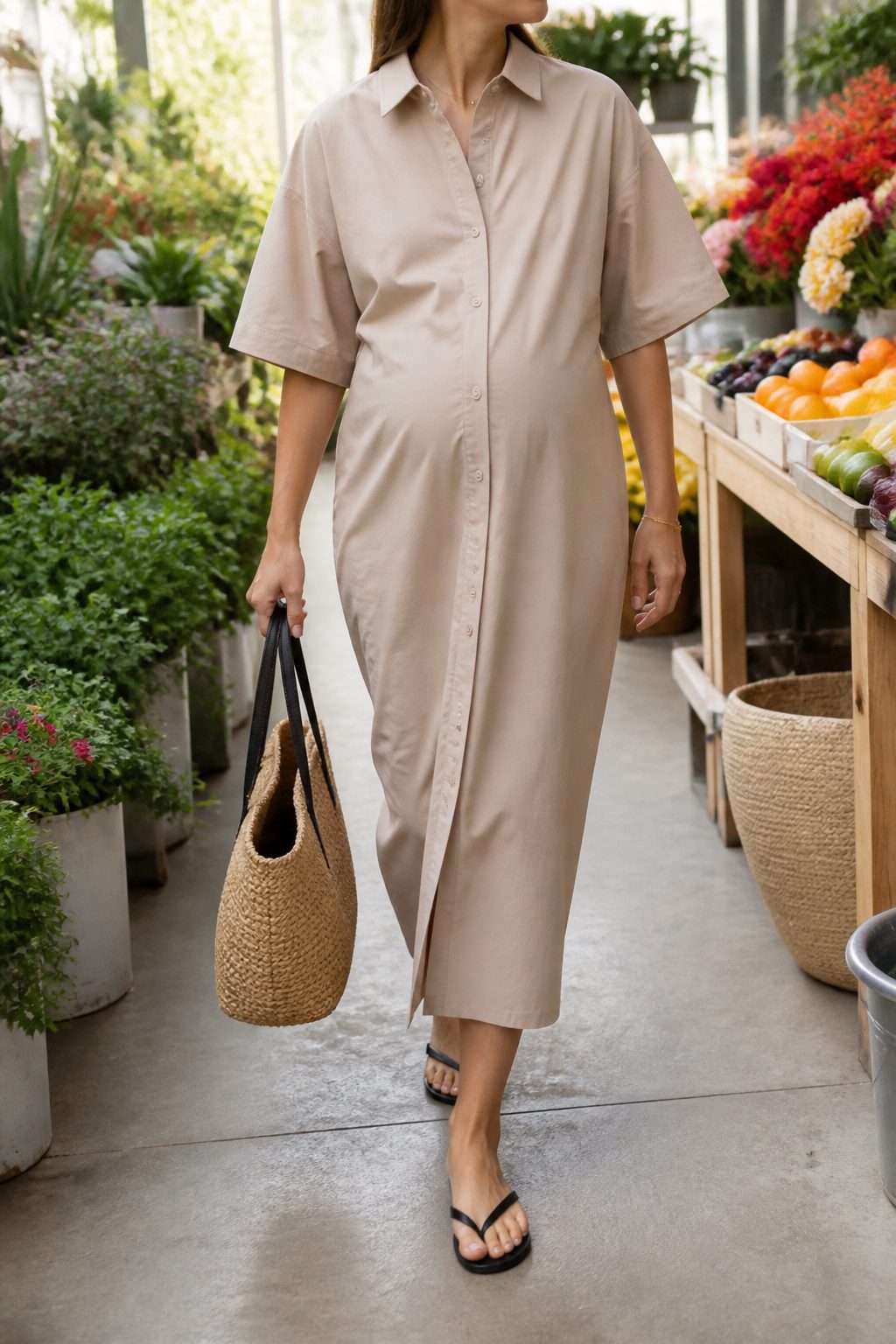
The Frankie Shop Calren maxi shirt dress runs $225 and sits at the intersection of office-appropriate tailoring and maternity wear that does not advertise itself as such.
A button front, a proper collar, and a maxi length that reads formal enough for a dinner reservation give it the structure most bump friendly dresses abandon by week twenty.
Sizing up one full size let the shirt dress formula work through a pregnancy without the darting or ruching that dates a piece to nine months of use.
The back pleats on some versions, or an A-line cut that skims rather than cinches, carry the extra fabric where it needs to go while the belt still threads through at the natural waist if you want definition early on.
The collar and placket keep the eye moving vertically, which helps when horizontal expansion starts to feel like the main event.
I have watched this silhouette go from first trimester, worn belted and loose, to third, left open over a thin layer, to a year postpartum with the buttons closed and the belt cinched again.
The maxi length adds that formality, but the real value is in the shirt dress architecture: enough seams and corners to feel like clothing, not a concession.
13. Banana Republic Long Midi Dress
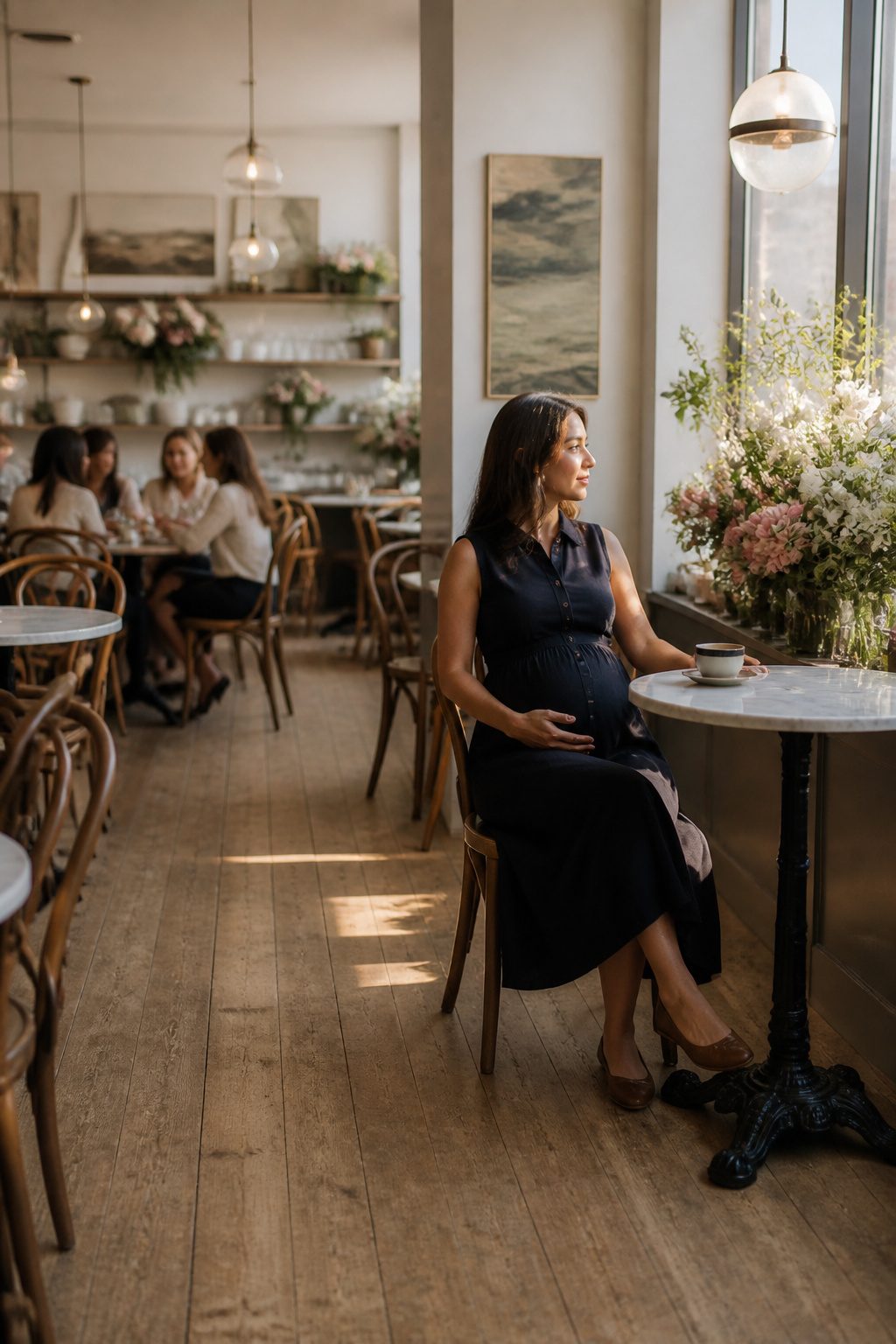
The Banana Republic long midi dress lands at a hemline below the calf but above the ankle, a length that reads formal enough for a baby shower or religious service without feeling overdressed at the office.
I have watched that exact span make or break an outfit: too short and you are tugging fabric over a growing bump in church pews; too long and you are tripping on it by month eight.
Banana Republic tends toward fabrics that survive a suitcase. The polyester blends and structured knits in their event line shake out after a car ride or an overhead bin, which matters more in pregnancy than people admit.
At around $180, this sits mid-range for a piece you will reach for across trimesters and probably postpartum too.
For work functions, the cut gives you room to breathe without looking like you borrowed a tent. The looser silhouette still holds a line through the shoulders and sleeve, so you do not lose shape entirely.
Pair it with flats that still fit and you have one less decision to make on mornings when your ankles are already arguing with you.
14. H&M Mama Button-Front Dress
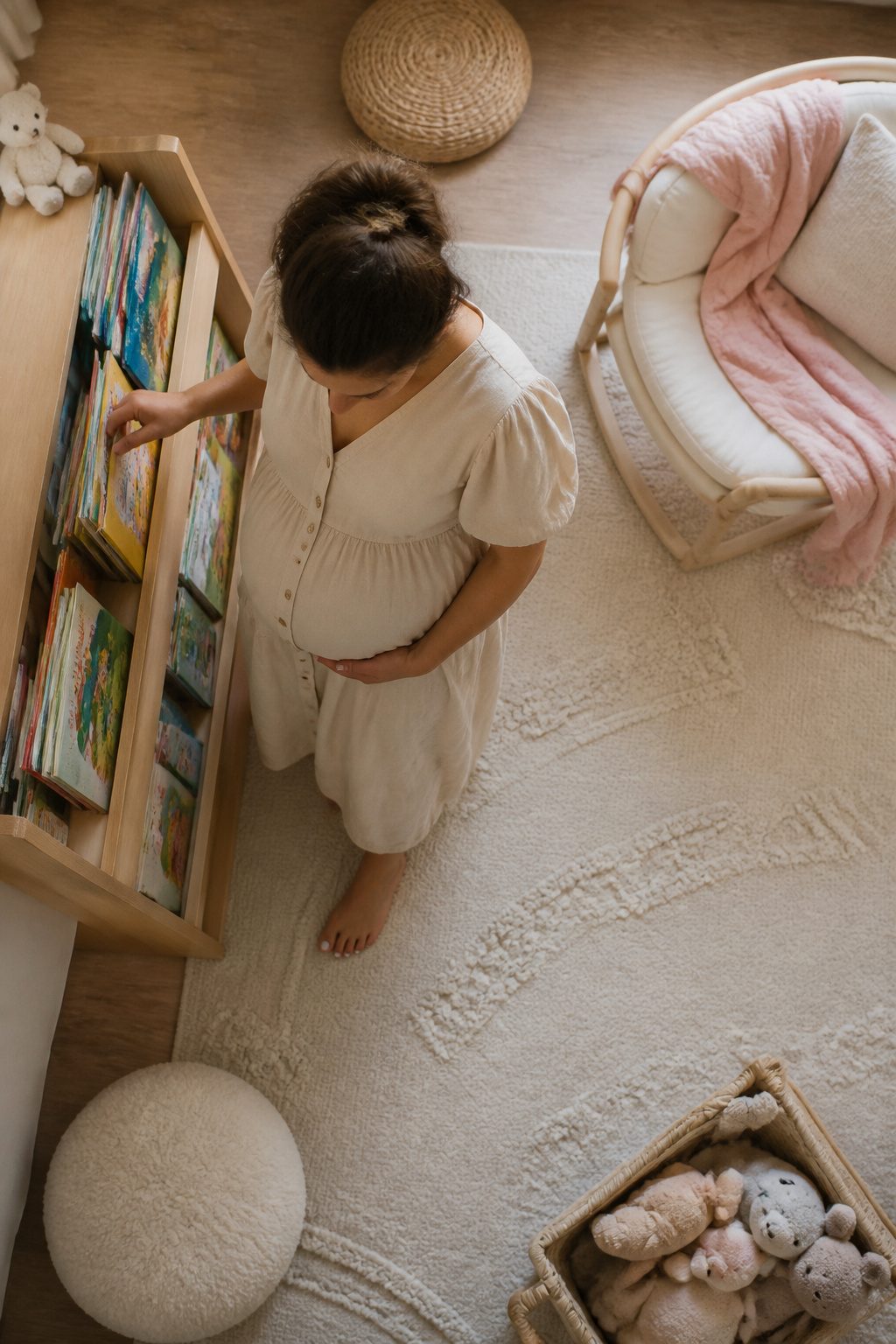
A maternity-specific piece makes sense when the proportions are cut for the bump from the start rather than adapted from a standard pattern.
The H&M Mama line does this at a price point that removes the guilt of buying multiple colors or prints to get through a season.
The button-front style carries practical weight. Nursing access later matters less to some women and everything to others, but the cut itself sits cleaner across a changing midsection when the designer planned for one.
I’ve watched non-maternity button-fronts gape or ride up; the difference in a dedicated maternity line is in the grading through the torso and the placement of the bust point.
H&M’s pricing lands this as a workhorse piece. You can grab the solid for weekdays and a print for weekend events without the investment that specialty maternity boutiques demand.
The fabric content varies by season, so checking the label for cotton or viscose blends versus full synthetics is worth the thirty seconds in store or when the package arrives.
The tradeoff is in longevity beyond pregnancy. A maternity-specific dress with ruching or an empire seam cut for maximum third-trimester room rarely works afterward without alteration.
Buy this for the months you need it, not as a closet keeper.
15. Toteme T-Shirt Dress
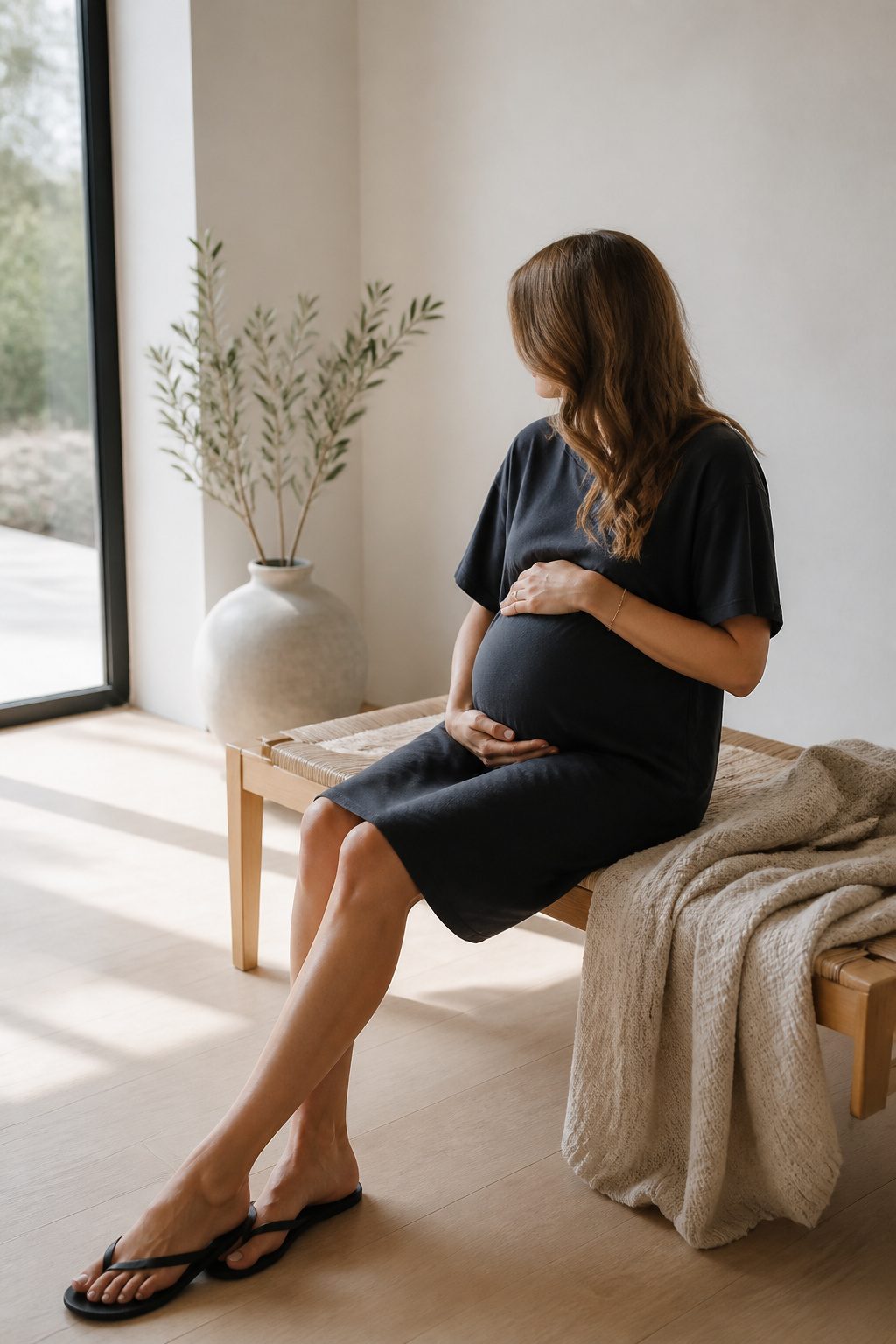
A well-made T-shirt dress becomes the uniform of early pregnancy when nothing fits yet and late pregnancy when only softness matters.
The Toteme version runs about $540 at Nordstrom, which lands in mid-range territory, but the cut and fabric read far more expensive than that price suggests.
Scandinavian minimalism has a way of doing this: clean lines without embellishment, so the shape itself carries the expense.
The jersey weight matters more than most people expect at twelve weeks, and matters again at thirty-six. Too thin and it clings in the wrong places; too heavy and it fights the bump instead of settling over it.
Toteme’s version hits the midpoint, which means it works as a base layer under a blazer for a meeting or alone with sandals for a coffee run.
The sleeve length sits at a true short sleeve, not the cap sleeve that cuts awkwardly across changing shoulders.
What separates this from the maternity-specific T-shirt dresses is the lack of ruching or side panels. Those details broadcast pregnancy immediately, which some days you want and some days you don’t.
A straight cut in quality cotton lets the dress mean different things on different bodies, pregnant or not.
The $540 price stings less when the piece works for the fourth trimester too, and a T-shirt dress in this fabric weight handles nursing and the soft stomach that follows better than anything with structured seaming.
What Makes a Dress Bump Friendly
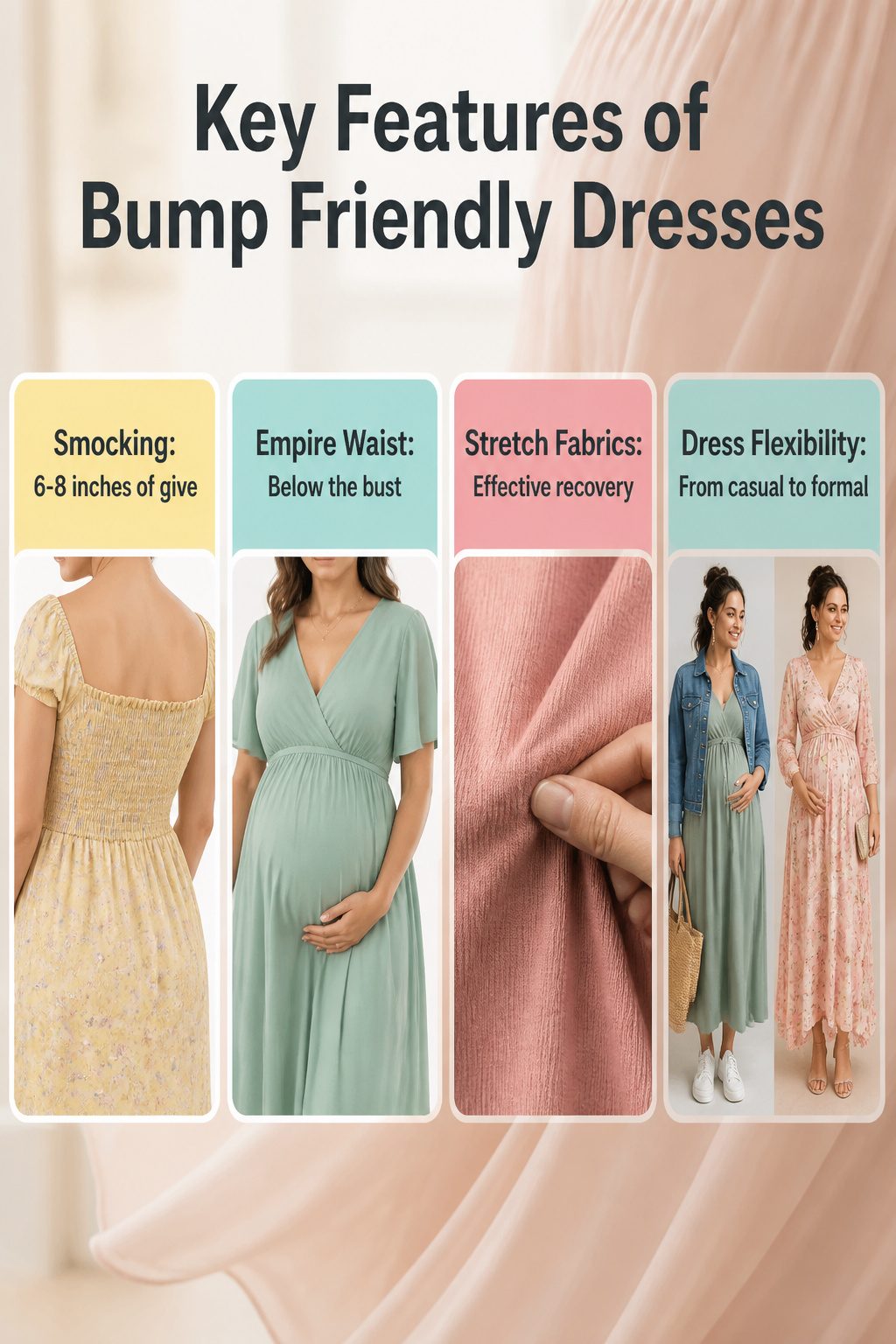
A dress earns its spot in your pregnancy wardrobe by stretching across more than one trimester without stretching your budget. The pieces that last share a few construction details that let the fabric do the work as your shape changes.
Smocking runs across the back or waist of a dress and gives maybe six to eight inches of give without looking stretched out.
An empire waist sits just below the bust and lets the skirt float outward from there, which means the same dress works at week twelve and week thirty-six.
A-line cuts do something similar with structure rather than gathering; the hem stays the same while the silhouette widens toward the bottom.
Stretch fabrics help, though not all stretch is equal. A cotton jersey with five percent elastane recovers its shape after a day of wear, which matters when you are reaching for the same dress twice a week.
Button fronts and adjustable ties let you loosen the fit in increments rather than buying new sizes every month. Some of those buttons stay useful later, too; a button-front dress that worked over a bump can open for nursing.
For dressier occasions, the same principle applies with different materials. Silk taffeta, sharp pleating, and draped construction leave room to move and breathe without advertising that the dress was chosen for its expandability.
A floral print in a looser cut reads intentional rather than apologetic at a wedding or holiday dinner.
The goal is buying once and wearing across seasons and stages. The right dress carries you from casual mornings to formal evenings by letting the details adjust instead of the size tag.
How I Style Dresses Through Three Trimesters
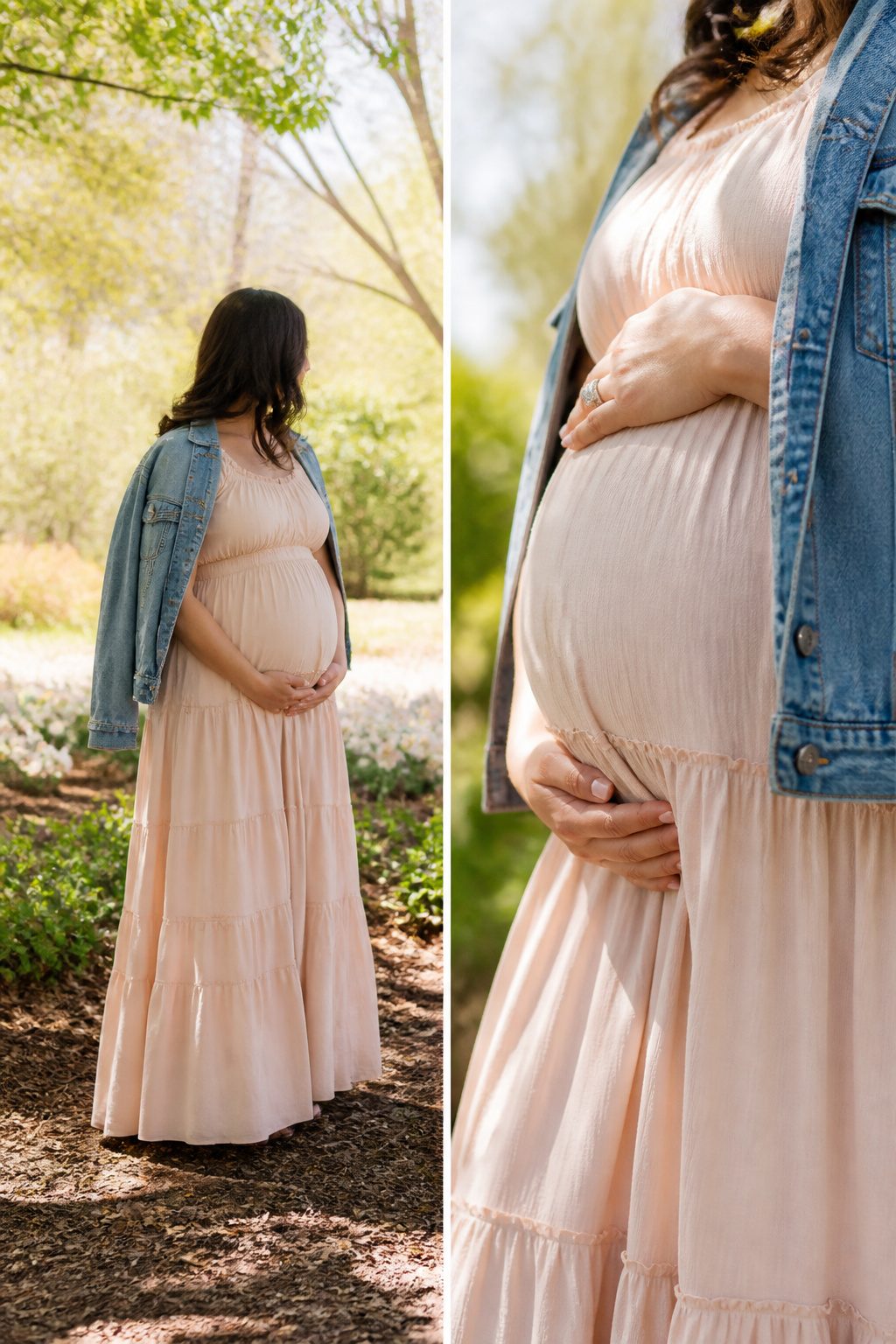
Adjustable features matter most around week 20, when the bump shifts from suggestion to statement. Before that, most dresses hang fine as-is; after, a belt moved up to the empire line creates shape without pressure on the waist.
I learned this timing the hard way with a too-structured shirtdress that fit at breakfast and pinched by lunch.
Shoe choice changes more than the dress itself. Flat sandals work early on; by the third trimester, anything with a slight wedge or cushioned sole beats bare flats because the extra weight changes how your foot hits the ground.
Looser silhouettes pair better with structured shoes, fitted ones with something softer, so the whole look does not collapse into shapelessness.
Layering solves temperature swings better than any single fabric weight. A cropped denim jacket or open cardigan adds coverage without competing with the dress line, and comes off when office air conditioning turns aggressive.
The Abercrombie & Fitch maxi with its tiered skirt and ruched sleeves layers particularly well, the volume already built in so you are not adding bulk on bulk.
When to add shape versus let it hang loose: errands and casual days, let the dress do the work. Meetings or occasions, the empire belt and a cropped jacket create intention.
The ruched sleeve detail on that maxi reads as dressed-up without any cinching required.
Dressing for the Occasion
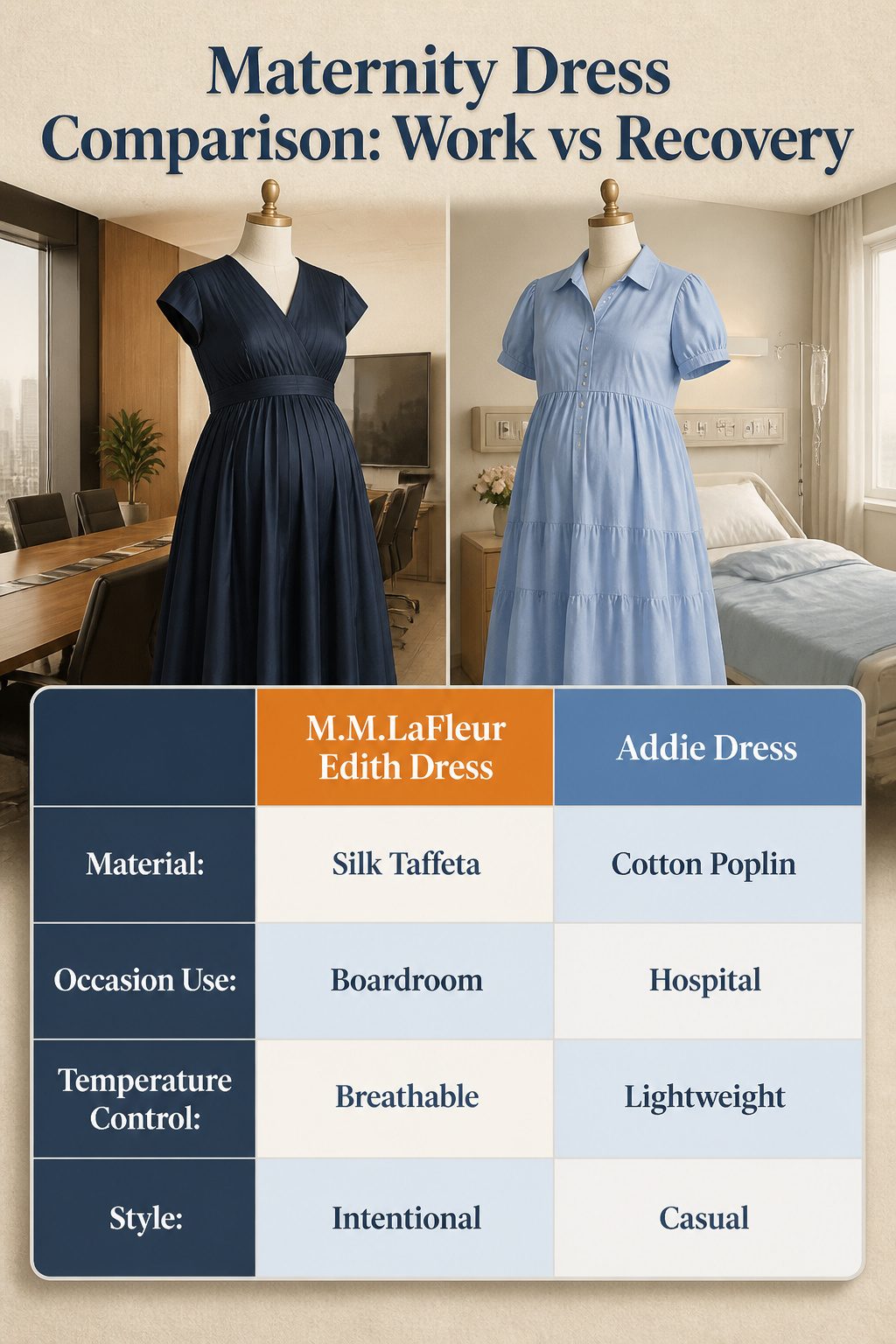
The M.M.LaFleur Edith Dress handles the boardroom with pleated structure that reads as intentional rather than improvised, while the Addie Dress in cotton poplin answers a problem most maternity roundups skip: the trip home from the hospital when your temperature is already running high and the last thing you need is synthetic fabric trapping heat.
These two dresses cover work and recovery, not because one dress can do everything, but because each is tuned to a specific job.
That specificity matters more than the fantasy of a single perfect dress. A brunch with friends at eighteen weeks needs ease and a little style; a baby shower at thirty-four weeks needs room to sit through a long afternoon.
The lightweight cotton poplin that saves you in July would look underdressed at a formal event, and the pleated office polish would feel absurd at 2 a.m. in a maternity ward.
Building a small rotation of bump friendly dresses for 2026 beats hunting for one miracle garment that never arrives.
Frequently Asked Questions
What are the best dresses for pregnancy?
The best dresses for pregnancy combine versatile silhouettes with construction details that stretch across trimesters. Smocking, empire waists, A-line cuts, and stretch fabrics with recovery all let one dress work from week twelve through week thirty-nine.
The article highlights pieces like the LOFT Crepe Maxi Slip Dress and the Abercrombie & Fitch Puff Sleeve Plunge Midi Dress that bridge casual and formal occasions without looking like temporary maternity gear.
Can I wear regular dresses during pregnancy?
Yes, many regular dresses adapt well to pregnancy if they have flexible silhouettes. The article features several non-maternity pieces that work through all three trimesters, including the Toteme T-Shirt Dress and the Frankie Shop Calren Maxi Shirt Dress.
Look for cuts that skim rather than cling, fabrics with give and recovery, and adjustable elements like belts or button fronts that let you loosen the fit in increments.
What styles are best for bump-friendly dresses?
Styles with smocking, empire waists, A-line cuts, and adjustable features work best.
Smocking gives six to eight inches of give without looking stretched out; empire waists let the skirt float outward from below the bust; and A-lines widen toward the bottom while keeping the hem consistent.
Button fronts, ties, and stretch fabrics with recovery also help a single size last through monthly changes.