A capsule wardrobe lands you somewhere between 30 and 40 pieces that mix into dozens of outfits, but the real cost is the upfront hours of honest assessment, not the shopping. Most people get stuck on the first step because they try to curate before they have seen what they actually own. The jeans with tags still on after three years, the silk blouse buried under trendier buys: the work is subtraction, not buying.
1. Assess Your Current Wardrobe
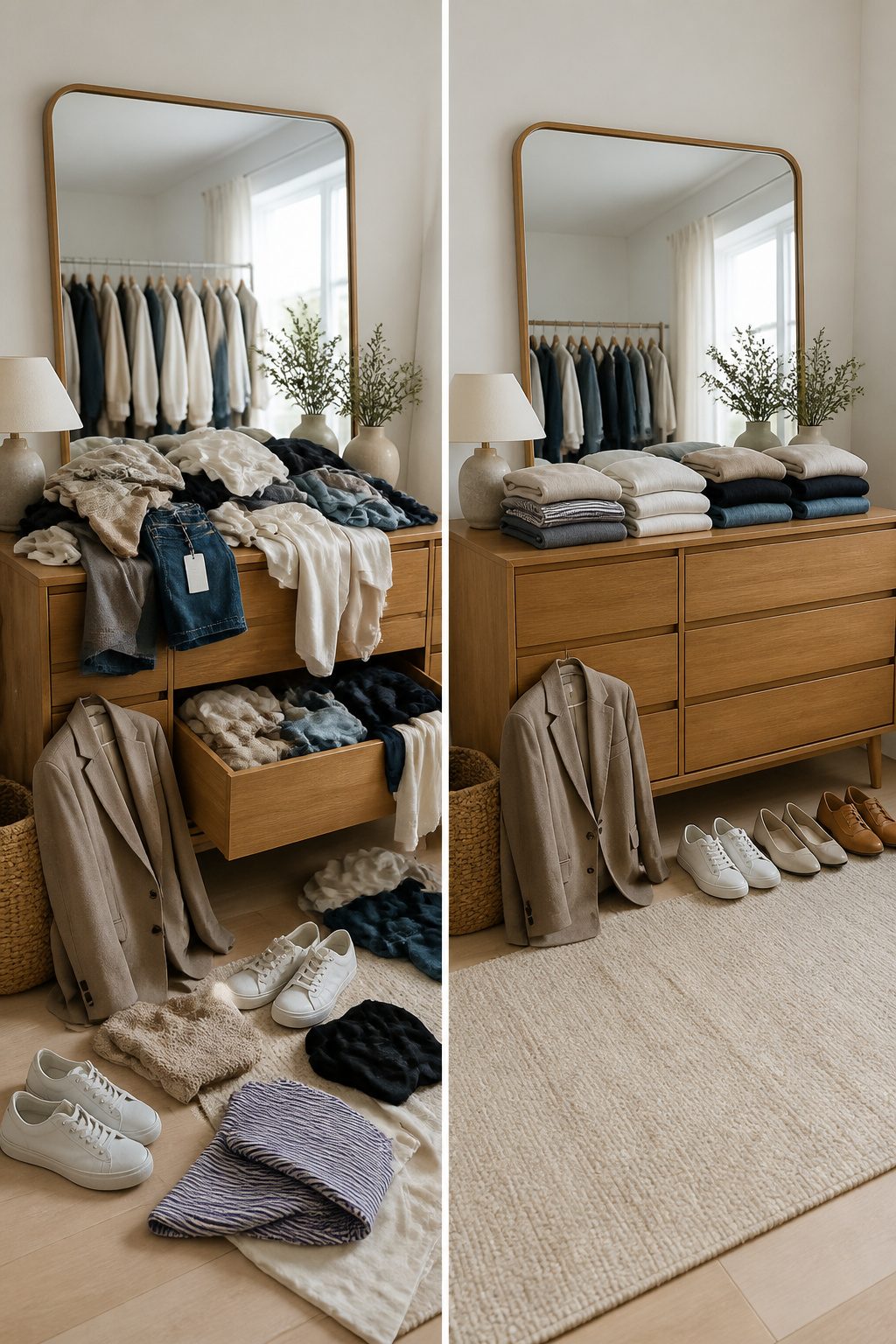
The jeans sat in my drawer for three years, tags still on, because I kept telling myself the fit would improve if I just lost five pounds. It never did, and that pair became my lesson in the cost of keeping clothes for a future self that never arrives. Most sources on how to build a capsule wardrobe start here for good reason: you cannot curate what you cannot see.
Pull everything out. Every item gets the same three questions: do I wear this, does it fit now, and is the condition good enough that someone else could wear it? The keepers go back. The damaged pieces need honest evaluation; donate only what another person would actually want, not what you want gone. Alteration works for close fits, but budget for the real cost of tailoring before you commit a straggler to that pile.
What surprised me most, reading through the guidance, was how often the forgotten pieces turn out to be the keepers. That silk blouse pushed to the back, the trousers that fit perfectly but got buried under trendier buys: these are the bones of a capsule already in your closet. The work is subtraction, not shopping.
2. Define Your Personal Style
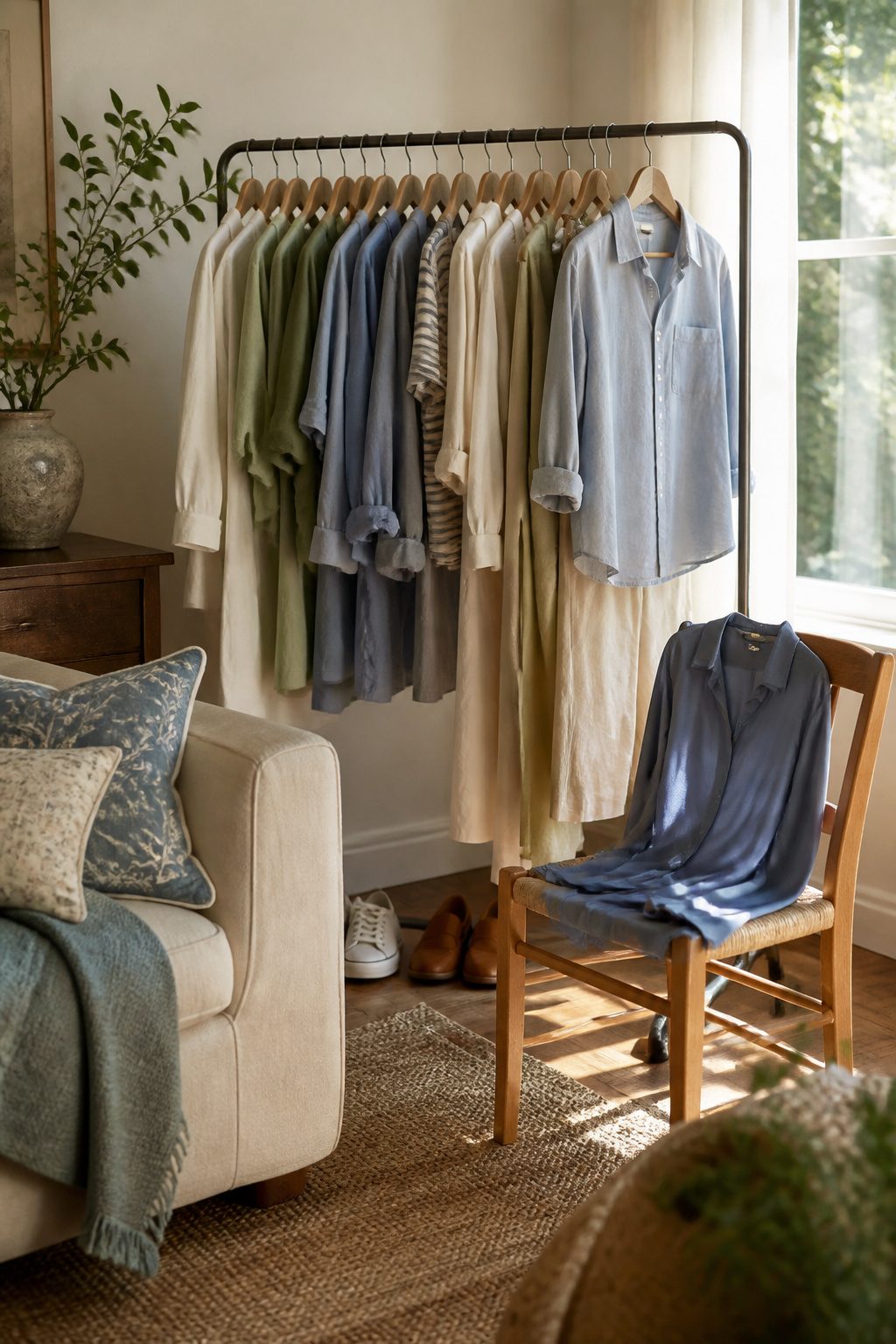
The clothes that actually leave the hanger on a rushed Tuesday morning say more than any mood board. For two years I tracked what I wore, and the gap between what I bought and what I reached for was embarrassing. Silk blouses I admired in the store sat untouched because they felt like costumes. The cotton button-downs I considered boring got worn twice a week.
Color analysis helped me stop guessing. A 12-season assessment placed me in Soft Summer’s darkest range, and narrowing to those tones meant everything in my drawer suddenly played together. I stopped buying black as a default; it had never been flattering, just safe. My final palette settled to about eight colors plus neutrals, and that constraint made morning decisions faster, not harder.
Patterns took longer to figure out. Small-scale florals worked; large ones overwhelmed my frame. I learned this by noting which pieces got worn once and which got washed repeatedly. The same with silhouettes: fit-and-flare skirts looked charming on others, but on me they felt juvenile, so they stopped entering the fitting room with me. Natural fibers became non-negotiable after I admitted that polyester blends left me sweaty and distracted by noon.
The real test is comfort as a hard limit. A beautiful garment that demands adjusting, tugging, or special cleaning becomes a burden. If you overhear yourself thinking about the outfit instead of the day ahead, that piece is aspirational, not functional.
3. List Your Essential Items
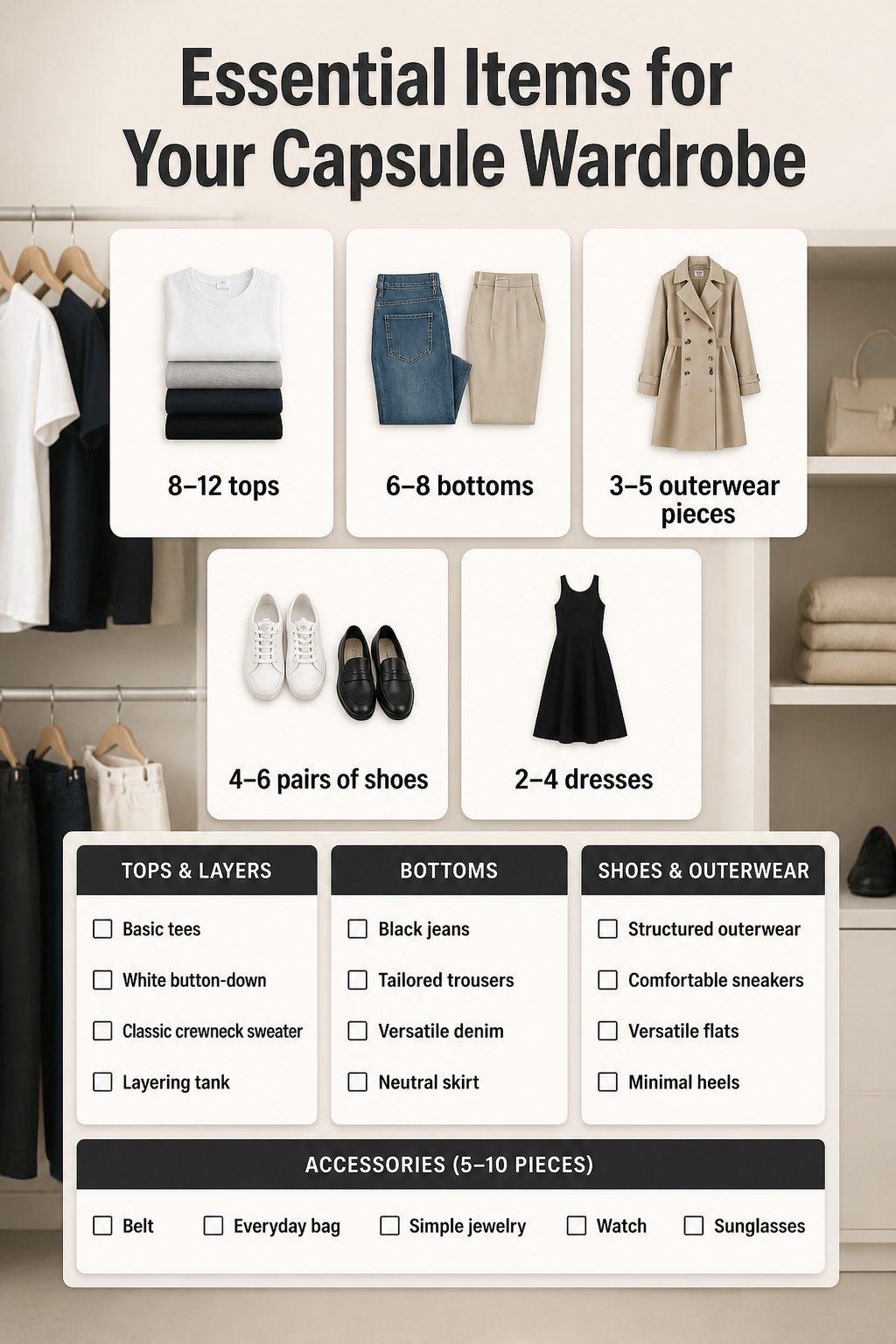
A typical capsule wardrobe lands somewhere between 30 and 40 pieces, with 8–12 tops, 6–8 bottoms, 3–5 outerwear pieces, and 4–6 pairs of shoes as the standard framework. Add 2–4 dresses if your routine calls for them. Those eight tops and six bottoms alone give you 48 possible combinations before you even reach for a jacket or swap your sneakers for heels.
The items that show up on every list are the ones worth prioritizing. Basic tees in white, black, grey, and navy form the foundation. A crisp white button-down in cotton poplin or linen works under a blazer or open over a tank. Black jeans read dressier than blue and carry you from day to night without a change. A classic crewneck sweater layers across seasons. For outerwear, something structured enough for meetings but relaxed enough for weekends covers most situations. Shoes need to be genuinely comfortable; you will reach for the pair that does not hurt before the one that looks interesting. A black maxi dress handles the occasions you did not plan for. Accessories sit outside the core count, 5–10 pieces, and fill the gaps: a belt that pulls together an oversized shirt, a bag sized for your actual daily load, simple jewelry that does not compete.
The numbers are not rules. Someone who rarely dresses up might drop to two dresses and add a third bottom. Someone in a formal office might push toward the higher shoe count. The math only works if it matches the life you already lead, not the one you imagine having.
4. Buy for Quality Over Quantity
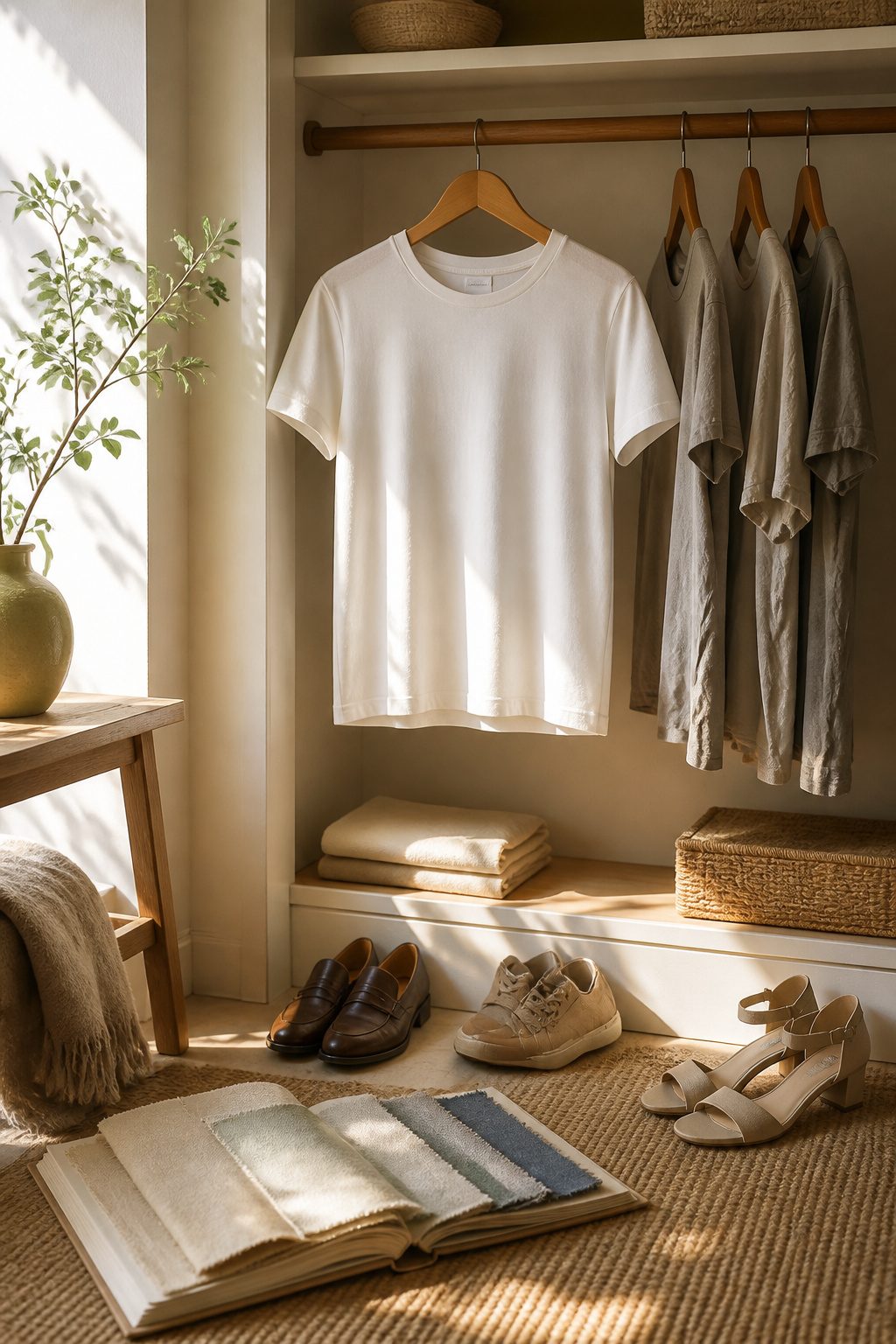
The fabric label tells you most of what you need before you even try something on. Organic cotton, TENCEL, and recycled fibers hold shape through dozens of washes where cheaper synthetics start pilling inside a month. I learned this the hard way with white tees. A $19 basic from a fast-fashion chain went saggy at the collar after four wears, so I replaced it with a $78 Perfectwhitetee that still sits flat after two years. The math is almost embarrassing: the cheap one cost about $4.75 per wear before I donated it, and the better one is down to roughly $0.75 per wear with plenty of life left. Quality only feels expensive if you count the tag and ignore the tally.
5. Shop Second-Hand or Sustainable
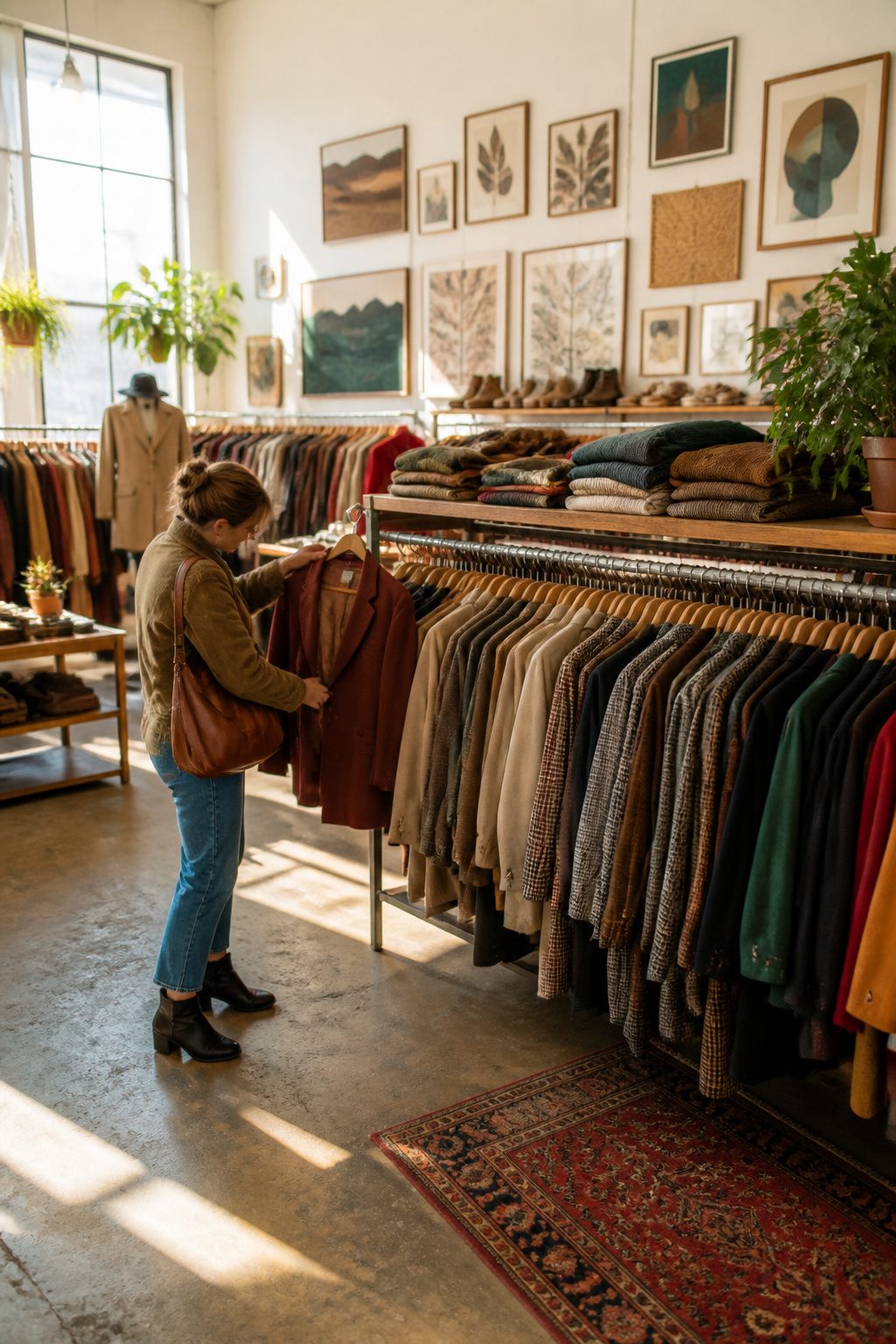
Sustainability gets mentioned in almost every capsule wardrobe guide, yet most stop short of naming where to actually shop. The hunt is real, and the honest truth is that it takes longer than clicking "buy now" on a fast-fashion site.
For second-hand, the women’s blazer section at any well-organized thrift store is where the value hides. Blazers are donated more often than worn out, and a wool or cotton-linen piece in a classic cut can look current for years. I check shoulders and lining first; those are the two places wear shows early.
Resale apps work better for replacing a specific piece you already know fits. Search by brand and size, and filter for items with original tags or a single owner. The listings with flat-lay photos and fabric close-ups tend to match reality more closely than hanger shots against a bedroom door.
When buying new, the materials matter more than the marketing. Organic cotton, TENCEL™ lyocell, organic wool, and recycled fibers last longer than synthetics and handle repeated washing without turning shiny. A brand that lists fabric content down to the percentage and explains where it sources those materials is usually doing more than greenwashing. If the "sustainable" label costs triple but the fabric is 100% polyester, the math does not work.
6. Mix and Match Everything
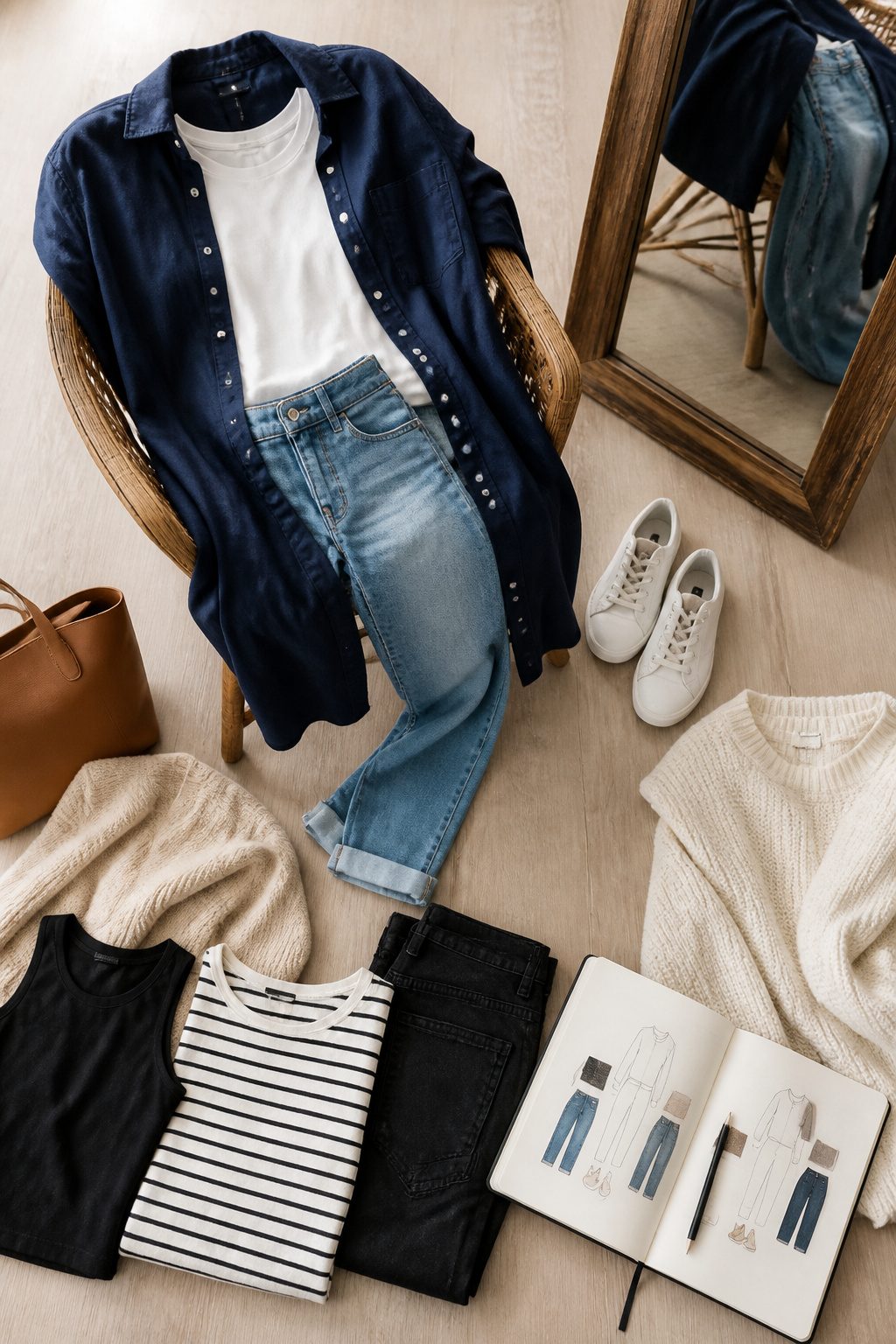
A capsule wardrobe lives or dies by how many outfits you can actually build from it. Most guides land somewhere between 25 and 40 pieces total, which sounds spare until you start pairing them. The math works because every item has to earn its place: each top matches multiple bottoms, each layer plays across seasons.
When I mapped out my first serious capsule, 34 pieces produced 62 wearable combinations. The surprise came from a navy shirt dress I’d filed under "summer only." Worn open over a white tee and slim jeans, it became a layering piece that stretched across three seasons. That one repurposing added twelve outfits I hadn’t counted on.
The test is whether you can dress for two weeks without repeating a full combination. Sit down and actually write the pairings out. The gaps show up fast: a bottom with no matching top, a color that isolates itself. Fix those before you buy anything else.
7. Care for Your Clothes
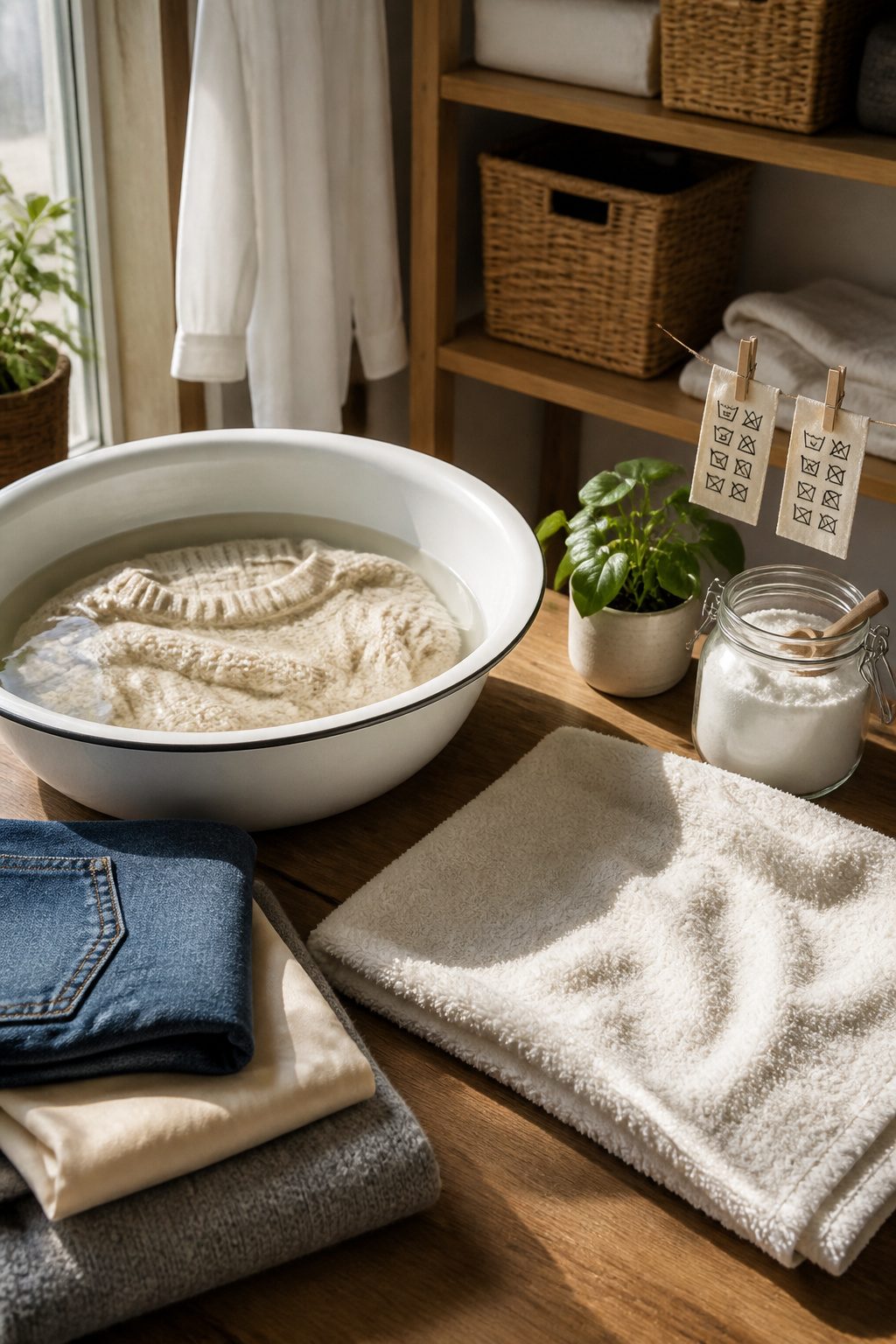
Care instructions on a tag are usually vague enough to ignore, and that is where most capsule wardrobes start falling apart. Cold wash and lay flat to dry means almost nothing until you have shrunk a cashmere sweater into a toddler size or watched black jeans fade to slate gray after six washes. I learned the hard way that "lay flat" actually requires reshaping the garment while it is still damp, not just tossing it on a towel and walking away. Wool now gets hand-washed in the sink with a no-rinse formula, which sounds precious but takes less time than driving to the dry cleaner. Denim gets turned inside out and washed on delicate maybe once a month, which sounds unsanitary until you realize how much longer the color holds. I still get silk wrong sometimes, assuming a gentle cycle will substitute for a true hand wash, and I pay for that with water spots or a sheen that never quite returns. The gap in most advice is specificity: sources tell you to "follow the label" without admitting that labels are written to protect manufacturers, not your clothes. What actually preserves a small wardrobe is building boring habits around washing less, drying smarter, and storing with enough space that items are not crushed into wrinkles they will never recover from.
What a Capsule Wardrobe Actually Means
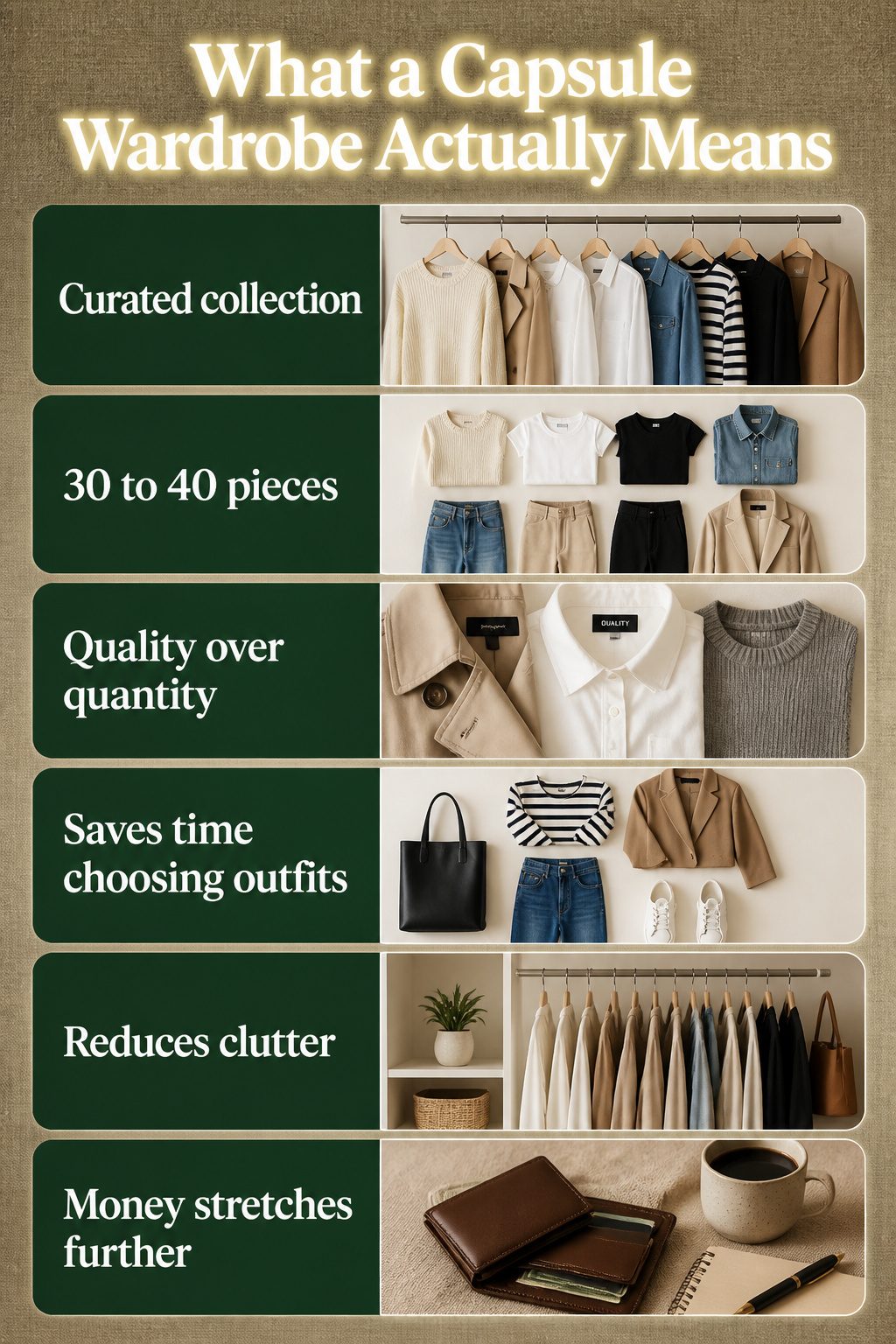
A capsule wardrobe is a small, curated collection of versatile, interchangeable clothing items designed to be worn repeatedly in different combinations. The pieces mix and match with little effort, so a handful of tops, bottoms, and layers produces a wide range of outfits rather than a closet full of single-purpose items.
Most people building one land somewhere around 30 to 40 pieces, though the exact count shifts with your climate, how often you do laundry, and what your actual week looks like. The point is quality over quantity: fewer garments that work harder, not a rigid number to hit.
Time saved choosing outfits is the immediate payoff, and the reduced clutter tends to follow. Money stretches further too, because you’re buying pieces that earn their keep instead of one-off items that sit.
How Many Pieces You Actually Need
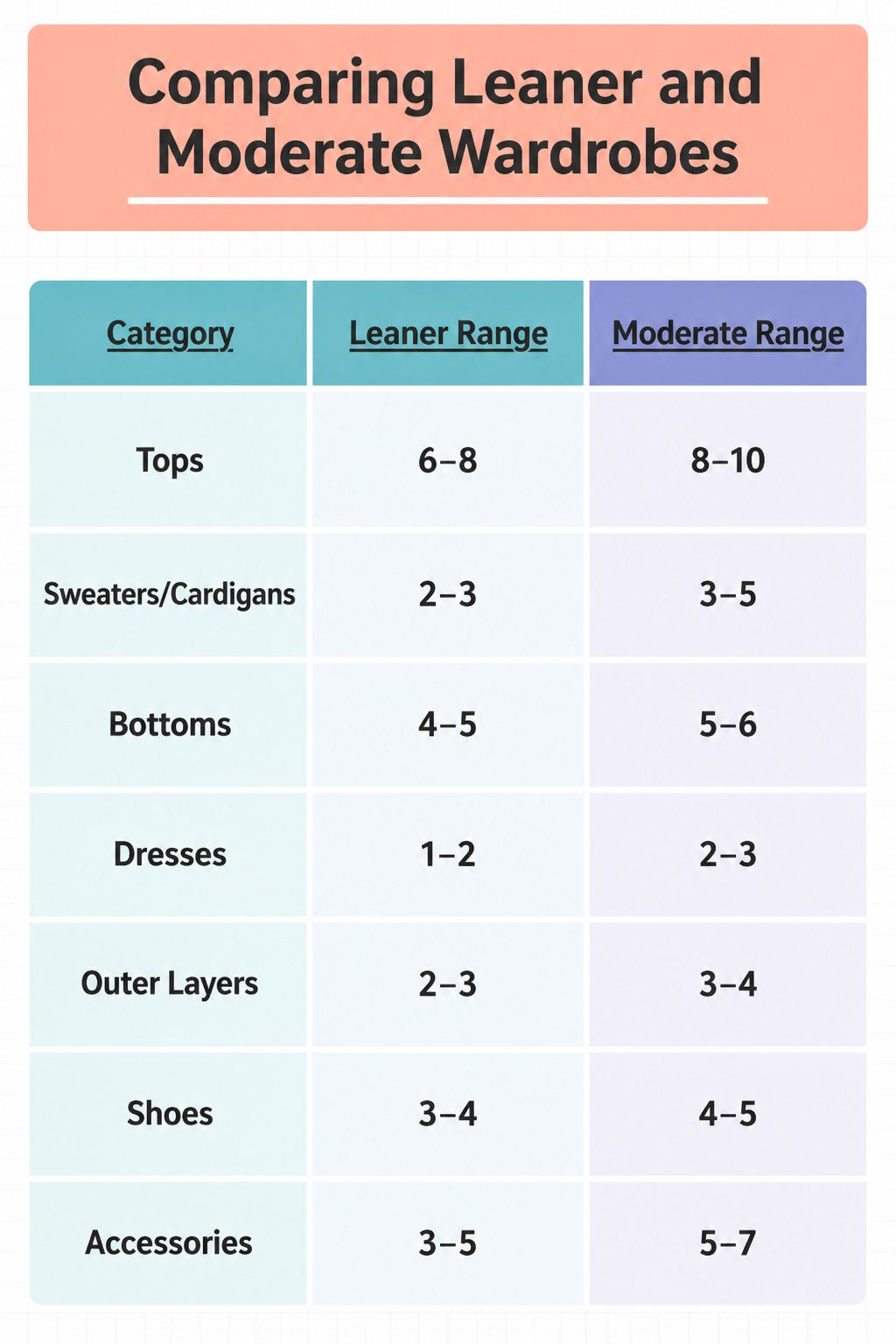
The number that gets thrown around most often is 30 to 40 pieces, though I have seen working wardrobes run as tight as 25 and as loose as 54 without falling apart as a system. What matters more than the total is how those pieces split across categories, since a closet heavy on tops and light on bottoms still leaves you scrambling in the morning.
| Category | Leaner Range | Moderate Range |
|---|---|---|
| Tops | 6–8 | 8–10 |
| Sweaters/Cardigans | 2–3 | 3–5 |
| Bottoms | 4–5 | 5–6 |
| Dresses | 1–2 | 2–3 |
| Outer Layers | 2–3 | 3–4 |
| Shoes | 3–4 | 4–5 |
| Accessories | 3–5 | 5–7 |
I started my own count toward the higher end and ended up closer to the lean column after a year of laundry experiments. The 30-piece wardrobes I have seen working in practice usually assume you are washing twice a week; stretch to ten days between loads and you will want those extra six or eight items, or you will be wearing damp jeans.
Seasonal Adjustments That Work
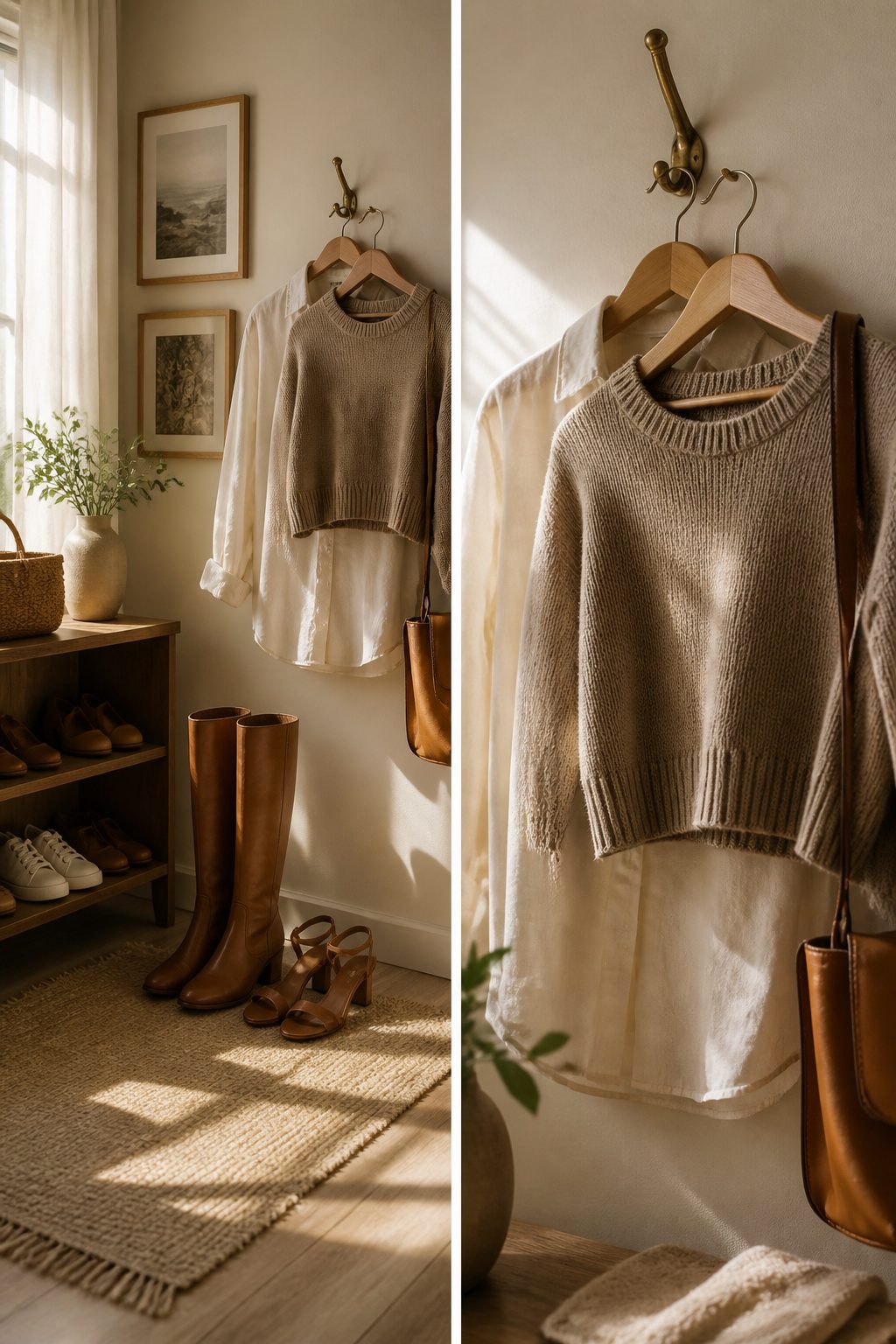
Most guides treat seasonal change like an afterthought, but the swap between summer and winter is where a capsule lives or dies. My first attempt failed because I built for a climate I wanted, not the one outside my window. I added heavy wool coats and knee-high boots to a 30-piece core that spent eight months in mild, rainy weather. Those pieces sat in storage, taking up the mental space the capsule was supposed to free.
The actual shift is smaller than you’d expect. Most capsule wardrobes run 30 to 40 pieces total, and only 8 to 12 items need swapping between seasons: a couple of outer layers, one or two pairs of shoes, and the difference between a linen blouse and a cashmere crewneck. The core stays put. Your 5 to 6 bottoms, your 8 to 10 tops, your blazers and jeans, they bridge the gap.
What changes is density, not count. Summer means natural fibers that breathe and one light layer for air-conditioned rooms. Winter means 3 to 5 sweaters or cardigans that layer without bulk, and outerwear rated for real cold. If your winter drops below freezing, that coat matters. If it doesn’t, the mistake is buying for a fantasy version of your city, not the one where you actually walk to the train.
The test is simple: lay out your transitional pieces and wear them for a week in the wrong season. The linen that wrinkles too much, the synthetic that traps heat, they’ll tell you before the weather does.
Why Some Clothes Are Hard to Let Go
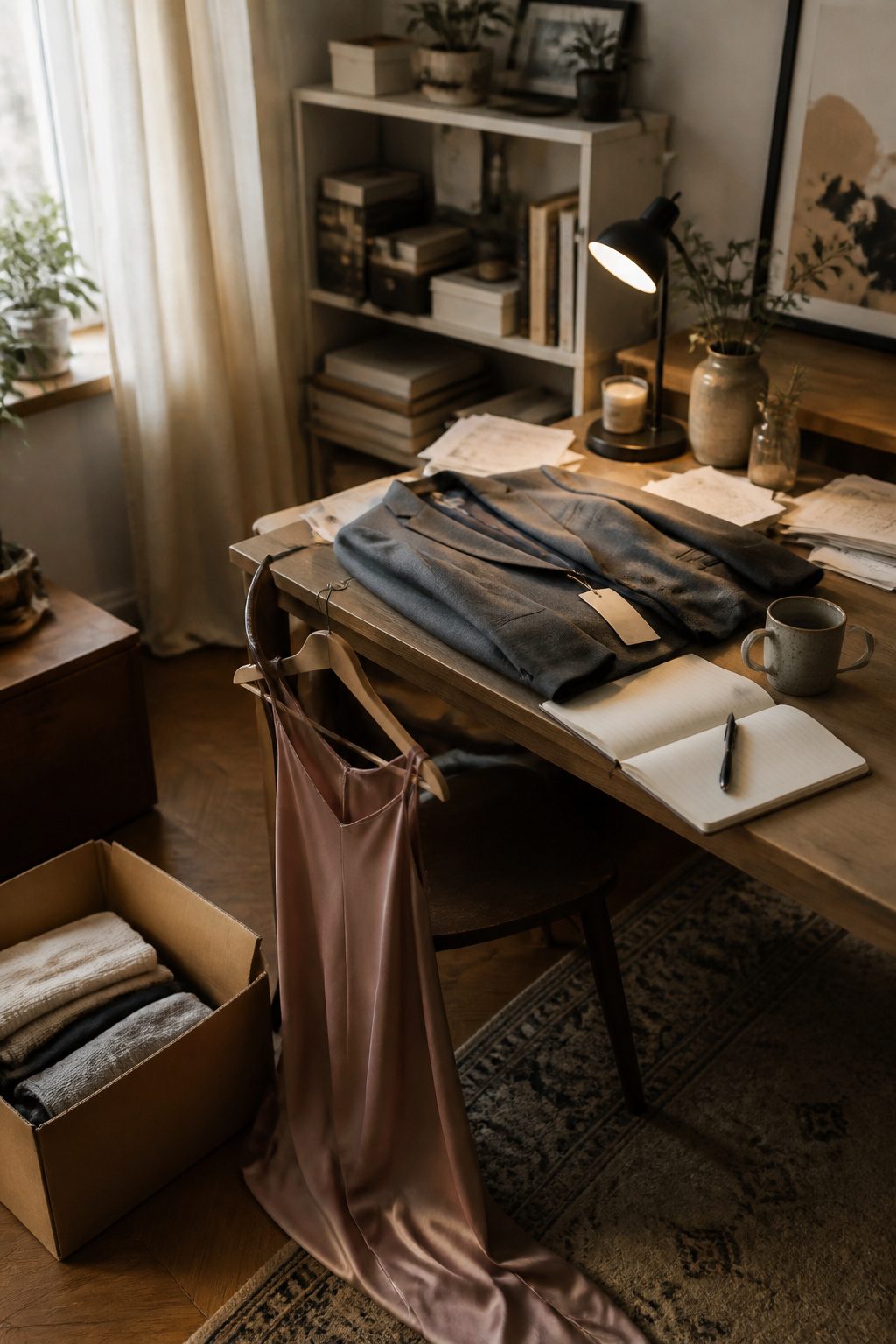
The hardest items to part with were never the worn-out jeans or the blouse with a stain. They were the silk dress bought for a gallery opening I never attended, still tagged, still carrying the price I memorized during a January sale. The clothes we keep for who we were planning to become take up more space than the ones we actually wear.
I held onto a structured blazer for three years because it belonged to a version of me who gave presentations in glass conference rooms. The real me works from a desk at home and reaches for cardigans. The blazer stayed through two moves before I finally photographed it and sent it to resale, watching the listing sit for eleven days before a theater student in Ohio bought it for a callback.
The fantasy occasion is the real clutter. A beach wedding I was never invited to, the hiking pants for a fitness phase that lasted six weeks. What finally worked was asking not whether I liked the item, but whether I liked the life it required me to live. Most of the time, the answer was no, and the space it freed mattered more than the memory it held.
Digital Tools I Tried and Dropped

Outfit-planning apps promise a tidy digital closet, but the upkeep cost is real. I tried one that let me photograph every piece and drag them into combinations, and within two weeks the daily logging felt like a second job. The screenshots from Canva whiteboards worked better for me because I only added what I already wore, not the full inventory of things I felt guilty about skipping.
The 30-to-90-day test matters here too. An app only proves useful if you still open it after the novelty fades, and most people won’t. I dropped mine after realizing the mental math of "what matches" took longer than just looking at the rack.
Skip the app unless you will photograph and tag clothes for a month straight. For most of us, a simple folder of phone screenshots and a note of which three tops work with which two pants does the same work without the subscription fee.
Quality Materials That Last
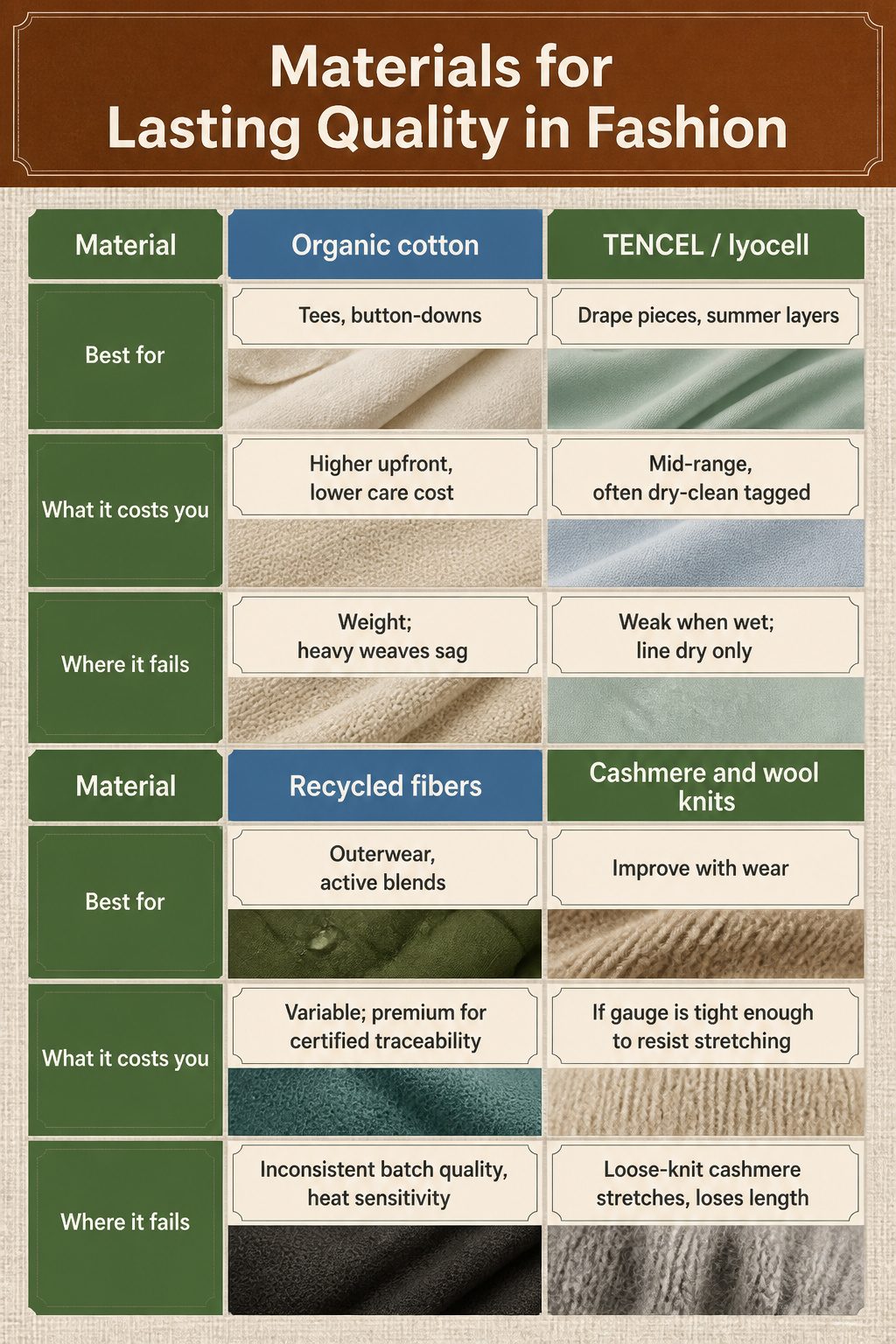
Organic cotton, TENCEL, and recycled fibers each deliver something different for the money, and the wrong match turns a supposed investment into a shirt that pills in six months.
TENCEL wins on drape and sweat management; the lyocell process pulls moisture away from skin faster than conventional cotton, which matters in a base layer you will wear twice a week. Organic cotton trades that performance for forgiveness, it washes without special handling and softens rather than breaking down. Recycled fibers, usually polyester reprocessed from plastic, cut environmental cost but vary enormously in hand feel; the cheaper batches pill faster than virgin synthetic and do not breathe, so they work better in a winter coat shell than a blouse.
| Material | Best for | What it costs you | Where it fails |
|---|---|---|---|
| Organic cotton | Tees, button-downs | Higher upfront, lower care cost | Weight; heavy weaves sag |
| TENCEL / lyocell | Drape pieces, summer layers | Mid-range, often dry-clean tagged | Weak when wet; line dry only |
| Recycled fibers | Outerwear, active blends | Variable; premium for certified traceability | Inconsistent batch quality, heat sensitivity |
Cashmere and wool knits improve with wear if the gauge is tight enough to resist stretching at the cuffs. A loose-knit cashmere sweater looks luxurious on the rack and measures half its original length after two seasons of hanging.
Frequently Asked Questions
What is a capsule wardrobe?
A capsule wardrobe is a small, curated collection of versatile, interchangeable clothing items designed to be worn repeatedly in different combinations. The pieces mix and match with little effort, so a handful of tops, bottoms, and layers produces a wide range of outfits rather than a closet full of single-purpose items. The focus is quality over quantity: fewer garments that work harder.
How many items should be in a capsule wardrobe?
Most capsule wardrobes land between 30 and 40 pieces, though working wardrobes can run as tight as 25 or as loose as 54 without falling apart. What matters more than the total is how those pieces split across categories. A typical breakdown includes 8–12 tops, 6–8 bottoms, 3–5 outerwear pieces, and 4–6 pairs of shoes, plus 2–4 dresses if your routine calls for them.
What essential items should I include in a capsule wardrobe?
Prioritize basic tees in white, black, grey, and navy; a crisp white button-down in cotton or linen; black jeans; a classic crewneck sweater; and outerwear structured enough for meetings but relaxed enough for weekends. Shoes need to be genuinely comfortable, and a black maxi dress handles unplanned occasions. Accessories sit outside the core count, about 5–10 pieces, and fill the gaps: a belt, a properly sized bag, simple jewelry.
How do I define my personal style for a capsule wardrobe?
Track what you actually wear on rushed mornings rather than what you admire in stores. Narrow to a palette of about eight colors plus neutrals, and note which patterns and silhouettes get worn repeatedly versus once and forgotten. Natural fibers and comfort as a hard limit matter: a beautiful garment that demands adjusting or special cleaning becomes a burden, not an asset.