Trendy maternity clothes are garments designed to accommodate a changing body without sacrificing style, but the real challenge is finding pieces that still work after delivery.
Most purchases fail because they stretch out by the third trimester or have no function once the baby arrives.
The dresses, jeans, and tops that earned their closet space were the ones with post-bump tags and nursing-friendly cuts, like a $54.95 maxi dress worn for eighteen months straight.
1. Maternity Dresses
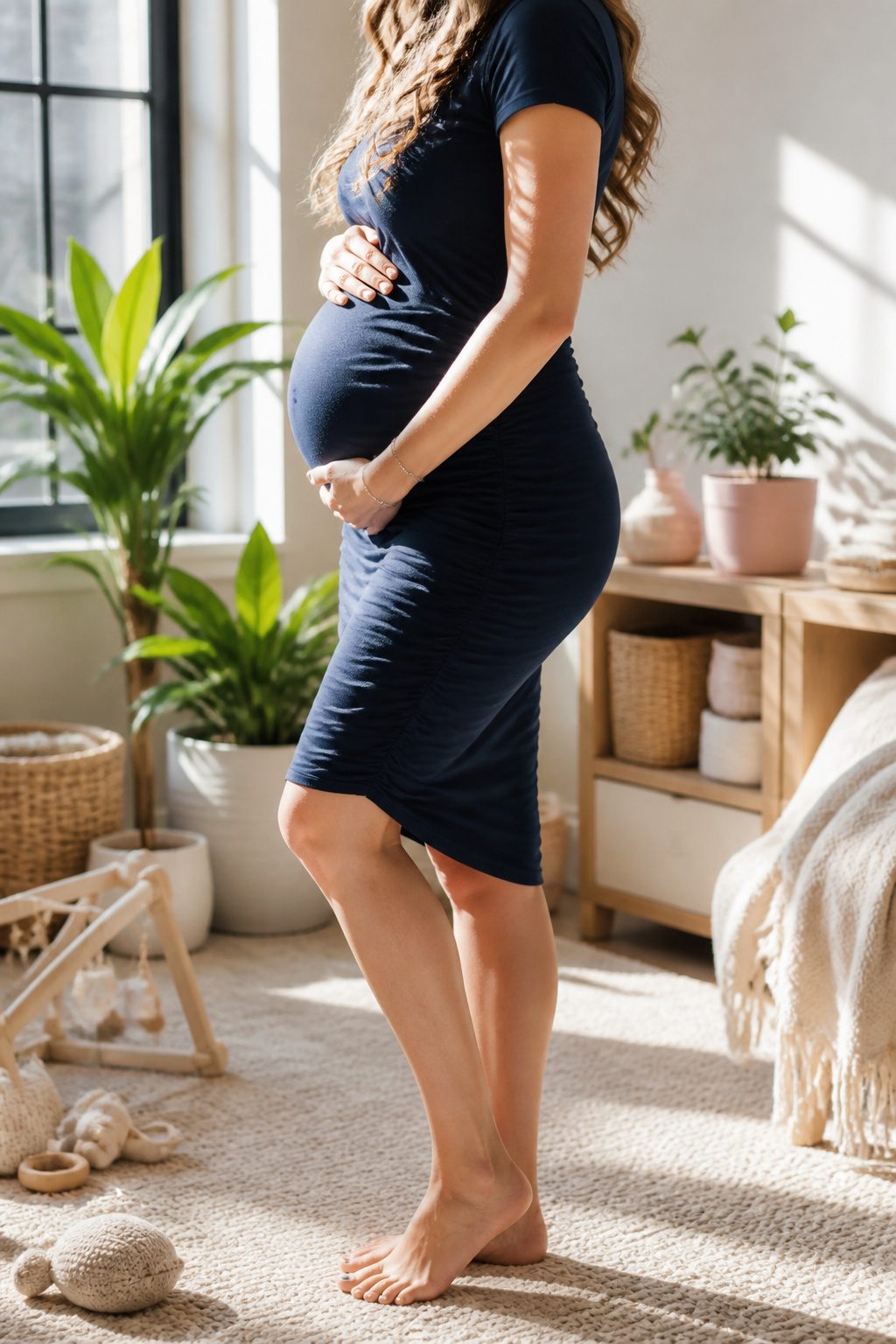
Bodycon dresses with ruched sides were the first maternity purchase I made that didn’t feel like a costume. The stretch cotton-spandex holds shape without squeezing, and the ruching expands from weeks twelve through forty without looking stretched out.
Most run $39.00 to $69.95, with the higher end using thicker fabric that doesn’t turn sheer across the belly.
Maxi dresses solve the problem of "what to wear when nothing fits" around month seven. A jersey knit with an empire waist or side shirring gives airflow in summer and layers under a cardigan in fall.
The same wrap-front and crossover styles that pull aside for nursing, mentioned in post-bump tags, mean the dress stays in rotation for roughly a year after delivery.
That math changed how I budgeted: a $54.95 dress worn for eighteen months costs less per wear than a $25.00 bargain relegated to the back of the closet.
Casual shirt dresses and swing styles fill the gap between those two. They read as current through 2026’s looser silhouettes without requiring a maternity-specific cut, so the transition back to regular sizing is invisible.
The pieces that last are the ones that don’t announce themselves as maternity in the first place
2. Maternity Jeans
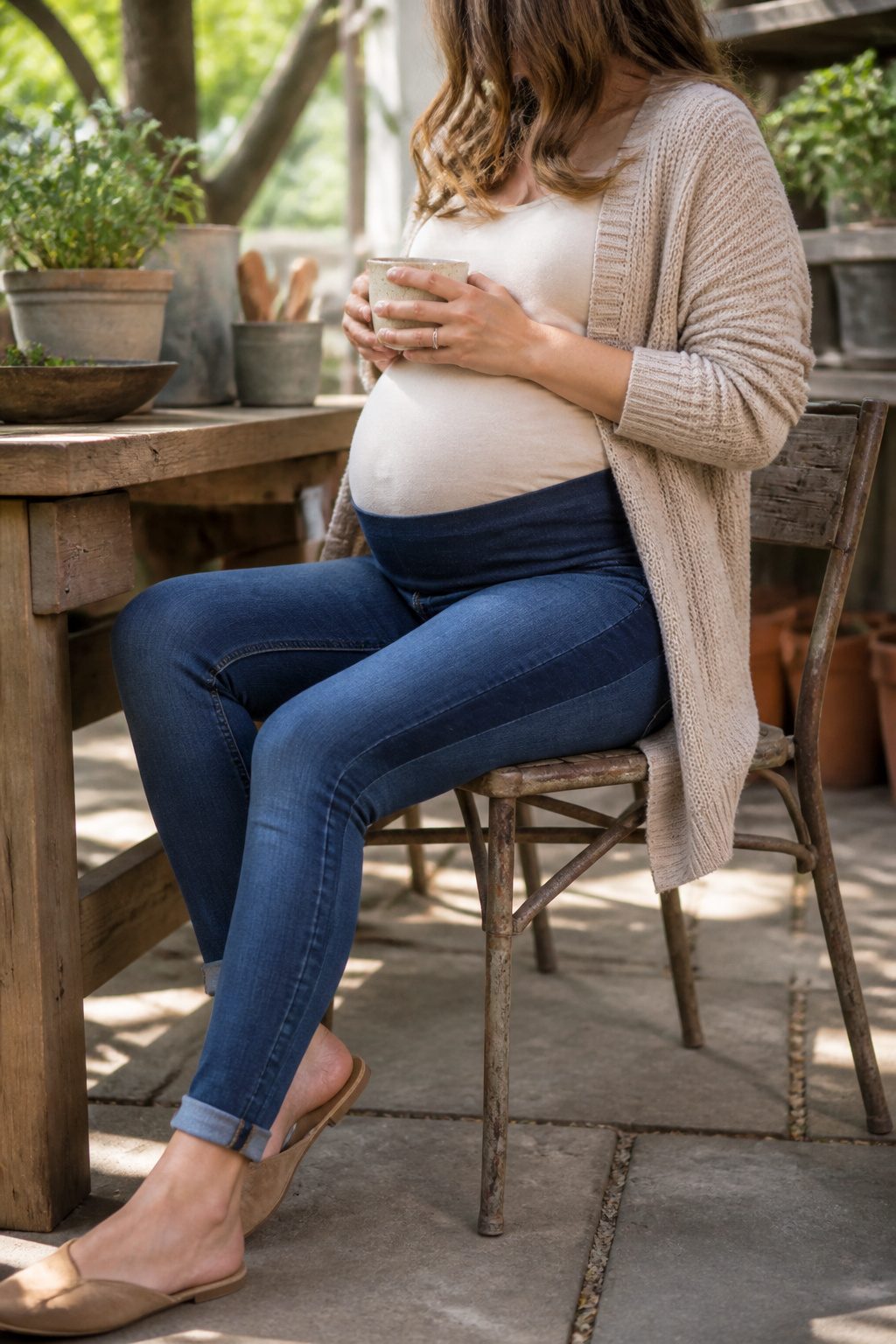
Stretch panels changed everything for me when I first tried them at sixteen weeks. The band sits under the belly instead of across it, which means skinny jeans that do not slip the second you sit down.
Bootcut styles balance the silhouette differently, and the same panel architecture works in both, so the choice is more about your regular preference than some maternity-only compromise.
The better pairs run $35.00 to $69.95, with the difference usually in denim weight and whether the panel is a full belly cover or a side insert.
Side-insert jeans look more like your old pants from behind, which matters if you plan to wear them after delivery. Full panels are more comfortable in the third trimester.
What makes the best maternity jeans is not the panel type alone. The denim needs actual recovery, so the knees do not bag out by noon.
I learned to check the fabric content in store, looking for enough elastane to spring back without feeling like leggings.
A pair that holds its shape through one pregnancy usually lasts into daily rotation postpartum, especially if you buy for your pre-pregnancy size and let the stretch accommodate the change.
3. Maternity Tops
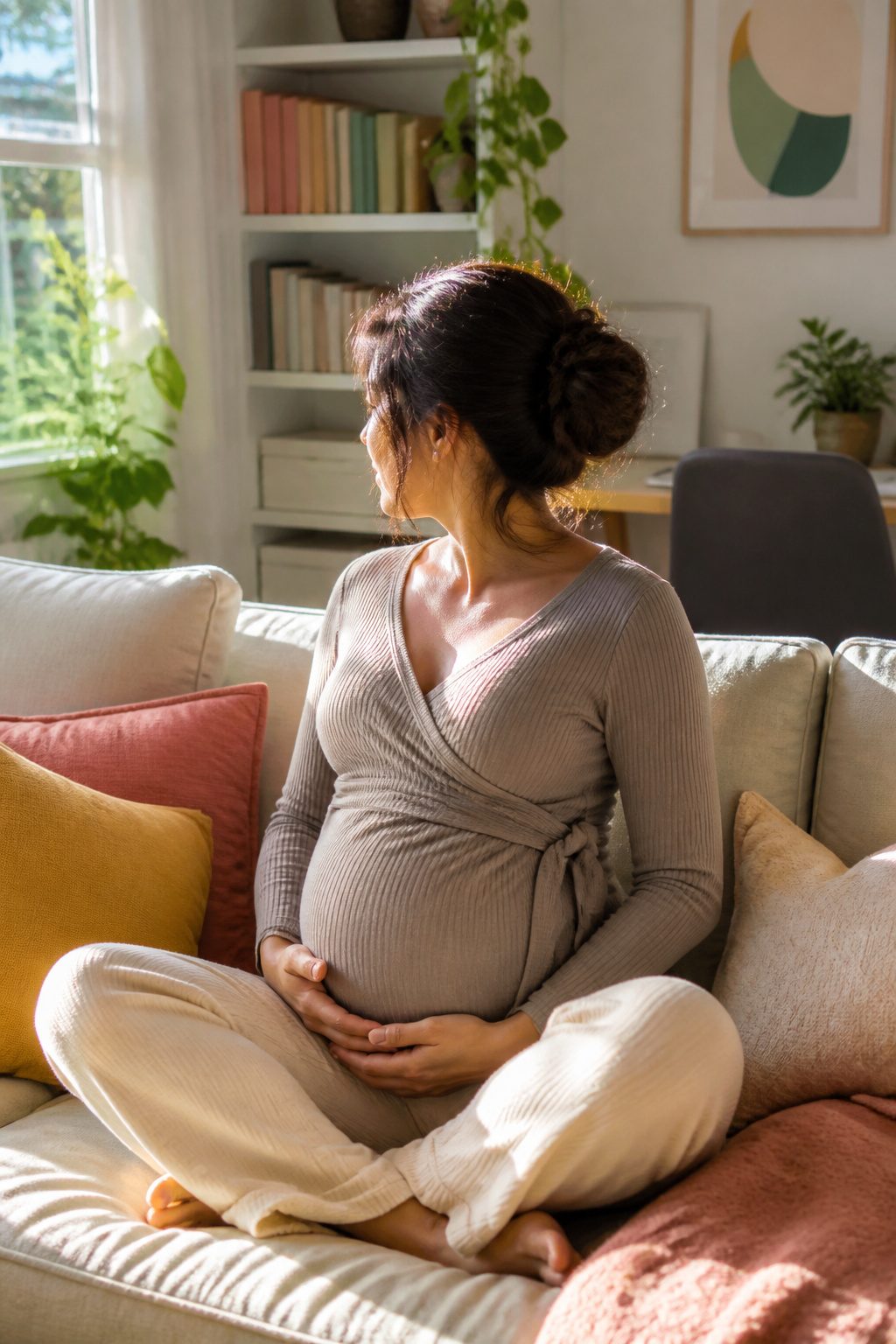
The real win in trendy maternity clothes is finding tops that stretch over a bump at week thirty and still button cleanly at week ten postpartum.
Wrap and crossover designs pull aside for nursing access without the clinical look of dedicated feeding wear, and a relaxed button-down in soft denim works the same double shift.
I look for side ruching or a subtle empire seam that grows upward rather than outward; it keeps the silhouette closer to what I’d wear anyway. Fabric matters more here than in other categories.
A ribbed high-neck tank with enough recovery to hold shape through washing saves buying three sizes, and a seamless construction layer avoids the sausage-casing effect that cheaper knits give once the belly really pops.
What separates the pieces I’ve kept from the ones I donated is whether the brand fit-tests on actual pregnant bodies.
A top cut on a straight-size mannequin with a foam bump rides up in back or gaps at the neckline; one fit-tested on women at different stages sits right where it should.
The post-bump tag some lines add is worth hunting for, especially in those crossover styles that look like deliberate design rather than compromise.
4. Maternity Activewear
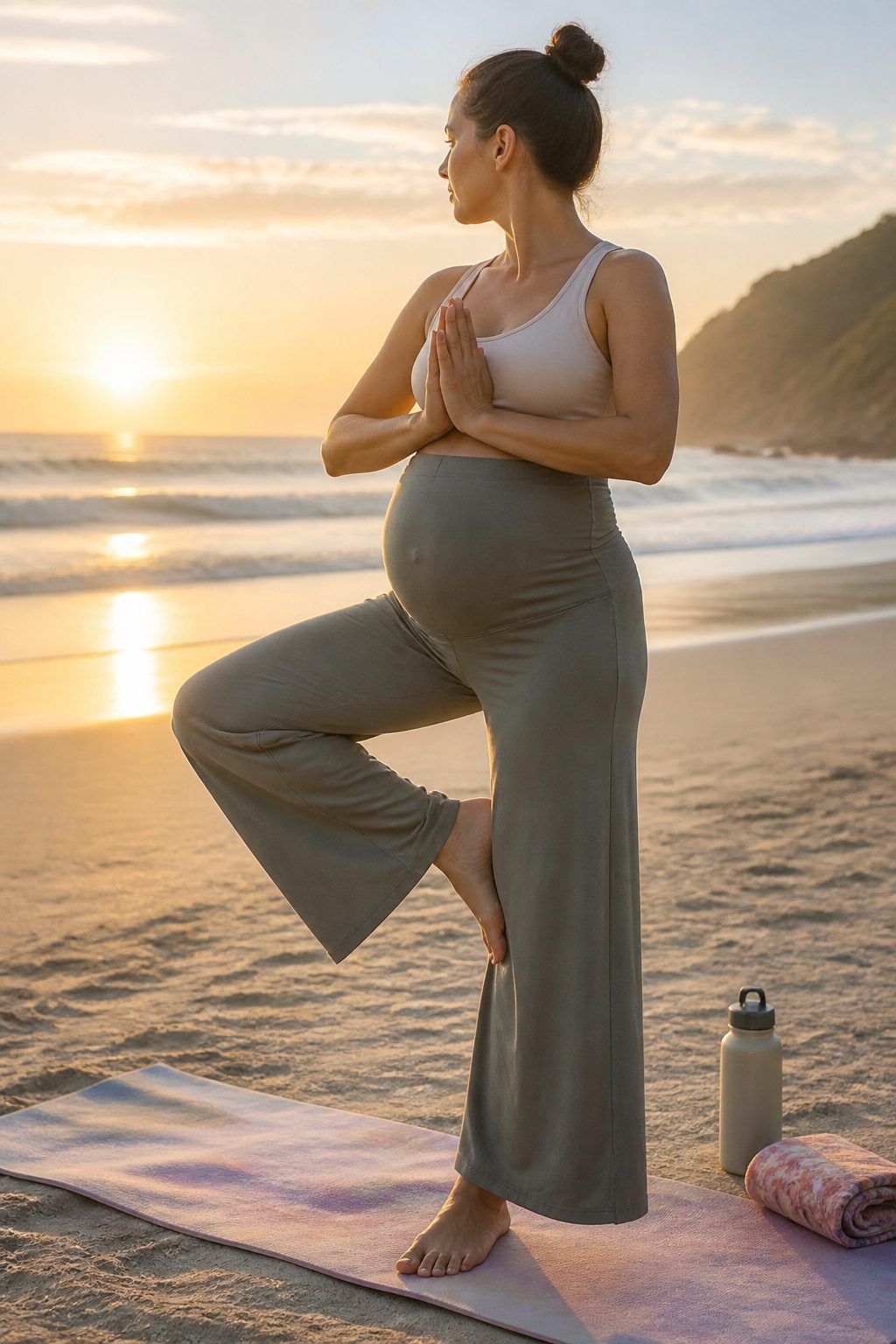
The first time I tried prenatal yoga at seven months, my regular leggings rolled down with every downward dog. That hour taught me activewear built for a bump matters more than sizing up in standard gear.
The right maternity activewear keeps the waistband above the belly, wicks sweat from stretched skin, and stays put through a squat or a stroller walk.
The High Rise Wide Leg Maternity Active Pant gets this balance right. The wide-leg cut keeps air moving, and the high rise sits where a growing bump needs coverage without pressure.
I’d pair it with a ribbed tank for low-impact days or layer under a relaxed button-down when errands run into evening.
What separates pieces you’ll actually wear from ones that languish in a drawer is postpartum life. Labels marked for the post-bump stage stretch the window.
A pant that works at week twelve and week forty saves closet space and decision fatigue when energy is already scarce.
5. Nursing Clothes
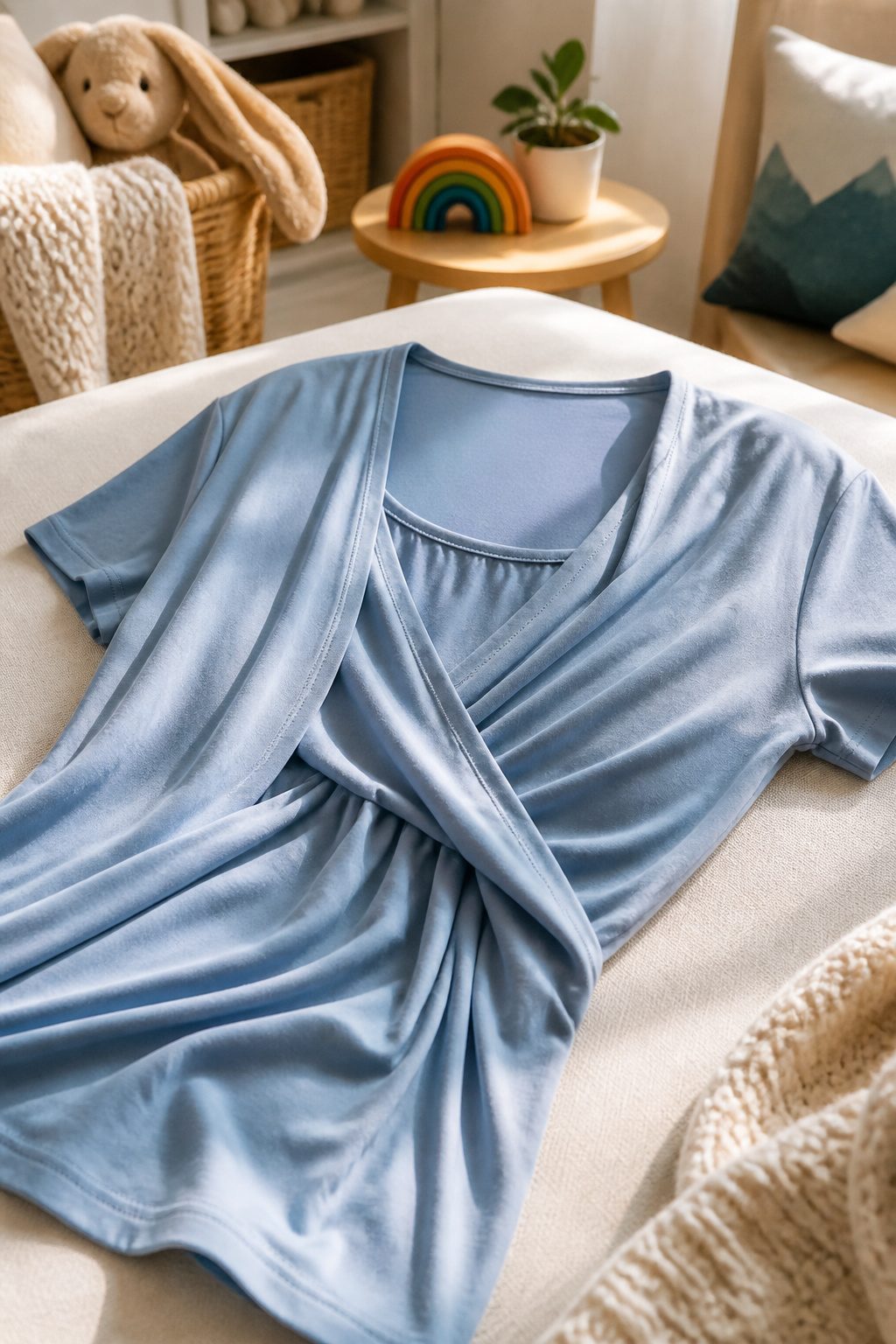
Nursing-friendly pieces that pull aside or unfasten without a full wardrobe change save real time during those first months.
Wrap tops and crossover designs let you nurse one-handed while the baby is already fussing; button-front styles work the same way and look enough like regular shirts that nobody clocks them as maternity wear.
I noticed most of what I actually reached for was tagged for both pregnancy and post-bump use, which meant the same $28 wrap top carried straight from third trimester into month four of breastfeeding.
Nursing tops in this category run about $25 to $39.95, and the dual-purpose construction matters more than the label: a crossover cut that clears the bump in week thirty-five will still pull aside cleanly for a two a.m. feeding.
The pieces that failed me were the ones with only one function, maternity-only or nursing-only, because they sat in the drawer once the other stage hit.
6. Loungewear
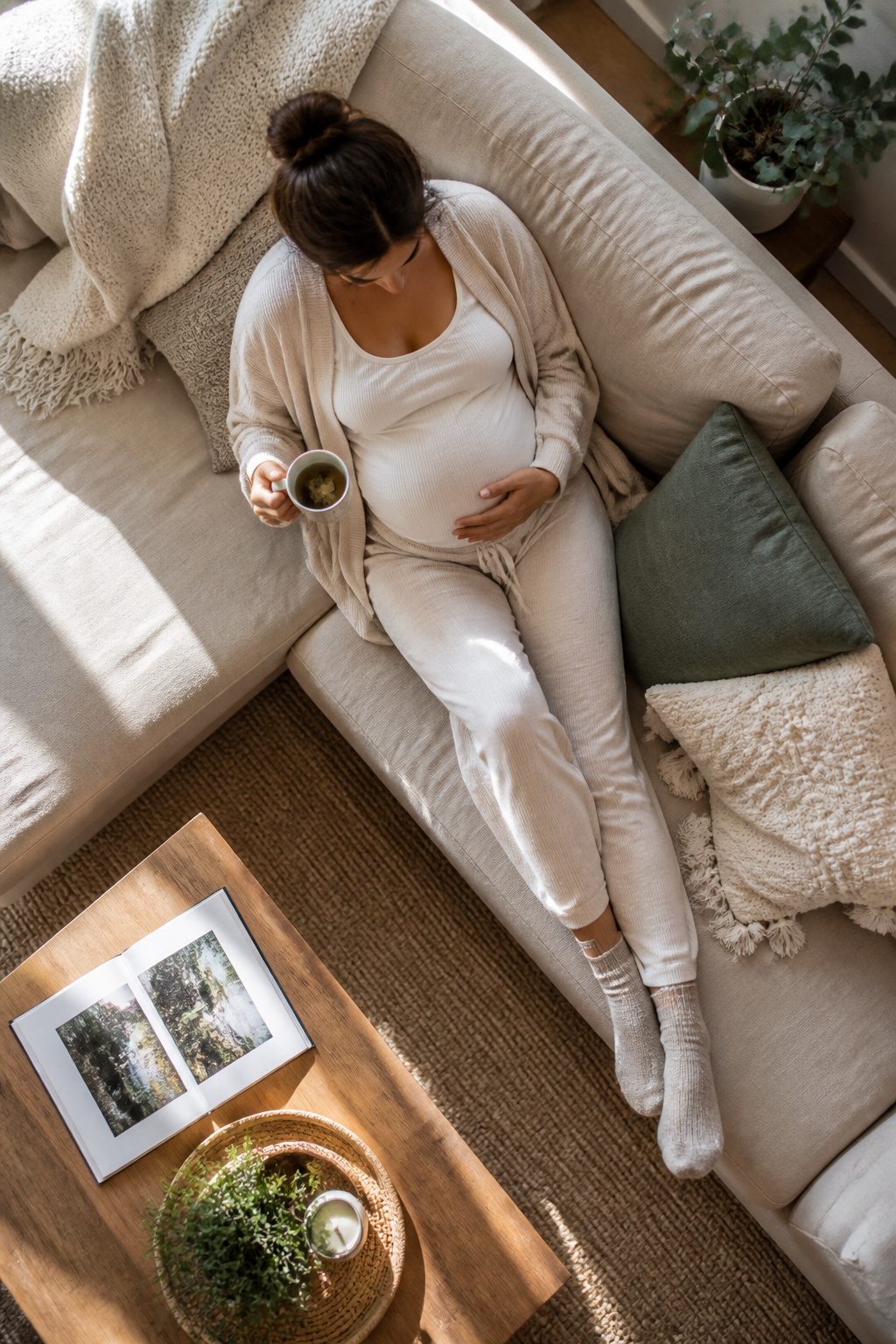
Soft fabrics stop being a weekend luxury somewhere around the second trimester, when even a grocery run starts feeling like a hike.
The $25–$49.95 range is where loungewear actually competes with your old college sweatpants, not just in price but in how many hours straight you can live in it.
Relaxed fits with stretch waistbands matter more as weeks pass, because a bump changes shape faster than most people expect.
I noticed, looking through what worked for friends, that the pieces they reached for daily had dropped shoulders and extra length in the torso, not because they looked oversized but because they didn’t ride up during a nap or a Netflix marathon.
The real value shows up in fabric weight. Too light and it clings; too heavy and you overheat, which happens faster in pregnancy.
A mid-weight modal or cotton-spend blend with some structure keeps you from feeling sloppy even when you haven’t left the house.
The pieces that last through multiple washes without pilling are usually closer to that $40–$50 mark, and worth it if you’re wearing them five days a week.
7. Maternity Swimwear
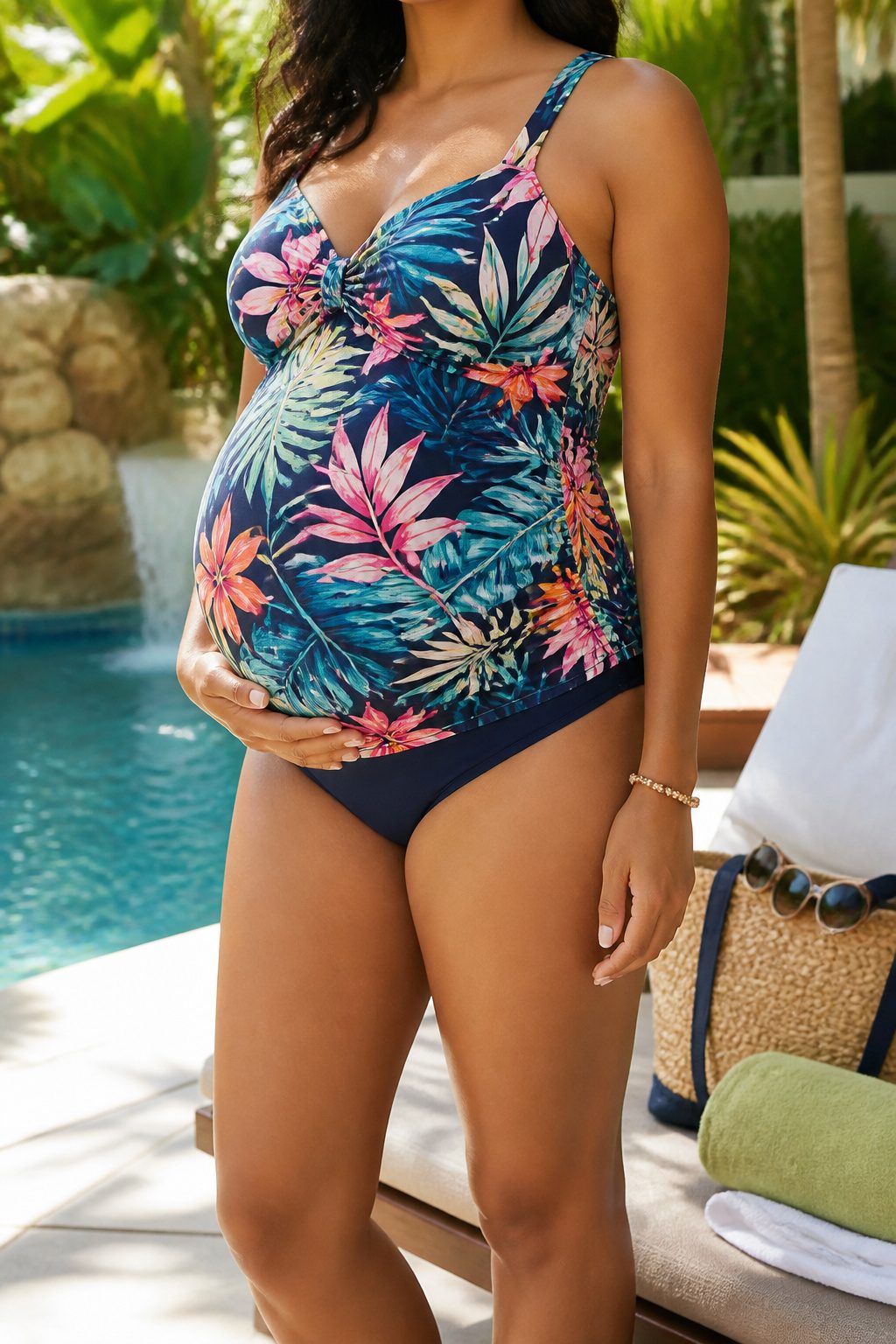
Swimwear tends to get skipped in maternity roundups, which makes no sense when a growing belly needs the most support exactly where a standard suit cuts in.
The trick is buying a cup-size specific top with ruched side panels rather than sizing up in a regular bikini.
Ruching gives you four to six extra inches of fabric play without the suit looking baggy early on, and underwire that fits your actual ribcage plus cup prevents the uniboob effect that plagues generic "S/M/L" maternity brands.
Tankini cuts win here because they let you buy different sizes top and bottom as proportions shift.
A friend swore by high-waist bottoms paired with a non-maternity cropped rash guard; the overlap hid everything and she wore it postpartum for nursing coverage.
One-piece suits with adjustable side ties work too, though those ties can dig into hip flesh once you’re far enough along, so softer fold-over waistbands tend to outlast them.
The real mistake is waiting until you need it. Most retailers stock maternity swim only February through May, and by June the remaining sizes run narrow.
Ordering at twenty weeks, even for a July due date, gives you actual choice.
Postpartum Wear
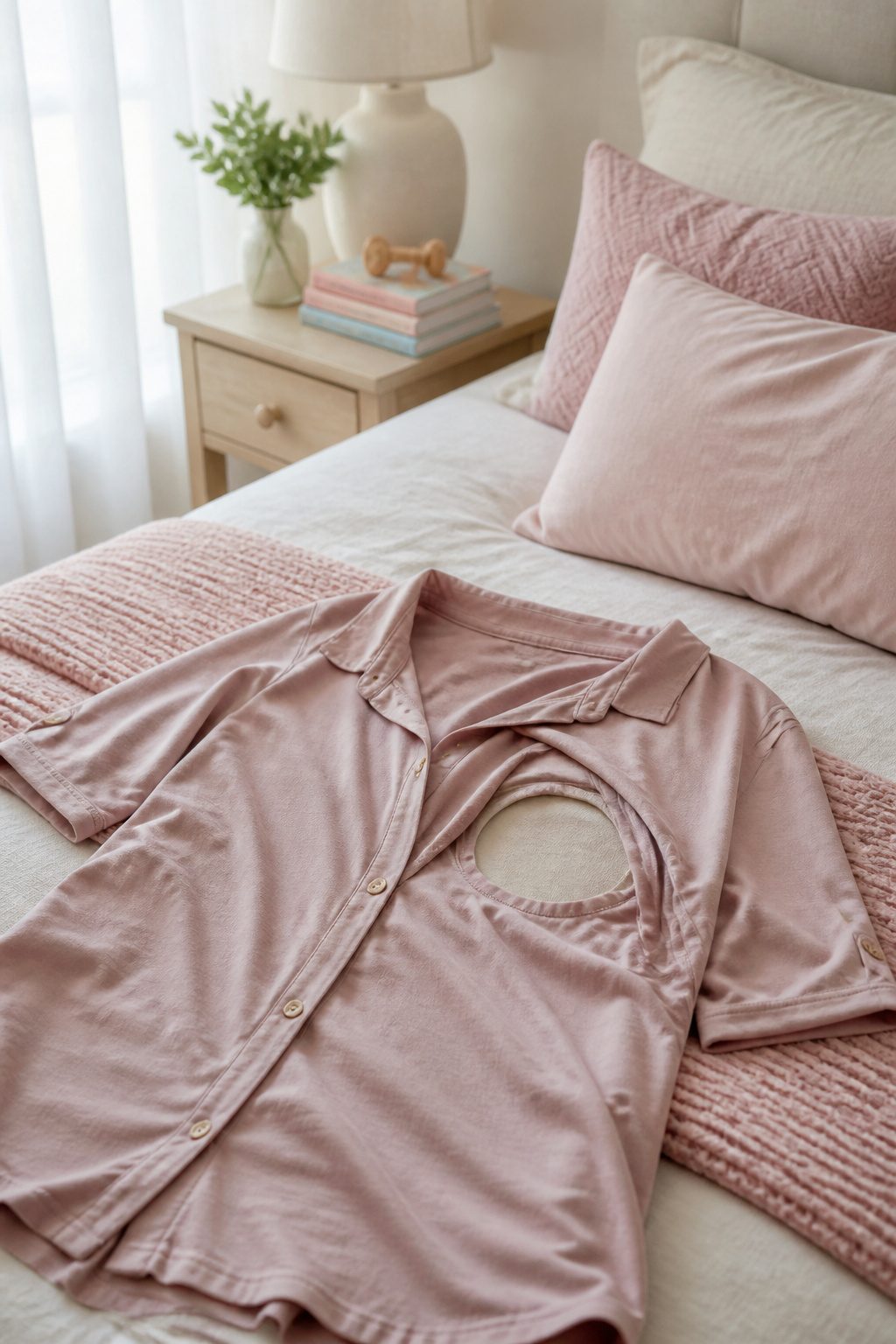
The first week home, your body is still in conversation with the clothes you wore at nine months, but the fit has turned tentative.
A post-bump tag on a maternity piece tells you the brand built it for this exact stretch, not just the pregnancy itself.
Wrap and crossover designs that pull aside for nursing access keep working after delivery without looking like a uniform you did not choose.
I look for button-front styles when I want an actual shirt that opens easily for feeds but still reads as something I would have worn before.
Bamboo bras and briefs, the kind sold as maternity-slash-nursing sets, handle the sweating and shifting that nobody warned me about; the fabric dries fast and the band adjusts without digging into a midsection that is still finding its new shape.
The mistake I made with my first was treating postpartum as a waiting room, wearing whatever was closest and feeling worse for it.
Now I check whether a piece is fit-tested on real postpartum women, not just sized down from pregnancy block. High-rise active pants with a wide, soft waistband got me through the six-week mark when jeans were still a fiction.
The same slim-leg ponte pant I lived in third trimester looked intentional enough for a pediatrician visit at week four.
Versatility matters more than novelty here. A denim shirt that buttons for nursing and still tucks into something structured later is worth more than three single-purpose pieces.
The shrinking belly changes daily; the clothing should keep up without announcing the transition.
What I Paid for Each Piece
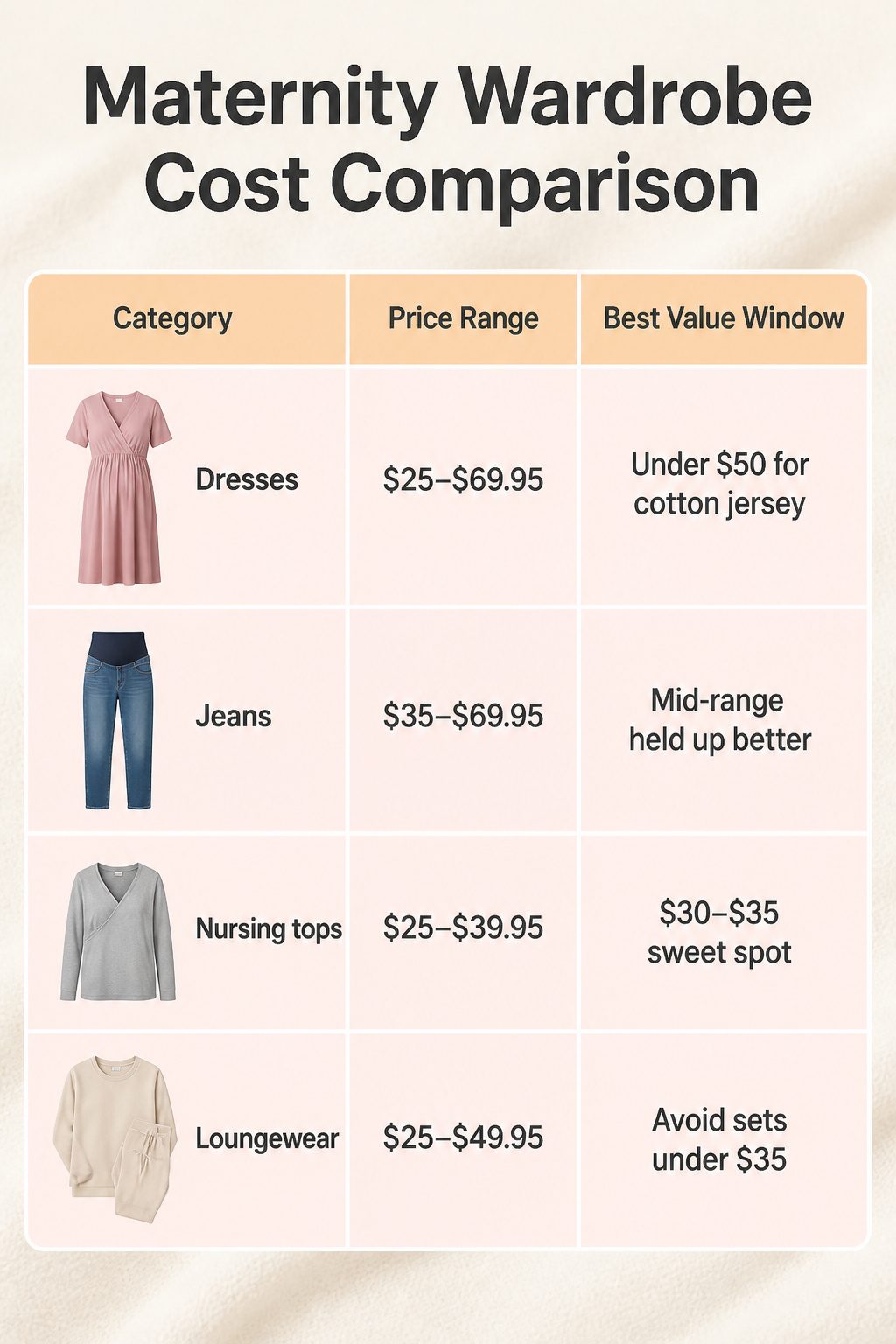
The biggest surprise in building a maternity wardrobe was how little the price tags actually shifted compared to my regular clothes. Dresses ran $25–$69.95, jeans landed in the same bracket at $35–$69.95, and nursing tops stayed under $40 at $25–$39.95.
Loungewear sat between $25–$49.95, which mattered more than I expected since I lived in those sets for the last two trimesters.
| Category | Price Range | Best Value Window |
|---|---|---|
| Dresses | $25–$69.95 | Under $50 for cotton jersey; over $50 for structured woven |
| Jeans | $35–$69.95 | Stretch panels wear out faster, so mid-range held up better |
| Nursing tops | $25–$39.95 | $30–$35 sweet spot for double-layer access |
| Loungewear | $25–$49.95 | Sets under $35 often lacked nursing access |
Where the money saved was in overlap. A $45 nursing top worked the full nine months and six months after.
Jeans with a full belly panel felt like a splurge at $65, but wearing them five days a week for twenty weeks dropped the cost-per-wear below a cheap dress worn twice.
The pieces that failed were the ones with no postpartum function: a $28 dress with a fixed empire waist that hit right at the ribcage I no longer had.
How I Choose What Lasts
The first maternity pieces I bought were a mistake.
A ruched jersey dress and a pair of over-belly leggings looked fine at week twenty-four, but by week thirty-two the fabric had gone slack and the waistband cut in exactly where the bump grew fastest.
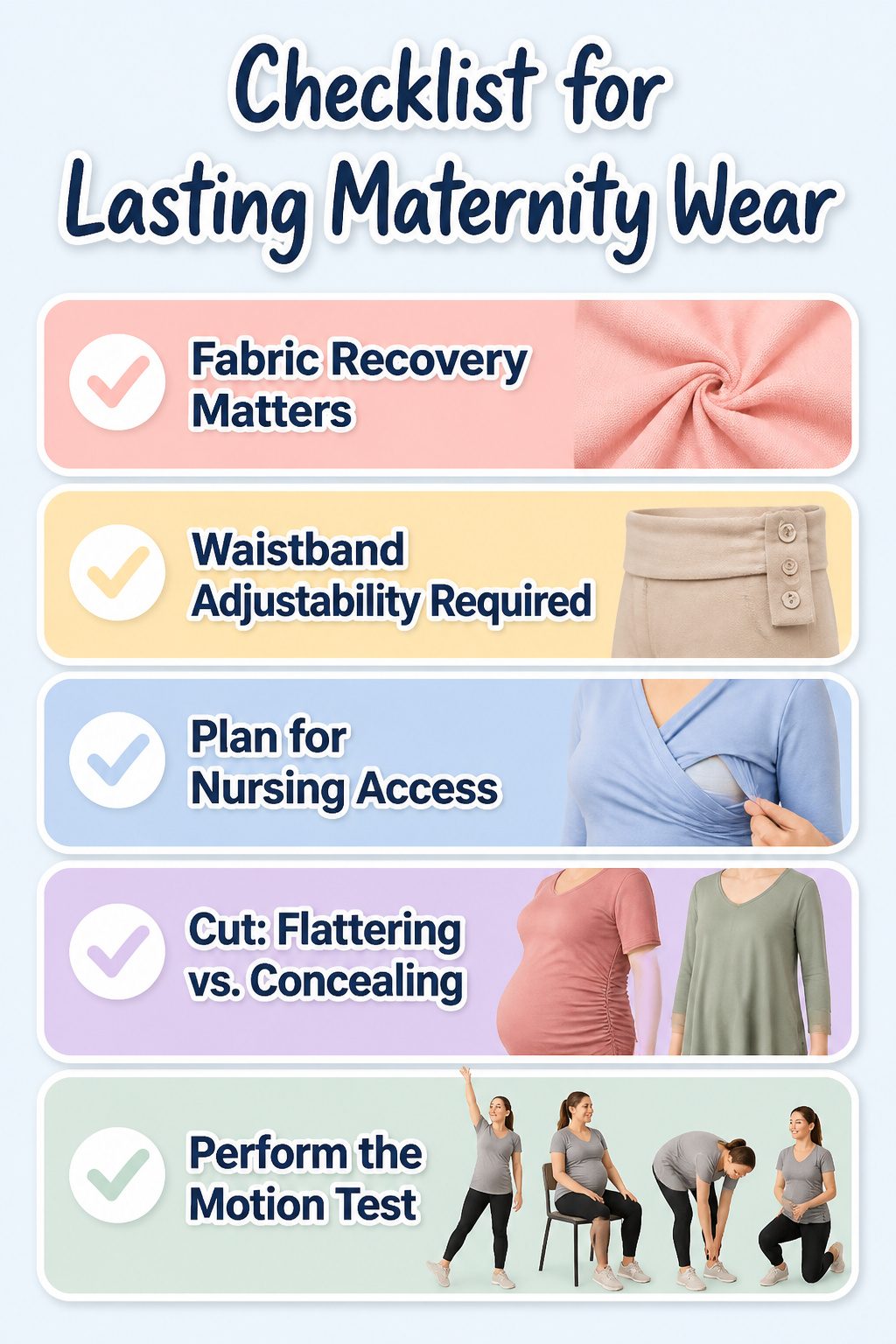
Both sat in the drawer for the last two months. What I learned was that fabric recovery matters more than stretch.
Cotton-modal blends that snap back after washing keep their shape through the third trimester and still look presentable six weeks postpartum.
Waistband adjustability is the other non-negotiable; side panels with multiple button settings or a wide foldover band let you wear the same piece from the first positive test to the last.
Nursing access is worth planning for even if you are not sure you will need it. Wrap and crossover necklines, or a true button-front, mean the sweater or dress earns its closet space for a year instead of a season.
The cut is a choice between flattery and concealment, and both are valid. A fitted side-ruched top follows the belly like a map; a swing tunic floats over it.
One reads confident, the other reads private. Neither works if the hem rides up or the shoulder seams drop, so try the motion test: reach, sit, bend, and see what shifts.
Sizing That Actually Fits
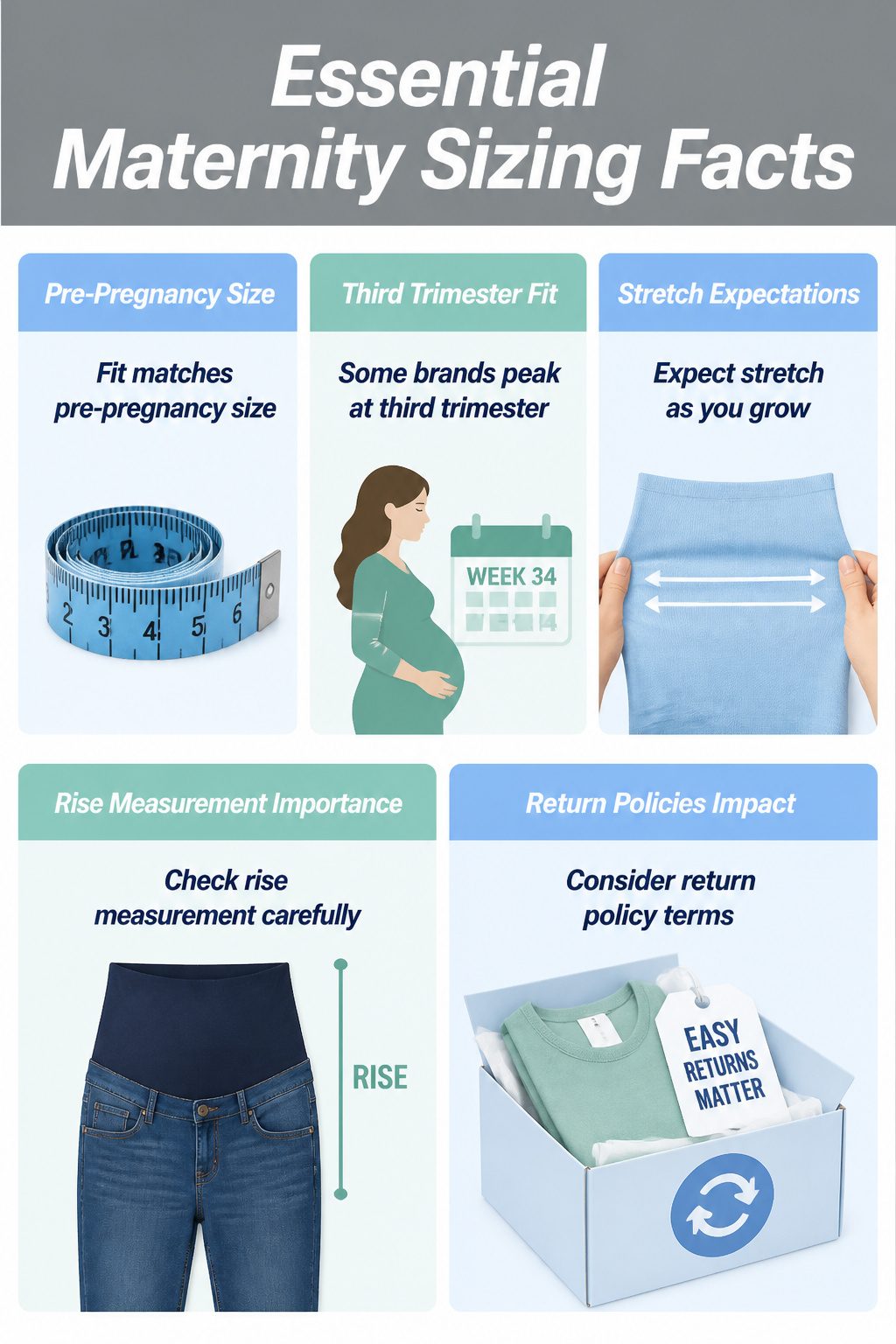
Maternity sizing follows a logic that took me two pregnancies to fully decode. Most pieces are built to match your pre-pregnancy size, not replace it.
A medium stays a medium because the fabric and cut do the expanding. The confusion starts when brands diverge on how much expanding they expect.
Some labels size for the third trimester peak, which means the same dress hangs loose for months and suddenly fits at week thirty-four. Others stretch gradually and feel snug early.
The difference matters for when you buy. Ordering everything in the first trimester based on one brand’s chart can leave you with clothes that fit at week twelve but sag by week twenty-eight.
The waistband tells the story. A true over-bump panel needs room to ride high; a side-panel jean sits lower and demands less length.
I learned to check the rise measurement against where my own bump actually carried, which was higher the second time than the first.
Length matters too, hems that looked intentional at five months turned awkward when the belly pulled them shorter.
Return policies become part of the sizing math. Free exchanges let you test the same item in two sizes without guessing.
When a brand charges for returns, I order once and measure carefully against my current waist and hip, not the ones on the chart.
Wearing Pieces After Delivery
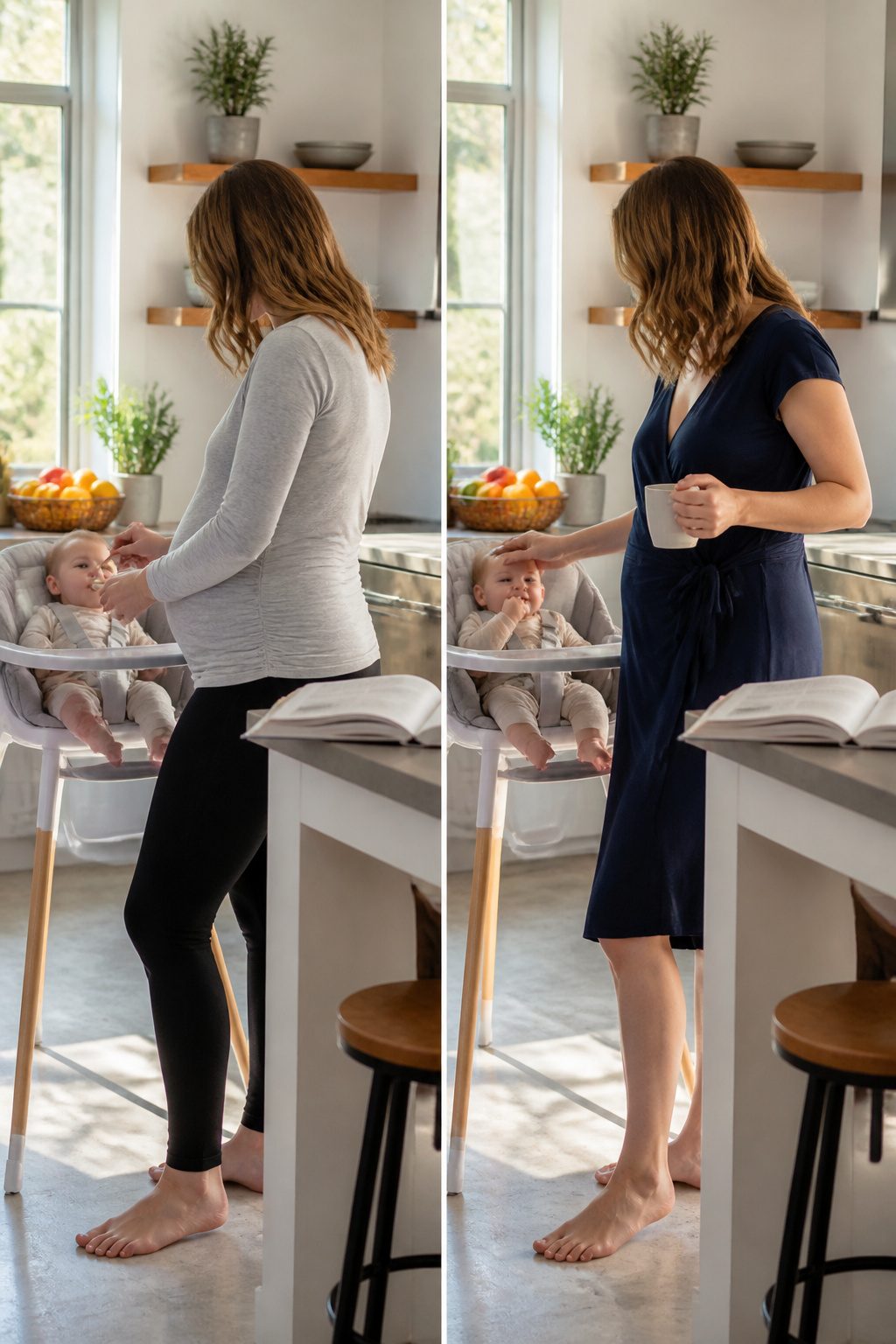
Some maternity pieces earn their keep long after delivery, and others sit folded in the drawer until the next pregnancy. The difference usually comes down to how the garment accommodates a shrinking belly and nursing access both.
Wrap dresses and crossover tops that pull aside for feeding were the first styles I reached for in those early weeks.
They read as normal wardrobe pieces, not medical equipment, and the same drape that skimmed a third-trimester bump flattered a softer midsection without pressure.
Button-front shirts worked similarly; I could leave the lower two fastened loose or open them fully for nursing, depending on the day.
Jeans with stretch panels told a different story. The side panels or full-belly band that expanded for pregnancy do contract, but the recovery curve varies enough that a snug fit takes weeks or months to return.
A pair with a wide, soft waistband sat more comfortably through that in-between phase than structured denim with a rigid panel ever could.
The items that flopped postpartum were anything with a fixed empire seam placed specifically for third-trimester proportions. That waistline hit wrong once the bump dropped, and without nursing access, there was no reason to keep wearing them.
Frequently Asked Questions
What are the best maternity jeans?
The best maternity jeans use stretch panels that sit under the belly rather than across it, with actual denim recovery so the knees do not bag out by noon.
Side-insert panels look more like regular pants from behind, while full panels feel better in the third trimester. Expect to pay $35.00 to $69.95, with the difference usually coming down to denim weight and panel type.
What should I wear postpartum?
Look for pieces marked with a post-bump tag, which means the brand built them for the weeks after delivery, not just pregnancy itself.
Wrap and crossover designs that pull aside for nursing access keep working without looking like medical equipment, and high-rise active pants with a wide, soft waistband handle the shrinking belly more comfortably than structured denim with rigid panels.
What are some trendy maternity dresses?
Bodycon dresses with ruched sides expand from weeks twelve through forty without looking stretched out, maxi dresses in jersey knit with empire waists or side shirring give airflow and layer well, and casual shirt dresses or swing styles read as current through 2026’s looser silhouettes without requiring a maternity-specific cut.
The dresses that last are the ones that never announced themselves as maternity in the first place.