The hair trends shaping 2026 are defined by restraint rather than risk. What makes them stick is the maintenance they demand; the French bob collapses into a different shape entirely once it drifts past the jaw, and the power pixie’s longer top layers grow awkward in weeks without a trim. Five separate forecasts have singled out that softened, airy French bob as the year’s defining cut.
French Bob
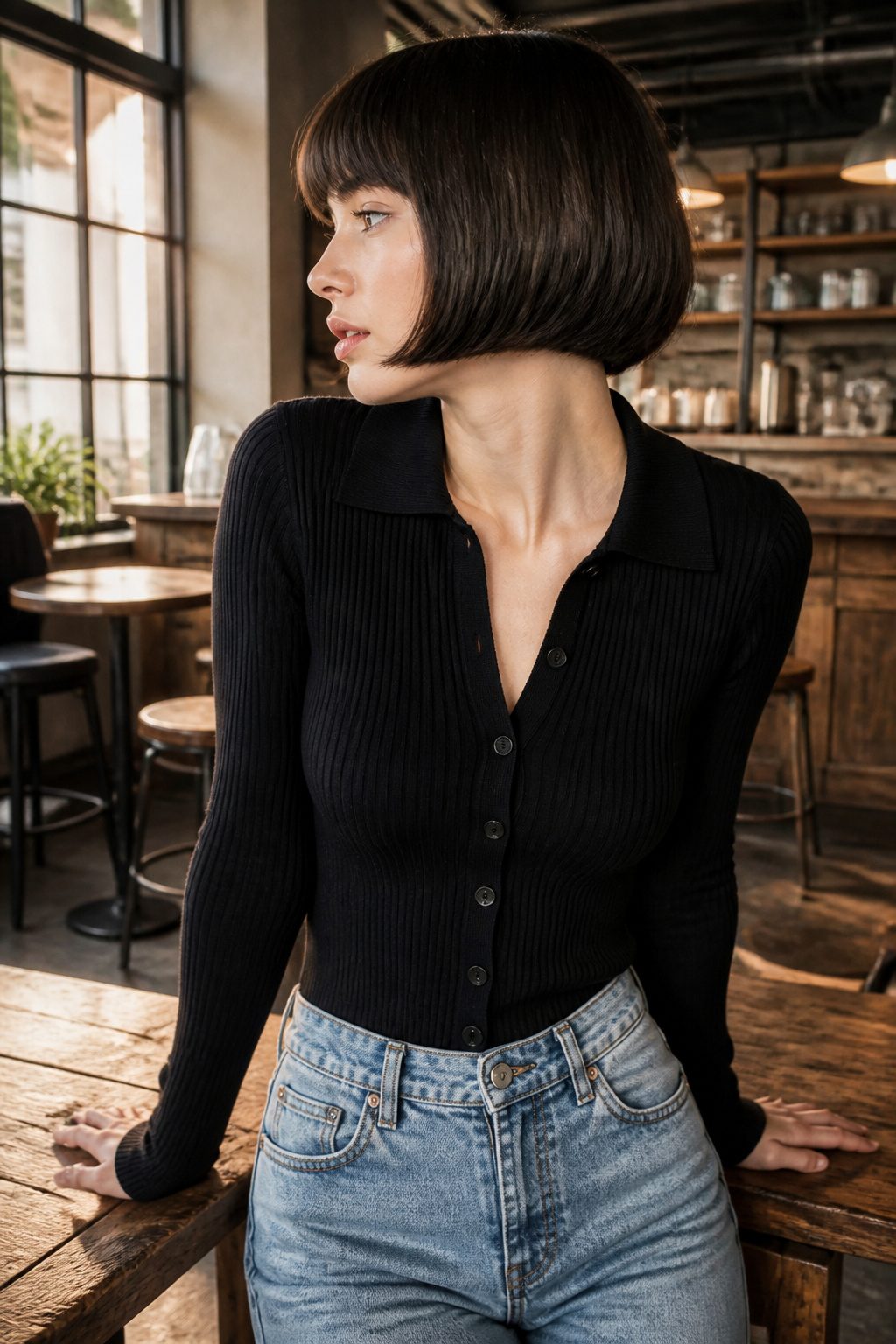
The jaw-length cut with clean lines and straight or slightly parted bangs reads as polished because it borrows from the same restraint as a well-cut blazer: nothing extra, everything intentional. The length sits right at the jaw, not above it and not drifting toward the collarbone, which creates that horizontal line stylists call face-framing. Oval and heart-shaped faces carry it most naturally; the cut gives rounder faces verticality through the cheekbones when the ends are kept sharp rather than feathered.
Five separate trend forecasts have flagged this as the defining bob for 2026, which says less about novelty and more about how many women are actually booking the appointment. The version gaining traction now has softened edges, airy rather than helmet-stiff, though the classic straight-across fringe still anchors the look. My read, after watching this cycle back around: the French bob works when you commit to the maintenance. Let it grow past the jaw and it becomes a different, less deliberate shape entirely.
Power Pixie
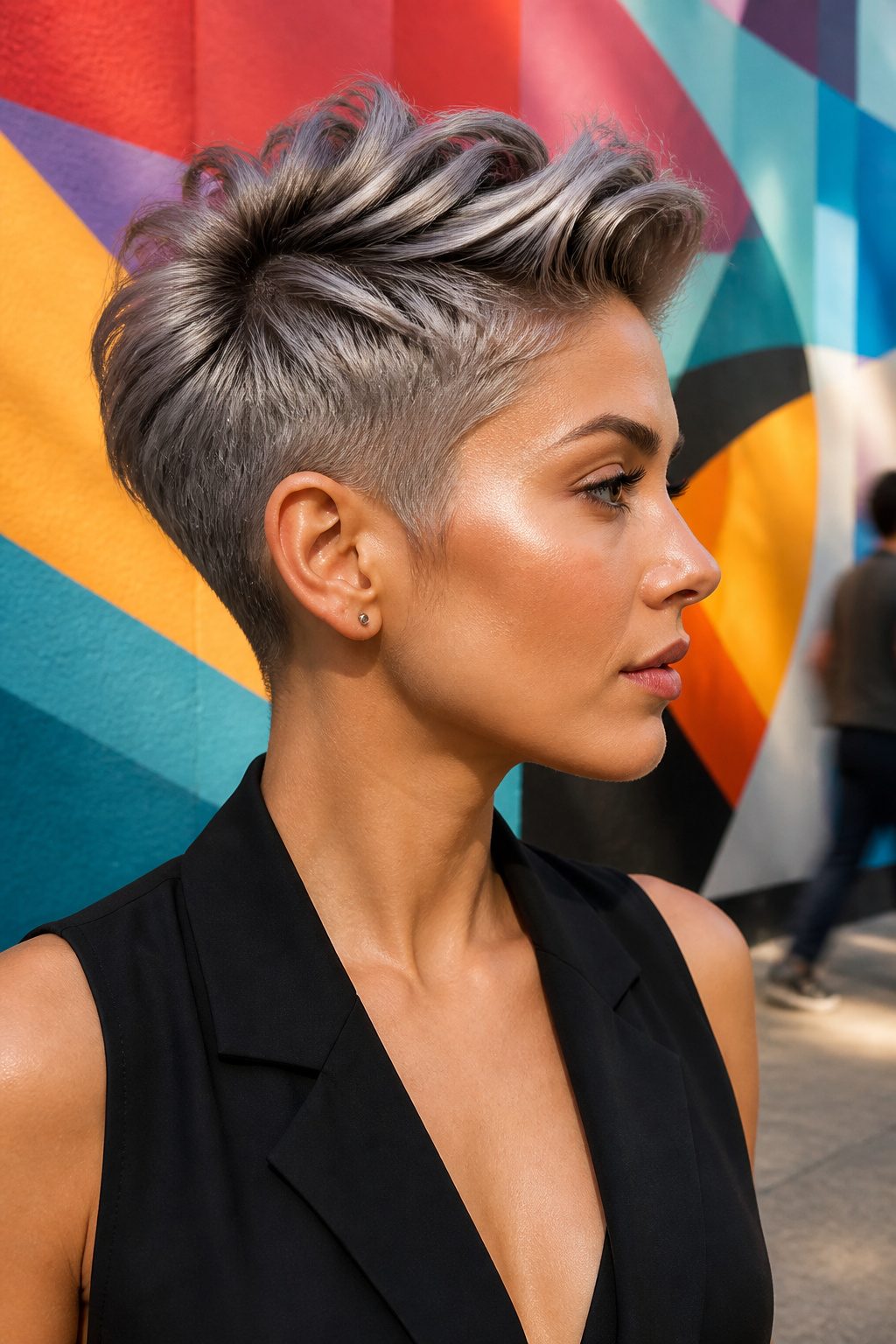
The power pixie keeps the recognizable short-back-and-sides silhouette but grows the top layers long enough to build real height and texture. That extra length is what lets it work on rounder or longer face shapes that a classic pixie tends to fight against, since the volume can be placed to balance or elongate as needed.
Styling it means committing to product and some heat. The upper layers need lift at the root and definition through the ends, so a blow-dry with a round brush or a few passes with a small flat iron for piece-y texture is pretty much non-negotiable if you want the "glamorous" finish rather than a grown-out look. The sleek sides or deliberately messy top that stylists are pairing with this cut both require that baseline of built-in volume to read intentional.
Maintenance runs higher than the wash-and-go classic pixie. The shape grows out fast enough that the contrast between the tight sides and the longer top turns awkward in weeks, not months, and the texture work takes time each morning. The payoff is a cut that reads bold without requiring the nerve of a full buzz or the commitment of growing toward a bob.
Mixie
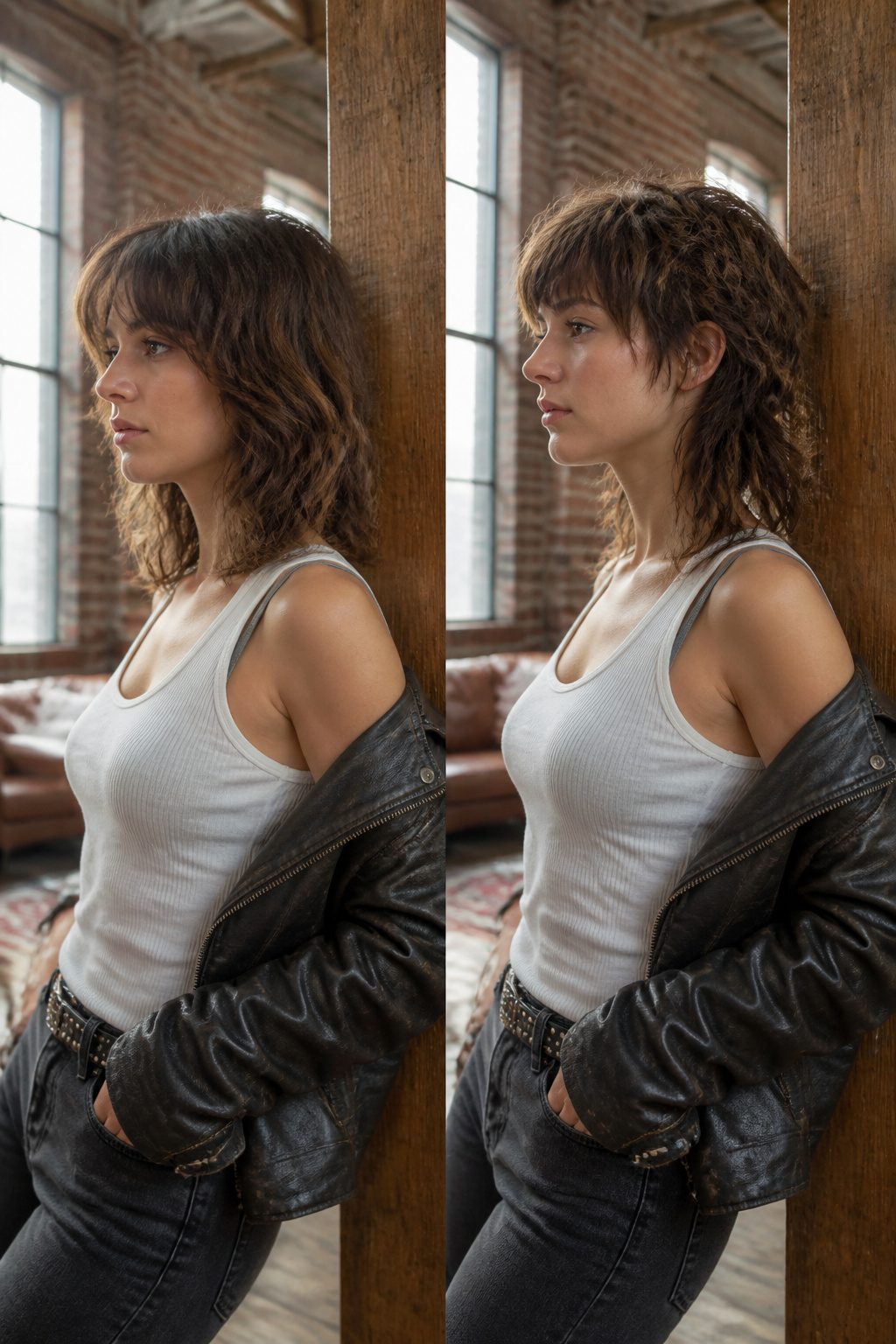
The mixie lands right where you’d expect from its name: short at the sides and on top like a pixie, longer in back like a mullet. The sweet spot is that extra length at the nape, just enough to read as deliberate rather than grown-out. Stylists who’ve named the cut say it works best with some natural wave or texture to give it movement, since straight, fine hair can fall flat against the neck and lose the shape entirely.
Who’s actually sitting in the salon chair for this? The same clients who used to ask for a bold pixie but want something that reads a little more rebellious, a little less polished. It’s the cut Emma Corrin wore that made people pause, and the kind of thing that gets described in salons as "chic but not trying too hard." One stylist calls it ideal for anyone after a stronger frame to the face, another notes it carries that rare quality of looking intentional even when it’s overdue for a trim.
Curtain Bangs
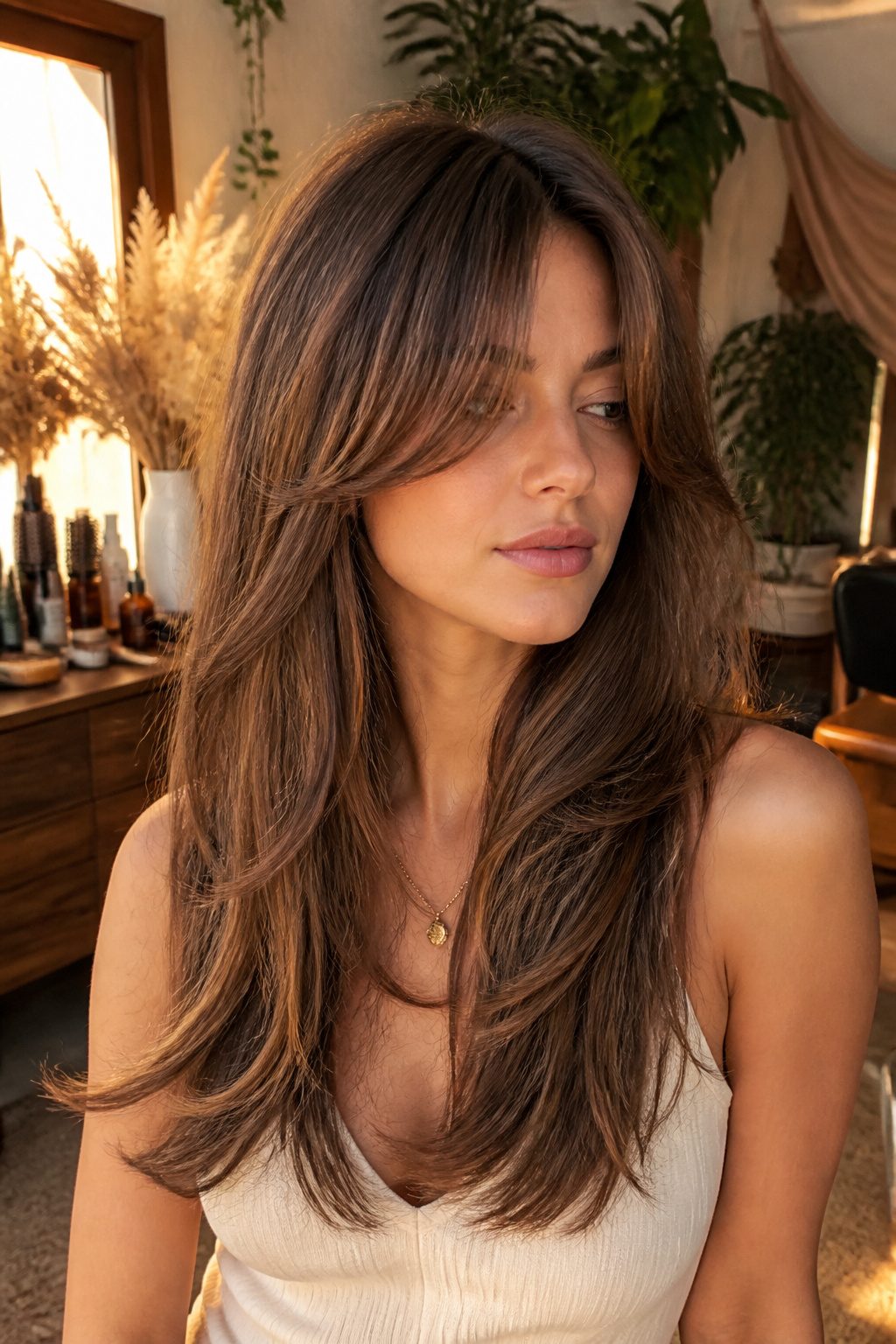
Curtain bangs part straight down the middle and sweep outward in two soft panels, each one shorter at the front and gradually longer as it moves away from the face. The shape is what makes them forgiving across textures: the same cut falls into gentle waves on loose curls, stays sleek on straight hair, or adds movement to fine strands without demanding daily heat styling. What keeps this fringe in rotation through multiple trend cycles is the grow-out. Unlike blunt bangs that hit an awkward stage and demand a trim, the tapered length of curtain bangs keeps blending into the rest of the cut as they lengthen. The parting mechanics matter more than most people expect. A true center part opens the face symmetrically, but shifting the part an inch off-center changes the frame entirely and can soften a stronger jawline. The shortest point usually sits somewhere between the cheekbone and the chin, though pulling the panels forward or back with a round brush shifts that line by half an inch in either direction. The versatility is real, not just marketing. You can pin them back for a job interview, let them air-dry for a weekend, or blow them out with a large round brush for something more polished. The maintenance is minimal enough that the style sticks around even when bolder trends cycle through.
Choppy Layers

Choppy layers live or die by the angle of each cut, and that irregularity is exactly what builds the bounce that flat, one-length cuts never quite manage. Shorter interior pieces lift the crown while longer ones swing below, so the hair moves in sections rather than as a single heavy sheet. Fine to medium density gets the most out of this, since the technique adds volume without stacking bulk where the head is already widest. Thick hair can swallow the effect and end up looking more scattered than intentional unless a stylist carves out weight from underneath.
The real decision comes after you leave the chair. Air drying works, but the layers land wherever moisture and gravity leave them, which means texture without direction. A quick pass with a round brush or a few minutes with a styling wand pulls those uneven lengths into deliberate shape, trading five minutes of effort for polish that lasts the day. The cut forgives skipping heat, but it rewards showing up for it.
Bixie
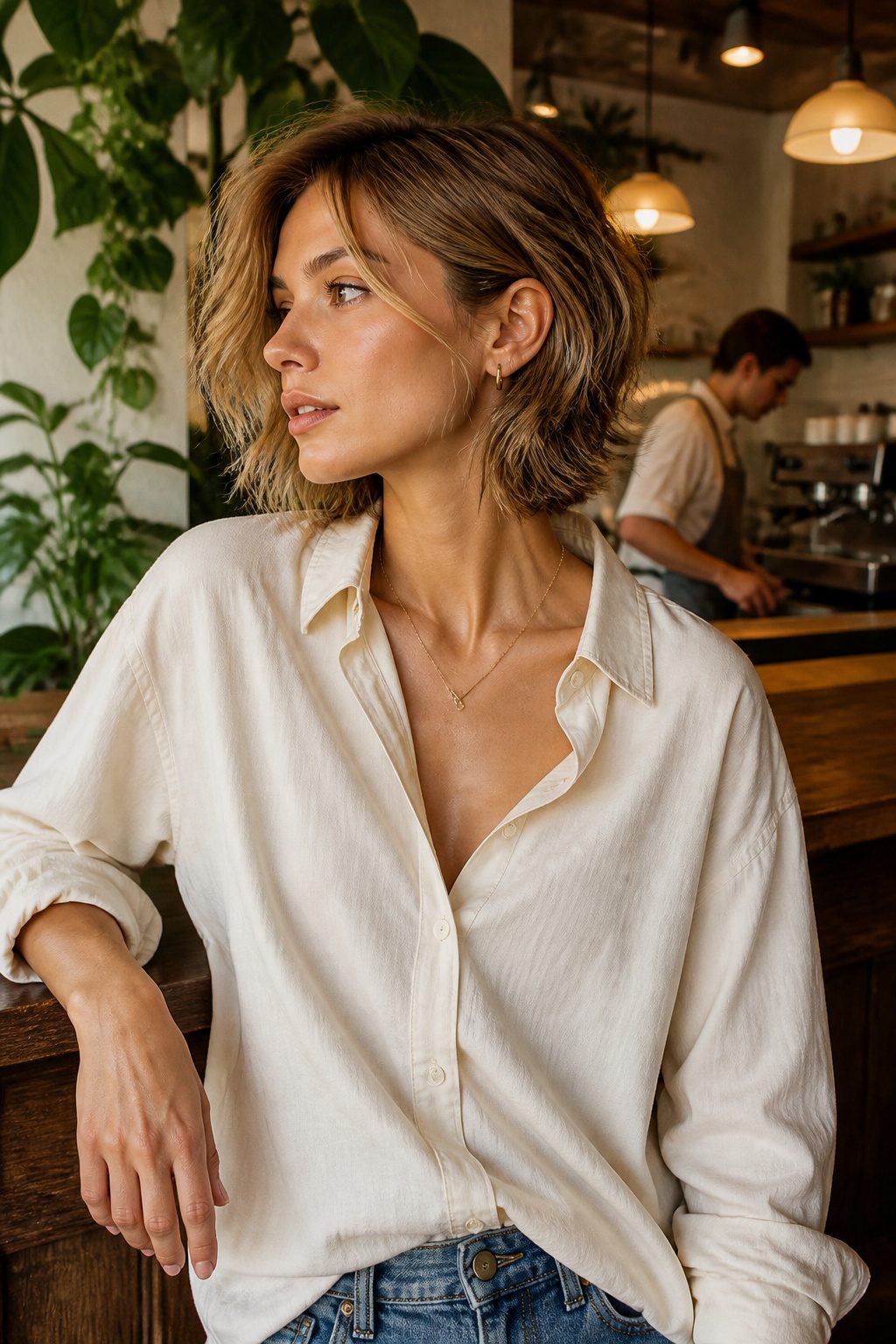
The bixie lands somewhere between chin and collarbone, long enough to tuck behind an ear but short enough that the neckline does most of the framing. That middle length is what lets it borrow from both cuts without committing to either.
Volume sits lower than in a power pixie, where the drama piles up at the crown. Here it spreads through the mid-lengths, giving the silhouette a rounded, slept-in shape rather than a sculpted top. The sides stay relaxed, not slicked or cropped tight, which keeps the whole thing from reading as deliberate.
What makes it casual is the absence of finish. A power pixie, by contrast, relies on upper layers that are blown out or textured for impact. The bixie skips that styling step. It looks like it grew out this way, which is either the appeal or the warning, depending on how much control you want over your morning.
Butterfly Cut

The butterfly cut arranges layers in two distinct tiers, shorter pieces around the face and collarbone while the back keeps its length. That framing is what creates the airy, almost weightless silhouette that moves when you turn your head. My stylist explained the shape as a V or U from behind, with the shortest layers usually hitting near the cheekbone and the longest descending past the shoulder blades.
What sold me on trying it was the promise of volume without sacrificing the option to throw it into a low ponytail. The reality of styling it, though, is where most people get surprised. To get that floaty finish, you need to round-brush the face-framing sections outward while drying, which adds about eight to ten minutes to a routine that used to be towel-and-go. Skip that step and the layers collapse into each other, looking more grown-out than intentional. A large-barrel curling wand on the mid-lengths, rolled away from the face, revives the shape between washes if the blow-dry feels like too much on busy mornings.
Hime Cut
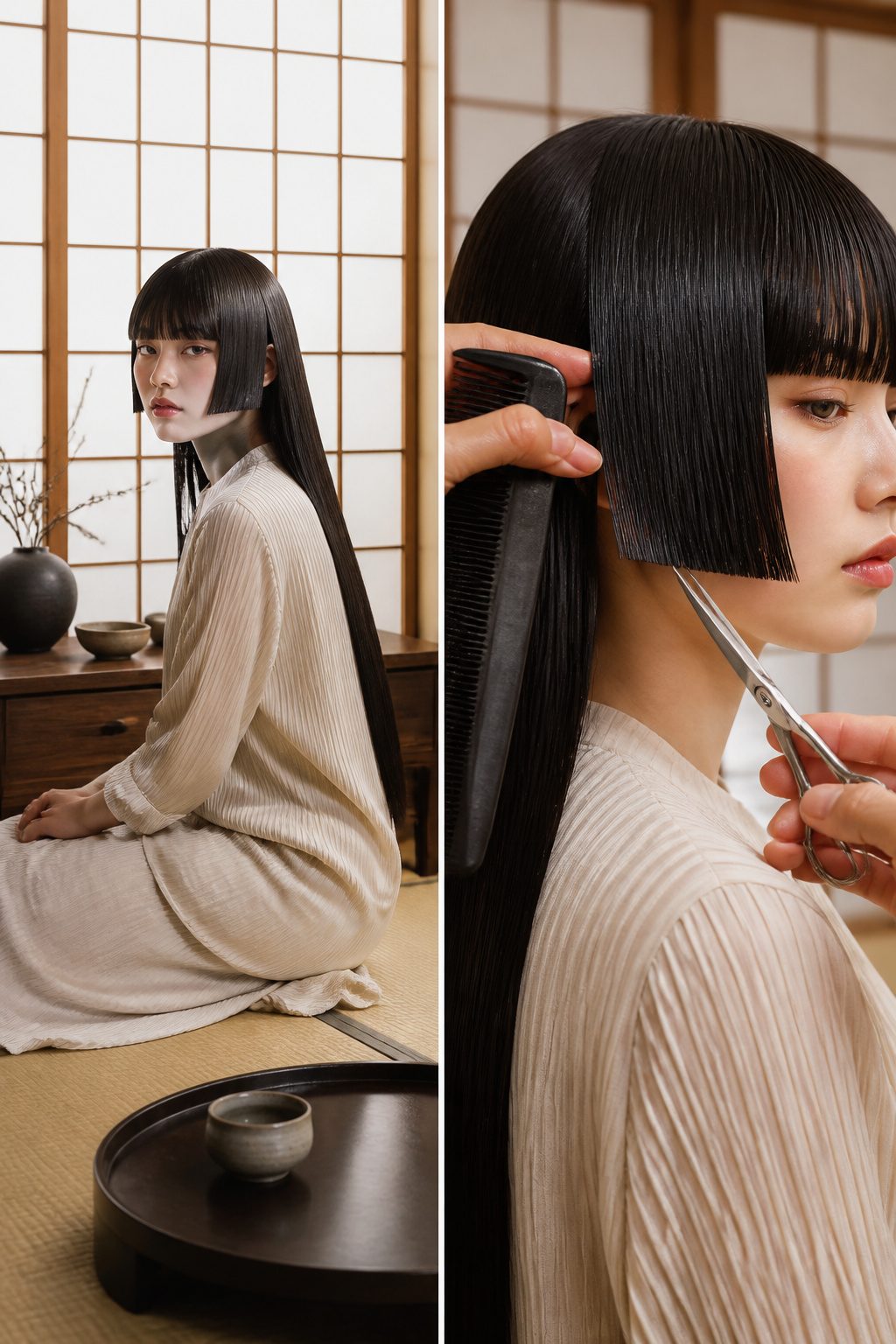
The hime cut carries one of the sharpest transitions in current hair trends: two front panels cut blunt to the jaw, set against hair that continues well past the shoulders in back. That severity is the whole point.
Its structure comes from Heian-period Japan, where noblewomen cut those same front sections at age eighteen while letting the rest grow for life. The modern version loosens that ritual but keeps the geometry intact.
What stopped me from trying it was the grow-out math. Those blunt front panels hit the collarbone fast, and the line goes soft in weeks, not months. Without regular trims the cut loses its definition and becomes an awkward, lopsided frame. Bangs or none is your call, and the back length can run to preference, but the jaw panels demand maintenance. Extensions can fake the look if you already wear a bob, which is how I have seen it pulled off without the commitment. Kristen Stewart wears it on curly hair, and the contrast between the rigid front and natural texture actually reads sharper than on straight strands.
Cowboy Copper
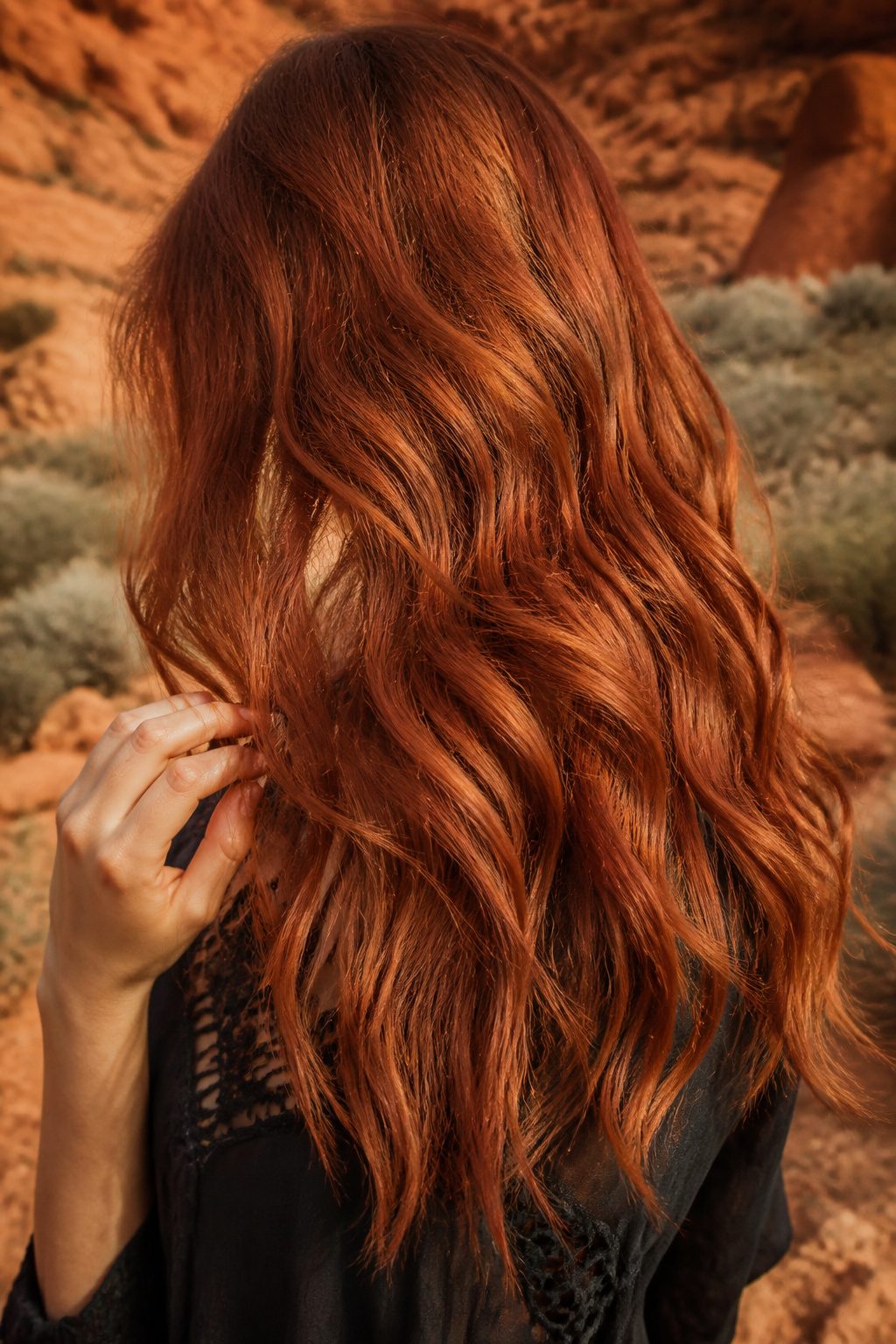
Cowboy copper sits closer to the orange end of the red-orange spectrum than a true auburn, but the brown undertone keeps it from tipping into traffic-cone territory. A natural brunette base lifts to this shade most predictably, which explains why the color took off the way it did: it delivers drama without the scalp-burning bleach sessions that platinum or fashion colors demand. The dimensional quality matters because flat, single-process copper reads as costume rather than style. What makes this iteration workable for 2026 is the shift toward cinnamon and rust notes, variations that let the color catch light differently at the roots than at the ends. A solid copper bowl looks like a wig; one built with lowlights of burnished brown and softer apricot reads as something that grew there. The wearability comes from that built-in variation, not from playing it safe with the tone itself.
Espresso Martini Brunette
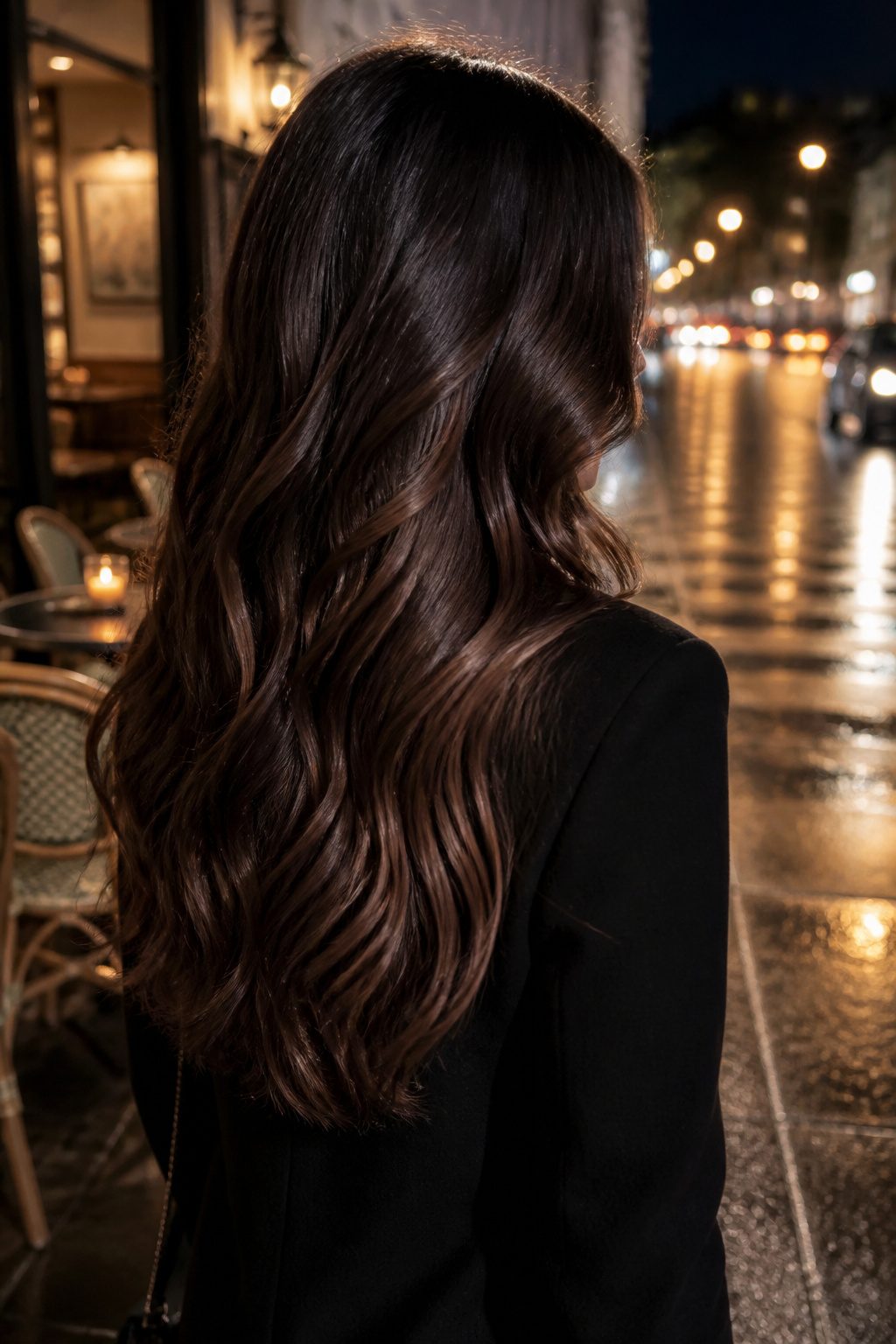
The subtle dimension in espresso martini brunette lives in soft balayage or lowlights that catch light just right, so the color reads expensive rather than flat. A standard dark brown can sit heavy and uniform, almost like a single-tone box dye. This shade gets its gloss from deep chocolate and espresso tones layered with that slight variation underneath.
What convinced me, reading through the colorists on this, is the upkeep story. Richard Mannah at Joico calls these shades ideal for polished styles with minimal maintenance, and Dimitris Giannetos notes the cool-toned version stays sleek and dramatic without constant salon visits. The gloss is the giveaway: it reflects light because the dimension is placed low and soft, not streaky or high-contrast. Think mousse and brownie richness from Pantone’s 2026 direction, but restrained enough that your skin tone gets the contrast without the color shouting.
If you are brunette already, this is a deepen-and-refine move rather than a departure. If you are not, the shift still works because the base stays near-natural; the polish is what reads as 2026.
Hair Colors That Work Across Skin Tones
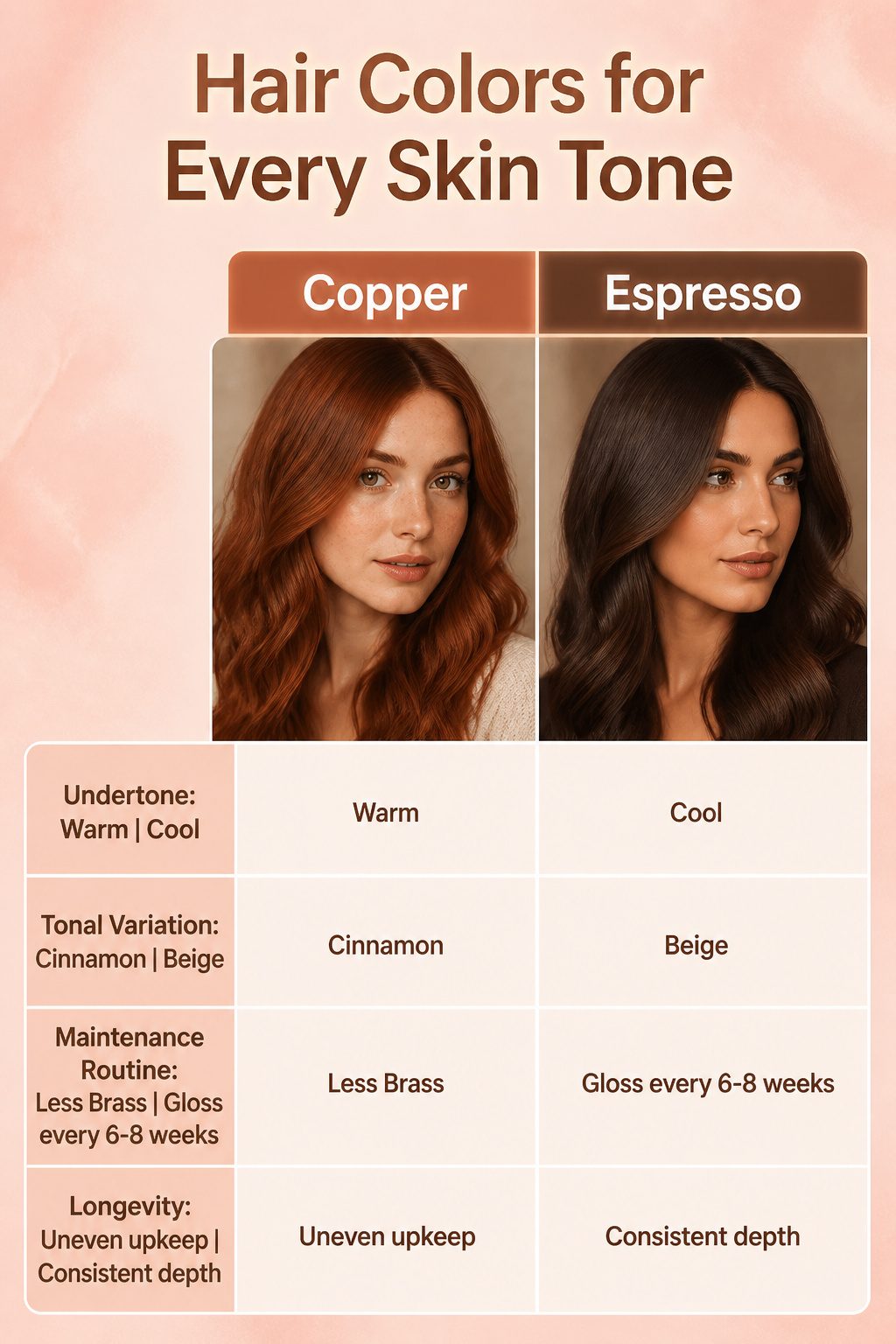
Copper lands differently depending on what your skin already does in sunlight. With a warm undertone, the cinnamon end of the range reads as an extension of your natural flush rather than a contrast against it. Cool undertones pull the shade toward rust and auburn, which keeps the color from tipping into orange territory. Either way, the brown base that stylists are favoring now means less brass correction between appointments than the copper of a few years back.
Espresso follows a similar split. On cool undertones, a beige-leaning espresso, sometimes called Tuscan leather, stays flat and sophisticated instead of muddy. Olive or warmer complexions need the richer gold variation to keep the depth from reading as harsh. The maintenance here is largely about avoiding the warmth that bleached brown can pick up; a glossing appointment every six to eight weeks keeps the tone intentional rather than accidentally auburn.
Honey bronde sits in the middle deliberately. It carries enough gold for warmth and enough ash to cool down, which means neutral undertones wear it most naturally. For longevity, the lighter pieces need more frequent toning than the darker ones, so the upkeep is uneven across the head. That is the trade you make for a color that shifts with the light rather than declaring itself in one glance.
Styling Techniques That Protect Hair
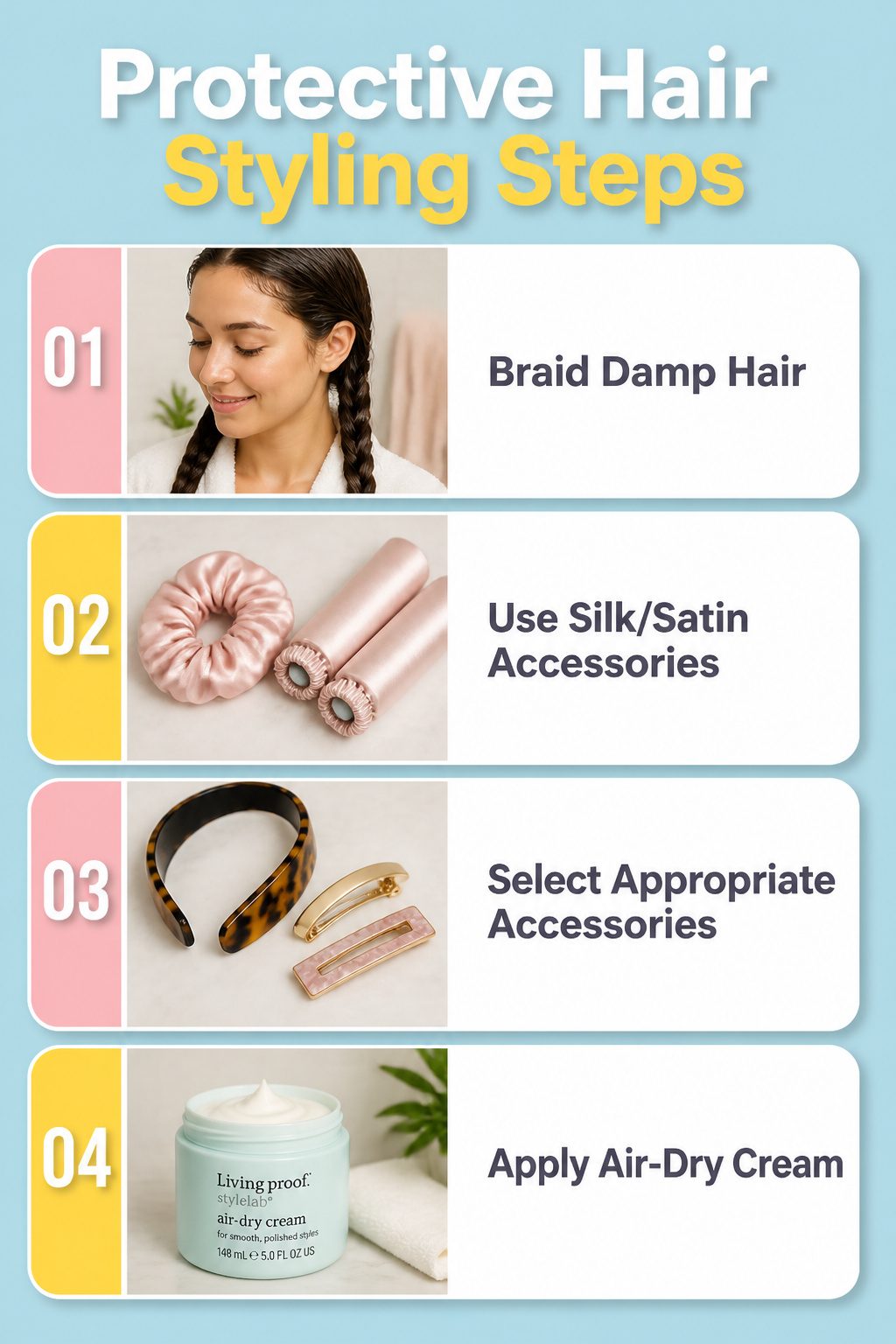
Braiding damp hair for overnight waves has replaced my morning routine with a curling wand more times than I care to count. The technique works especially well with the crimped looks coming back from the ’80s: those zig-zag waves add body without a dedicated crimper, and sleeping in loose braids lets the texture set while your hair actually recovers from the day. Silk or satin accessories matter more than I expected here — a basic cotton scrunchie creates friction that roughs up the cuticle and undoes the point of going heatless. Switching to silk rollers or flexi rods changes what you wake up to; the Rosewood Jumbo Satin Flexi Rods and similar tools reduce that overnight abrasion so the wave pattern holds cleaner and the color you just paid for at the salon doesn’t dull from mechanical damage.
Headbands and French barrettes in bold finishes do work with these softer textures, though the pairing takes some judgment. A flat wave from braiding can read too casual with a metallic barrette; the accessory ends up looking like an afterthought rather than the nostalgic accent it’s meant to be. I tend to use the barrettes on second-day hair when the waves have loosened and need the structure, or pull the front sections back with a headband while leaving the braid waves loose below. The air-dry creams help here too — Living Proof’s Stylelab version or similar keeps the wave defined enough that the accessory reads intentional, not corrective.
How Celebrity Culture Pushes a Cut Fast
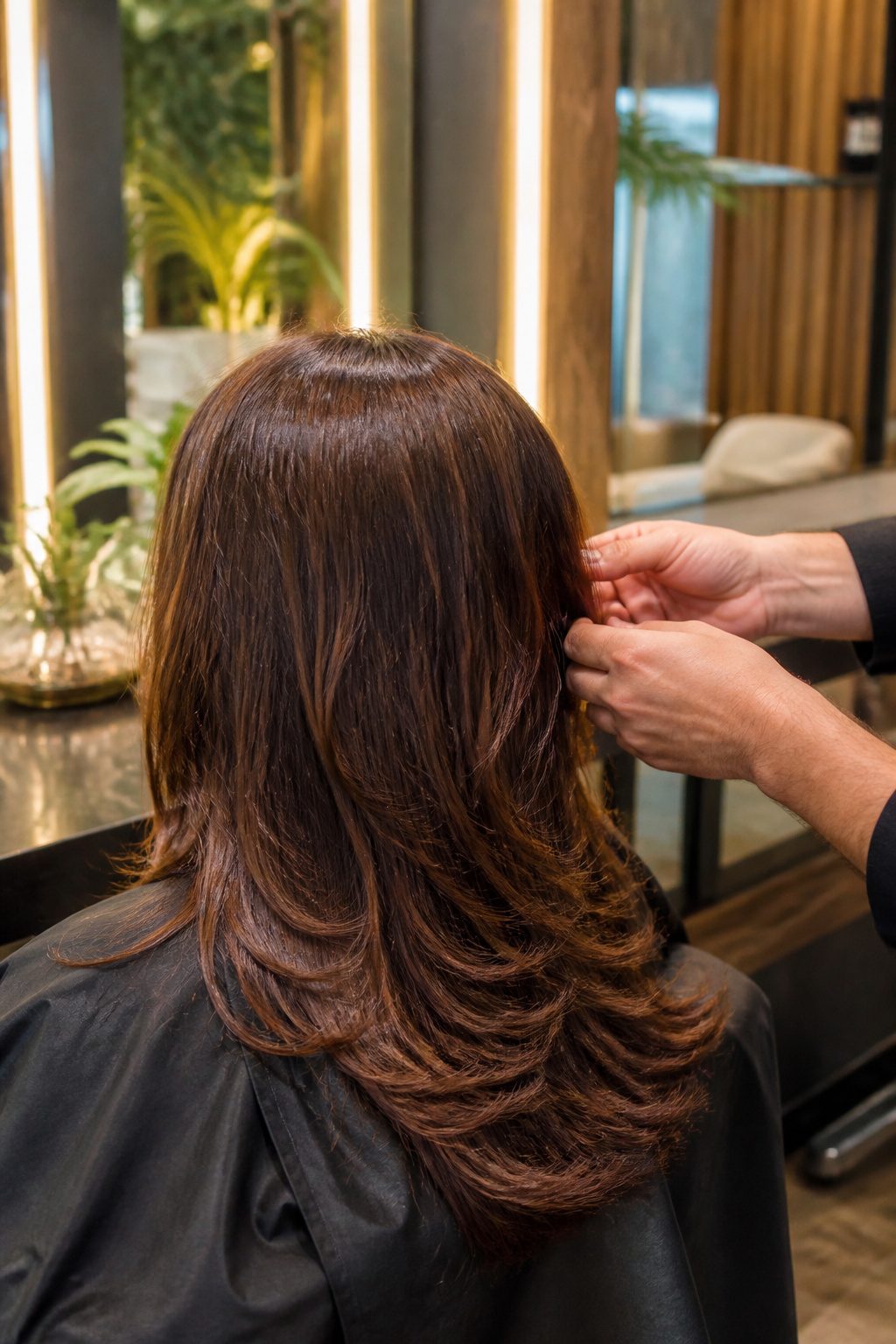
A single red carpet shot of Zendaya or Timothée Chalamet can flood a salon with requests inside of two weeks. The lag is surprisingly short now: a premiere hits social media on Sunday night, and by Wednesday the stylist is fielding DMs asking for "that exact fringe" or the shag that framed the jawline just so. I watched this happen with the ’70s-inspired shag after one awards season, the textured layers and curtain bangs moving from paparazzi shots to salon chairs almost before the afterparties ended.
The mechanics are simple. Stylists save the reference photos, the client brings the screenshot, and the cut gets replicated with minor adjustments for face shape or hair type. A versatile cut, one that works across lengths and textures, spreads faster because more people can wear it without heavy modification.
But the same cycle kills it. The next premiere arrives, a sharper bob or a sleeker silhouette appears, and the previous style thins out in the chair. What looked daring in February reads as last season by June. The shag that Mannah praised for its movement and the kitty cut’s rounded layers above the shoulder both follow this arc: peak visibility, rapid adoption, then quiet retreat as the reference photos update. A good stylist learns to deliver the look without promising it will stay current past the next streaming release.
Frequently Asked Questions
What are the latest hair trends for 2026?
The defining cuts include the French bob, power pixie, mixie, bixie, and butterfly cut, with color directions like cowboy copper and espresso martini brunette leading. Five separate trend forecasts have flagged the French bob as the defining bob for 2026, while the power pixie builds real height through longer top layers than the classic version.
How do I choose the right haircut for my face shape?
Match the cut’s structure to what your face needs: oval and heart-shaped faces carry the French bob most naturally, while rounder faces gain verticality when its ends stay sharp. The power pixie works on rounder or longer faces because the extra top length lets you place volume to balance or elongate as needed.
What hair colors are trending this season?
Cowboy copper sits closer to orange than auburn but avoids traffic-cone brightness through brown undertones, while espresso martini brunette builds gloss from deep chocolate and espresso tones with soft balayage or lowlights. Honey bronde sits between them, carrying enough gold for warmth and enough ash to cool down for neutral undertones.
What styling techniques are recommended for maintaining healthy hair?
Braid damp hair overnight for heatless waves, especially for the crimped looks returning from the ’80s, and use silk or satin accessories rather than cotton to cut friction that roughs up the cuticle. Air-dry creams keep wave patterns defined enough that accessories read intentional, not corrective.