Daxxify wins for anyone who wants the longest gap between appointments, with results stretching 6–9 months and some patients reporting up to a full year. Skip it if your budget is tight or you prefer frequent tweaks, since the upfront cost runs $400–$800 per session and fewer touch-ups means less flexibility.
1. Injectable Neurotoxin Alternatives
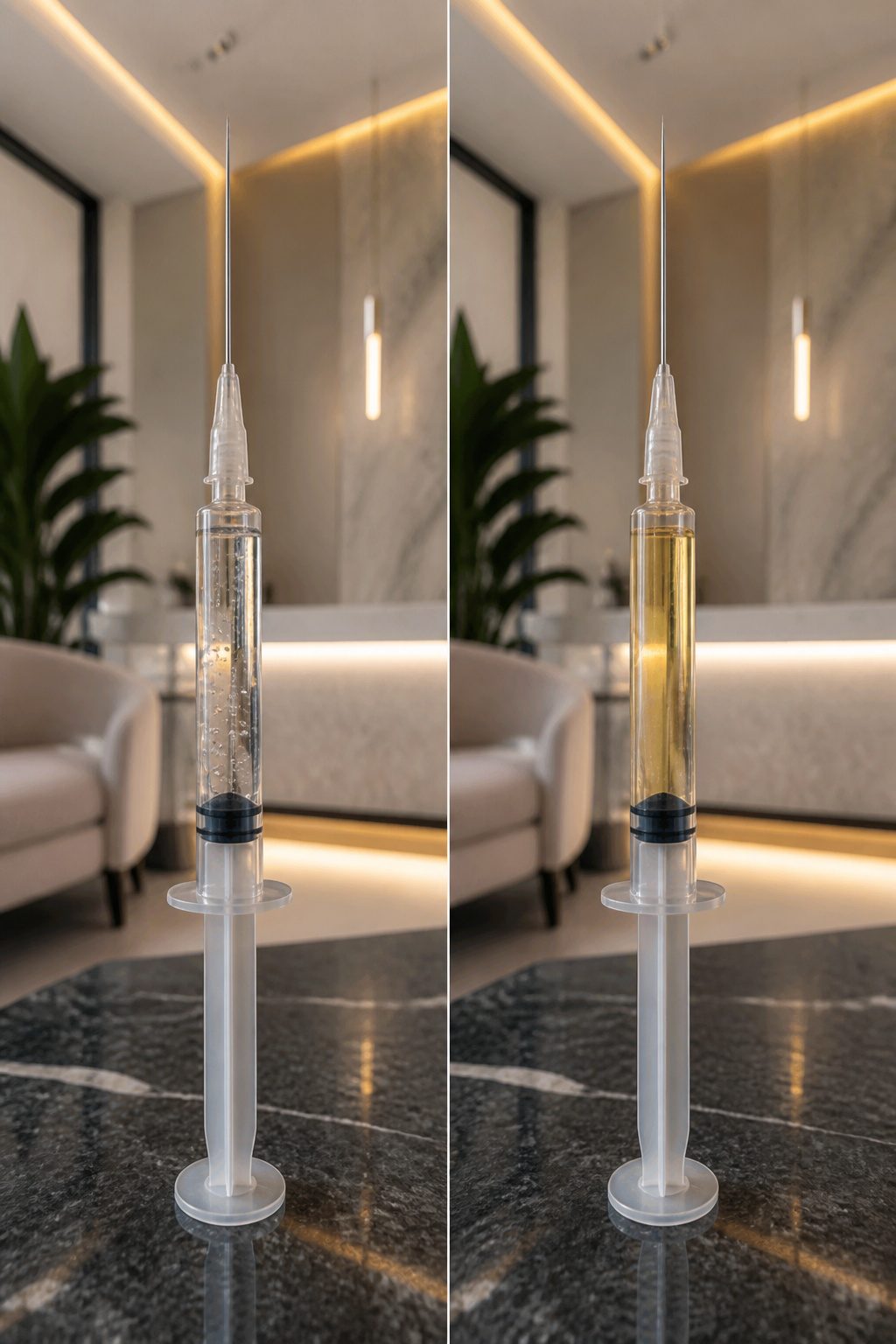
Daxxify is the newest neurotoxin on the market, and its proprietary peptide extends results to 6–9 months, with some patients reporting up to a full year. That longevity comes at a price: expect $400–$800 per session. If your budget is tight or you prefer frequent tweaks to your look, the fewer touch-ups may not justify the upfront cost.
Dysport spreads more than other options, which makes it useful for larger treatment areas like the forehead, and its onset clocks in at 2–3 days rather than Botox’s typical week. The per-unit pricing runs cheaper too, though units are not interchangeable. You will need more of them, so the math only works in your favor on broad surfaces.
Xeomin is sometimes called "naked" Botox because it carries no accessory proteins. That purity matters if you have sensitive skin or have stopped responding to other neurotoxins after building antibodies. I would skip Xeomin if cost is your main concern, since the price lands close to Botox without the longer track record.
Jeuveau, approved in 2019, targets millennials in its branding and positions itself as a cheaper wrinkle treatment. The savings are real for standard frown lines, but the formula has not been studied as extensively for off-label areas. Someone treating crow’s feet or a drooping brow may want to wait for more data or pay the Botox premium instead.
2. Needle-Free ‘Botox in a Bottle’ Serums
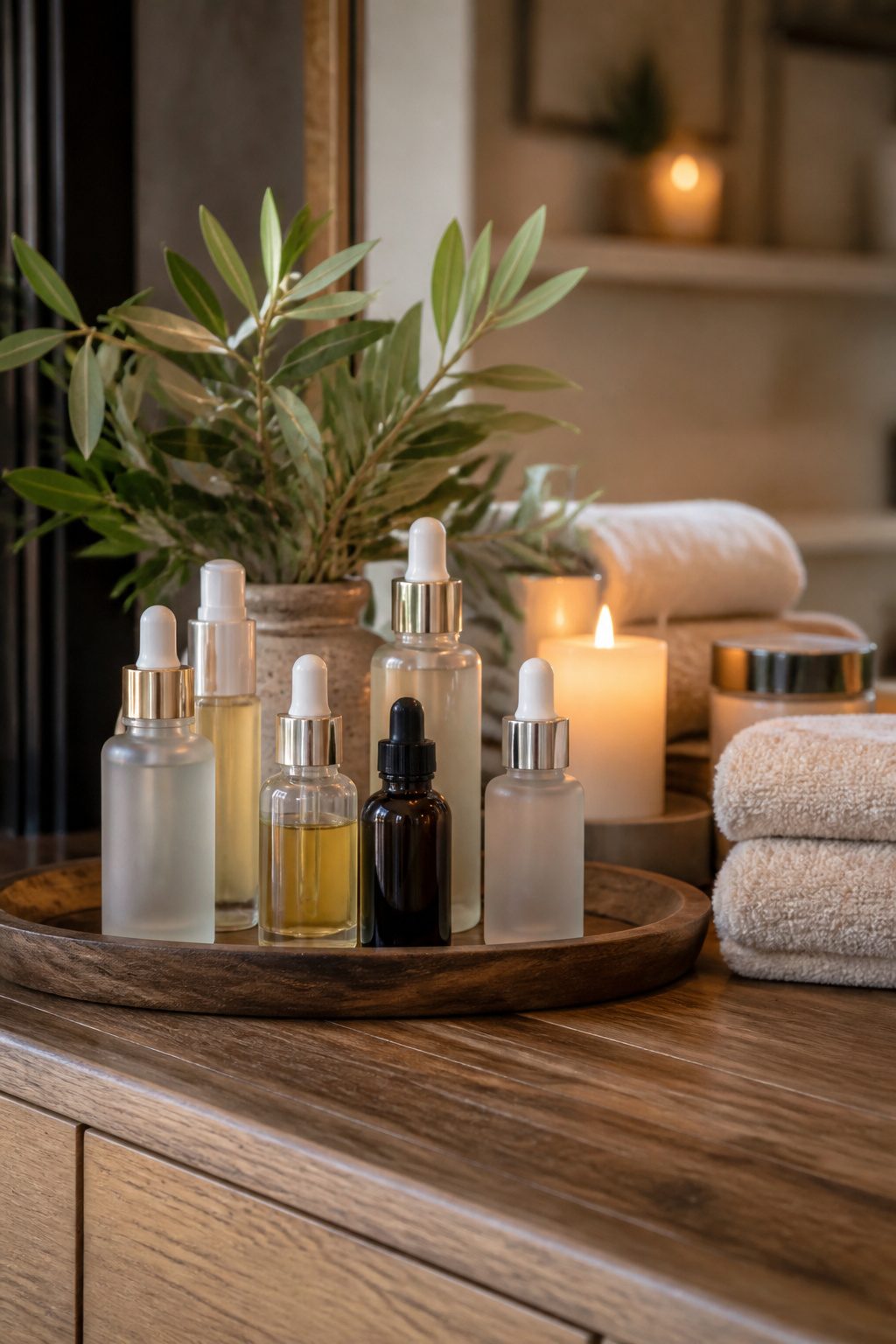
Topical serums built around peptides like argireline sit at the accessible end of the best botox alternative search, and the spread in price is dramatic. SkinCeuticals P-Tiox runs $150, Revision Skincare Revox Line Relaxer lands somewhere in that premium tier, and The Ordinary Argireline Solution 10% costs $10 at Nordstrom. The gap is not pocket change, and the results gap exists too.
"It may reduce facial muscle contractions and help reduce wrinkles and line formation"
— Vogue
That "may" matters. These formulas work superficially, weakening facial muscles through the skin rather than paralyzing them beneath it. With consistent morning and night application, expect something in the range of 50–80% of the visible smoothing you’d get from an in-office treatment. The Ordinary serum targets dynamic lines like elevens and smile creases; TikTok users pair it with the brand’s Matrixyl 10% + HA for smoother, refreshed-looking skin. SkinCeuticals and Revision aim at similar territory with higher price tags and typically more sophisticated delivery systems.
Skip this category if you need dramatic results fast or if your budget cannot handle ongoing repurchase. No topical argireline product, at $10 or $150, replicates the muscle-relaxing effect of injected botulinum toxin. The results are real but temporary and cumulative, which means the cost repeats. Someone already committed to in-office Botox can use these serums to extend or enhance between appointments, but treating them as a true replacement sets up disappointment.
3. Professional In-Office Treatments
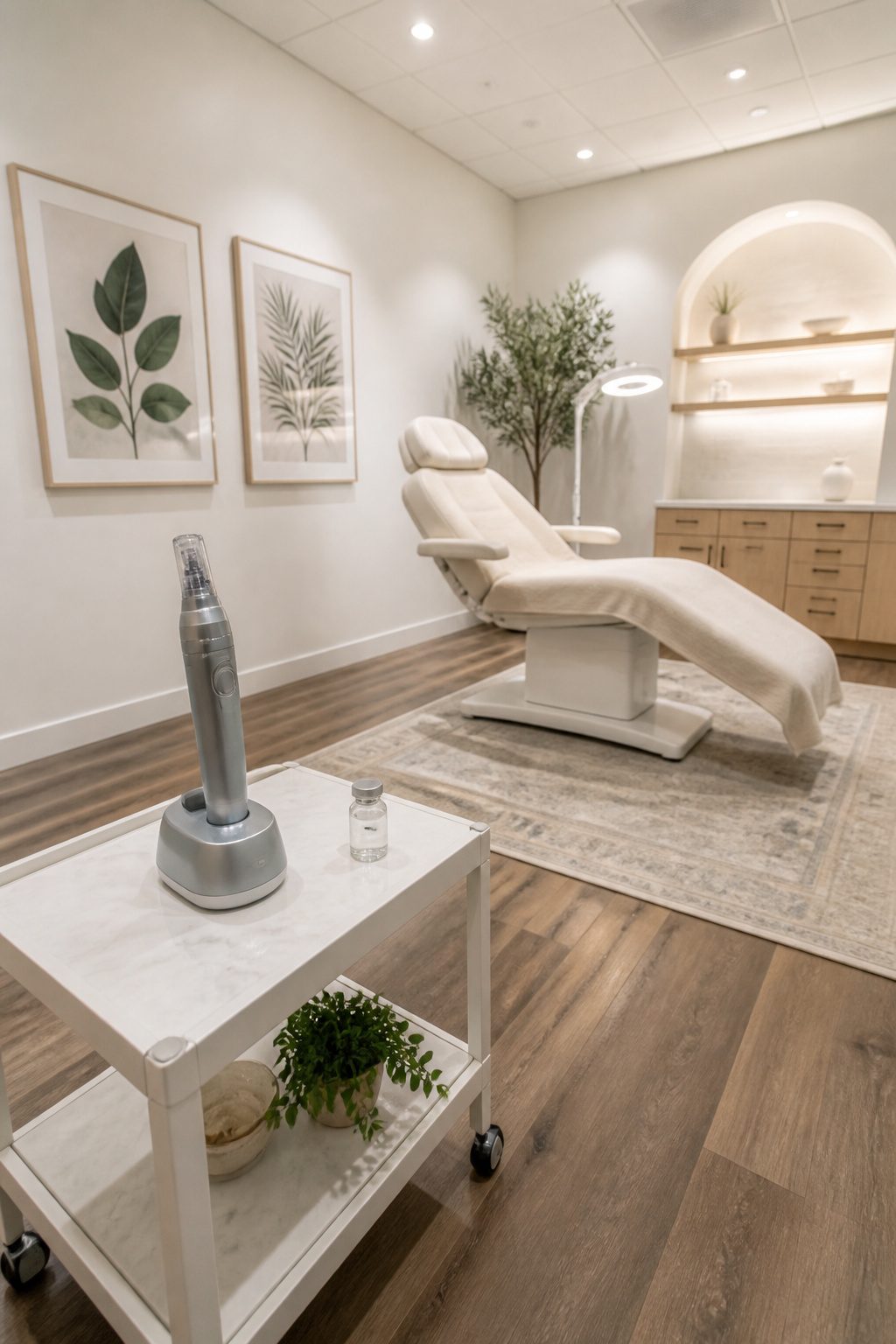
RF microneedling sits at the more intensive end of in-office alternatives, pairing radiofrequency energy with ultra-thin needles to prompt collagen and elastin production. A single session with a popular device like Morpheus8 runs about $1,000, and the tightening effect lasts six to twelve months. The treatment stings, and the price climbs fast, but the results look dramatic without crossing into unnatural territory.
Chemical peels work lighter, exfoliating the outermost skin layer to improve texture and soften fine lines. The downside is real: temporary or permanent color changes, scarring risk, and cold sore reactivation all sit on the table. Downtime and intensity vary by peel depth, so the category spans everything from a lunch-hour refresh to a week of hiding indoors.
Ultherapy uses non-invasive ultrasound to target deeper tissue, with results stretching up to two years and costs starting around $1,500. Collagen builds slowly, so the payoff takes weeks, not days, and the 45-minute session hurts despite zero downtime afterward.
Skip RF microneedling if your pain threshold or budget is tight. Skip chemical peels if your skin reacts unpredictably or you need reliable timing for an event. Skip Ultherapy if you want immediate results or cannot stomach the upfront cost. The longest-lasting option demands the most patience and the fattest wallet.
4. At-Home Natural and Device-Based Options
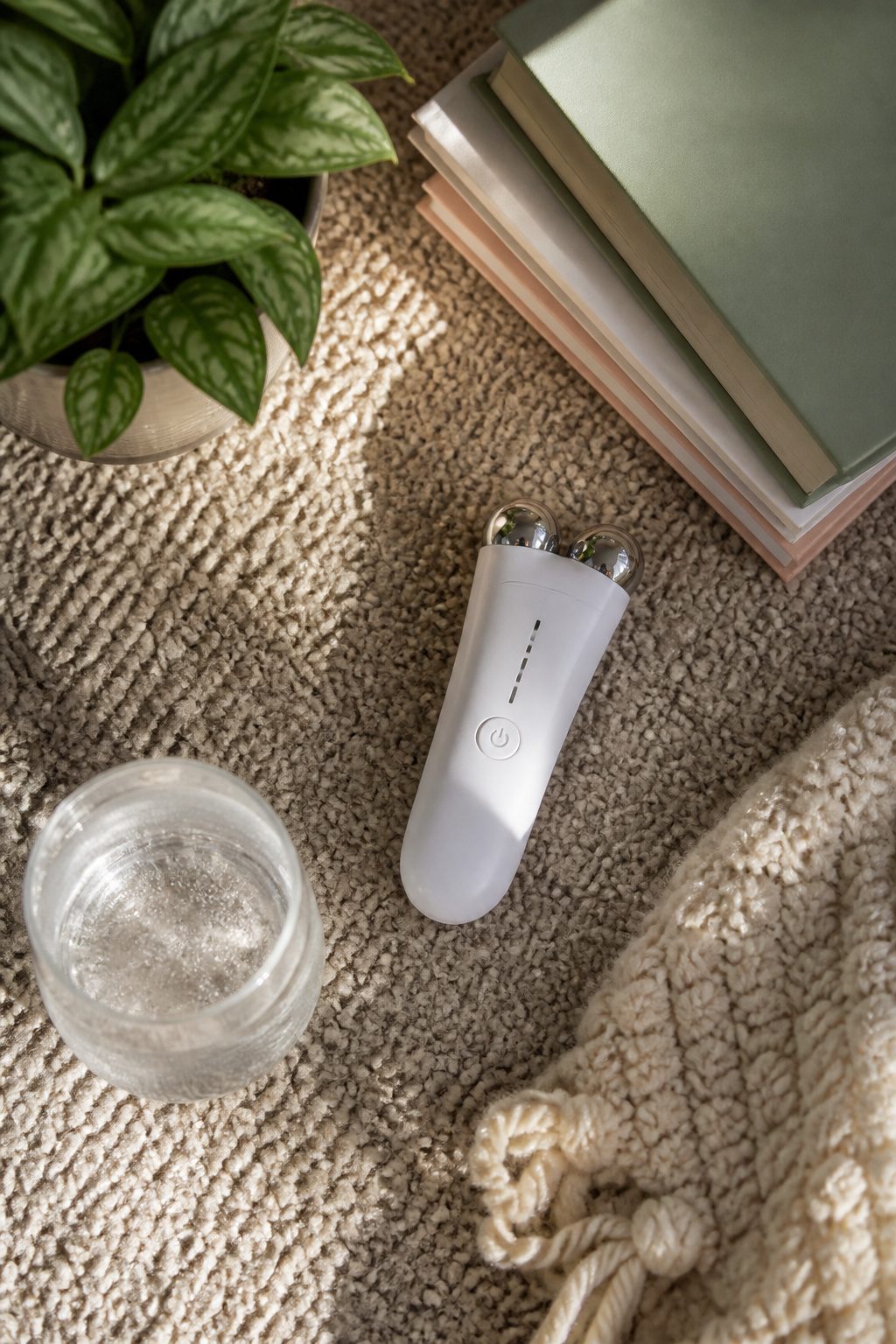
Microcurrent devices send a low-level electrical current through facial muscles to tone them over time, which sounds promising until you realize the commitment involved. Most routines need daily sessions of ten to fifteen minutes, and the results build so gradually that a friend might notice a difference before you do. Face yoga works on a similar principle, stretching and relaxing specific muscles to increase circulation and, in theory, reduce wrinkle depth. The sources suggest pairing these exercises with increased water intake, though the link between hydration and facial muscle tone remains more hopeful than proven.
Red light therapy sits somewhere between device and topical, using specific wavelengths to stimulate collagen production at home. Like microcurrent and face yoga, it demands consistency, with meaningful changes typically appearing after eight to twelve weeks of regular use.
On the ingredient side, bakuchiol and sunflower bulb extract offer plant-based paths to firmer skin. Bakuchiol promotes cell turnover and collagen production with less irritation than retinol, making it workable for sensitive types. Sunflower bulb extract appears in formulations aimed at relaxing facial tension and smoothing lines without synthetic compounds.
These methods suit someone who genuinely enjoys a nightly ritual and has the patience to track incremental change. Anyone who wants faster, more dramatic results, or who knows they will abandon a routine after two weeks, should skip straight to professional options. The lower price point and at-home convenience only pay off if the time actually gets spent.
Cost Comparison Across All Alternatives
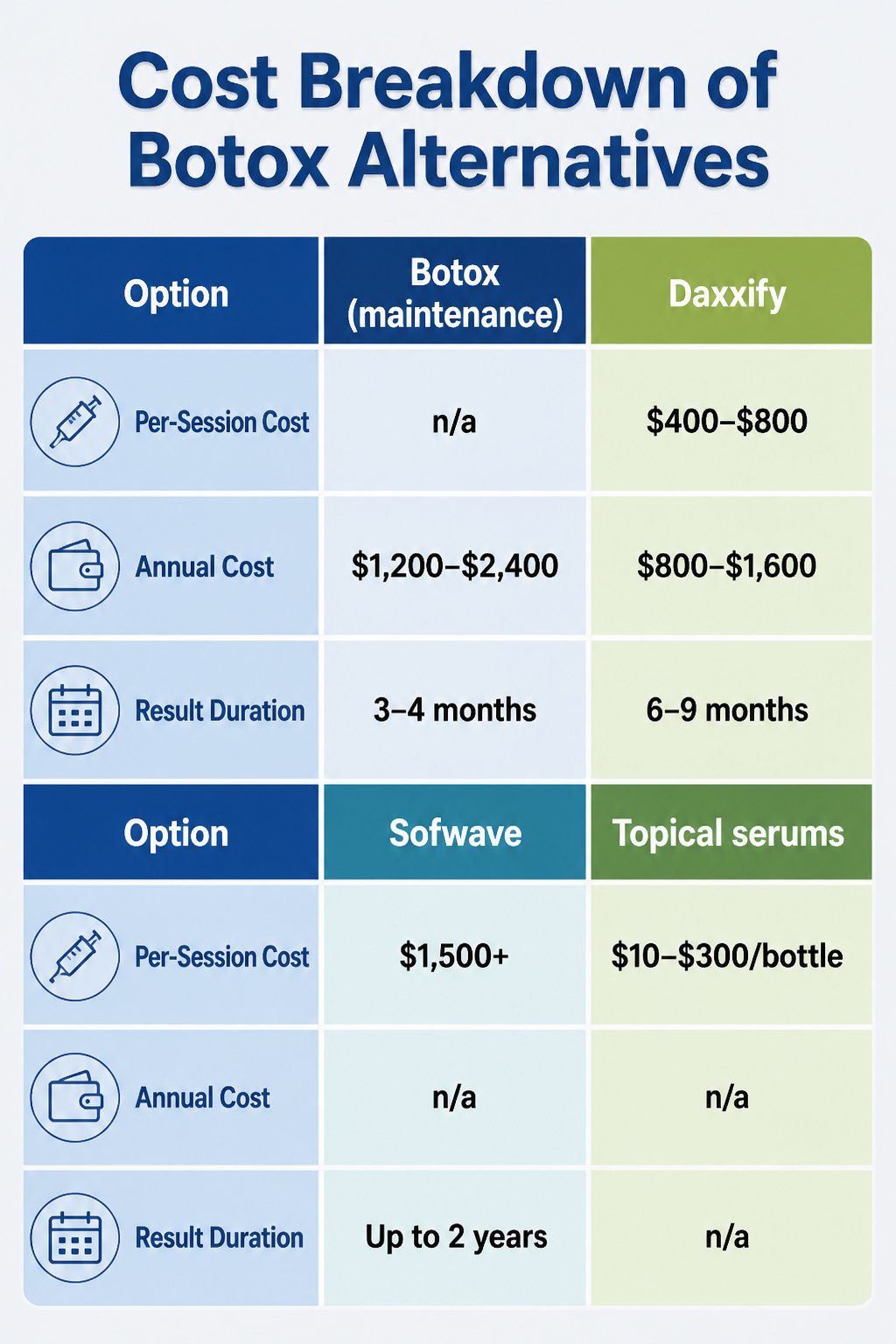
Botox runs $1,200–$2,400 yearly once you factor in the three to four sessions needed to maintain results. Topical "Botox in a bottle" serums land anywhere from $10 to $300 per bottle, though no formula replicates what a neurotoxin does. Professional in-office treatments like Sofwave hit $1,500 or more per session, with results lasting up to two years; Daxxify, a newer injectable alternative, ranges $400–$800 per session but stretches results to 6–9 months. What convinced me, reading through the breakdowns, is how duration reshapes the math entirely. A single Sofwave session costs more upfront than a year of Botox, yet spread across twenty-four months it can undercut annual maintenance.
| Option | Per-Session Cost | Annual Cost | Result Duration |
|---|---|---|---|
| Botox (maintenance) | n/a | $1,200–$2,400 | 3–4 months |
| Daxxify | $400–$800 | $800–$1,600 | 6–9 months |
| Sofwave | $1,500+ | n/a | Up to 2 years |
| Topical serums | $10–$300/bottle | n/a | n/a |
Safety and Side Effects by Category
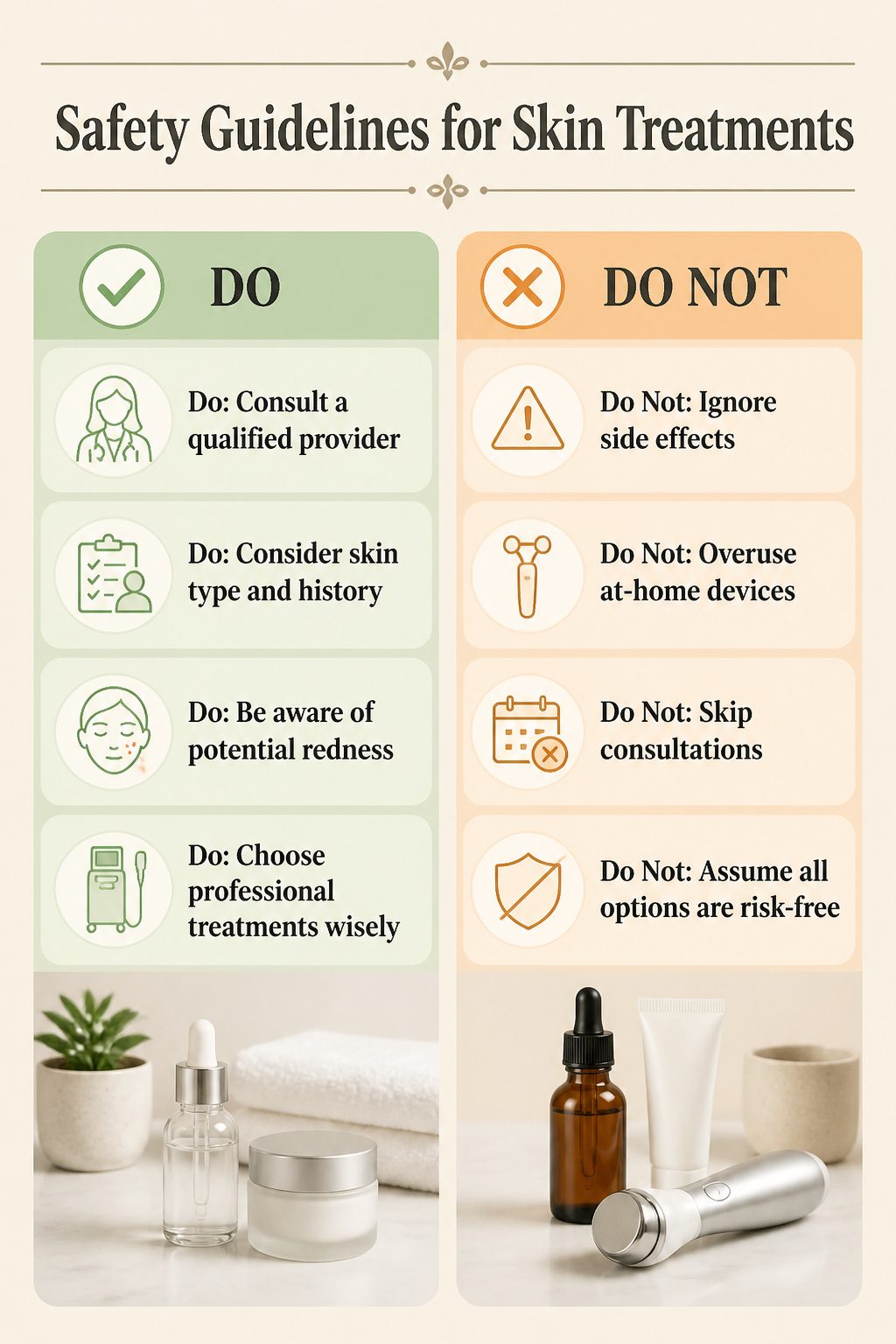
Botox carries a known set of risks that keep some people away from needles entirely. Bruising at the injection site, headaches, temporary muscle weakness, and the possibility of facial asymmetry are well-documented outcomes that can leave you looking worse before you look better. The "frozen face" effect, where expression disappears along with wrinkles, sits in the back of many minds when they book the appointment.
Non-invasive alternatives generally land in safer territory, but "fewer side effects" does not mean "no side effects." Professional-grade treatments, whether they are in-office lasers, ultrasound devices, or medical-grade peels, still expose skin to controlled damage. Redness, swelling, and temporary sensitivity are common responses, and any provider who skips the consultation is cutting a corner worth walking away from.
The real mistake is treating at-home serums and devices as risk-free because they lack needles. Overuse of microcurrent tools or high-strength retinoids can compromise your skin barrier just as surely as a bad injection. What convinced me, reading through the available guidance, is that the consultation matters more than the category. A qualified provider who assesses your skin type, your history with sensitivity, and your actual goals will steer you toward the right option far better than any comparison chart.
How These Alternatives Actually Work
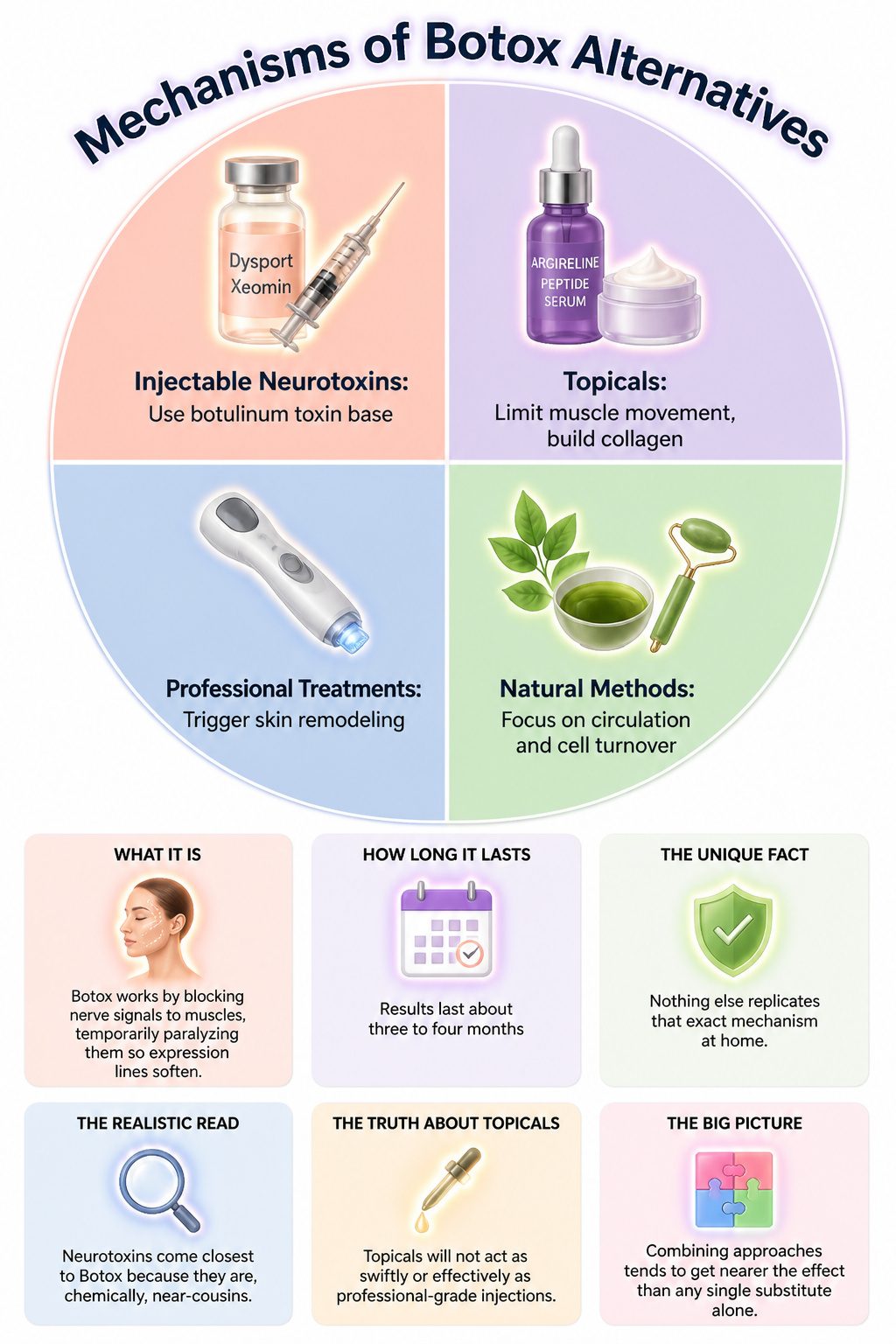
Botox works by blocking nerve signals to muscles, temporarily paralyzing them so expression lines soften. Results last about three to four months, and nothing else replicates that exact mechanism at home.
The alternatives split into four approaches. Injectable neurotoxins like Dysport or Xeomin use the same botulinum toxin base but with varied formulations, some purportedly diffusing differently across the forehead. Topicals with peptides such as Argireline aim to limit muscle movement too, though to a much lesser degree, while also building collagen and elastin fibers. Professional treatments like heat or micro-injury devices trigger skin remodeling through controlled damage. Natural methods focus on cell turnover and improved circulation without any toxin involvement.
Topicals will not act as swiftly or effectively as professional-grade injections. No "Botox in a bottle" exists yet, though neuropeptide serums can soften expression lines over time and pair well with injectables to prolong results. Biostimulators and fillers take yet another path, stimulating your own collagen production rather than relaxing muscles at all.
The realistic read: neurotoxins come closest to Botox because they are, chemically, near-cousins. Everything else improves skin quality, elasticity, or texture, but does not paralyze. Combining approaches tends to get nearer the effect than any single substitute alone.
What to Know Before Choosing
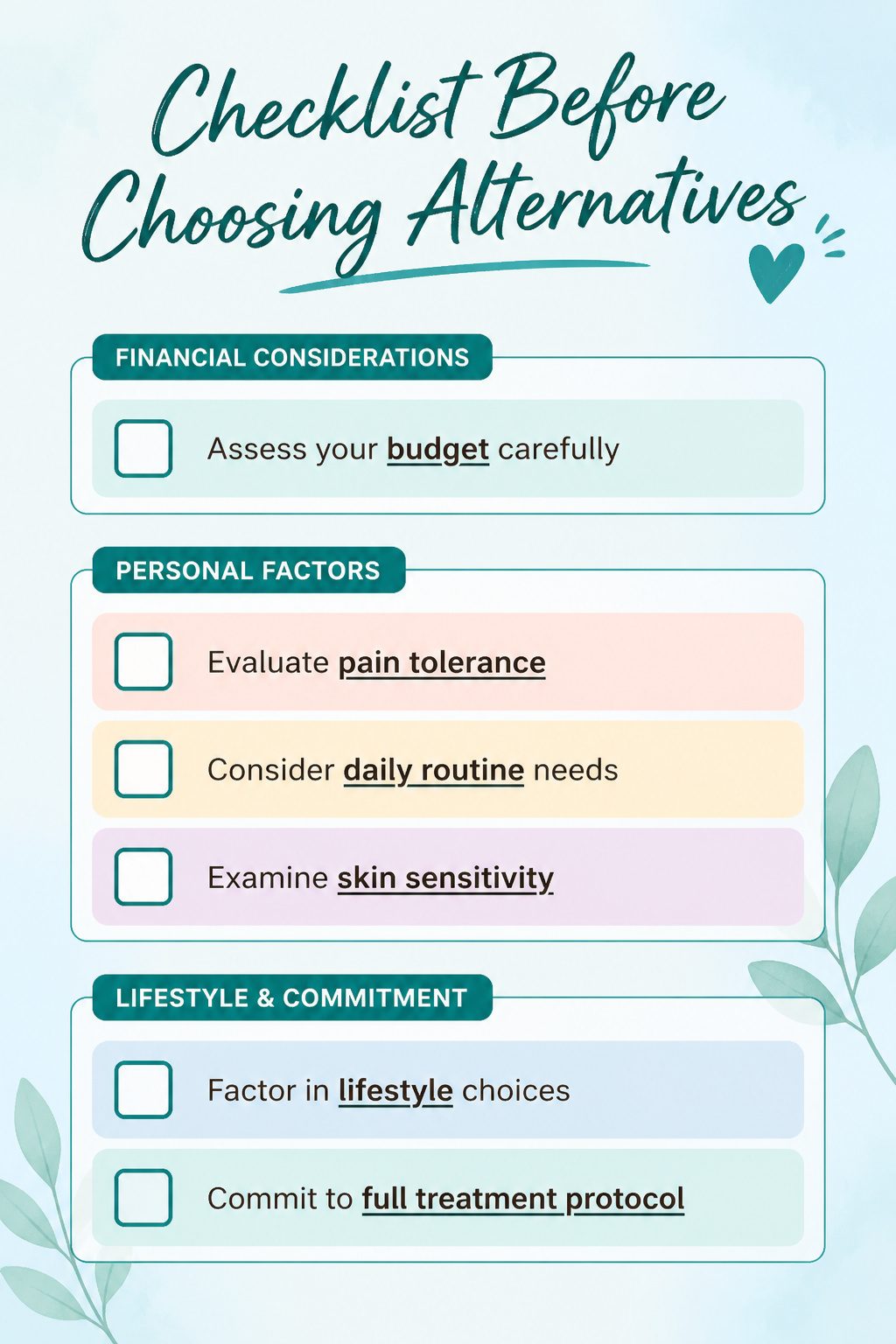
The best botox alternative for your situation starts with an honest look at what you actually have to work with. Budget breaks the tie first for most people. A single RF microneedling session, like Morpheus8, runs about $1,000, and you will need multiple sessions. Needle-free topicals cost far less per month but demand daily patience.
Pain tolerance matters too. RF microneedling uses ultra-thin needles stamped into the skin, and the tightening effect is dramatic but not painless. If even that level of discomfort makes you hesitate, stick to serums and at-home devices.
Your daily routine reality is the next filter. Topical peptides, niacinamide, and hyaluronic acid need consistent application to build collagen and elastin over time. Skip three nights and the chain breaks. Professional treatments reward the time-poor but wallet-stressed.
Skin sensitivity narrows the field further. Non-invasive options carry minimal risk of side effects and suit reactive skin better than anything involving needles or controlled injury. That said, no topical supplement replaces what a certified practitioner can assess in person.
Lifestyle factors like diet and exercise support skin health but are not standalone replacements. They complement whichever route you choose; they do not substitute for it. Match your intensity preference, budget ceiling, and tolerance for routine to the category that fits, then commit to the full protocol rather than half-measures.
Frequently Asked Questions
Do any Botox alternatives really work like Botox?
No alternative fully replicates Botox’s muscle-paralyzing effect, but several come close with consistent use. Injectable neurotoxins like Daxxify, Dysport, and Xeomin use the same botulinum toxin base and act on the same mechanism. Topical peptides and professional treatments like RF microneedling typically deliver 50–80% of the visible smoothing you’d see from injections, though they work through collagen building or mild muscle relaxation rather than true paralysis.
What is the best "Botox in a bottle" serum?
SkinCeuticals P-Tiox at $150 is the highest-rated by dermatologists and editors right now, though the field is crowded. Revision Skincare Revox Line Relaxer sits in the same premium tier, while The Ordinary Argireline Solution 10% costs $10 and targets the same dynamic lines like elevens and smile creases. The expensive options typically use more sophisticated delivery systems, but no topical formula yet matches what a needle can do.
How much do alternatives cost compared to Botox?
Botox runs $1,200–$2,400 yearly for maintenance, while Daxxify stretches to $800–$1,600 annually thanks to 6–9 month duration. A single Sofwave or Ultherapy session starts around $1,500 but can last up to two years, which may undercut Botox on a per-month basis. Topical serums range from $10 to $300 per bottle, though none replicate injection results and the repurchase cycle never ends. The math shifts dramatically once you factor in how long each option lasts.
Are there natural alternatives to Botox?
Yes, though they work slowly and indirectly rather than paralyzing muscles. Bakuchiol promotes cell turnover and collagen with less irritation than retinol, making it workable for sensitive skin. Sunflower bulb extract appears in formulas aimed at relaxing facial tension without synthetic compounds. Face yoga, microcurrent devices, and red light therapy also fit here, but all demand months of consistent use before visible change, and none approach the speed or drama of professional treatments.