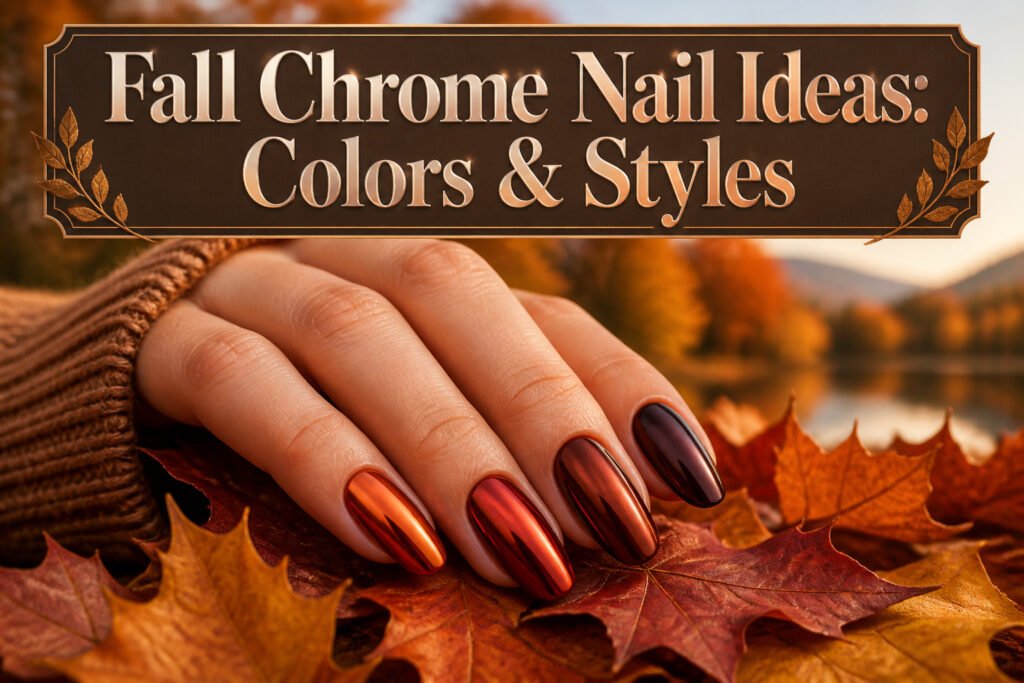
Fall chrome nails run from sheer milky glazes to near-black mirrors, and the deciding factor is not the shade itself but the undertone beneath the powder.
A pumpkin-leaning orange reads costume until you shift it toward rust; the same chrome finish that flatters a camel coat in September will look deliberate in February.
That tonal precision, not the mirror alone, is what separates the 15 ideas ahead from a standard seasonal list.
1. Brown Chrome
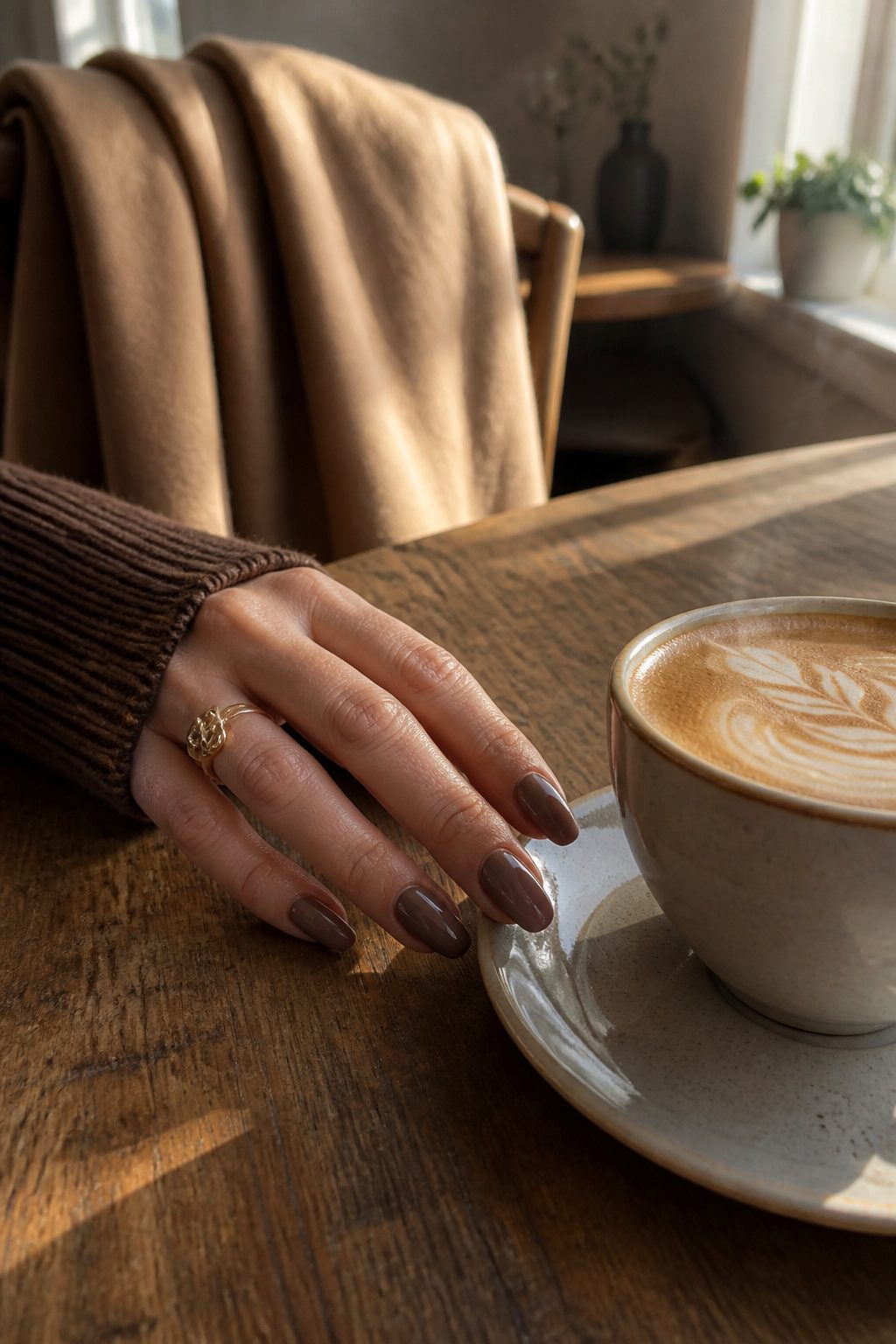
Warm glossy brown chrome runs from soft mocha to deep espresso, and that entire range is what makes this finish feel so right for fall.
A mocha or cocoa-glazed chrome, buffed over a milky brown base, catches light the way a good latte catches morning sun.
OPI Espresso Your Inner Self and OPI Chocolate Moose both work as that foundation, with a pearl chrome powder layered on top to create the glazed effect.
Against fall neutrals, brown chrome reads as intentional rather than loud.
A camel coat or cream knit doesn’t compete with it; the tones talk to each other. The mirror-like finish adds enough interest that you don’t need a bold color to make the manicure feel dressed up.
If the brown washes you out in daylight, skip it. If it hits, the chrome layer only improves it.
2. Burgundy Chrome
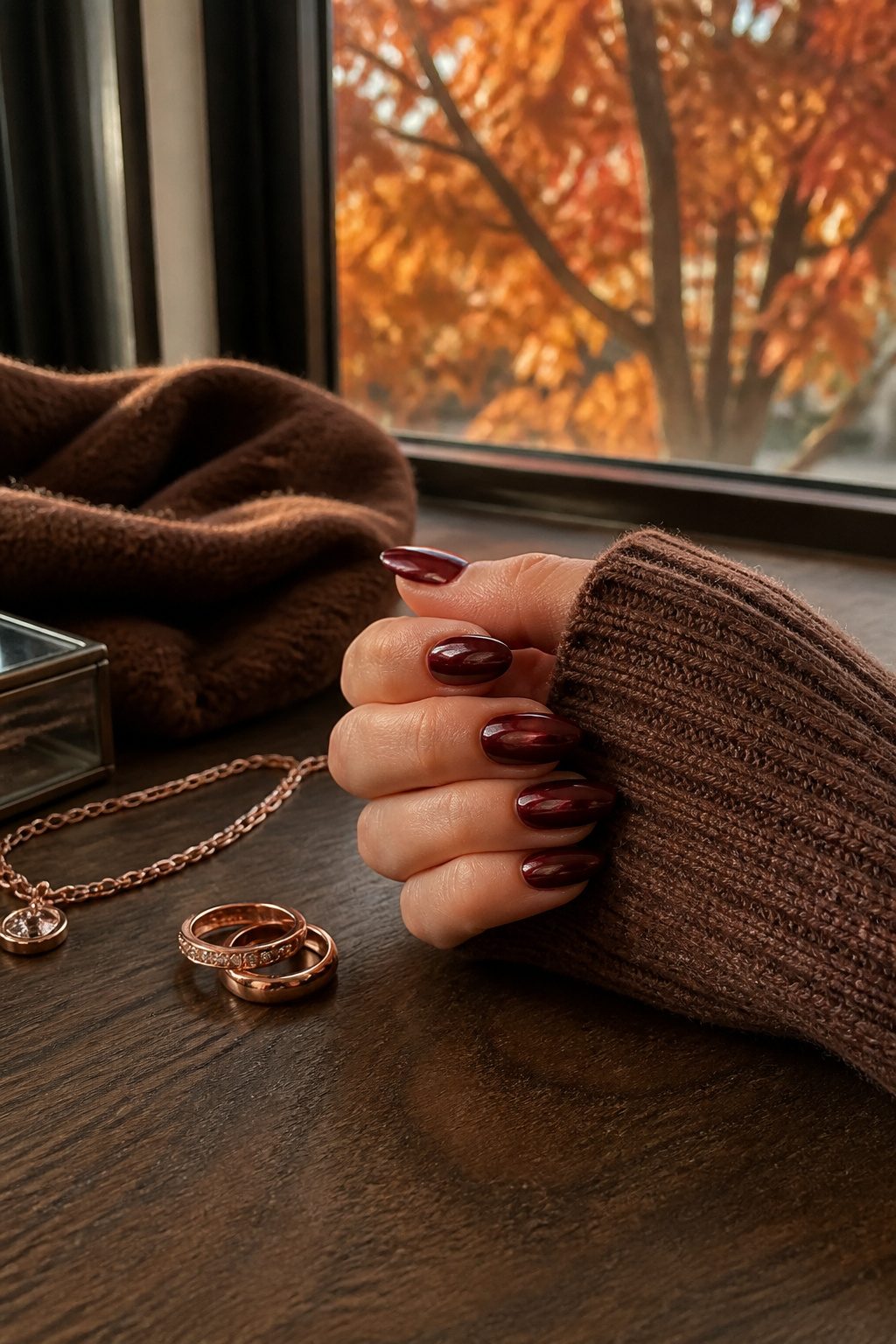
Burgundy chrome carries the weight of autumn better than any other red.
The finish turns a deep wine base into something that catches light like liquid garnet, and against camel coats or chocolate knits, the match feels almost too perfect to be accidental.
Two ways to build it.
A salon can lay a rose or copper chrome powder over a deep red base for a warm metallic pull, or you can do the same at home with a full cure on the base color before buffing.
OPI Malaga Wine works for the foundation, and OPI Big Apple Red will push brighter if you want more pop against olive or deeper skin tones. Rose gold jewelry keeps the pairing clean; silver fights the warmth and reads muddy.
3. Navy Blue Chrome
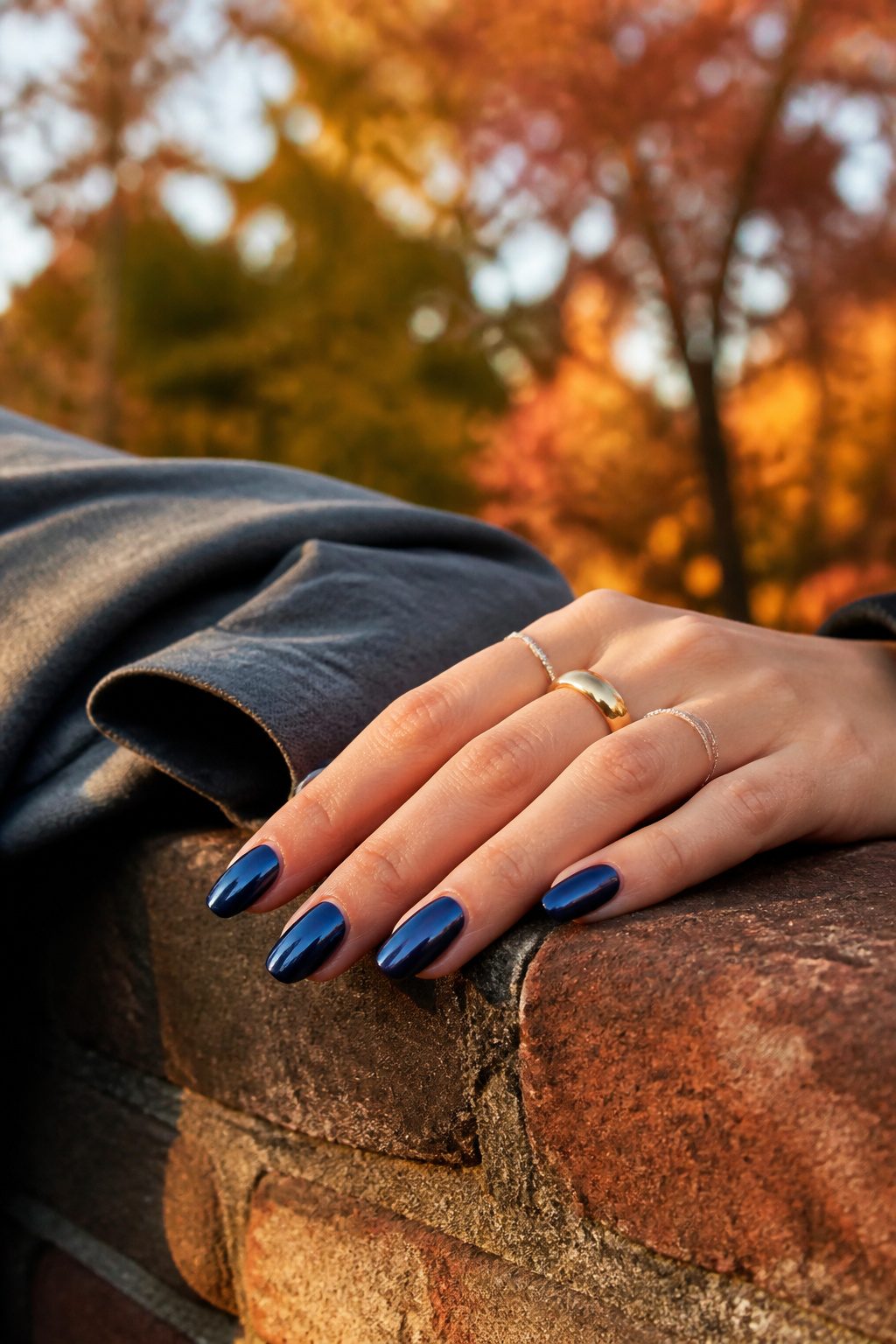
Navy blue chrome carries the preppy energy of fall blazers and loafers into something that actually catches light.
The shade works with both gold and silver accessories, which matters more than it sounds when you’re grabbing jewelry on the way out.
OPI’s Russian Navy is the reference point here, a deep pigment that chrome powder lifts into something reflective without turning gimmicky.
Two coats of that base, then a light pass of pearl or silver chrome powder, give the finish depth rather than flat mirror.
The real test is the lighting shift.
Under office fluorescents, navy chrome reads as polished professional, dark enough to stay subtle. At golden hour, that same surface turns liquid and almost black-blue, picking up every warm tone in the room.
I’ve seen short oval shapes recommended for this specifically; the curve catches light differently than a square edge would, more continuous glide than flash point.
For home attempts, a serious glossy top coat is the fallback if you skip powder entirely, though you’ll lose the dimensional shift that makes the color worth choosing over standard navy gel.
4. Dark Green Chrome
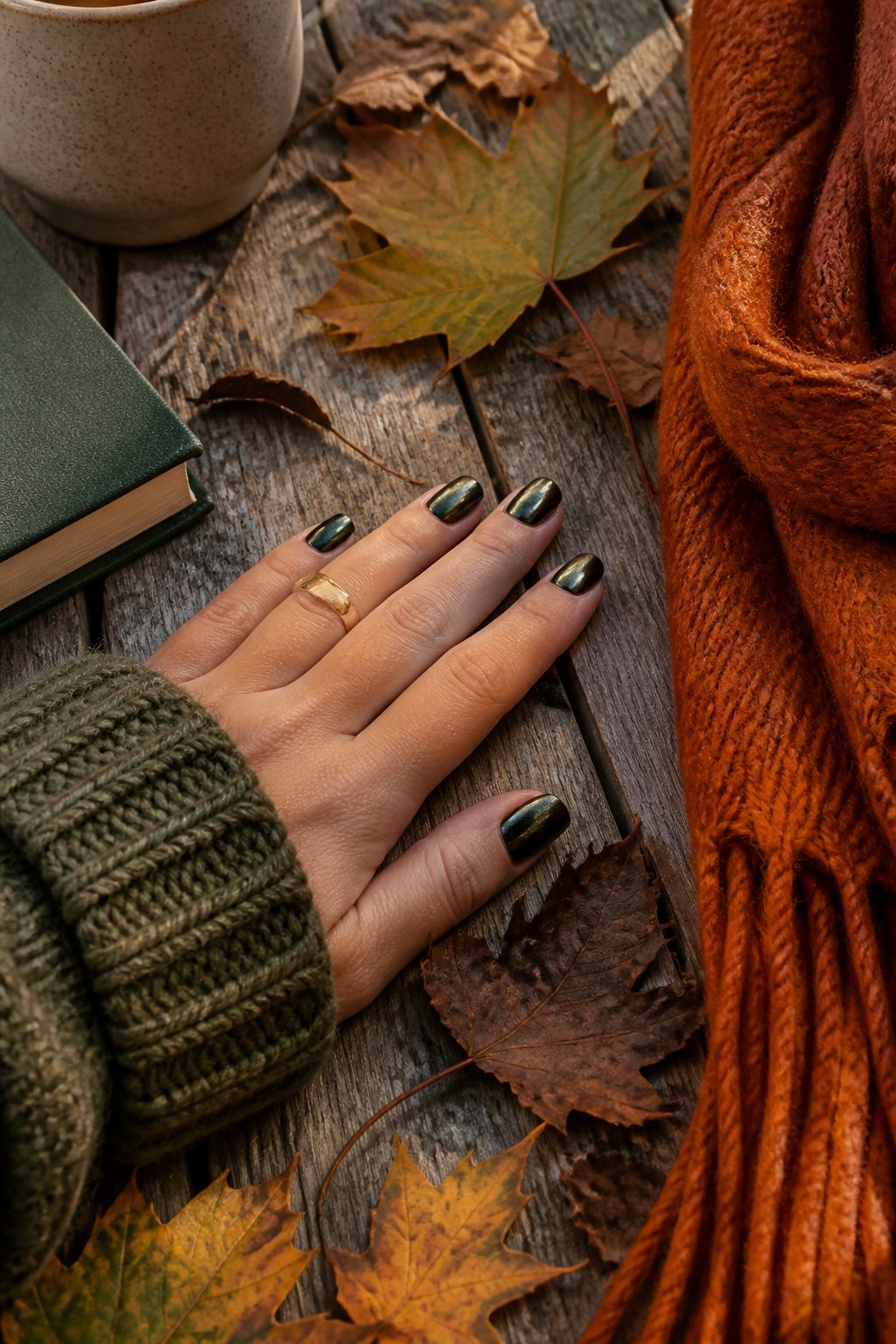
Rich dark green chrome carries two personalities, and the difference matters before you sit down at the lamp.
Pine-tree greens stay lively enough to read as color even under office fluorescents, while near-black forest tones flatten to something closer to a reflective void that only shows green at certain angles.
The sources split on which reads as more expensive: the deeper, almost-black version wins for dark-academia layering with camel coats and houndstooth, but the mid-depth pine needs less deliberate styling to avoid looking like you forgot the lights.
Short nail beds get the better deal here. The reflective surface of chrome multiplies whatever length is present, and dark green on short nails reads as intentional polish rather than shrinking the finger.
Long nails in near-black forest chrome can tip into costume territory fast unless the shape is restrained. Squoval or soft almond keeps it wearable; stiletto pushes the shade toward holiday villain, which may be the point or may not.
5. Black Chrome
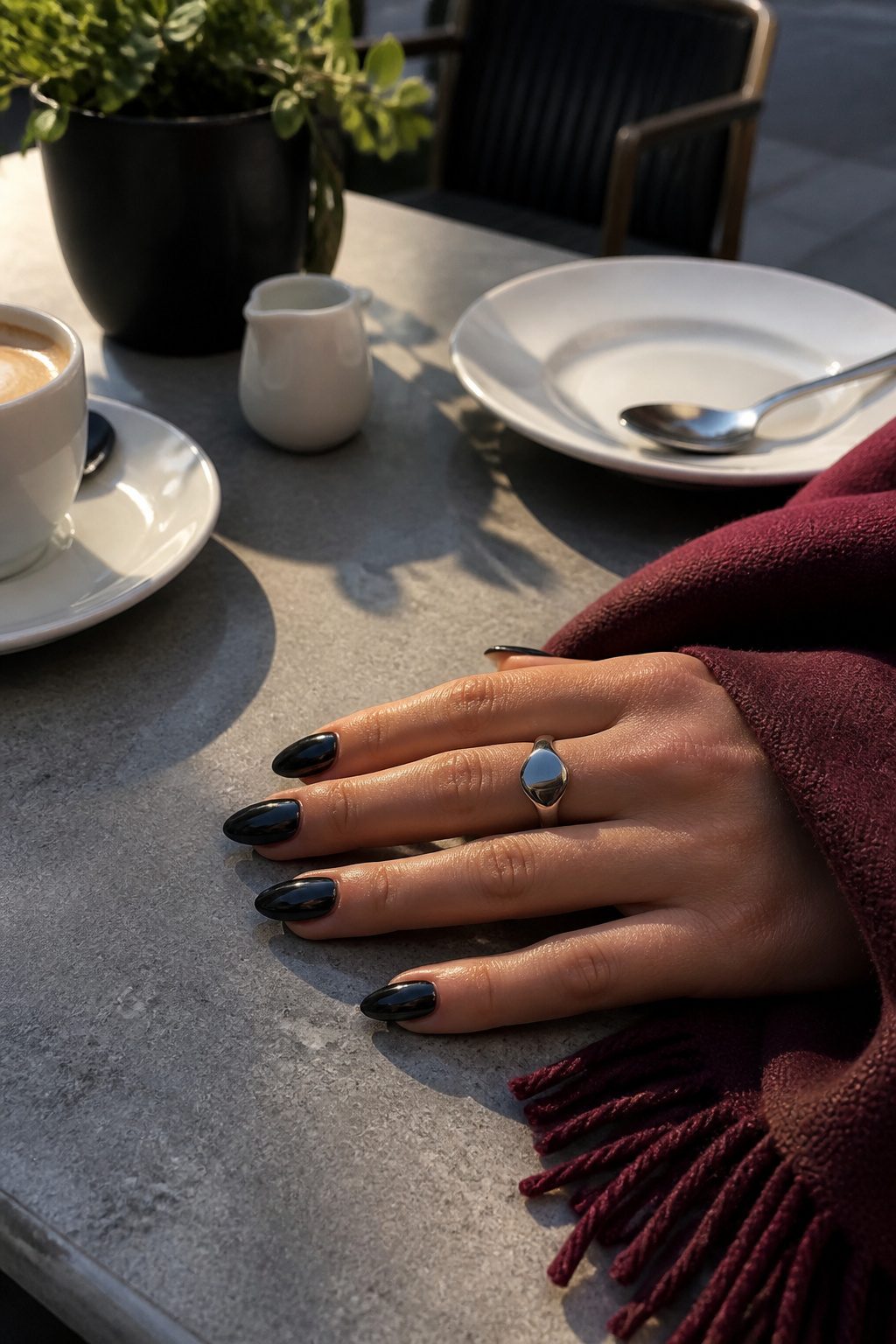
A high-gloss black chrome finish reads as luxury rather than costume only when the base stays true deep black, not the easier dark gunmetal that most salons push.
OPI Black Onyx gives that solid, light-absorbing foundation, while OPI Lincoln Park After Dark carries a near-black plum undertone that shifts the chrome into something softer and more expensive-looking under warm fall light.
Gunmetal bases, by contrast, throw silver and read metallic before they read black, which lands closer to Halloween aisle than editorial.
The shape matters too: almond or elongated square lets the reflection travel, but a stubbier round nail breaks the line and the chrome pools flat.
Black chrome demands the full villain silhouette or it pools into something a teenager did at home.
6. Sheer White Chrome
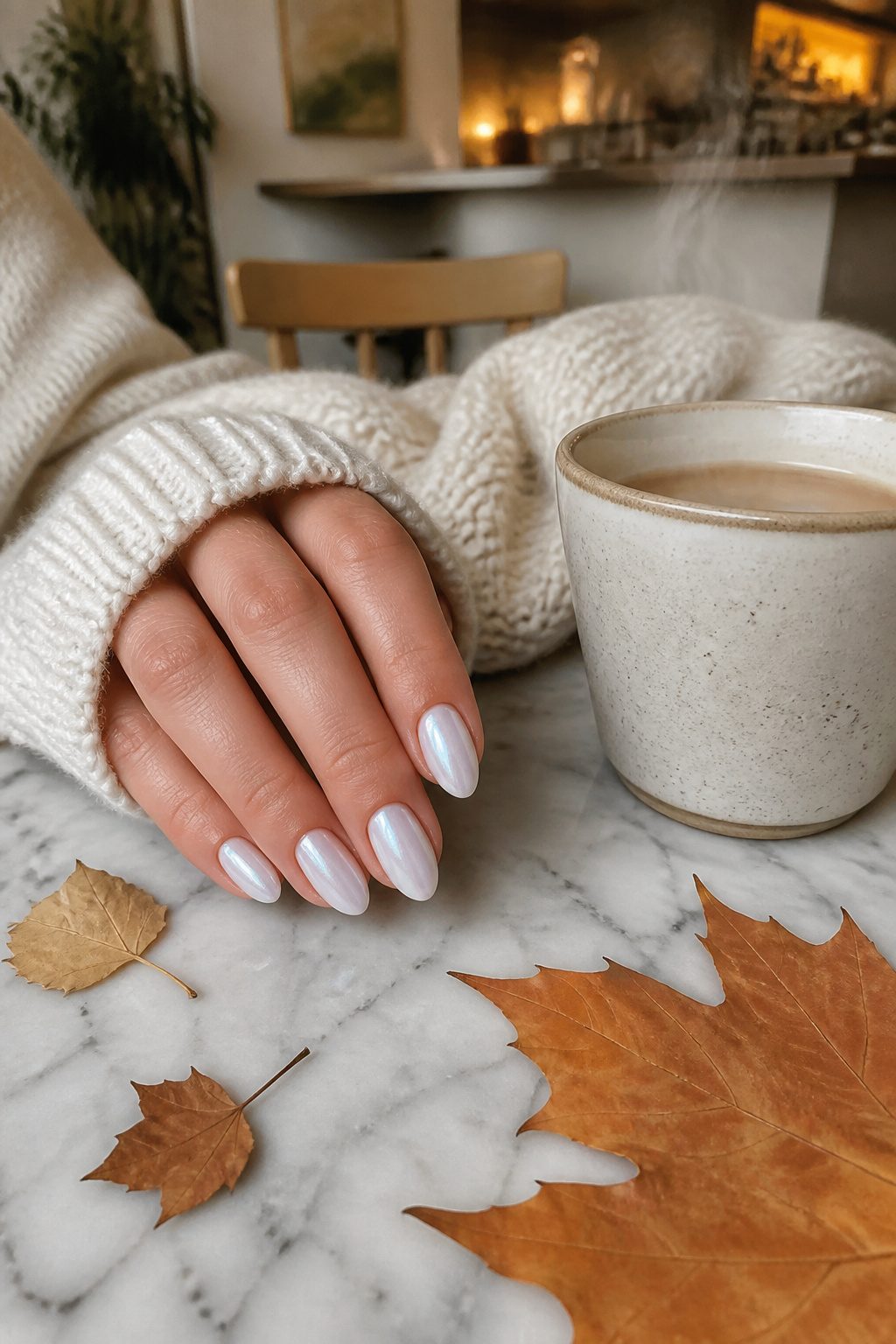
Sheer white chrome lands in that awkward gap October always creates.
Summer neons feel suddenly loud against wool coats, but bare nails look like you gave up. A milky, translucent chrome solves it: the finish catches low autumn light without shouting for attention.
OPI Funny Bunny has been the reliable base for this.
Two thin coats give that clean, opaque-milk effect; one coat keeps it transparent and barely-there. Either way, the chrome layer on top adds a pearlescent glow that reads as polished rather than flashy.
The Hailey Bieber glazed-donut trend pushed this look mainstream, and it has held through the year because it adapts so simply.
Keep the base sheer for a minimal moment, or layer to full milky coverage if your nails tend toward discoloration or ridges. The chrome softens the white enough that it never hits chalky or clinical.
Short almond shapes carry it best. The soft curve keeps the overall effect gentle, and the chrome’s reflective quality makes shorter lengths feel intentional rather than just untended.
7. Gold Chrome
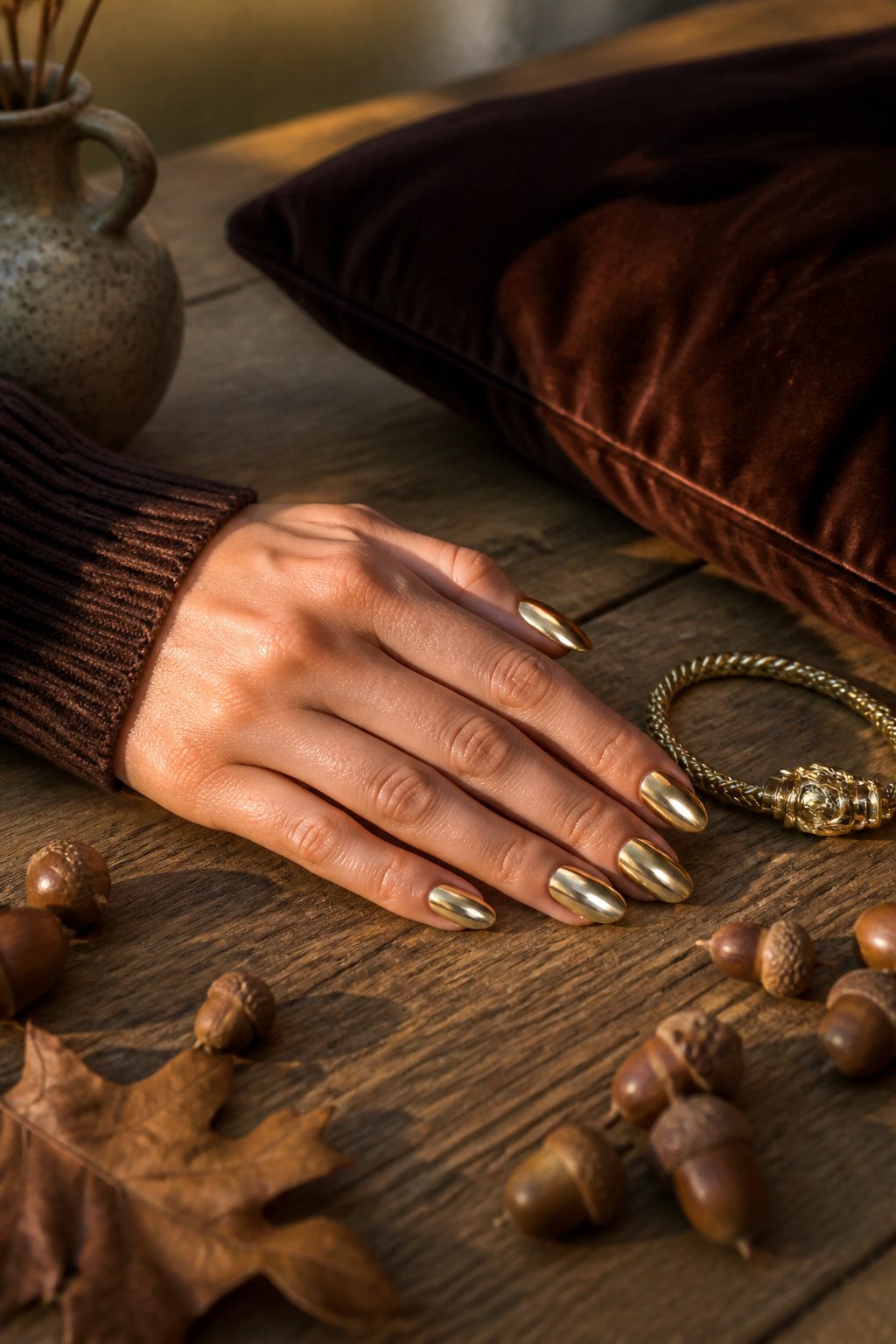
Warm, buttery gold chrome stays truer under powder than yellow-golds that pull brassy, something I learned watching two manicures side by side last October.
The paler, almost champagne base kept its honeyed depth after buffing; the brighter, taxi-cab gold turned flat and metallic in a way that read cheap under restaurant lighting.
Full-hand coverage reads evening and deliberately loud. A single feature nail on the ring finger, set against matte camel or deep chocolate cremes, gives the metallic somewhere to breathe and keeps the look wearable through Thanksgiving dinners.
Placement matters more with gold than with silver: too many accent nails and the hand starts looking like costume jewelry.
At home, the chrome powder needs a no-wipe gel base that cures fully tack-free.
Any residual inhibition layer grabs the pigment unevenly, and gold shows every streak. The feature-nail approach saves product and time, which matters when a jar of quality chrome powder runs enough that you want it to last the season.
8. Rose Gold Chrome
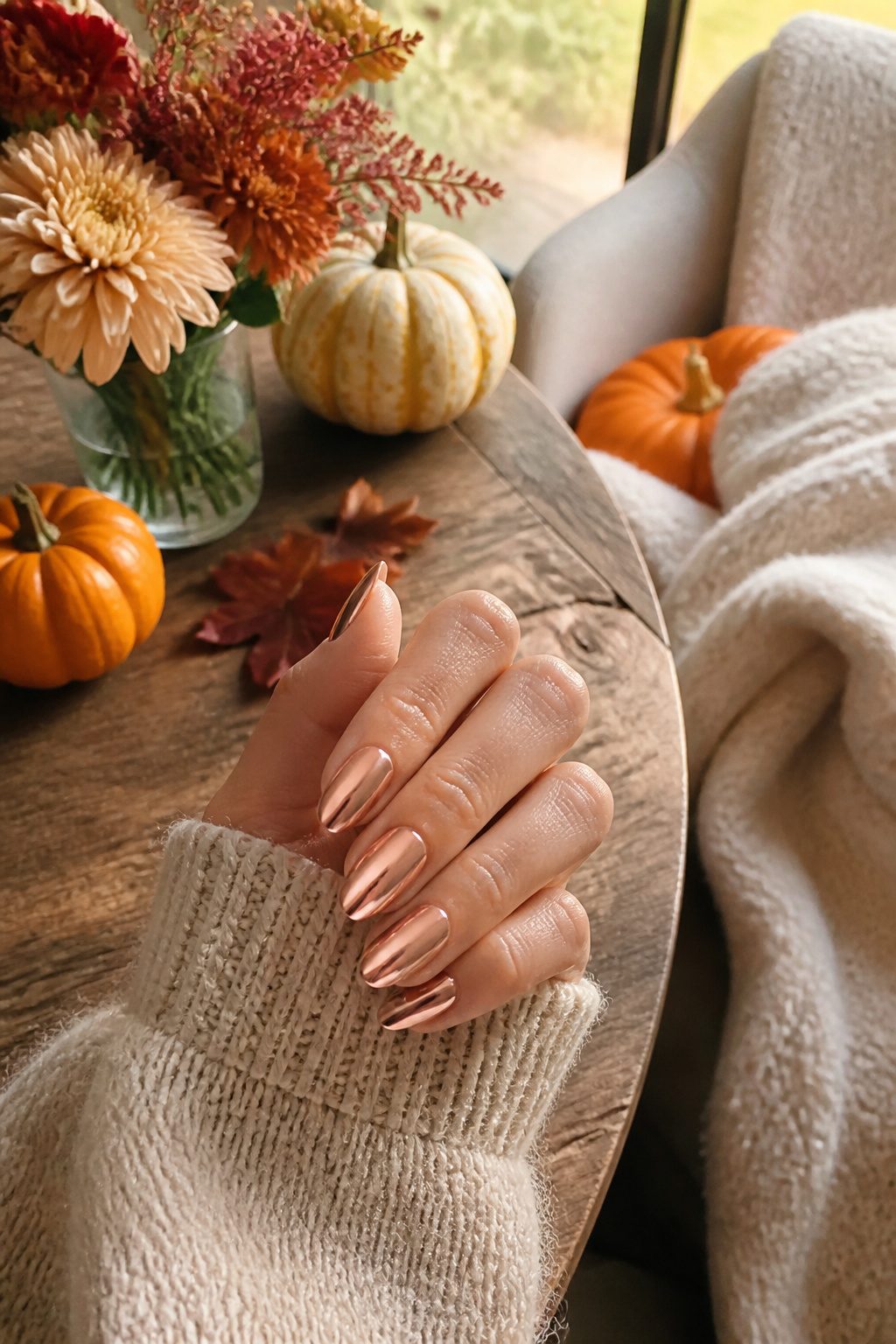
Rose gold chrome lands in a sweet spot between warm and cool that true gold rarely manages.
The pink undertone keeps it from reading as brassy on cooler skin, while the metallic shift still carries enough warmth to feel like fall.
On warm undertones, it leans peachier and softer than a straight gold would, which can sometimes look harsh against autumn colors.
A sheer nude base like OPI Samoan Sand gives the chrome powder something to grip without muddying the finish.
Two thin coats of base color, cured, then the chrome applied with a silicone tool while the top coat is still tacky. The result catches coffee-shop light the way actual rose gold jewelry does, not like a flat paint swatch.
Where true gold chrome can feel costume-y by November, rose gold reads as cozy without trying for seasonal novelty. It pairs with the burgundy and olive tones already in a fall wardrobe without competing for attention.
The wear time matches standard chrome: five to seven days before the mirror starts dulling at the free edge, less if you’re hard on your hands.
9. Glazed Ombre Chrome
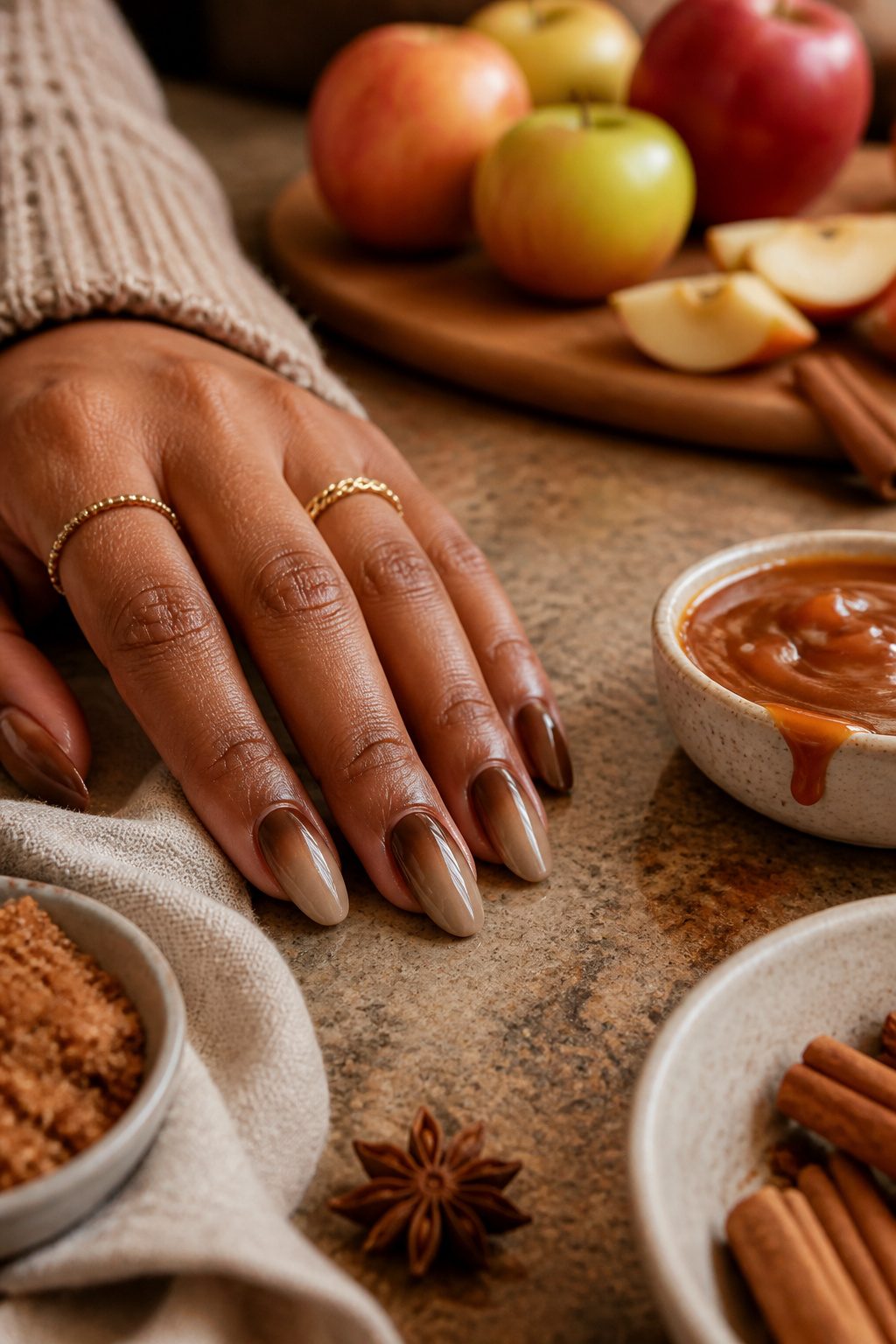
Standard ombre fades one color into another with a soft, blurred edge.
Chrome ombre starts the same way, but the magic happens after: a chrome powder pressed over the entire gradient turns that matte fade into something wet-looking and dimensional, like the glaze on a fresh donut catching light.
The technique difference is order and finish.
Regular ombre stops at the color blend. For glazed ombre chrome, you lay down the gradient base, cure it, then press pearl or reflective chrome powder across the whole nail so the shine shifts as the colors underneath shift.
The result reads not as two separate colors but as one luminous surface with depth.
Fall pairings that work here are warm and edible. Espresso melting into caramel, mocha into creamy nude, or a clean white-to-clear fade with autumn tones swapped in.
The chrome doesn’t fight the gradient; it unifies it. What looked like a simple fade in daylight turns molten under restaurant lamps.
10. Polka Dot Chrome
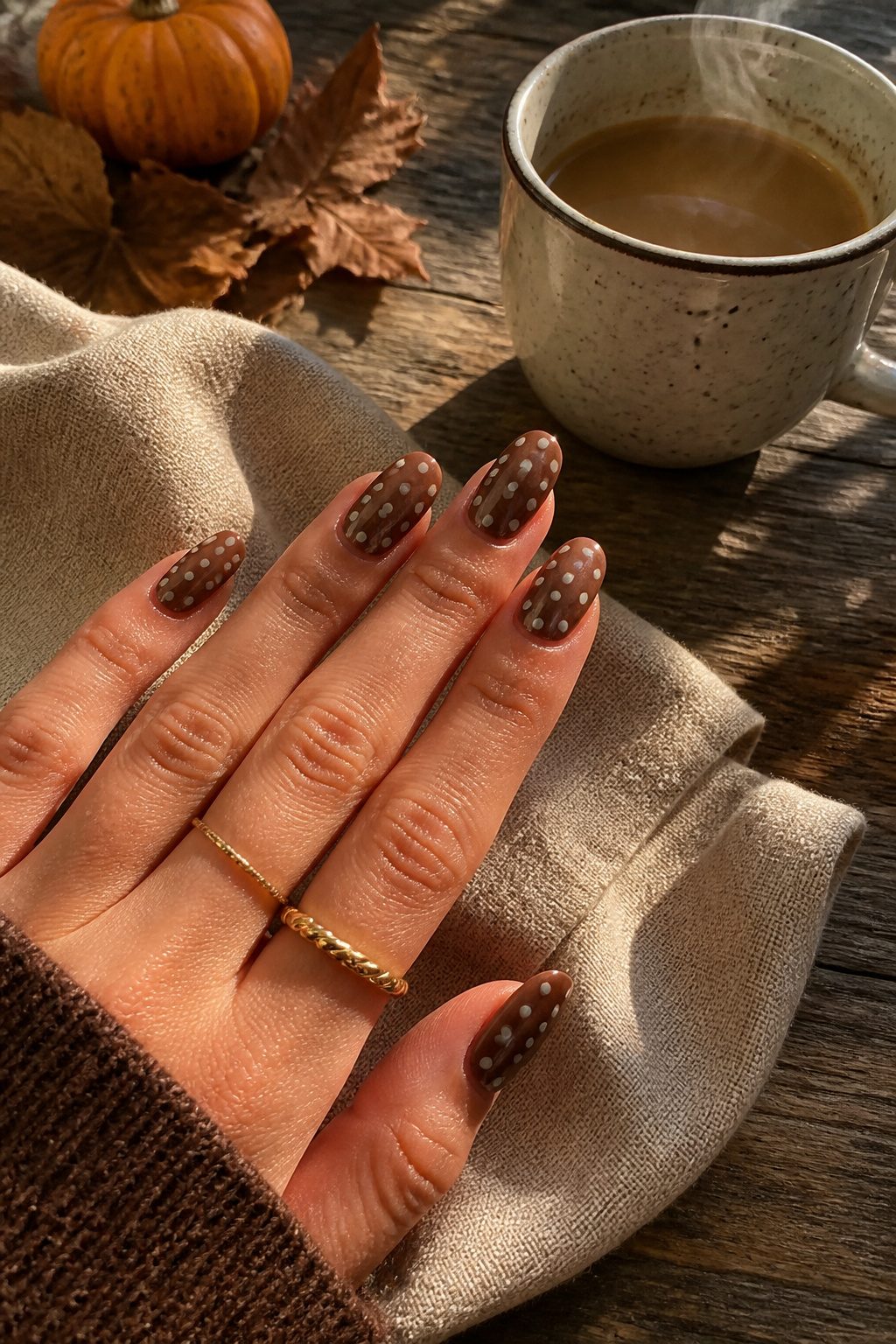
Polka dots under chrome powder look playful until the buffing step smears them into hazy blobs.
The trick is keeping the dots small enough and fully cured before the chrome layer goes on. Micro-dots, about the size of a pinhead, survive the rubbing motion best.
Anything larger than a sesame seed risks distortion, and even medium dots need a no-wipe top coat sealed under the lamp first so the chrome powder has a smooth, dry surface to grip.
A soft, milky white base with opaque white dots keeps the look clean and lets the reflective finish read as sophisticated rather than novelty.
For fall, swap that base for espresso brown or sage green and keep the dots in a contrasting cream or pearl. The chrome glaze unifies everything, but the underlying color pairing is what makes it seasonal.
Burgundy with oyster-pearl dots works too, though the contrast flattens once the chrome goes on, so the difference in tone needs to be sharper than you think.
11. Mauve Chrome
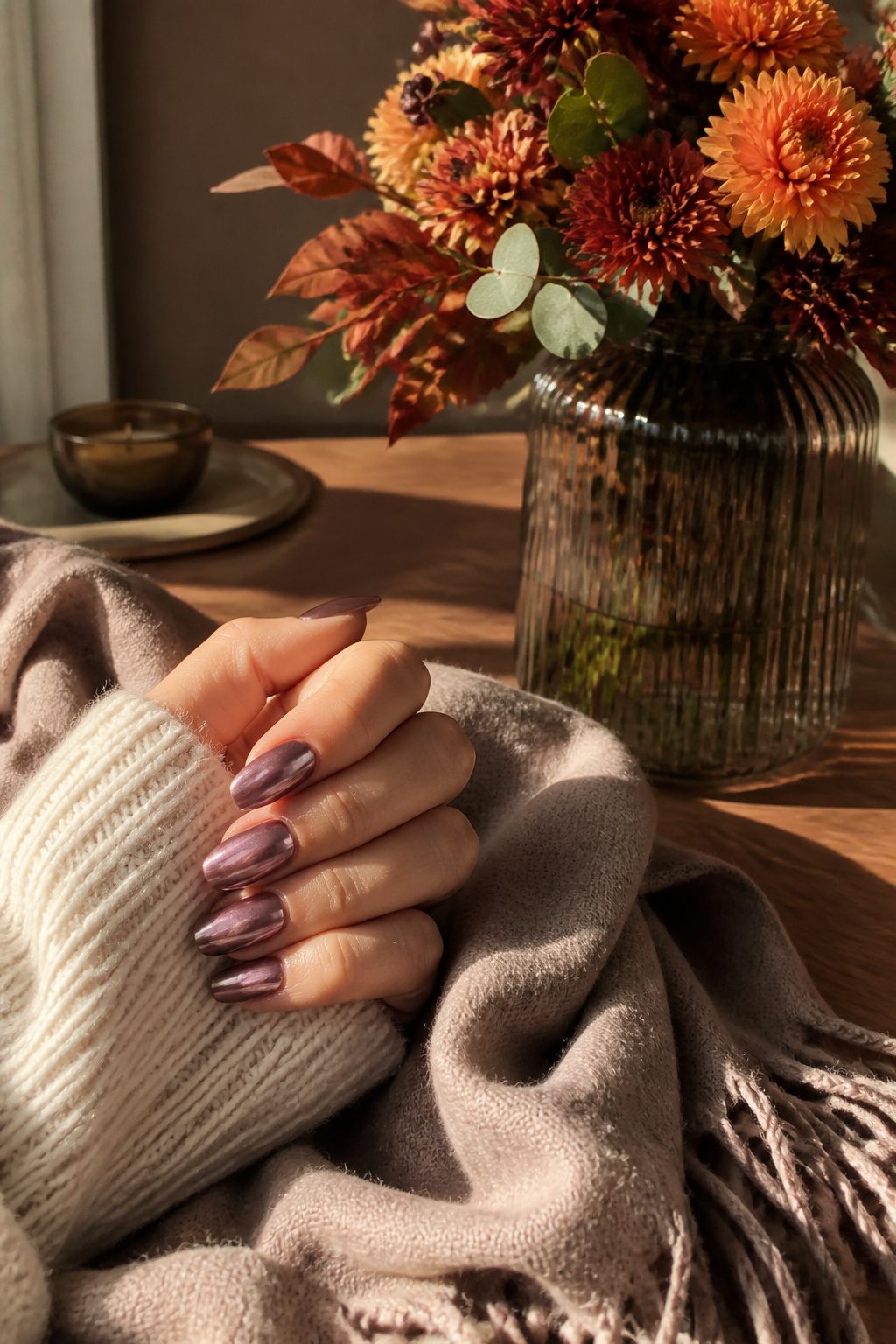
Mauve lands in that quiet space between pink and purple where most chrome finishes would read spring picnic, not autumn dinner. The trick is the base shade.
OPI Lady Like, a dusty rose that carries enough gray to keep it grounded, works as the starting layer. Over that, silver or pearl mirror powder buffed in turns the color cool and reflective, pushing it straight into fall territory.
Two ways to wear it. A full nail of silver mirror powder over the mauve base gives a single, moody metallic.
For something softer, the sponge-method ombre, rose taupe fading into the chrome, keeps the color moving without losing the autumn weight. Either way, the chrome does the seasonal lifting.
Without it, the same shade risks floating back toward Easter. With it, the gray undertone and the metallic finish together read exactly what late October calls for.
12. Silver Chrome
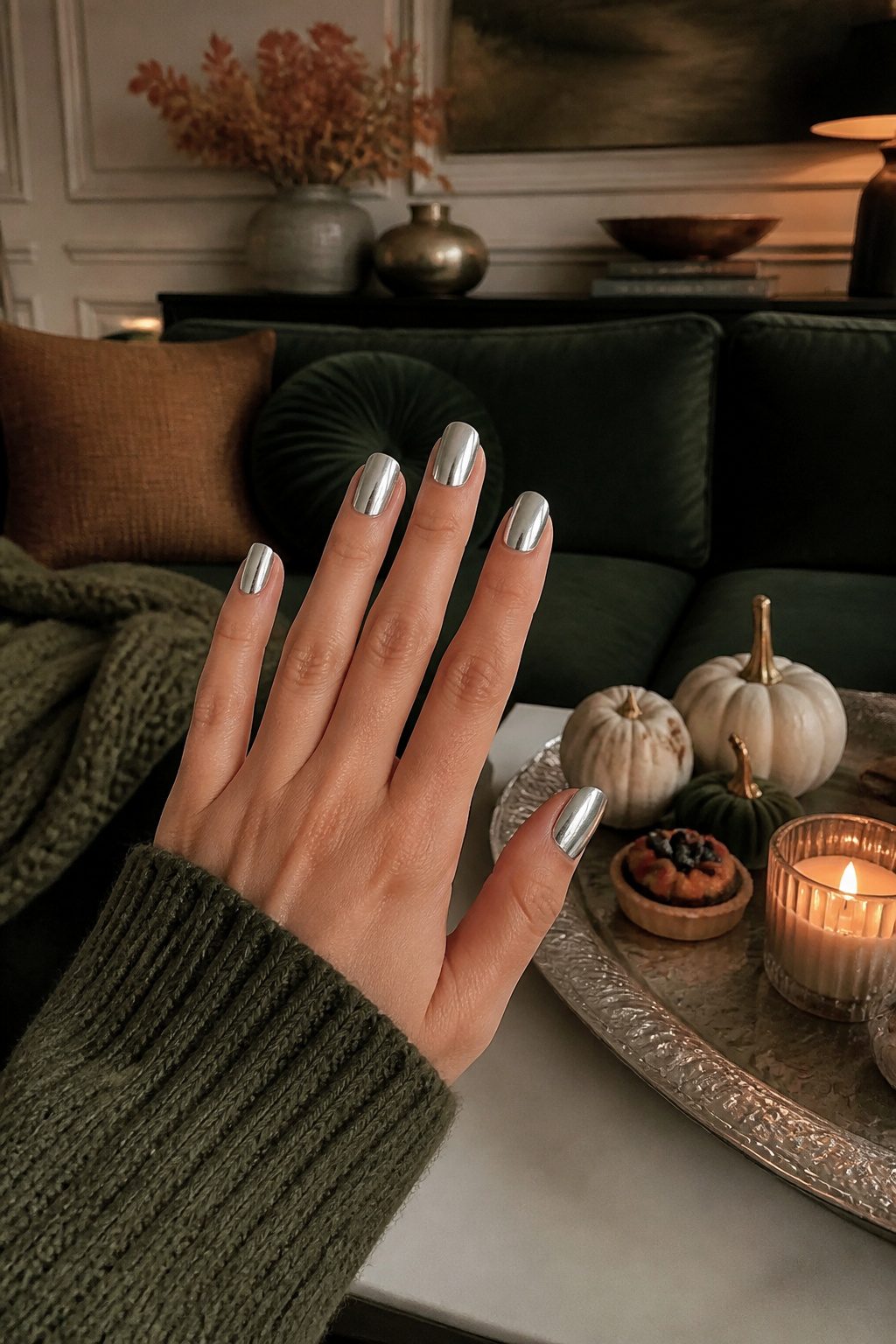
Silver chrome reads colder than the season around it, which is exactly why it works for fall.
The trick is treating that contrast as intentional rather than accidental. Warm burgundy knits and camel coats make silver look editorial instead of clinical, like a deliberate skip of the expected autumn palette.
The finish itself is a mirror, not a tint, so it shows every surface flaw underneath.
A ridge or uneven base coat turns into a visible line once the powder goes on. Two thin layers of builder gel or a quality self-leveling base even the nail out before the chrome layer ever touches it.
Silver oxidizes faster than gold or rose gold chrome, dulling from reflective to cloudy at the free edge or around the cuticle first.
Early dulling looks like a faint film, not a full color shift; the nail loses its liquid-metal shine and starts resembling brushed aluminum. A no-wipe top coat sealed at the edges slows this down, but nothing stops it entirely.
I check my own set at day five, especially after hand sanitizer or dish soap, since both seem to strip the protective layer faster than plain water.
13. Nude Chrome
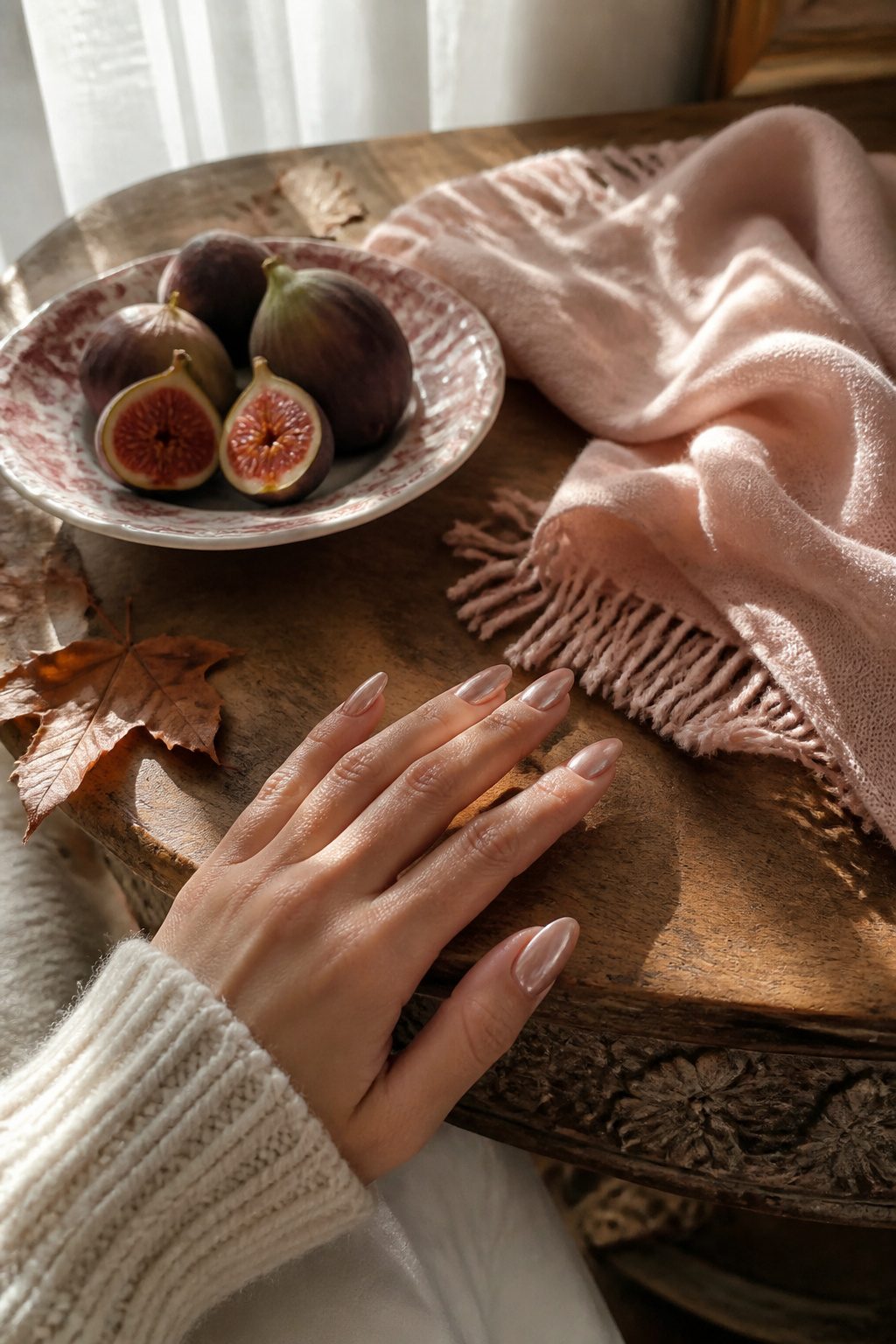
A sheer nude base buffed with pearl chrome powder gives the quietest kind of statement.
OPI Bubble Bath works as that base: pink-leaning enough to read as color on fair skin, soft enough to avoid the "band-aid beige" problem that pulls ashy on deeper tones.
For medium and dark complexions, the same pearl chrome layered over a nude two to three shades deeper than skin tone keeps the look grounded rather than floating.
The chrome finish is what rescues nude from invisible.
Without it, a nude manicure on short nails can look like unfinished maintenance; with the mirror glaze, it reads as intentional, dressed-up, the nail equivalent of a silk blouse that feels minimal until the light hits it.
I keep seeing this paired with almond shapes, though a short square holds it just as well if the edges stay crisp.
Two ways to wear it: keep the whole nail in that single pearly wash, or use the chrome as a base for a black French tip.
The latter needs a steady hand or a guide sticker, but the contrast of matte black against that wet-looking nude gives the drama without abandoning the neutral wardrobe.
14. Burnt Orange Chrome
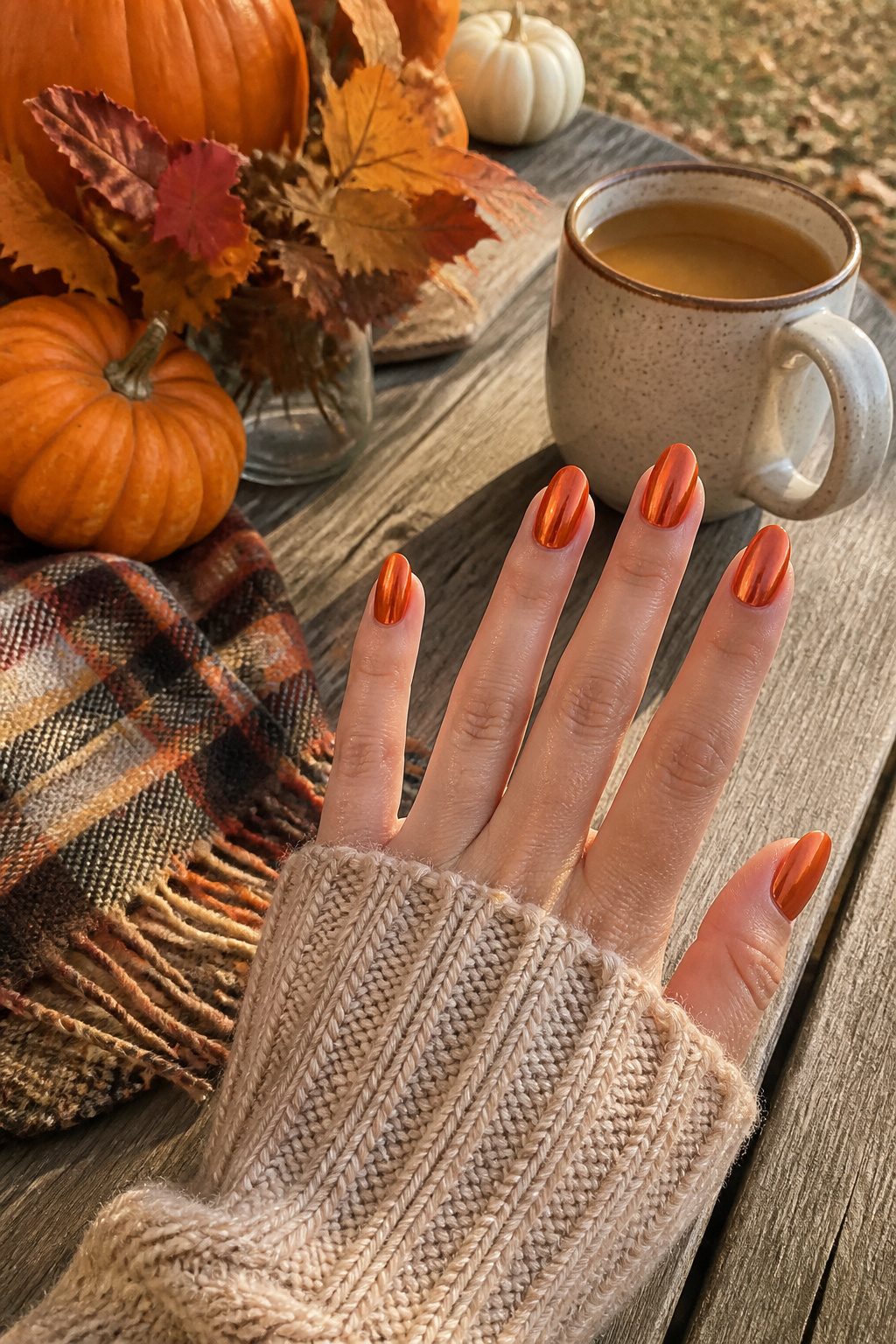
Burnt orange chrome sits right on the edge where seasonal warmth tips into costume territory, and the undertone is what decides which side it lands on.
A pumpkin-leaning yellow undertone reads playful and literal, the kind of shade that shows up on October décor shelves and nowhere else.
Shift toward brown-red rust and the same chrome finish suddenly works past Thanksgiving, pairing with camel coats and dark denim without shouting about the season.
True orange, balanced dead between red and yellow, tends to flatten against most skin tones and needs the mirror surface of chrome to keep it alive.
The chrome effect changes the math here. A matte burnt orange nail is a color statement; the same shade in chrome becomes a light source, reflecting back whatever warmth is in the room or the outfit.
That reflection is what lets rust-leaning burnt orange function in late September and still look deliberate in February. Pumpkin undertones, though, trap themselves in the one month, because the chrome only amplifies the novelty instead of complicating it.
For someone testing this shade, the move is checking the polish bottle against actual brick or dried leaves, not against the label.
If the sample matches the leaf, it will likely read costumey once mirrored. If it matches the brick mortar, the darker and duller note, it carries.
15. Light Pink Chrome
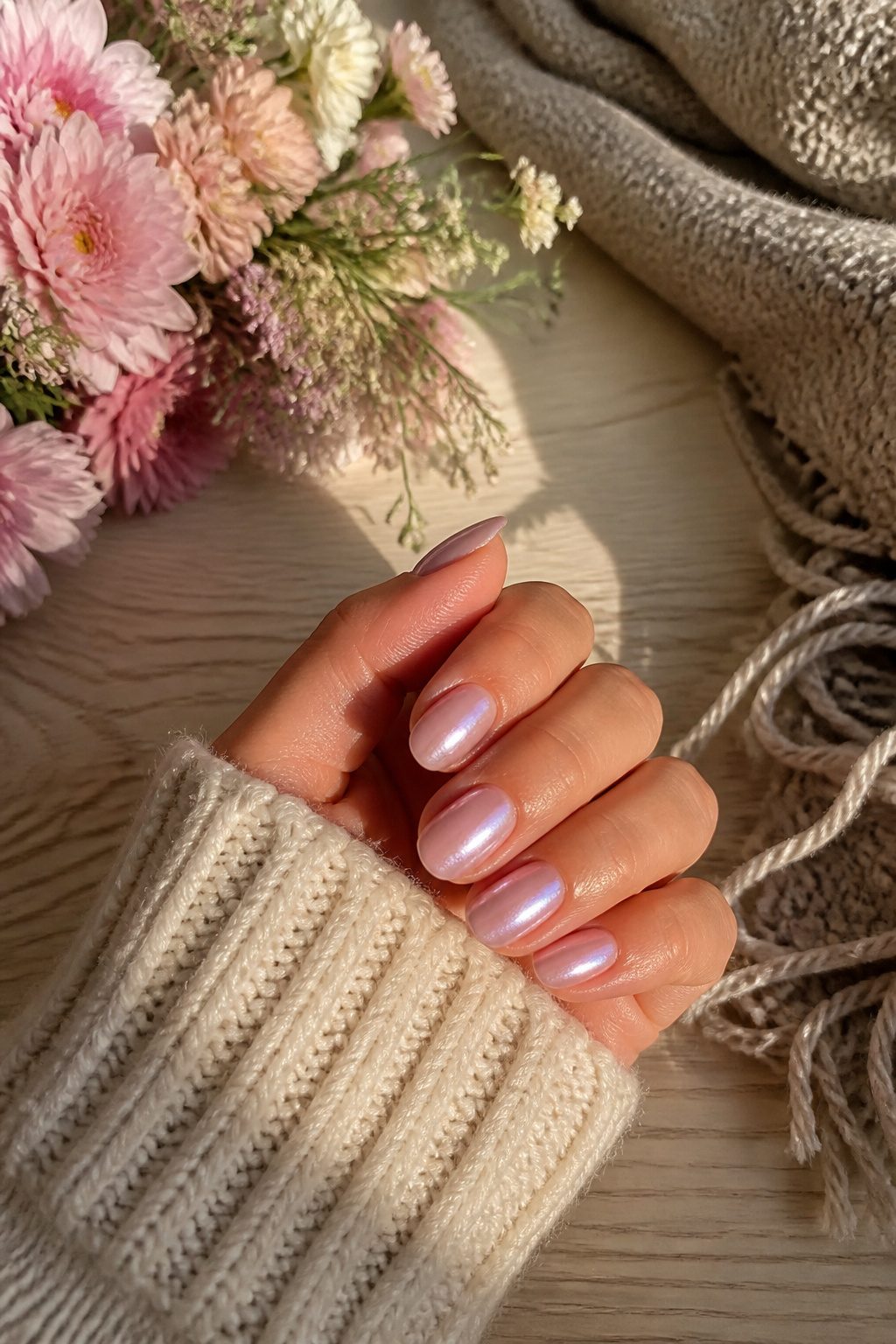
Soft glam light pink chrome lands in that narrow window between summer’s bright pinks and the deep berries that take over later in the season.
The shift runs toward baby pink, cool blush, and rosy neutrals topped with a mirror finish that reads feminine without drifting too sweet.
OPI Bubble Bath works as the base here, layered with pearl chrome powder for that glazed, reflective surface.
It catches light the way deeper fall tones do, just without the weight. The look carries through September and October while the weather still feels transitional, before the moment when burgundy and wine chrome start to feel inevitable.
For anyone who wants the trend without committing to dark polish for three months, this is the move.
It photographs cleanly, pairs with the neutral wardrobe most of us live in through early fall, and still registers as seasonal thanks to the metallic finish. The chrome makes it current; the pink keeps it wearable.
How Chrome Nails Work
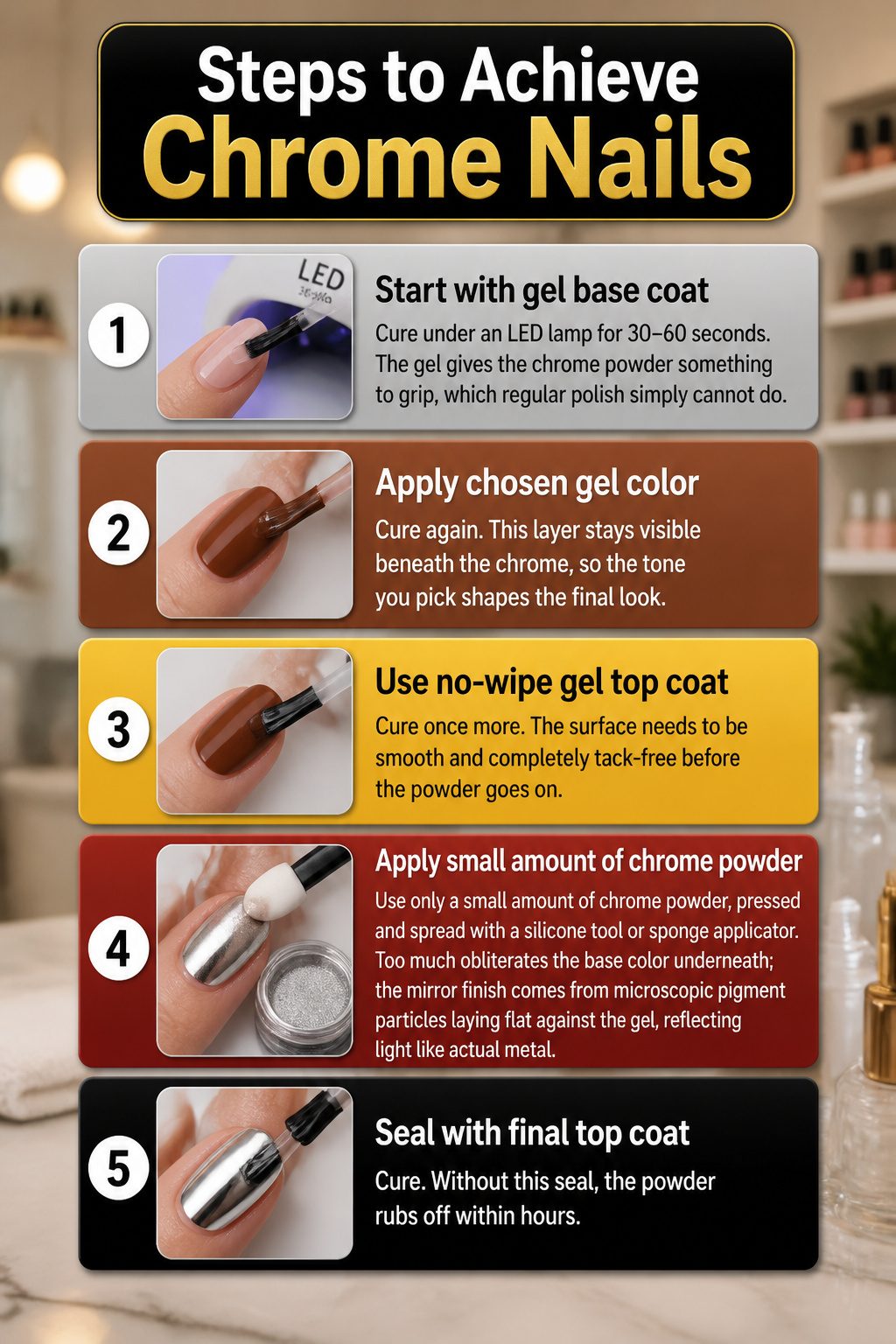
- Start with a gel polish base coat and cure it under an LED lamp for 30–60 seconds. The gel gives the chrome powder something to grip, which regular polish simply cannot do.
- Paint on your chosen gel color and cure again. This layer stays visible beneath the chrome, so the tone you pick shapes the final look.
- Apply a no-wipe gel top coat and cure once more. The surface needs to be smooth and completely tack-free before the powder goes on.
- Use only a small amount of chrome powder, pressed and spread with a silicone tool or sponge applicator. Too much obliterates the base color underneath; the mirror finish comes from microscopic pigment particles laying flat against the gel, reflecting light like actual metal.
- Seal everything with a final layer of top coat and cure. Without this seal, the powder rubs off within hours.
Fall Colors That Trend
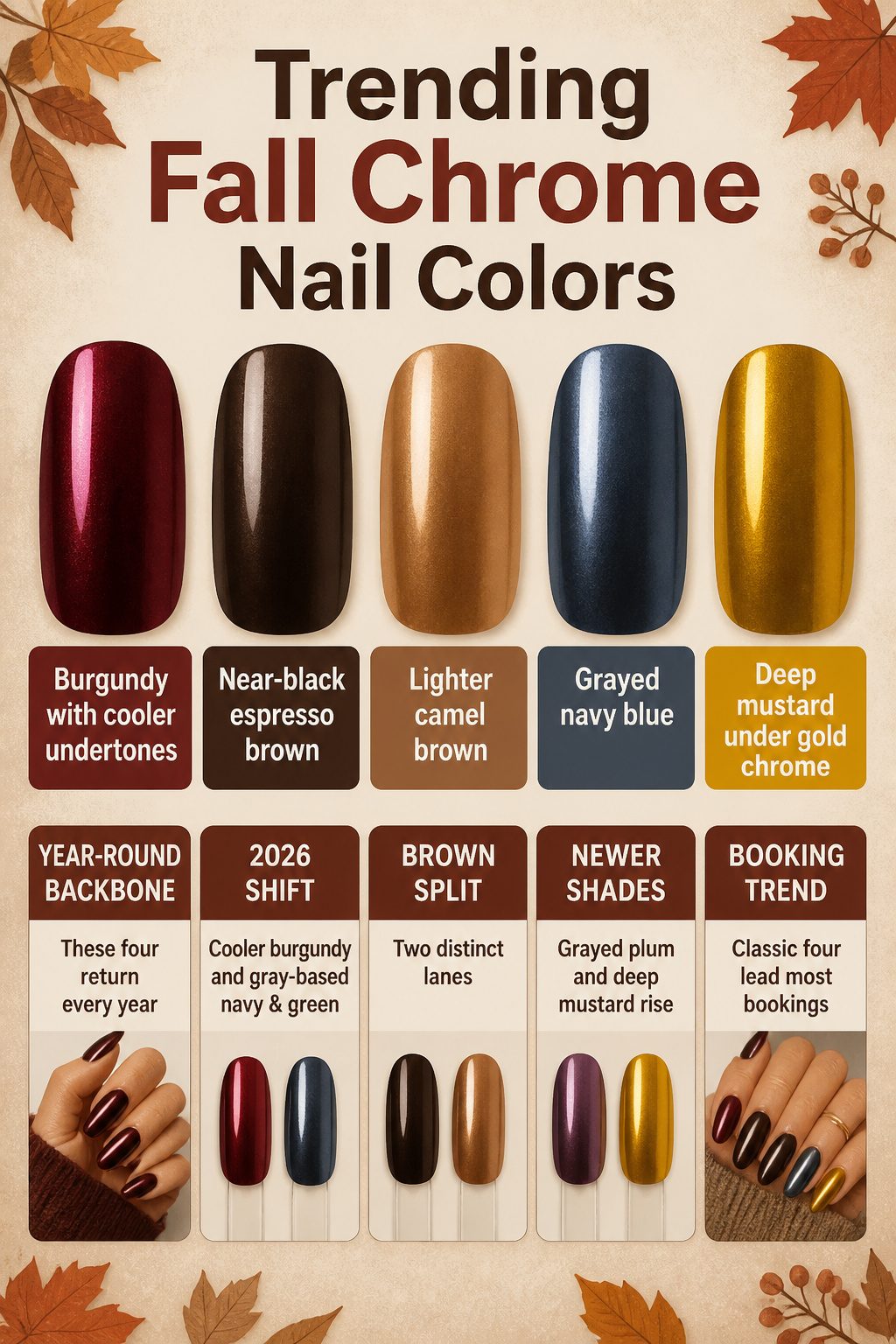
Burgundy, brown, navy, and dark green have become the backbone of fall chrome nails for the same reason they dominate autumn wardrobes: they read as rich without fighting the muted light of October afternoons.
These four return every year because they bridge the gap between statement and wearable; a chrome finish tips them into something that catches candlelight at a dinner table without looking like a New Year’s Eve leftover.
What shifted for 2026 is the undertone.
Burgundy has moved cooler, closer to a wine stain than a brick. Brown has split into two lanes: a near-black espresso and a much lighter, almost camel tone that reads surprisingly formal under chrome.
Navy and dark green both picked up gray bases that keep them from looking nautical or Christmasy, which was the old risk.
The newer shades joining them are harder to pin down because they keep shifting names between salons.
A grayed plum, something between mauve and raisin, keeps appearing on sample wheels. So does a deep mustard that sounds wrong until you see it under gold chrome, where it suddenly makes sense against a camel coat.
What convinced me, looking through dozens of these sets, is that the established four still carry most of the bookings; the experimental shades are what people ask for in January when they are bored.
Shapes That Carry Chrome
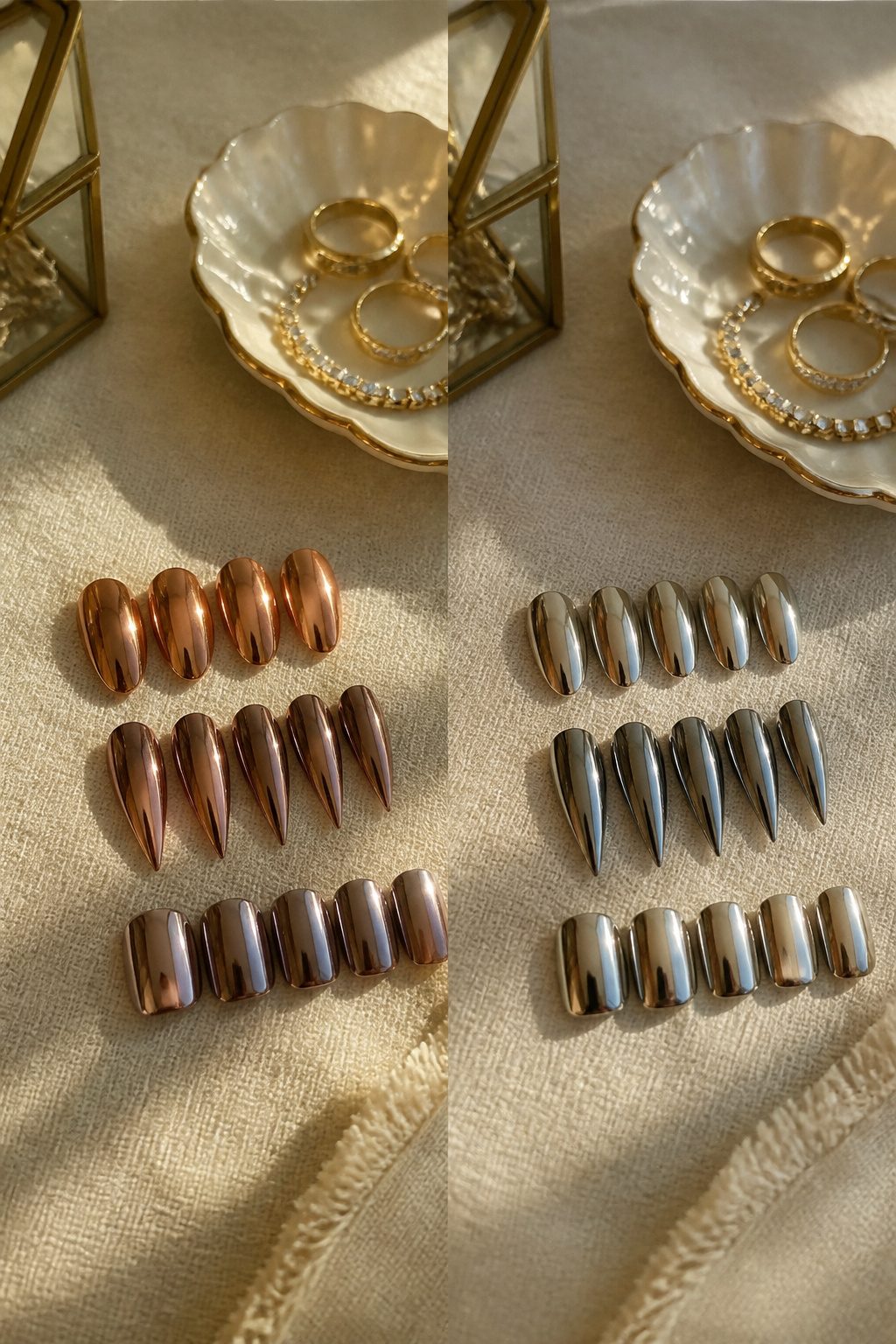
Chrome behaves differently depending on what shape is underneath it.
An almond shape curves just enough to catch light along the sidewalls without breaking the mirror into too many planes, which is why every fall variation I kept seeing paired pearl or gunmetal chrome with that silhouette.
The single continuous arc lets the reflection travel smoothly from cuticle to free edge.
Stiletto changes the game entirely.
The long, tapered point turns the nail into a narrow reflector that reads almost liquid under movement, though the sources flagged a real risk here: if the proportions throw off your finger length, the chrome stops looking expensive and starts looking accidental.
Black mirror chrome especially needs that confident, glossy geometry to land right.
Square keeps the surface flat and uninterrupted, which actually maximizes how much mirror you get. I noticed the champagne brown chrome on a medium-length square looked almost architectural, the light hitting it like a single sheet rather than a curve.
The tradeoff is that any flaw in application sits right there in the open; the shape hides nothing.
Salon or Home
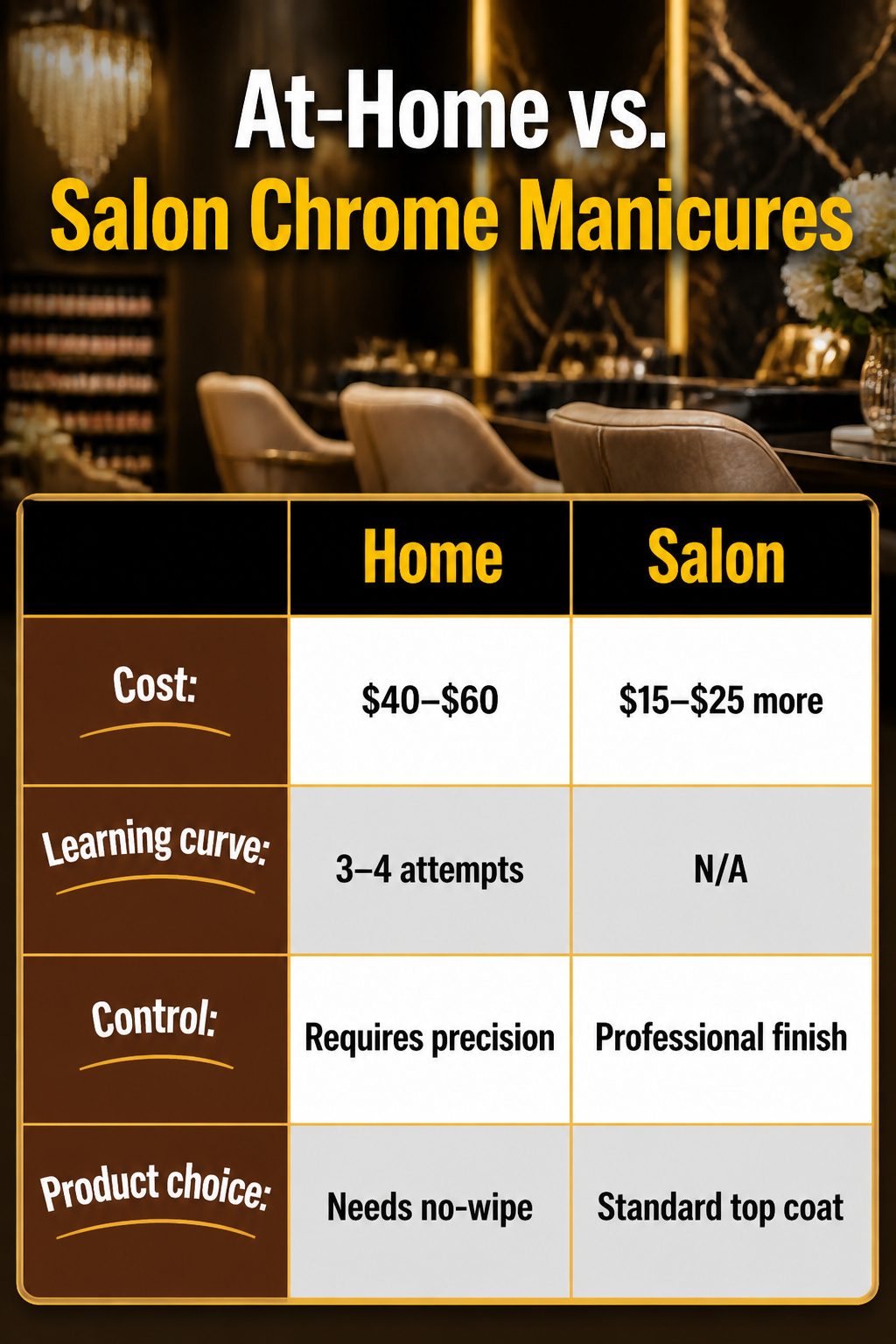
A full chrome manicure at home runs about $40–$60 in start-up equipment: a decent UV lamp, chrome pigment, a no-wipe top coat, and a silicone applicator.
The learning curve sits around three to four attempts before the finish stops looking patchy or dull.
Most of that struggle comes down to timing. Chrome needs to press into a tack-free surface within a narrow window after curing, and hesitation leaves you with glitter where mirror should be.
The salon route costs roughly $15–$25 more per visit than a standard gel manicure, but the evenness of a hand-turned chrome, especially across ombre fades or negative-space designs, is hard to fake at home.
Glazed ombre and multi-tone chrome shifts demand that control; the pigment has to land in exactly the right zone or the whole effect reads as smudged. Simpler autumn shades, solid burgundy or gunmetal chrome, are more forgiving for beginners.
I spent my first two home attempts convinced my lamp was broken.
The chrome simply never activated. Turns out I was using a regular top coat with a sticky inhibition layer, which traps pigment instead of bonding it.
Swapping to a true no-wipe formula fixed it immediately. That single wrong purchase ate half my budget and a full evening.
Frequently Asked Questions
How do you do chrome nails?
Start with a gel polish base coat and cure it under an LED lamp for 30–60 seconds. Paint on your chosen gel color and cure again, then apply a no-wipe gel top coat and cure once more.
Press a small amount of chrome powder into the tack-free surface with a silicone tool, then seal with a final top coat and cure.
What colors are trending for fall chrome nails?
Burgundy, brown, navy, and dark green are the backbone shades for fall chrome nails this year.
For 2026, burgundy has moved cooler toward wine, brown has split into near-black espresso and lighter camel tones, and both navy and dark green have picked up gray bases to avoid looking nautical or Christmasy.
What nail shapes work best for chrome nails?
Almond shapes work best because the continuous curve lets the reflection travel smoothly from cuticle to free edge.
Stiletto creates an almost liquid effect but risks looking accidental if the proportions are off. Square maximizes mirror surface but hides nothing, so any application flaw sits right out in the open.