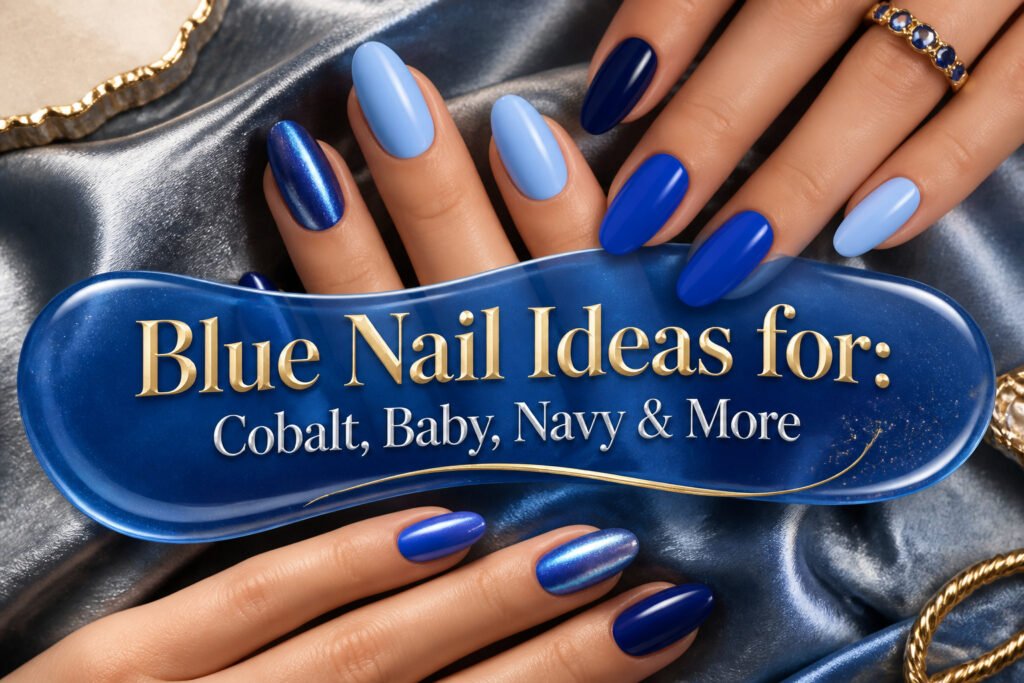
Blue nail ideas range from barely-there baby blue sheers to near-black midnight gels, and the right shade depends almost entirely on your skin’s undertone rather than the season. Fair complexions carry pastels best with a shimmer finish to keep them from washing out, while deeper skin turns sapphire or mermaid shimmer into a statement that reads expensive at any length. The detail that separates a two-week manicure from a chipped disappointment is simpler than the color choice: a clear top coat, never tinted, because even the wrong finish can shift cobalt toward gray or flatten navy into shadow.
1. Cobalt Nails
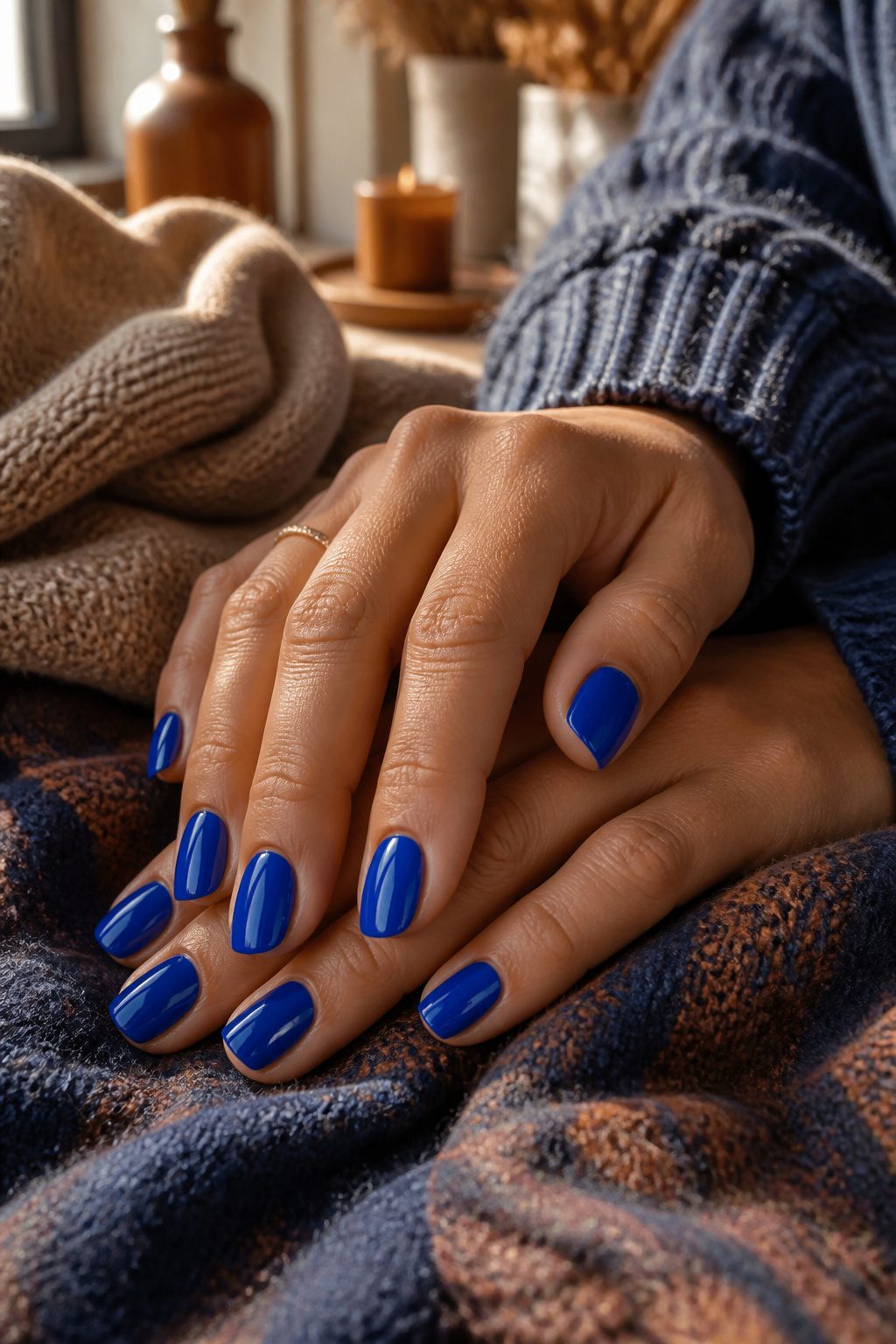
Cobalt carries the kind of saturation that reads expensive even on a drugstore budget. A full-coverage gel polish in this shade stays glossy for two to four weeks, but the real payoff is that high-shine finish; without it, the color falls flat. A clear top coat locks in the mirror effect and buys you extra days before the next appointment.
The tone works across seasons in a way softer blues do not. In winter it holds its own against heavy fabrics, and in summer the depth keeps it from looking washed out against tanned skin. Gel application matters here; regular polish chips too fast on a color this bold, and the upkeep every two weeks is worth the durability.
Cobalt is trending for the new season, and for good reason. Vibrant, refined and ultra-glossy when topped with a high-shine top coat, it’s a seriously underrated shade.
That "seriously underrated" line is the point. Cobalt gets passed over for navy or baby blue, but the intensity flatters more skin tones than most assume. Deeper complexions look especially striking with this level of pigment, and fair skin gets the same lift without the harshness of a true primary. The mistake is treating it as a once-in-a-while color; wear it as the default it should be.
2. Baby Blue Nails
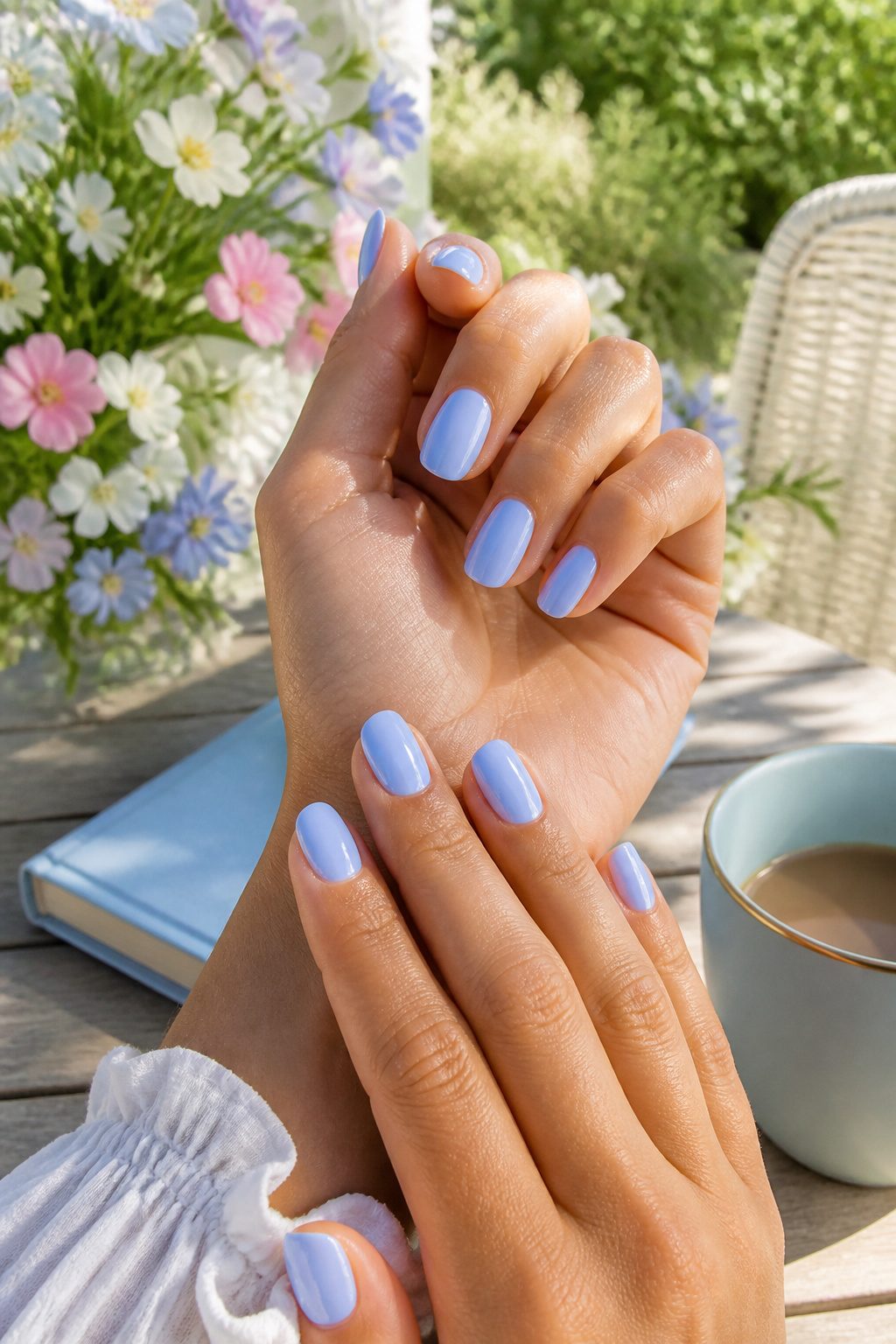
Baby blue carries a softness that heavier blues cannot quite match, and that is exactly why it earns its place in a rotation of bolder shades. The first time I considered moving past my usual neutral polishes, this was the color that made the leap feel possible: pale enough to read as subtle, blue enough to count as an actual departure.
Spring and summer are where this tone lives most naturally. A wash of baby blue against sun-warmed skin reads fresh without trying for novelty. The sources point toward two ways to wear it. A solid, opaque coat keeps the look clean and minimal; a sheer formula, something like Essie Sky Jelly, gives the same color family in a veil that barely sits on the nail.
Skin tone matters here more than with deeper blues. The lighter and more luminous baby blues flatter fairer complexions best, while shades that drift toward gray or lavender, like a color with mineral undertones somewhere between morning mist and sea air, add enough depth to work across a broader range. For anyone uncertain about committing, baby blue functions as a gateway shade: try it opaque, try it sheer, then step up to sky blue or cobalt once the color feels like yours.
3. Navy Blue Nails
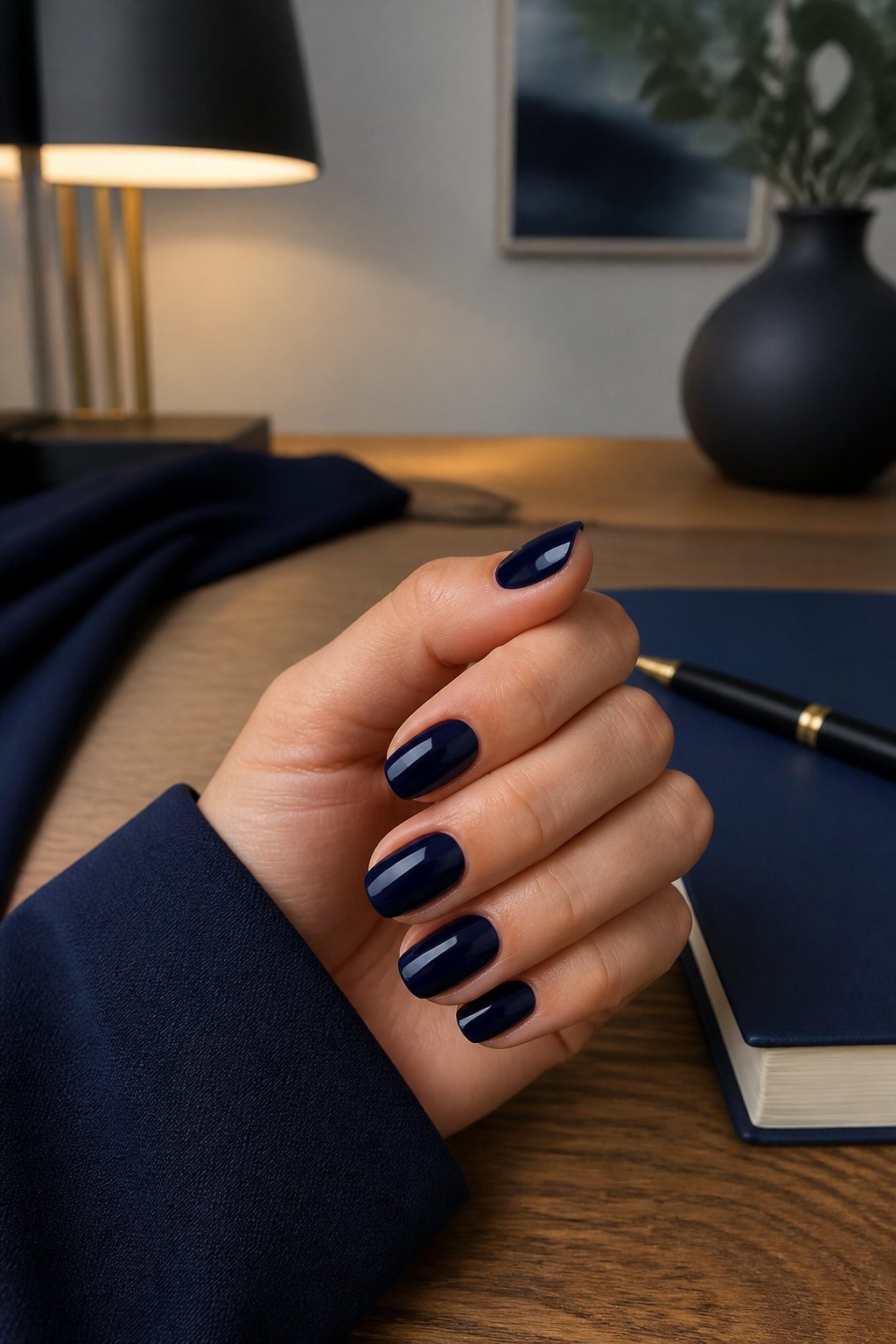
Navy blue carries the depth of a winter evening without tipping into black, which is exactly why it works on nearly every skin tone. Cool undertones pull out its subtle slate notes, while warm undertones let it read as a rich, saturated neutral rather than a cold color. The shade sits in that rare space where it feels appropriate from September through February, shifting from a crisp fall statement to something almost icy against bare winter branches.
What convinced me, reading through a dozen of these roundups, is how navy functions as a professional alternative to nude or blush. A full-coverage navy manicure reads as polished in a boardroom in a way that brighter blues simply do not; it carries the authority of black without the severity. For office settings, navy is the blue that passes as a neutral.
The finish matters more than you might expect. A high-gloss navy catches light and keeps the color alive, while matte versions can flatten toward near-black and lose the distinction that makes navy interesting in the first place. If you are deciding between midnight and true navy, the latter keeps enough blue visible to register as color rather than shadow.
4. Turquoise Nails
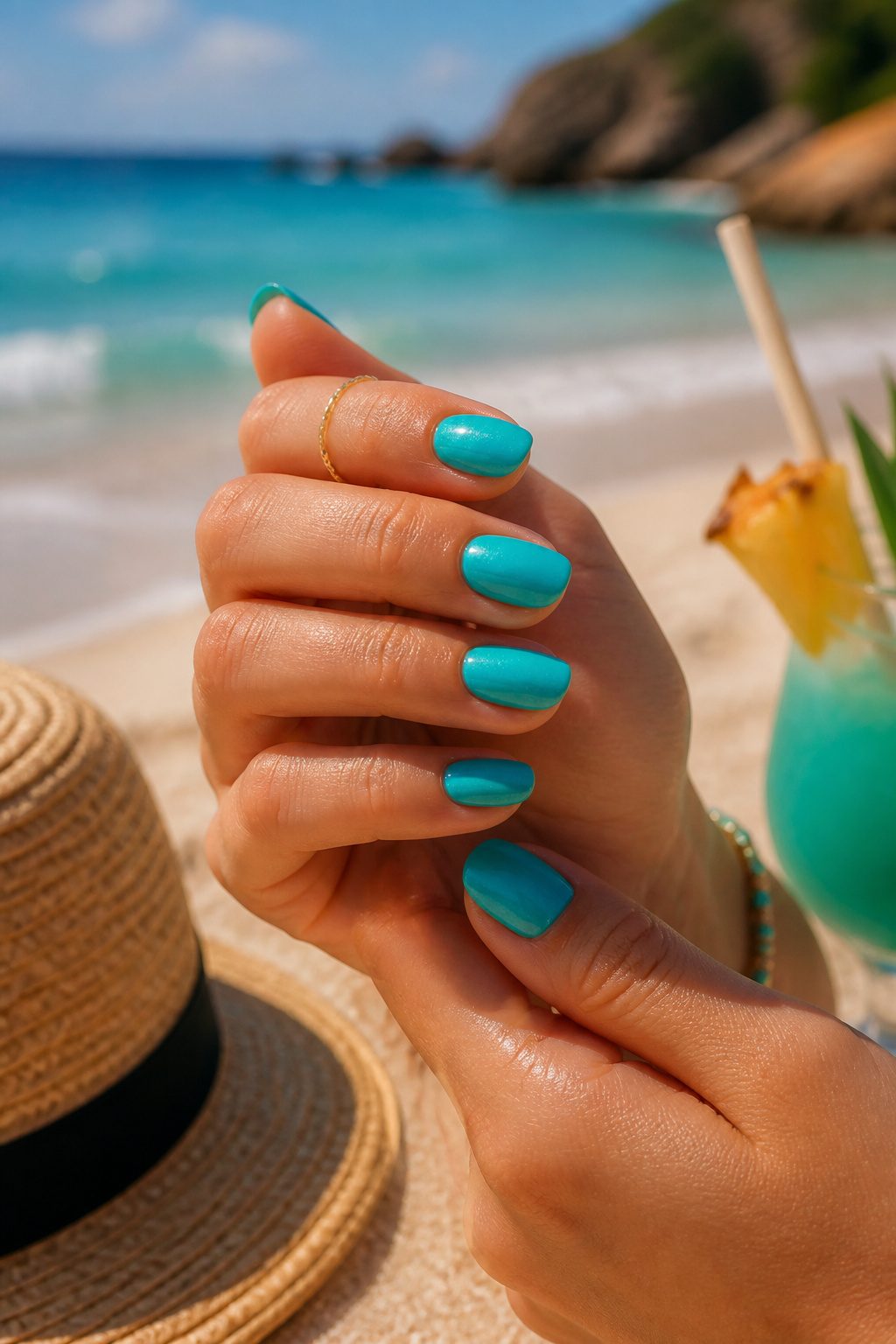
Turquoise lands in that rare space between green and blue, which makes it read as a color family all its own rather than a half-measure of either. On sun-kissed or medium-toned skin, the warmth underneath the shade pulls out the golden undertone instead of fighting against it the way a pure primary blue might. The result is a glow that looks intentional, not accidental.
Summer is where turquoise earns its keep. It carries enough saturation to hold up against tanned skin and enough lightness to feel seasonal rather than heavy. The Riviera shade from Manucurist’s lineup nails this balance: sea-spray brightness without tipping into neon territory. Wear it as a full manicure or anchor a nautical look by pairing it with a nude base and a graphic blue accent nail. For pool or beach days, a gel cure under LED keeps the color locked through water and sun.
5. Denim Blue Nails
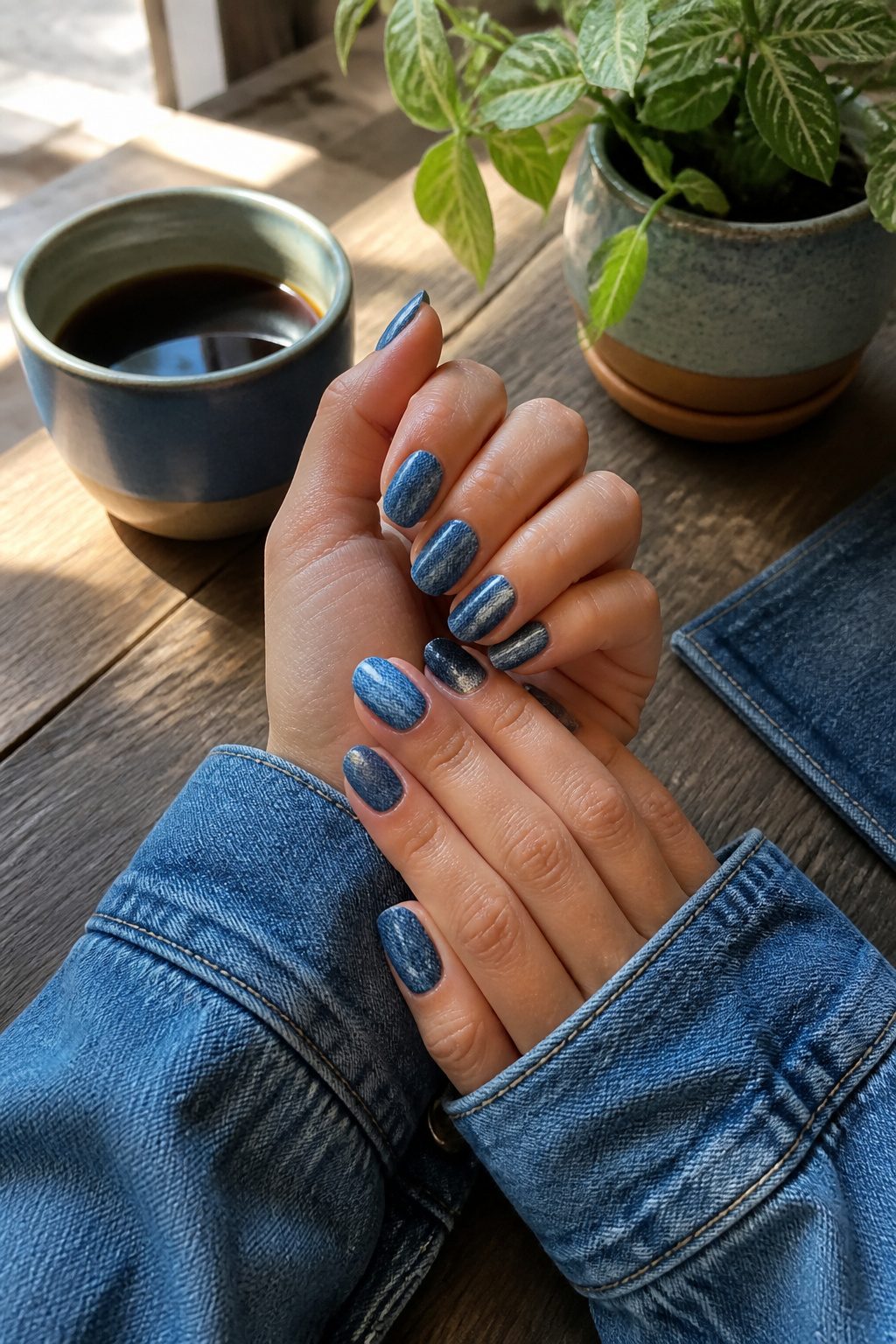
A denim blue manicure carries the same worn-in ease as a favorite pair of jeans, shifting from pale stonewash to deep indigo depending on the light and the angle. The shade sits quieter than cobalt or navy, which makes it the one blue I would actually wear through an entire week of errands, office hours, and dinner without catching myself staring at my hands. The slight variation in tone mimics actual denim fabric, so the nail reads textured even when the surface is perfectly smooth.
This is the blue for seasons that do not announce themselves. It works in March when spring still feels theoretical, and again in September when summer is technically over but nobody has told the temperature yet. The muted quality keeps it from competing with holiday metallics in December, and it avoids the beach-party obviousness of brighter blues in July. Squoval or rounded shapes soften the workwear reference just enough; anything too sharp starts to look like a uniform instead of an outfit.
6. Ombre Blue Nails
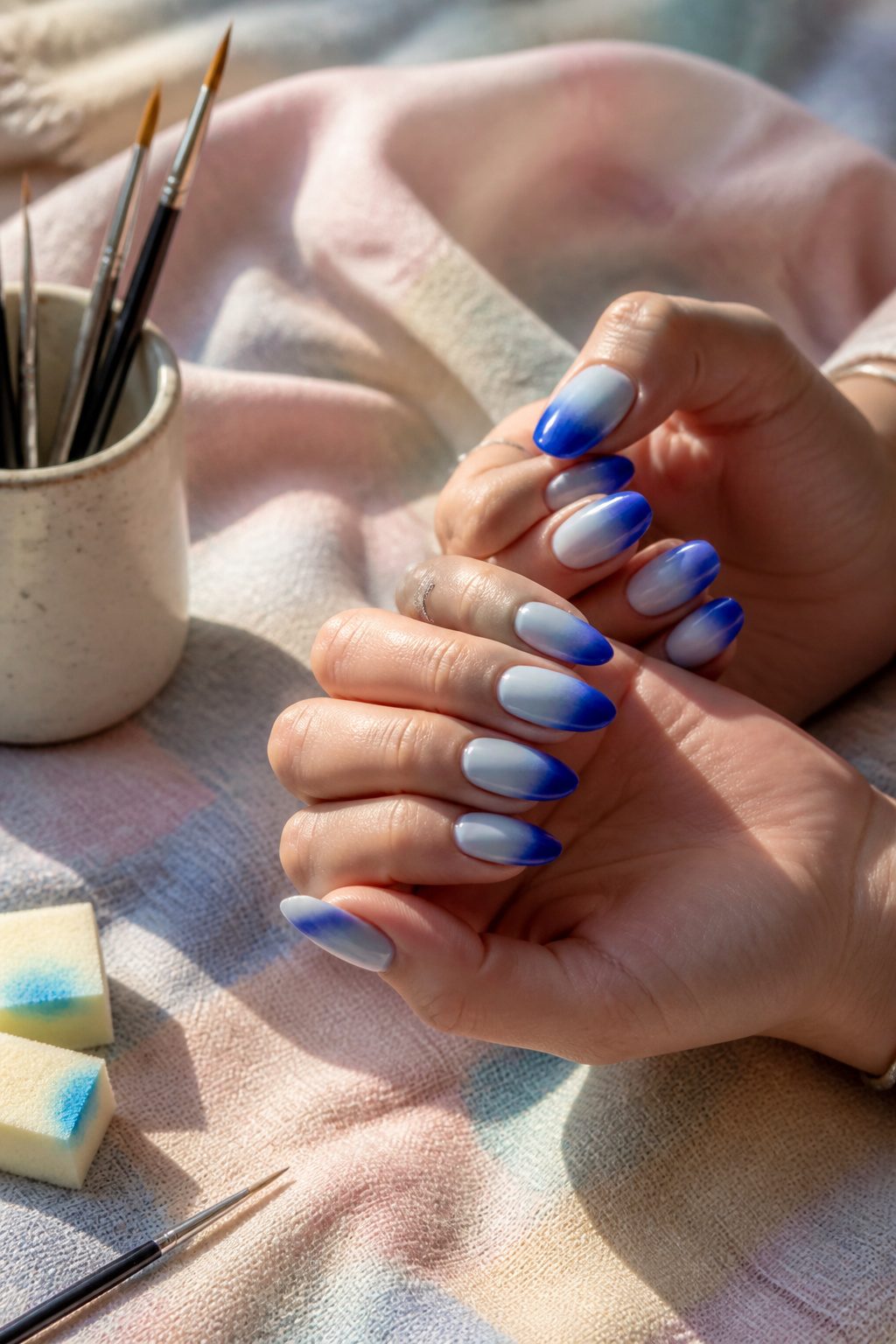
Ombre blue nails keep showing up everywhere this season, and the sponge method is what separates a smooth fade from a streaky mess. A light blue base coat goes down first, fully dry before anything else touches it. The darker shade, whether that’s a navy or a cobalt, gets dabbed onto a makeup sponge, not brushed on, then pressed and rolled from the tip downward so the pigment deposits unevenly on purpose. That unevenness is what blurs the line between the two colors.
What convinced me, reading through a dozen tutorials, is that two or three light passes beat one heavy coat every time. Too much polish on the sponge and the gradient turns into a solid block; too little, and the transition looks like chalk dust. Some nail artists work with three blues at once, a pale base, a medium middle, and the dark tip, each layer slightly overlapping the last. The finish needs a generous top coat to sink into the texture the sponge leaves behind, otherwise the surface catches on hair and fabric for days.
7. Blue French Tips
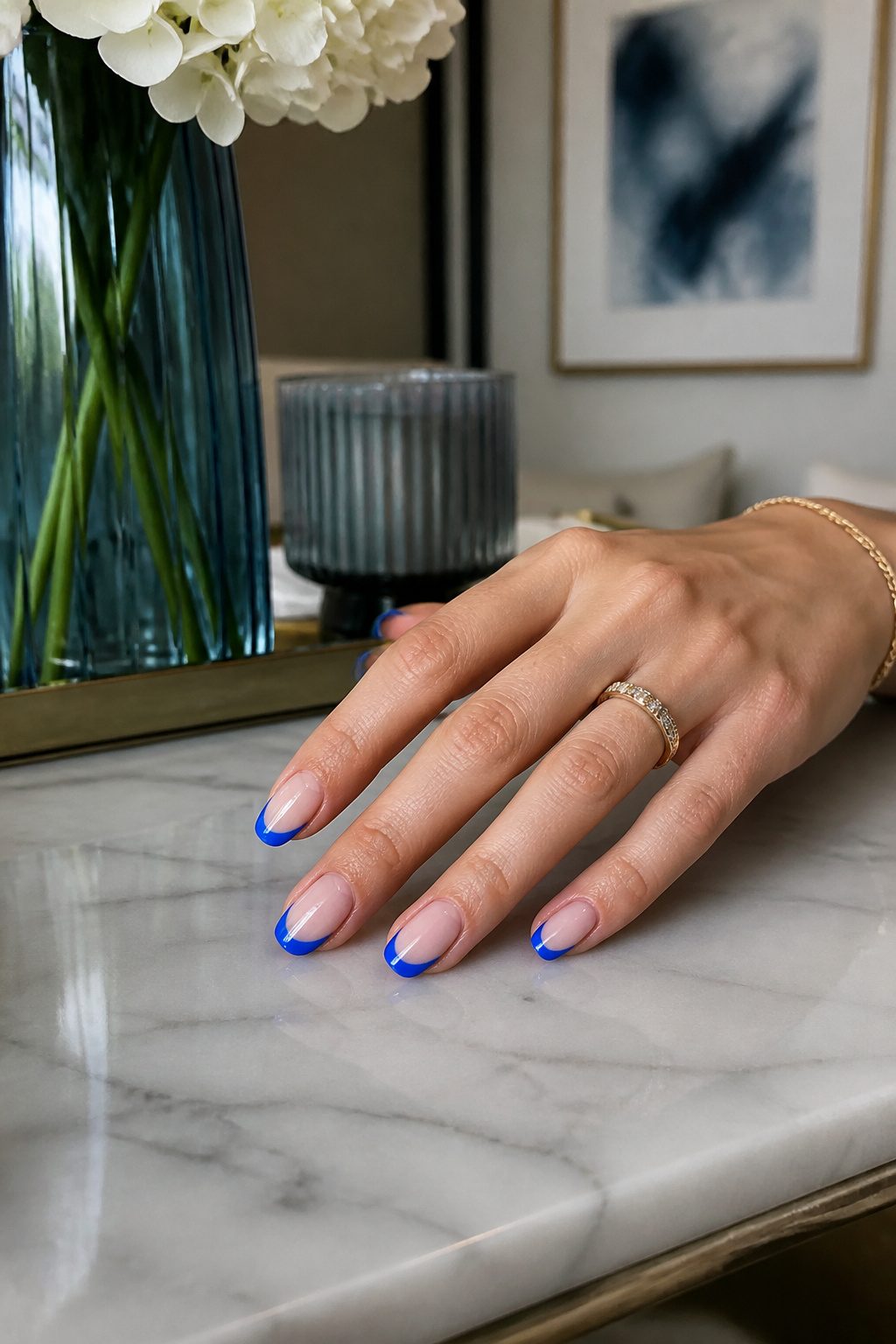
The blue French tip keeps the clean architecture of the original but swaps the white edge for something with more personality. A sheer pink base with a fine line of blue at the free edge reads as minimal from a distance and intentional up close.
Two approaches sit at opposite ends of the same idea. Layer a translucent Hortencia pink and trace the tip in Riviera for something barely-there, or push the contrast with an Active Bright base and an Ultramarine edge. The second option is bolder, but both stay graphic enough to feel modern rather than retro.
Lighter blues wear easier in spring and summer; deeper ones like navy or ultramarine shift the same shape into fall. Fairer skin tends to suit the lighter shades, while deeper tones carry the darker blues without the color flattening against the nail. The occasion matters less than you might think, though royal blue or navy tips edge closer to formal than a pale wash does.
8. Blue Floral Designs
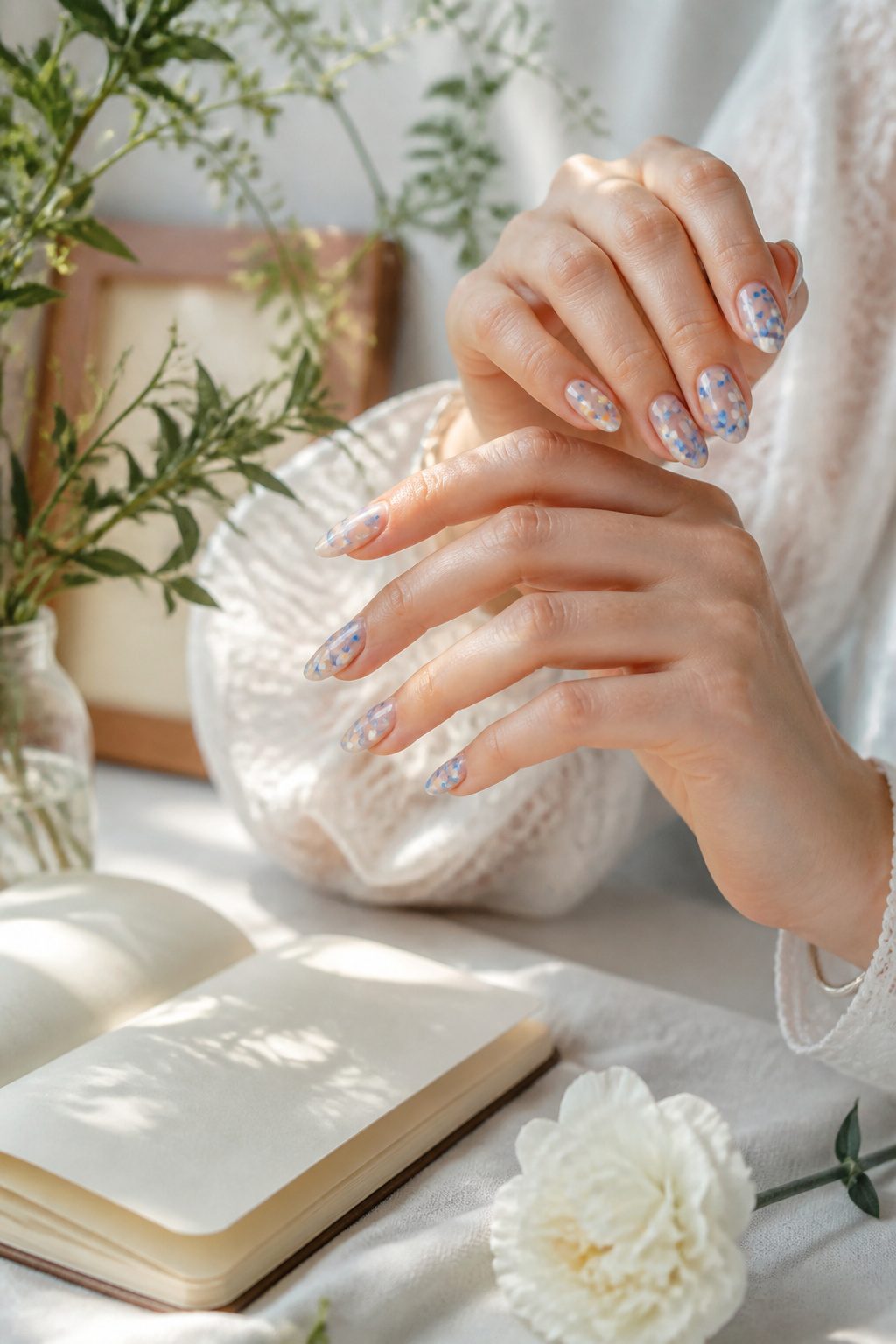
Blue floral nail art lives or dies by the base color you set underneath. A milky sheer base lets blue-toned daisies peek from the edges and tips like pressed flowers under glass, while a soft white such as iGel’s DD164 Winter White pushes hand-painted or stamped blooms forward with real contrast. Medium blues like DD117 New Wave work the opposite way: the flowers stay subtle, almost tone-on-tone, which reads as texture rather than statement.
The technique matters as much as the palette. Hand-painting with a 3D flower brush gives you control over petal shape and layering, but stamping saves time when you want repeatability across ten fingers. iGel’s Blue Fairy Wren and Silent Springs pair well here, one for the flower bodies and one for shadowed depth, with Freshwater or DD128 as a bright accent in the centers. Line art gel in white keeps the stems and outlines crisp without the bulk of regular polish.
What I’d skip: trying to pack every blue you own onto one nail. Two, maybe three blues maximum, or the eye loses the flowers entirely.
9. Mermaid-Inspired Nails
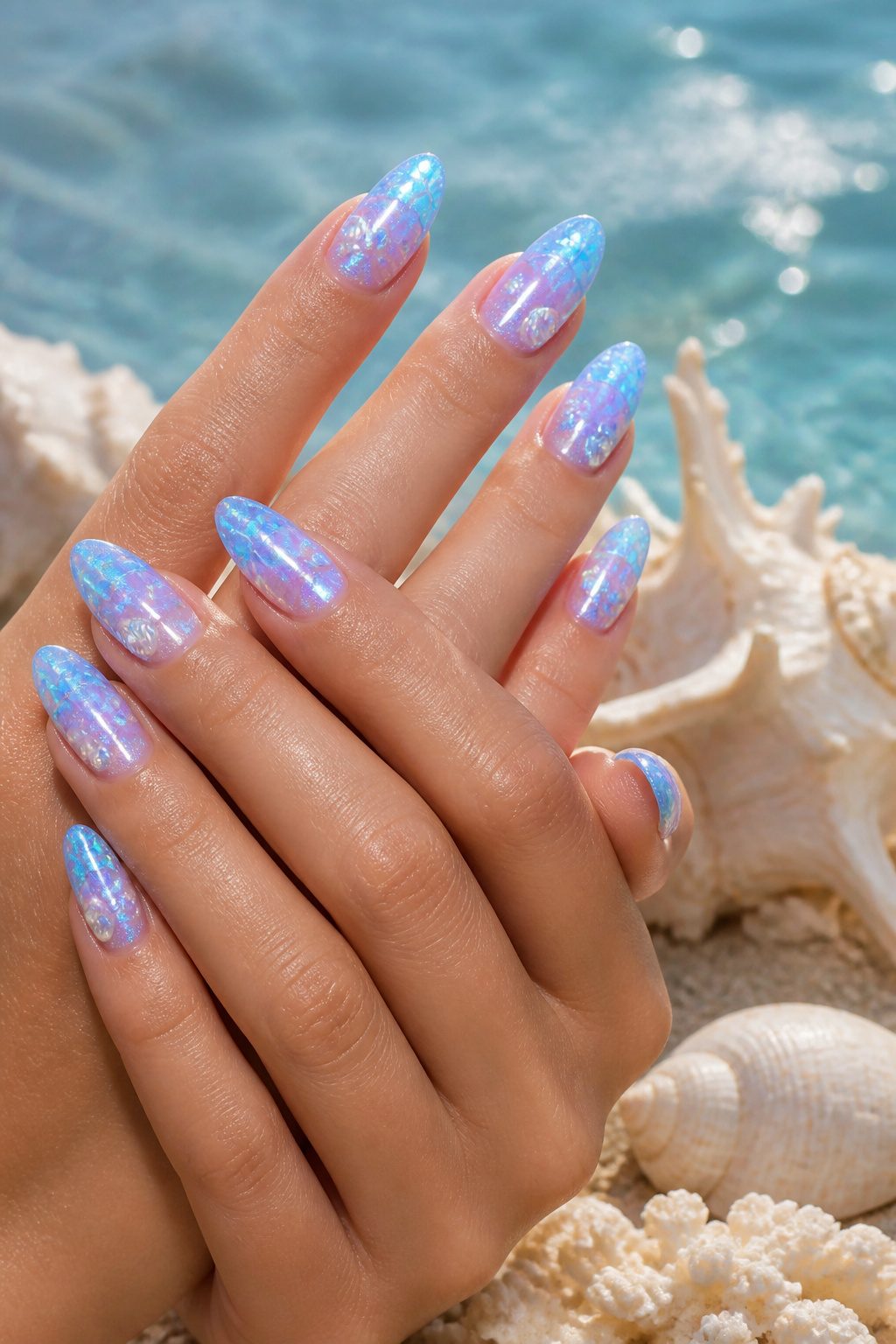
The first time I saw mermaid nails done well, the wearer was in a plain white T-shirt at a coffee shop, not a costume. That is the test: the shimmer has to read as nail art, not cosplay. A translucent holographic base with blue-violet undertones gets you there. Think moonlight on still water rather than full Ariel.
Scale patterns work if you keep them partial. A single accent nail with tiny overlapping arches near the cuticle, or a diagonal band across two fingers, reads as texture. Cover all ten and you have entered costume territory.
For color, iridescent blues that shift toward green or purple give the aquatic feel without literal fish imagery. Opaque turquoise reads beachy; the translucent shades with chrome or glass-paper overlays read mermaid. Fair and medium skin tones carry the shimmer best, while deeper skin makes the contrast stunning against vibrant, intense blue-violet bases.
The products that nail this look: a deep blue gel with blue-violet undertones layered under aurora chrome, plus glass paper or scattered gems placed with tweezers for controlled sparkle. Skip the rhinestone clusters; they tip the look toward pageant. One or two glass-paper flakes at the nail’s stress point, where color would naturally catch light, is enough.
10. Blue and Gold Foil Nails
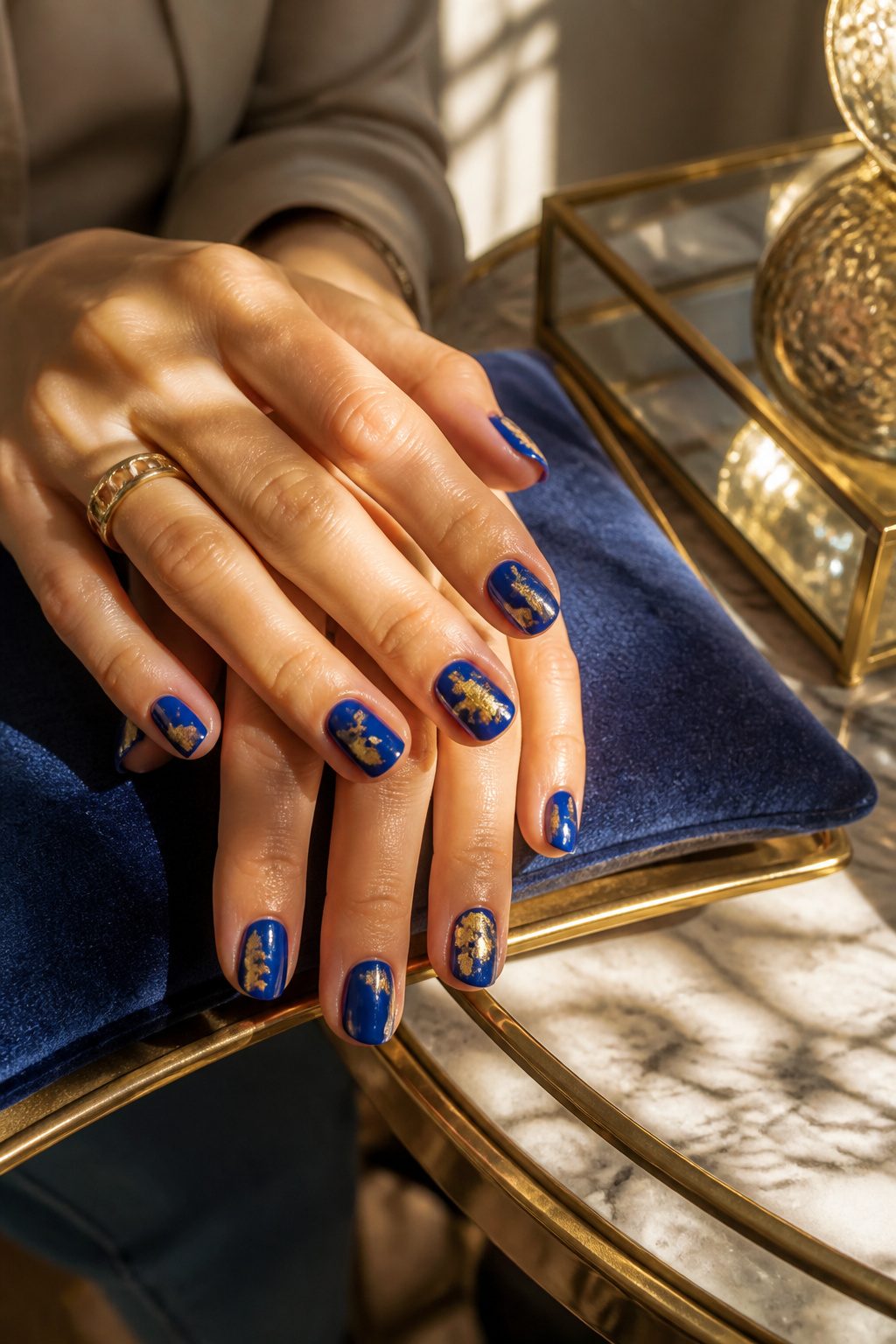
Thin gold leaf over blue polish reads expensive even when the application takes ten minutes. The trick is working while the base coat is still tacky, not fully cured, so the foil grips without extra adhesive that would later lift at the free edge. Press the leaf on with a silicone tool or the pad of a clean finger, then tear away the excess with a quick upward flick rather than rubbing, which drags the pattern into fuzz.
Royal blue makes the gold look almost torch-lit, the contrast that sharp. Navy works too, though the effect turns quieter, more like old locket interiors than celebration. A cobalt base under scattered gold veins lands in the middle: loud enough for a party, restrained enough that you won’t wish you’d picked something else by Wednesday. The leaf itself comes in transfer sheets or loose flakes; transfer sheets give you control for stripes or half-moons, while loose flakes reward a random scatter that hides any unevenness in your own hand.
11. Blue and Silver Glitter Nails
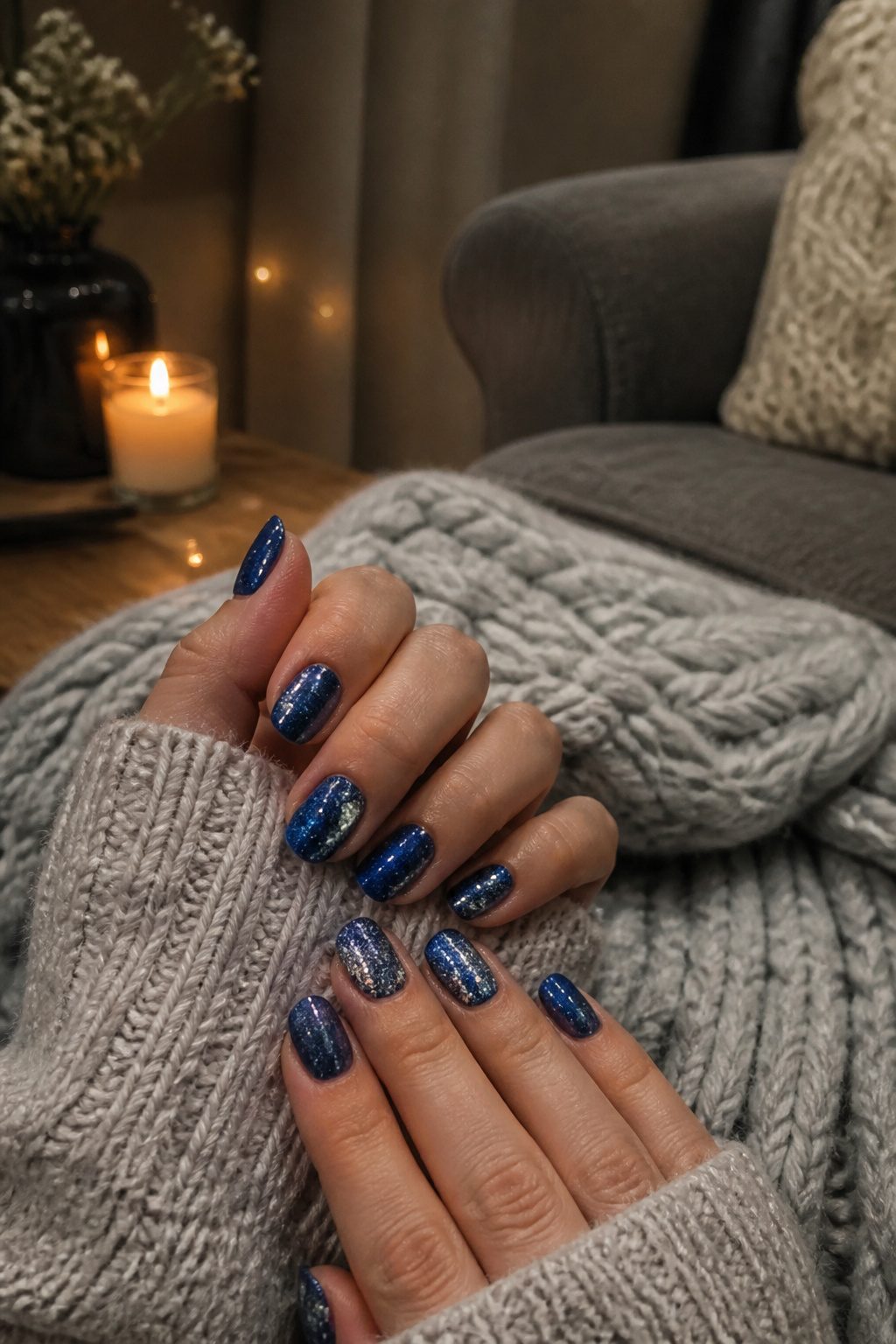
A deep sapphire base with silver glitter catching the light gives nails dimension without drifting into costume territory. The iGel Beauty pairing of JG16 Sapphire with PL OM01 Sparkling Silver Mist shows how jelly formulas let the glitter sit at slightly different depths, so the sparkle reads as texture rather than a flat sticker.
Full glitter coverage works best when the glitter is fine enough to read as metallic from a distance. Larger flakes across every nail can look like craft glitter; reserve those for one or two accent nails, usually the ring finger, while the rest carry the blue alone. For a Stardust effect, the sources suggest concentrating the silver at the tips, which also forgives the growth line as your nails lengthen.
The mistake I notice in photos that miss is mismatching the undertone. A warm-based blue against cool silver turns muddy. Stick to sapphire or true cobalt bases with silver, and save warmer navy or teal pairings for gold leaf instead. Finish with a thick top coat, two layers if the glitter has any texture, or you will feel every rough edge by day three.
12. Blue Line Art Nails
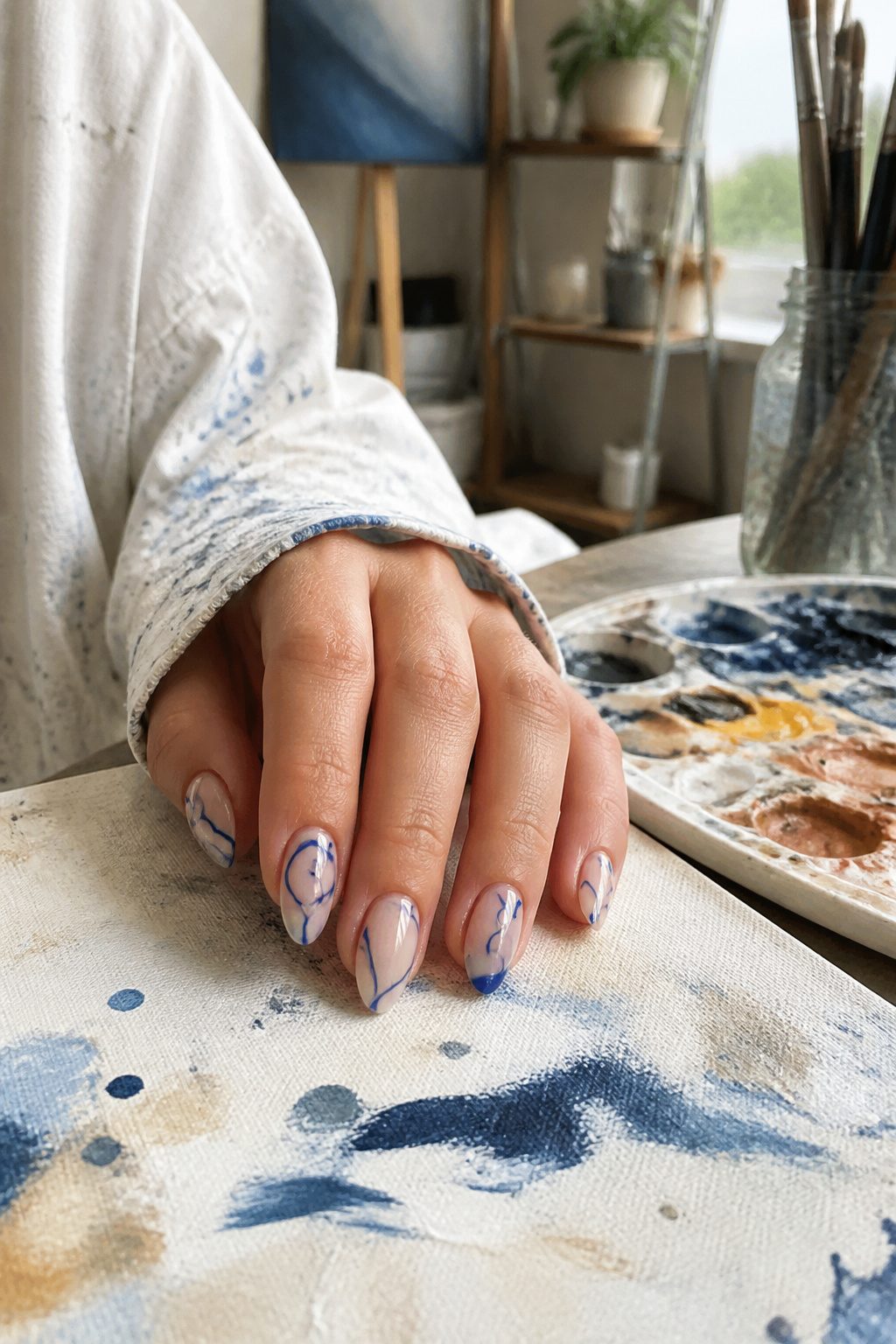
Thin blue lines turn a bare nail into something deliberate without trying too hard. A 10 mm/22 mm dual line brush gives the control you need for strokes that stay consistent from cuticle to free edge. The technique works three ways: leave the nail bare and let the blue read as a floating sketch, lay down a nude base like Vintage Lace for warmth that makes the line pop, or build on an active bright base if you want contrast that still feels clean rather than loud.
Precision matters more than color choice here. Two shades that handle differently on the brush: Universal City runs brighter and shows every waver, while Denim forgives slightly softer edges because the tone itself recedes. Wavy lines need the same tool discipline as straight ones; the wrist moves, not the fingers, or the ripple turns into a wobble. What separates this from a French variation is the refusal of a frame; the line sits wherever you place it, not only at the tip.
13. Blue Butterfly Nails
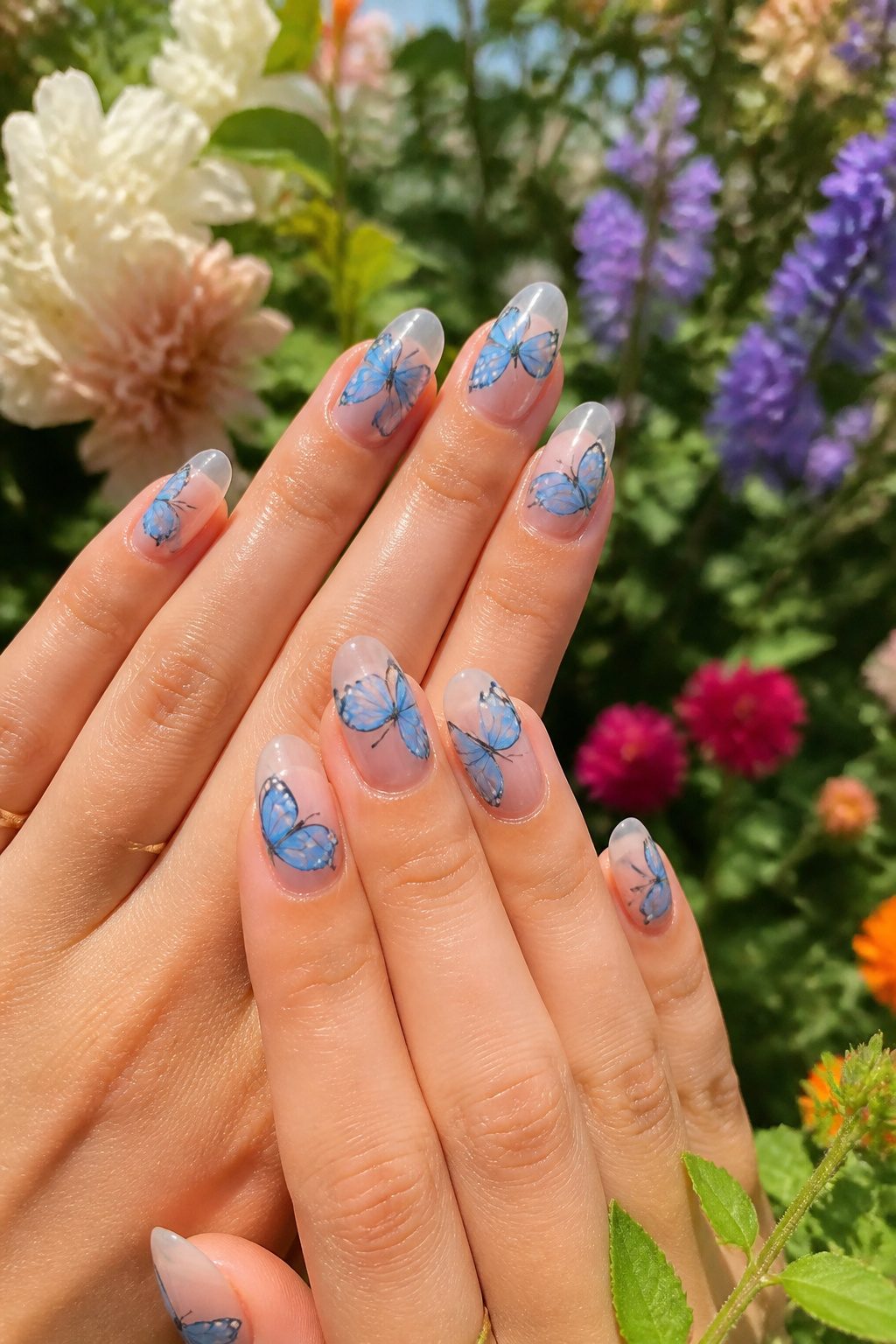
Butterfly motifs in blue tones work because the shape itself carries meaning, nostalgia even, without needing to shout. A single wing stamped across a clear or nude base reads delicate; clustering two or three smaller butterflies toward the cuticle keeps the eye moving without crowding the whole nail. I have seen the design hold up for years now, and what separates it from flash-in-the-pan nail art is its adaptability. The same stencil looks entirely different in a midnight navy against matte black than it does in pale sky blue over a milky pink.
Placement is where the design earns its keep. Butterflies placed off-center, with one wing trailing off the nail edge, create the illusion of movement that centered decals rarely manage. For shorter nails, a butterfly body running vertically along one side elongates the finger better than a horizontal spread. The blue palette matters less than the tone pairing: a metallic cobalt catches light like actual wing scales, while a muted slate blue reads more vintage and sits easier in professional settings. The motif does not demand a full set, either. One accent nail per hand, or even a single thumb detail, keeps the look from tipping into costume territory. That restraint is probably why it keeps resurfacing rather than fading out.
14. Blue Starry Nails
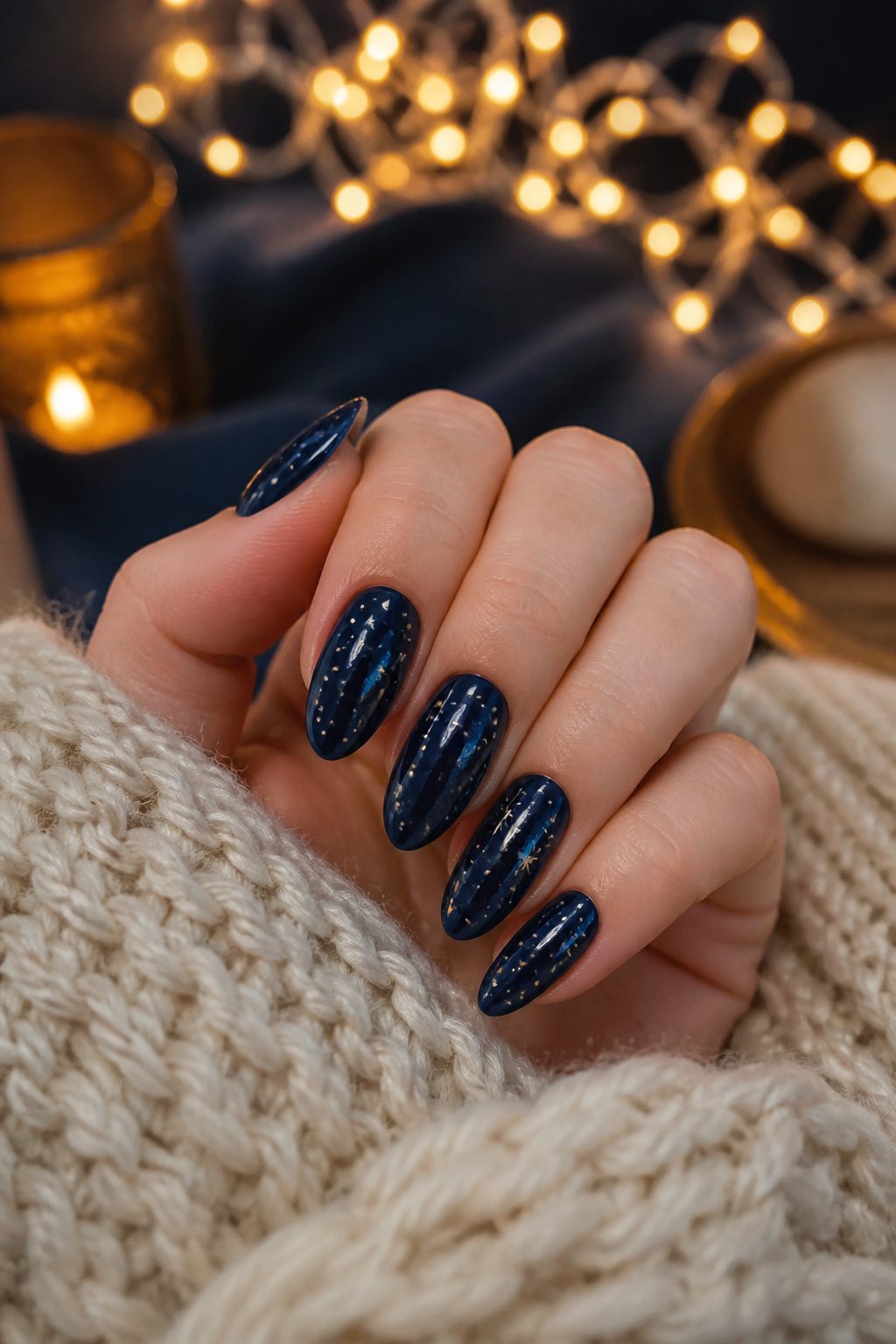
A scattered star placement reads quieter than full glitter coverage, and the difference matters for how long the look stays interesting. Night-sky effects work best when the stars sit at varying distances from one another, some clustered, some drifting alone, rather than marching in a predictable grid. Navy Blue makes the most convincing base for this, deep enough that a Metallic dot on top actually registers as light against dark. The occasional cat-eye finish underneath, that dimensional azure shift, adds movement without tipping into maximalist territory. Baby blue can soften the whole thing if you want a duskier sky, something closer to periwinkle or sky tones fading into the navy. What separates celestial nails from ordinary sparkle is restraint: one or two larger focal stars, a handful of smaller points, and bare base between them so the eye has room to travel. Full glitter erases that breathing room by the second day.
15. Blue Abstract Designs
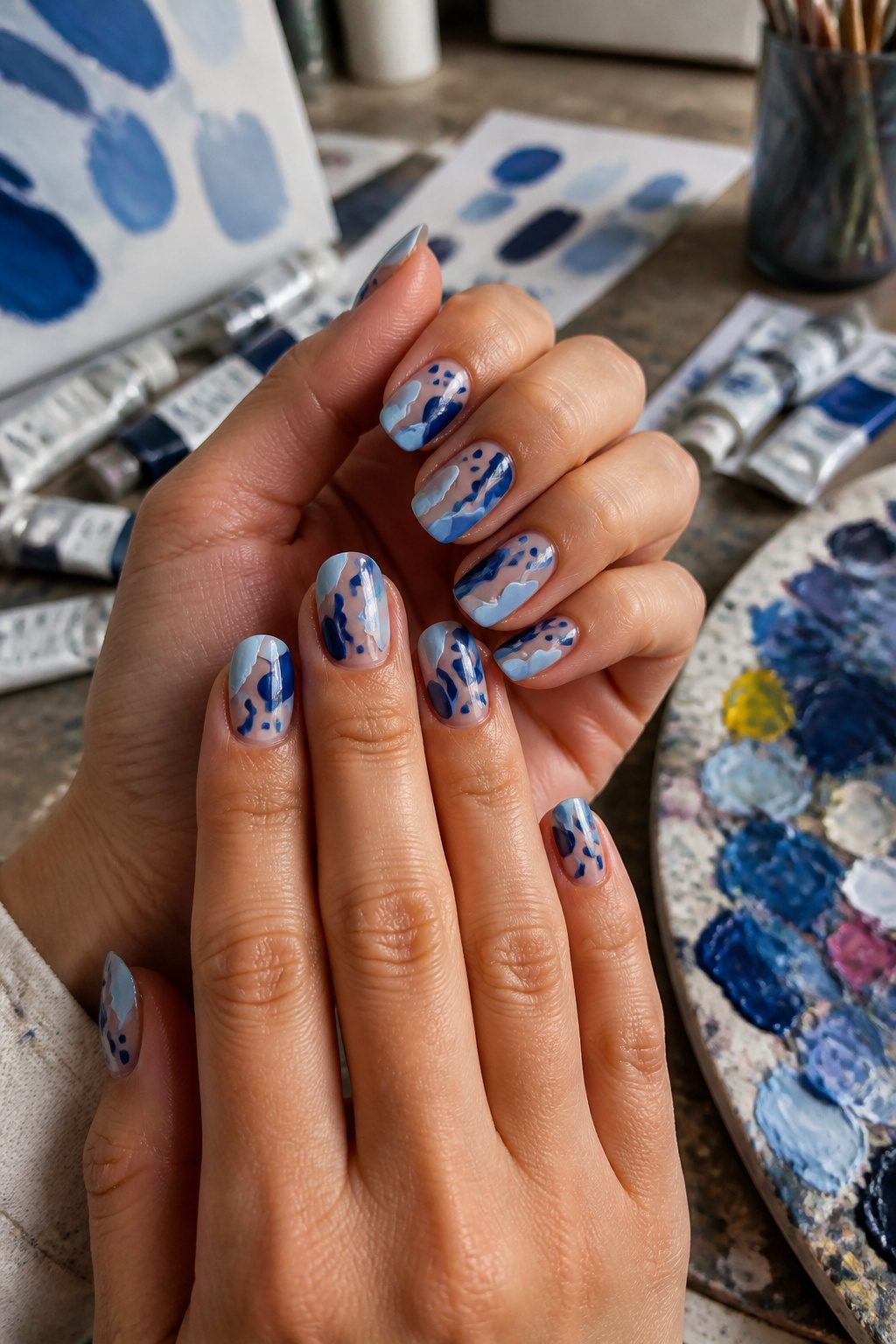
Freeform abstract blue nail art works because the color itself does the heavy lifting. Start with a solid anchor like Navy Blue or Dark Night, then add wavy lines in a lighter shade like Lilas to suggest sea ripples, or dot Metallic polish on for a scattered star effect. The technique is forgiving: a toothpick dragged through wet polish connects random dots into shapes that read as intentional rather than messy.
What separates a polished abstract look from a failed experiment is limiting yourself to two or three blues so the chaos still coheres. One approach pairs Tranquil Aqua with Illuminating Aqua, mixing opaque and glitter finishes for depth without clutter. Another builds a trio: Denim, Universal City, and Electric Blue layered in blocks or strokes. The imperfection is the point; no two nails match, and they are not supposed to.
Seasonal Blue Nail Trends
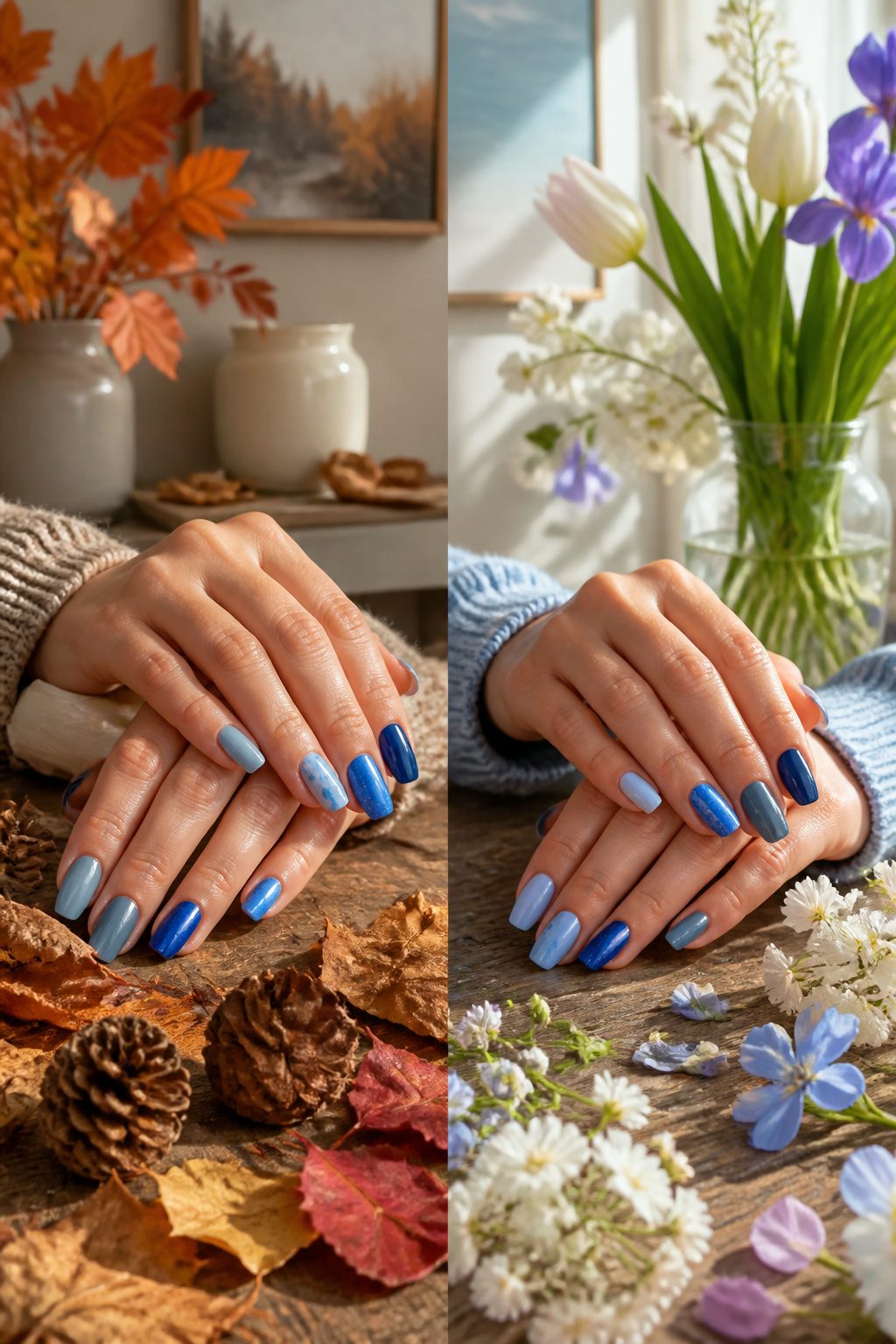
Lighter blues carry the weight of spring and summer on their own. Pale sky tones, mineral grays with a blue cast, and faint lavender-blues feel right when the days stretch longer and the light turns soft. These shades need little help: a single coat of something like a soft sky blue or an airy bubble tone reads as intentional without extra ornament.
Come fall, the same base color shifts rather than gets replaced. A mid-tone blue that looked breezy in July becomes the anchor for navy tips, gold flecks, or a half-moon accent in deep teal. The transition is cheaper than starting over with a new bottle. I have kept a single cornflower gel through three seasons by changing only the art on one or two nails: dots to stripes to a single matte-finish accent.
Winter asks for depth. Ultramarine, true navy, or a near-black midnight blue hold up against wool and the gray cast of short afternoons. The same navy that felt heavy in June looks grounding in December, especially with a thin line of silver at the cuticle or a glossy top coat over matte for contrast.
Skin tone still matters across seasons. Fair complexions tend to suit the lighter end year-round, while deeper skin carries the bold Klein blues and dark navies with less effort. The seasonal rule is a starting point, not a fence.
Blue for Every Skin Tone
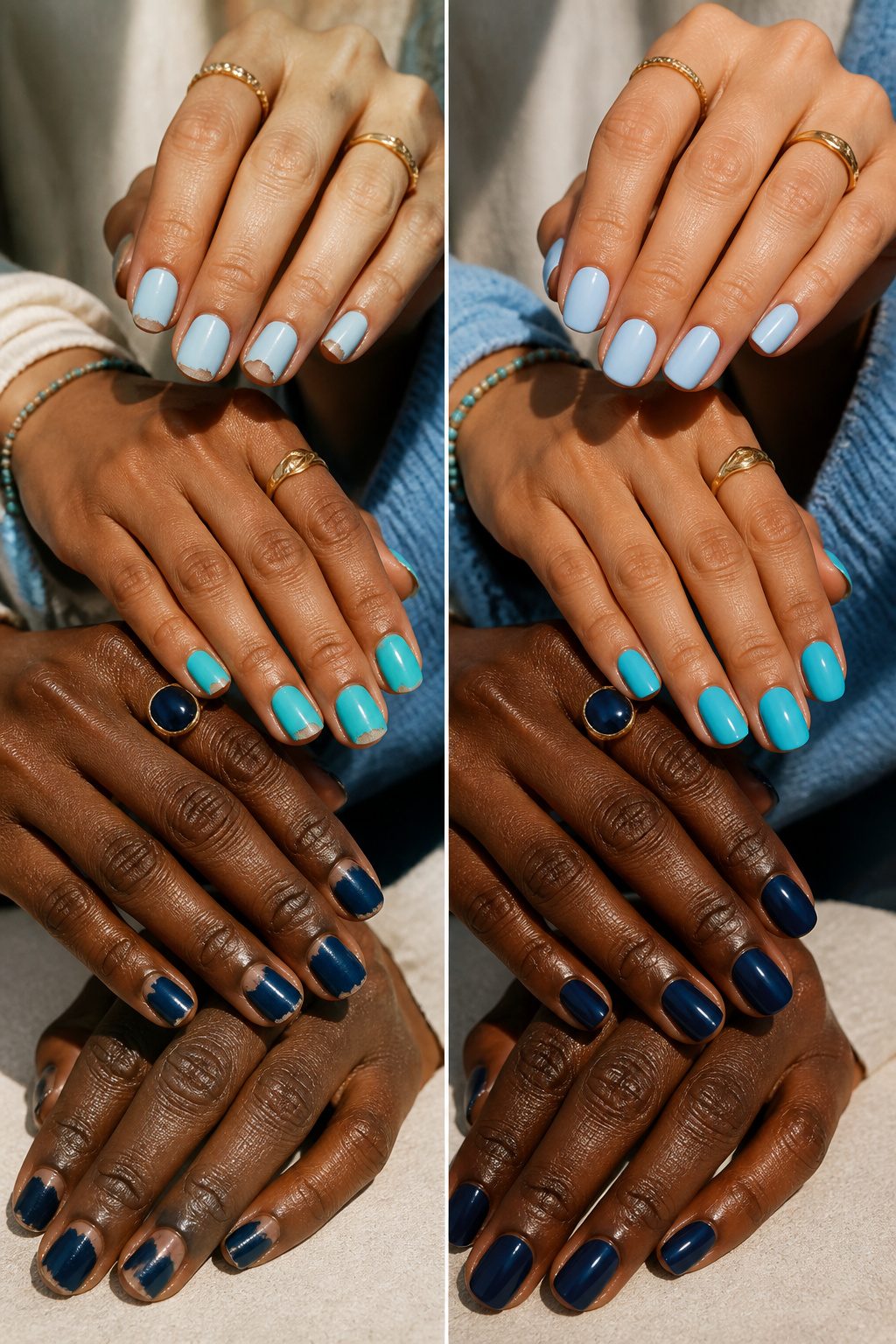
Fair skin picks up pastel blues like lilac-tinged light blue without looking washed out, though a shimmer finish helps the color hold its own against paler undertones. Turquoise reads differently on medium or sun-kissed complexions, where the green base warms the whole thing up and keeps it from tipping into costume territory. That Riviera shade, a true sea-spray turquoise, was designed with exactly this balance in mind.
Deeper complexions carry the weight of intense pigment better than anyone, and the payoff is the contrast itself: sapphire, mermaid shimmer, near-black midnight. These are not background colors. They announce themselves at every nail length, which matters if you are not someone who grows theirs past the fingertip.
Navy is the reliable middle. It does the work of a neutral while still reading as a deliberate choice, and I have yet to find a skin tone it deadens. If you own one blue polish for the year, make it this one. Electric ultramarine, that Klein-inspired charge, sits adjacent to navy on the wheel but behaves like an event: save it for when you want the hands noticed, not just presentable.
Keeping Blue Polish Fresh
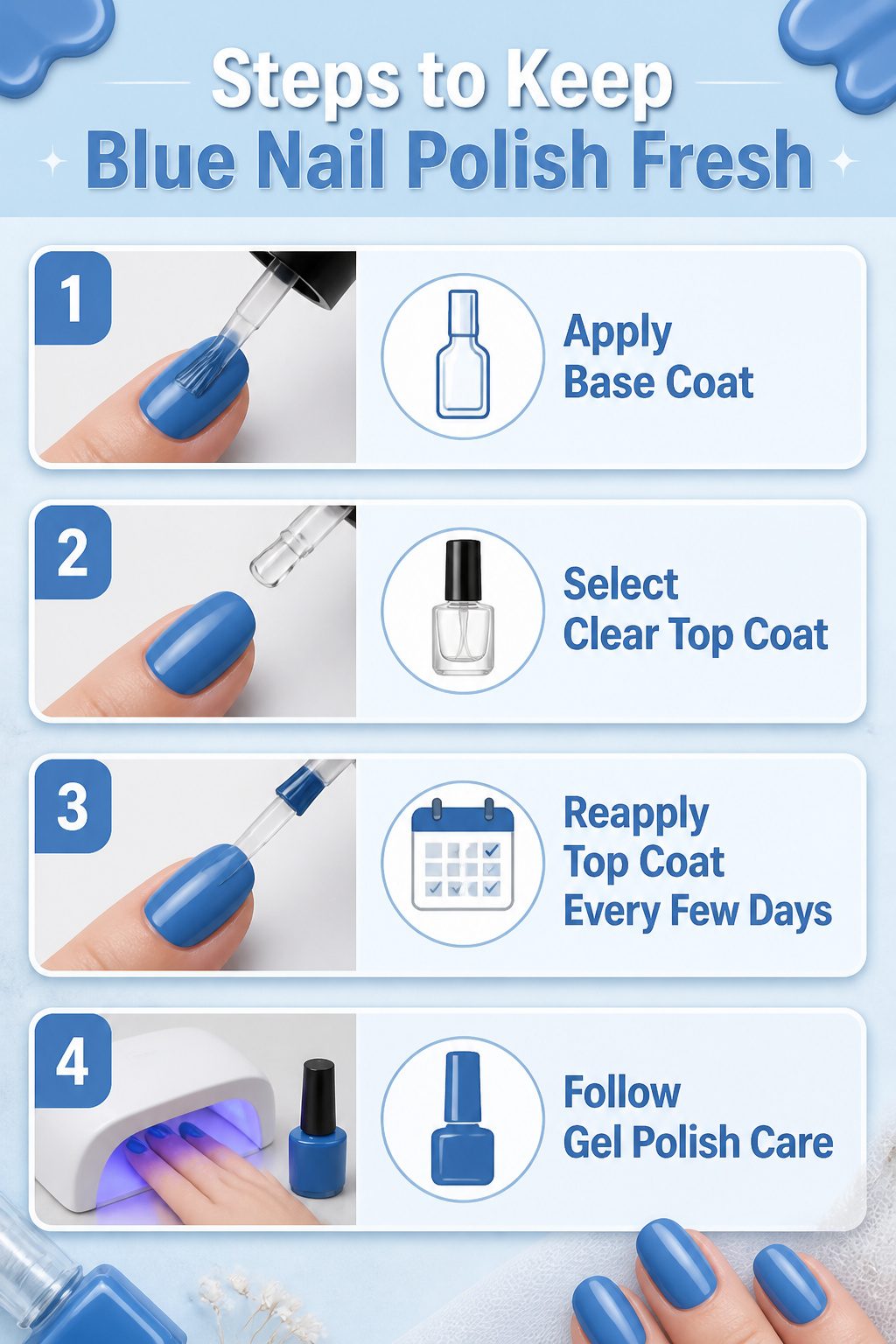
A blue manicure starts going dull at the cuticle line or chips at the free edge first, and the difference between a week of wear and two to four weeks comes down to prep and sealing. Gel polish holds two to four weeks when the nail plate is properly dehydrated and capped at the tips, but even regular lacquer lasts longer with the right foundation.
Base coat is non-negotiable if you want the pigment to stay true and not stain the nail. I learned that the hard way after skipping it once with a dark navy; the blue lingered for months. A thin layer of base coat creates the anchor layer the color needs.
Top coat selection matters just as much. Clear top coat is the best finishing layer for blue nails specifically because it protects without altering the shade. Some tinted or matte top coats can muddy cobalt or shift baby blue toward gray. For gel systems, a no-cleanse top coat gives that glassy finish without the wipe-down step that can dull the shine.
Reapplication helps between manicures. A fresh layer of clear top coat every few days extends regular polish significantly, though with gel you’re locked in until removal.
Frequently Asked Questions
What type of blue nail polish should I use?
Gel nail polish is the best choice for blue nails, especially for bold shades like cobalt. Regular polish chips too fast on saturated colors, while gel holds its glossy finish for two to four weeks. The durability is worth the upkeep every two weeks.
How long does blue nail polish last?
Blue nail polish lasts two to four weeks with proper gel application and prep. That lifespan depends on dehydrating the nail plate, capping the tips, and sealing with a clear top coat. A fresh layer of clear top coat every few days can extend regular polish between manicures.
What is the best top coat for blue nails?
A clear top coat is the best finishing layer for blue nails because it protects the color without shifting the shade. Tinted or matte top coats can muddy cobalt or turn baby blue gray. For gel systems, a no-cleanse top coat gives a glassy finish without the wipe-down step that dulls shine.