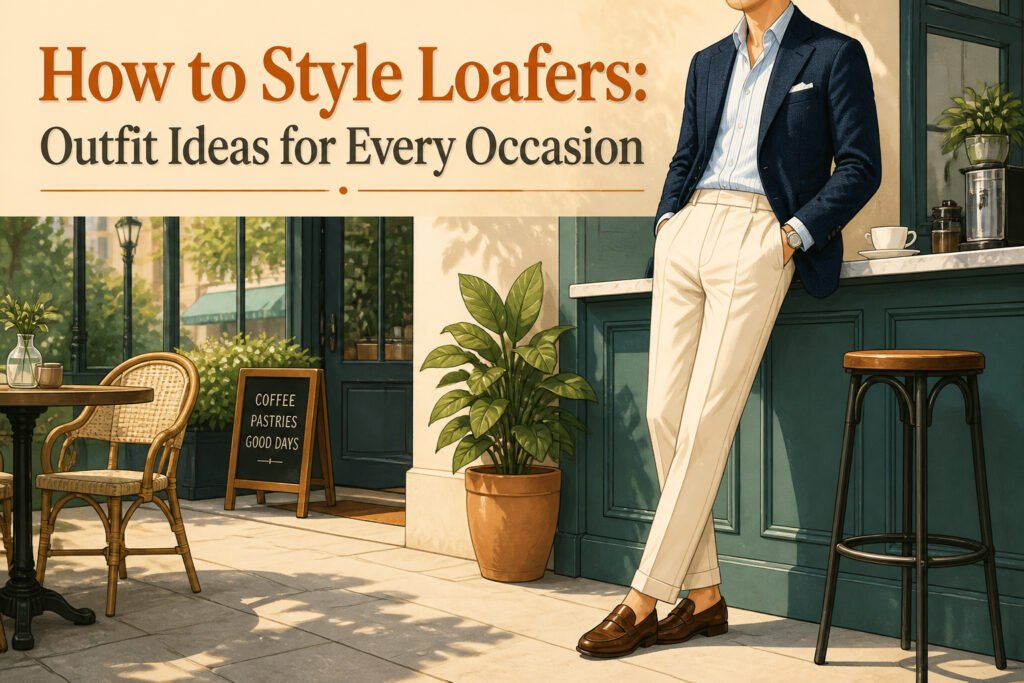
You can wear loafers with nearly anything, but the pairing fails when the trouser break pools at the vamp or the shorts drop below the knee. The hem is what separates styled from accidental. A slight to half-break against wool creases, or a single two-inch cuff on raw denim, keeps the loafer visible and the proportion deliberate. Even the $350 Jacques Solovière New Leather Loafers, which bridge jeans and dinner outfits, look off if the fabric swallows them.
1. Tailored Trousers
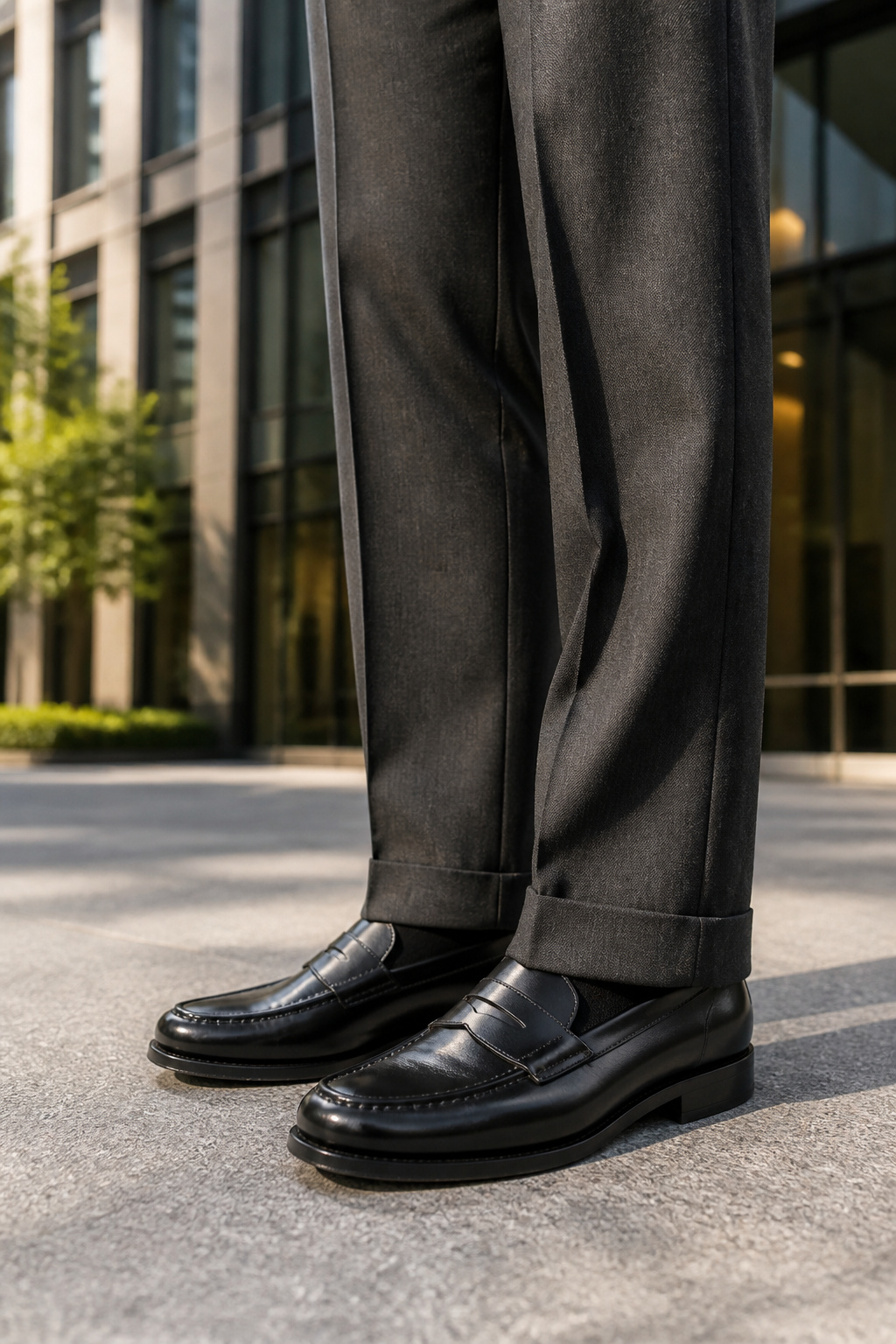
Tailored trousers and loafers share a straightforward lineage that still asks for some attention at the hem. Penny loafers and horsebit loafers both earn their place here, though they send slightly different signals. A penny loafer like the G.H. Bass Larson Weejuns at $260 carries American trad roots that play naturally against wool creases. The Gucci 1953 Horsebit Leather Loafer at $1,050 leans more Italian, the metal bit catching light against charcoal or navy in a way that reads deliberate rather than decorative.
The trouser break matters more with loafers than with lace-ups because the shoe itself is quieter. A slight to half-break keeps the line clean without looking like you borrowed your father’s pants. Cropped or slim hems that sit just above the ankle tend to look intentional, while fabric pooling at the vamp kills the proportion entirely.
Socks become a choice rather than an afterthought. A thin visible dress sock in a subdued shade reads office-appropriate; a bare ankle or no-show sock shifts the same trousers toward casual territory. The silhouette balances best when the trouser taper and loafer vamp share a similar visual weight, neither one overwhelming the other.
2. Denim Outfits

Swapping sneakers for loafers with denim is the fastest way to make jeans feel intentional instead of leftover. The shape of a loafer, even a flat one, adds structure that a rubber sole never quite manages.
The wash matters more than people expect. Raw denim holds its own against a polished leather upper. Light washes work best when the loafer itself has some texture or wear. Black denim with black penny loafers reads as deliberate, almost monochrome, without trying for a matching set.
Fit is where most people hesitate. Straight-leg jeans with a single cuff, about two inches, hit right at the ankle bone and let the shoe sit fully visible. Wide-leg needs a shorter inseam or a higher cuff, one fold max, or the fabric swallows the loafer entirely. The common mistake here is heavily ripped denim with a refined loafer: the contrast fights instead of complements, and the polished leather starts looking like you grabbed the wrong shoes in a hurry.
The Jacques Solovière New Leather Loafers, at $350, earn their place here: the clean lines work with cuffed raw denim and a plain white tee, but shift just as easily into a dinner outfit. Penny loafers specifically bridge that gap between casual and refined because the strap detail reads as finished even when the rest of the look is simple. A thin sock in a tone close to the shoe, or none at all with cropped hems, keeps the ankle line the point of focus.
3. Dresses and Skirts
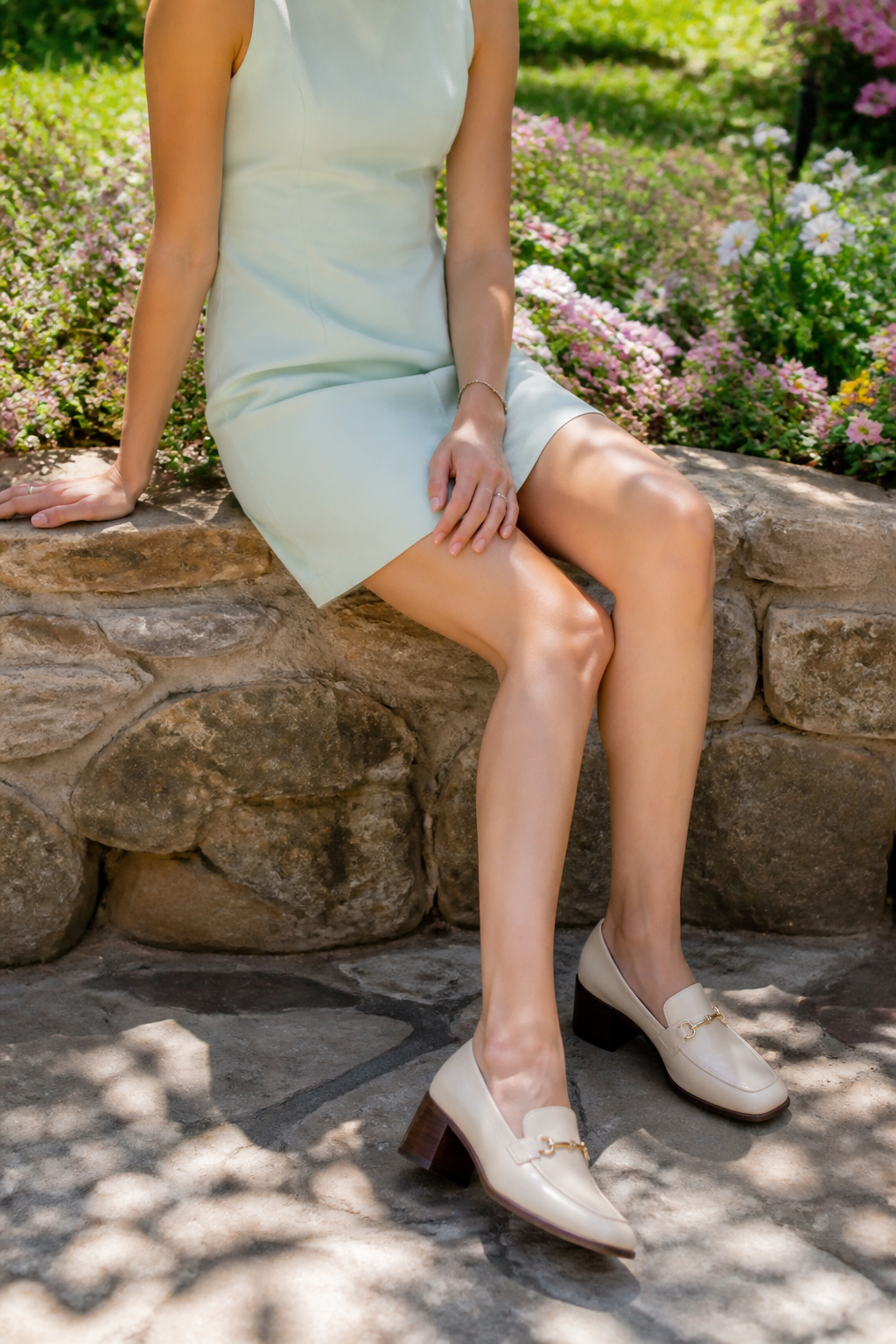
The question of whether loafers work with dresses and skirts comes up constantly, and the short answer is yes, they read as intentional, not like you gave up on heels. A heeled loafer gives you the posture boost of a pump without the wobble of a stiletto, which matters on days when you’ll be standing through a commute or an outdoor wedding. Midi and mini lengths land best with loafers, while maxi skirts tend to swallow the shoe and hide the detail that makes the pairing look considered.
For a concrete example, the Nordstrom Sleeveless Linen-Blend Minidress at $100 sits right where a loafer wants to show, neither so short that the shoe competes nor so long that it disappears. Linen and cotton blends in warm weather, wool or ribbed knits in cooler months, the loafer adapts to the fabric rather than fighting it. Add socks or tights when the temperature drops; skip them in summer unless you’re deliberately playing with that preppy contrast. The horsebit hardware on some styles catches light against a solid dress without the noise of a full metallic shoe, and a chunky or platform sole gives real height without the pressure points of a narrow heel. The look is pulled-together, not apologetic.
4. Casual Shorts

Tailored shorts and Bermuda lengths are the only shorts that earn their place with loafers. Athletic shorts and cargo pockets pull the pairing into mismatch territory, because the shoe’s structure needs a clean line to work against.
Leather finishes read sharper against bare skin, but suede softens the whole look in a way that still feels intentional. In real heat, no-show socks beat going completely bare; they keep the leather from sticking and absorb sweat that would otherwise warp the insole over a single afternoon. Thin dress socks, meanwhile, throw the proportion off entirely here.
The casual loafers that work are the ones with some texture or soft structure, not the patent or highly polished pairs that sit waiting for an office. A snakeskin pattern or matte suede keeps the outfit from looking thrown together rather than styled.
What separates the two is the hem. Cropped or tailored shorts let the loafer lead, as the shoe already carries enough visual interest. Anything baggy or below the knee competes instead of complementing.
5. Business Casual Looks
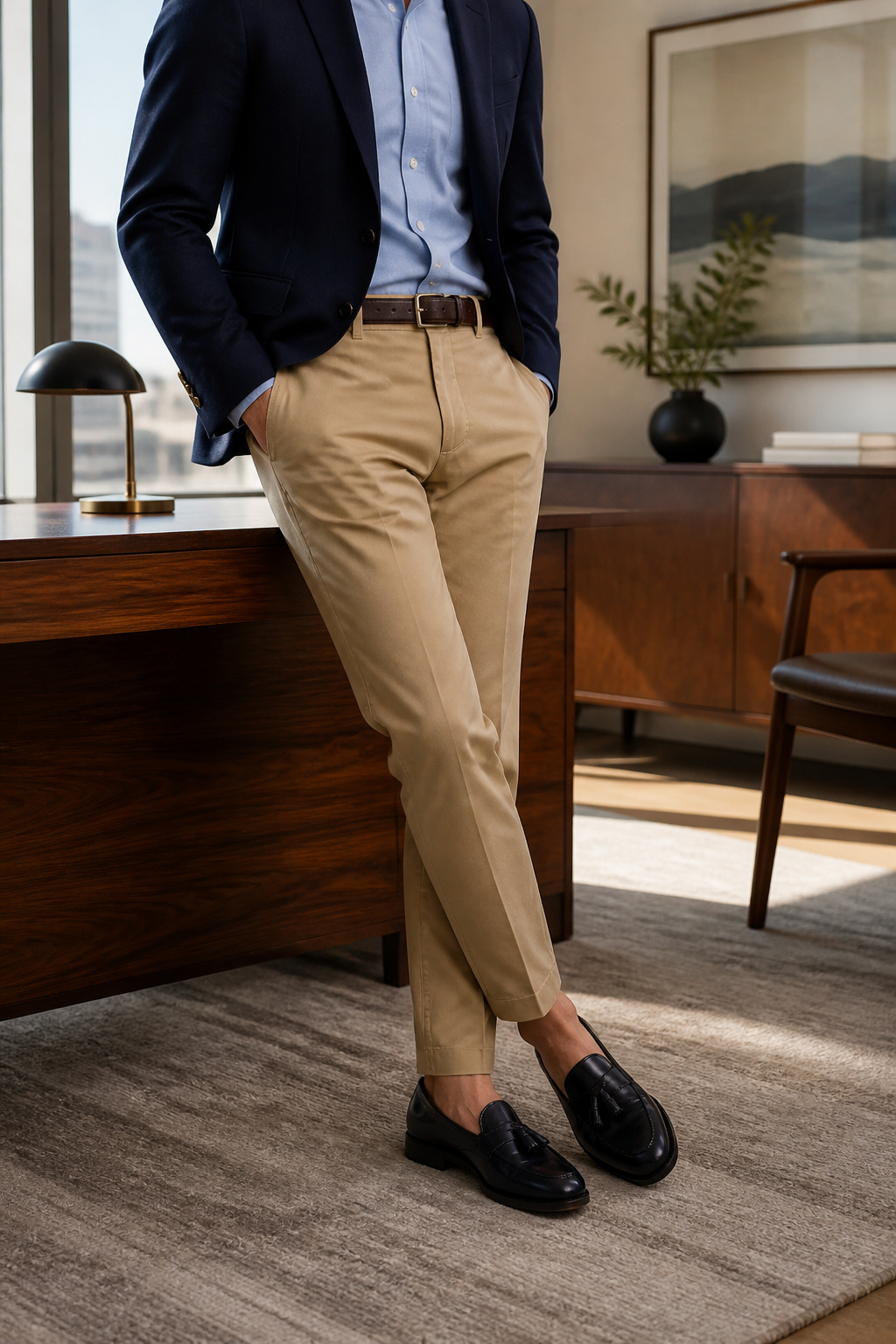
The office is where loafers earn their keep, and the line between sharp and sloppy runs thinner than most people think. Chinos with a navy or charcoal blazer and a tucked Oxford shirt sit right in the safe zone. Suede penny loafers read dressed-up without pushing into full formal territory, and the slip-on build means no lace-up ritual at the security line or after a cab ride.
Finance still leans harder than creative fields. A friend in wealth management keeps horsebit styles in reserve for days without external meetings; his agency counterpart wears the same pair with an open collar and no jacket by Thursday. The shoe bridges both without a change.
The Alden Cordovan Tassel Loafer at $885 remains the benchmark for business casual: shell cordovan leather, no broguing that competes with tailoring, enough detail to signal intention without noise. Match the leather tone to belt and any watch strap. One dominant color across those three points keeps the look considered rather than assembled.
The real payoff is the commute-to-conference-room problem solved. A loafer that works with chinos at 8 a.m. and a client presentation at 2 p.m. saves the shoe swap in a lobby bathroom, which is where most men draw the line and just wear sneakers all day.
6. Playful Socks Styling
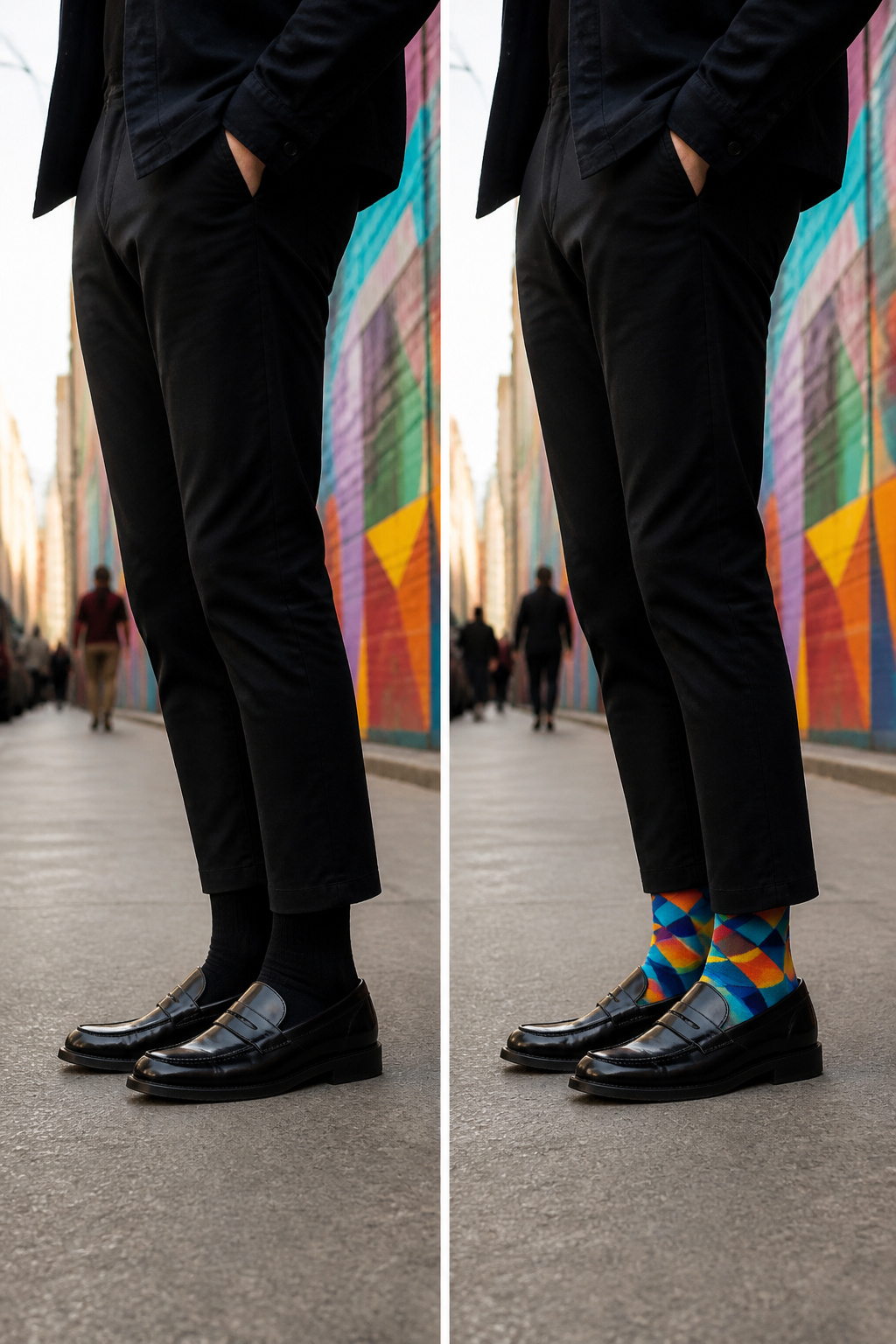
The socks-with-loafers question comes up constantly, and the answer is straightforward: yes, it is a major trend, and the difference between looking styled and looking like you forgot your boots comes down to treating the sock as an accessory rather than an afterthought. Crisp white crew socks give a classic collegiate feel that works with relaxed jeans and a striped polo or rugby shirt; the white provides just the right pop of brightness against slim loafers. For something more fashion-forward, sheer or patterned socks add personality and contrast, and a mini skirt with patent loafers channels that playful, editorial vibe directly. Color-matching socks to loafers can also extend the visual line of the leg for a lengthening effect. No-show socks remain the utility play for invisible coverage under trousers or shorts when you want the shoe to read clean and uninterrupted. Ankle socks work with Bermuda shorts and a Henley for preppy-cool errand dressing, though they read as optional rather than essential to the look. The bridge color matters most: match your sock to either the loafer or the outfit’s dominant tone, never let it float in between.
7. Monochrome Outfits

Tonal dressing lives or dies at the shoe. Match your loafer to your trouser color and the leg line keeps going; break it with a single contrast piece and the shoe becomes the full stop at the end of the sentence.
Black is the easiest place to start. I keep the belt and bag in the same finish as the loafer, matte with matte or polished with polished, so nothing jars. Tan and cream need more care. Cream suede against cream wool reads flat until you introduce texture variation: suede versus leather is what saves monochrome from looking like a uniform. Navy works the same way. A navy leather loafer with navy cotton twill holds together, but swap in navy suede and the outfit gains depth without gaining a second color.
The clean lines of monochrome let the silhouette do the work. Oversized tailoring in a single tone, finished with a structured bag, reads expensive without reading loud. The loafer is the anchor either way, lengthening the leg when it matches or drawing the eye when it doesn’t.
8. Chunky Loafers Styling
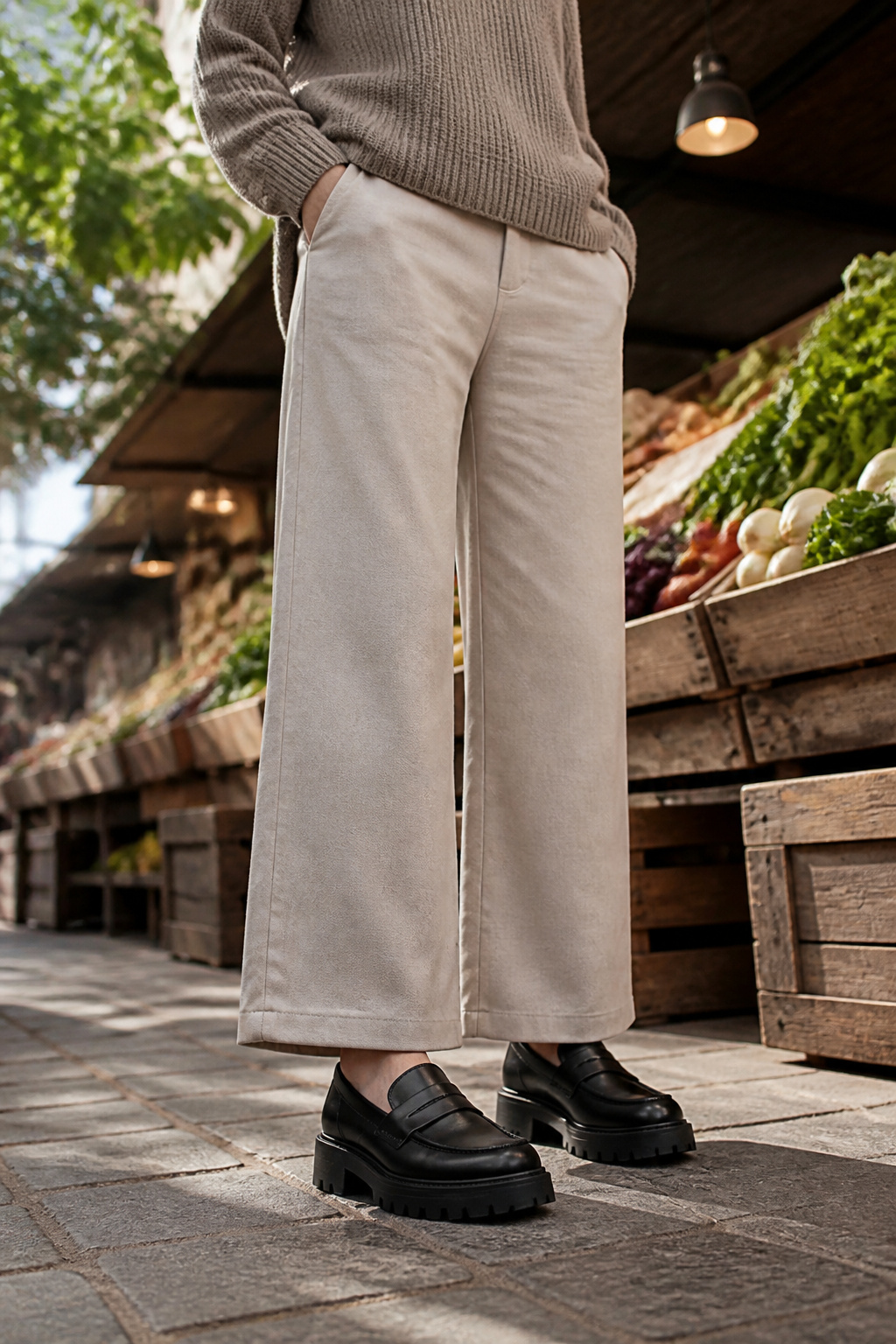
Chunky loafers live or die by proportion. Their thick outsoles and platform soles add real visual weight, so the rest of the outfit needs to either match that heft or deliberately contrast it.
For me, the sweet spot arrived after a few missteps. Wide-leg trousers with a long hem that breaks right at the shoe top give the lug sole something to anchor. Cropped or tapered pants work too, but only if you want the loafer to dominate the silhouette entirely. I tried them once with a slim ankle-grazer and the proportions felt off, like the shoe was wearing me.
The 90s reference is always lurking with this style. Lean too far into oversized suiting or layered knits and the whole look tilts retro. Keep lines cleaner, maybe a tonal outfit with contemporary tailoring, and the same shoe reads current. The difference from a classic penny loafer is attitude: penny loafers slot into polite settings almost invisibly, while chunky soles bring a utilitarian edge that works better for smart-casual or off-duty occasions than anywhere formal.
Flowy midi skirts and casual day dresses can balance the weight with softness, though I find this trickier than trousers. The shoe wants structure; give it too much volume on top and both pieces compete. Lug soles especially pair well with outdoor terrain and rainy days, so I reach for them when practicality matters as much as style.
Types of Loafers
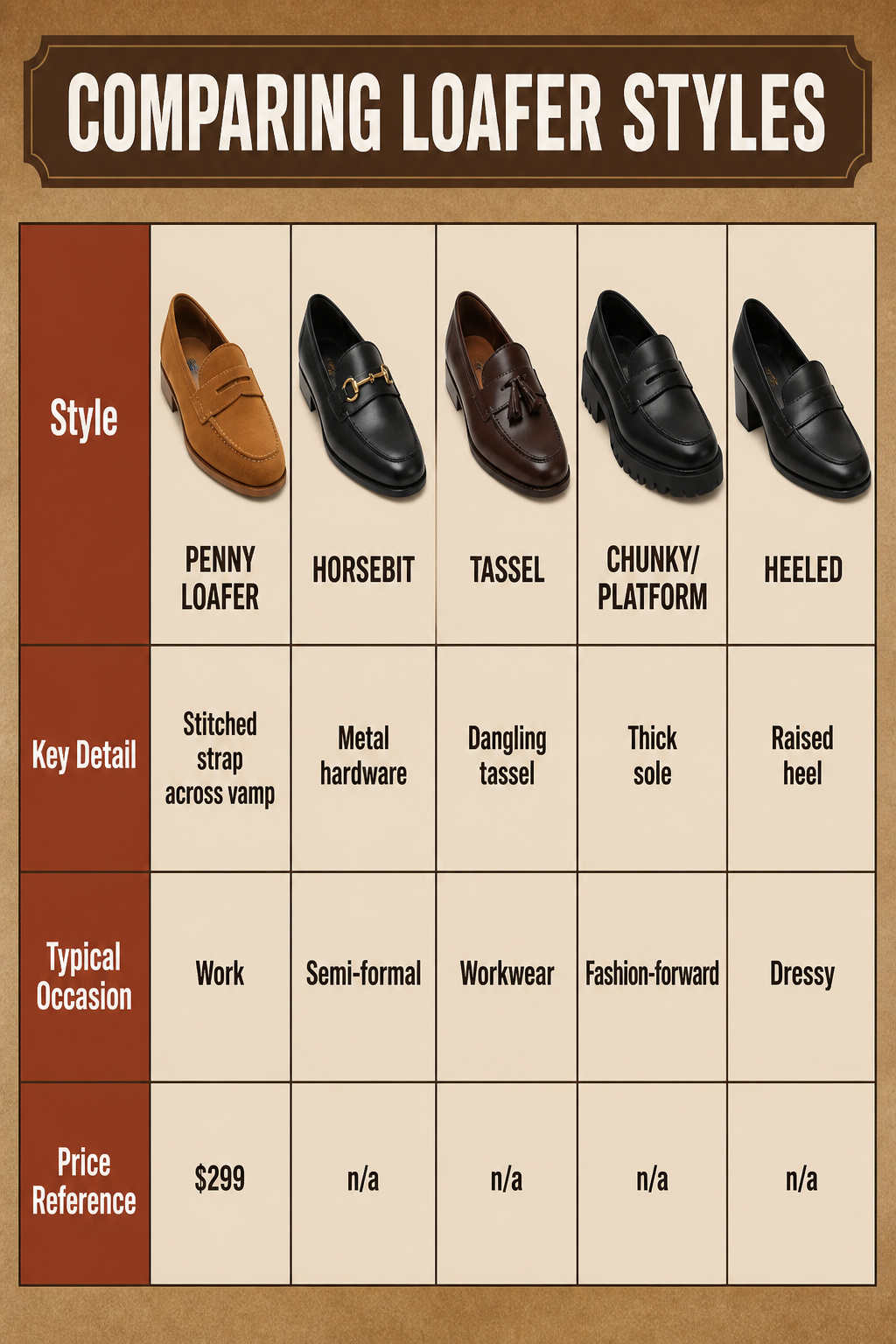
Loafers have been solving the same problem since the mid-20th century: most shoes are either too casual for the office or too formal for the weekend. The style that fits your life depends on which details you actually notice.
The penny loafer is the original, with that stitched strap across the vamp where people once tucked a coin. Classic Dan’s version runs $299 in both the Chauna Ochre Tan Suede and the Emutail Black Leather. It reads vintage-inspired and timeless, which means it works with tailoring or jeans without trying hard.
Horsebit loafers add polished metal hardware across the front. Gucci’s 1953 model defined the look, and that bit of flash pushes the shoe toward semi-formal and elevated occasions where a plain penny might look underdressed.
Tassel loafers, like those from Alden, trade restraint for movement. The dangling detail reads dressier and more deliberate, ideal for workwear or smart-casual settings where you want the shoe to carry some of the outfit’s personality.
Chunky and platform soles flip the script entirely. Thicker soles and bolder lines move the loafer from classic underpinning to fashion-forward statement, which changes what you pair them with and how much visual weight they pull.
Heeled loafers split the difference between comfort and lift. They keep the slip-on ease but add enough height to read dressed-up while staying grounded, literally.
| Style | Key Detail | Typical Occasion | Price Reference |
|---|---|---|---|
| Penny loafer | Stitched strap across vamp | Work, smart casual, weekend | $299 (Classic Dan) |
| Horsebit | Metal horsebit hardware | Semi-formal, elevated looks | n/a |
| Tassel | Dangling tassel detail | Workwear, smart-casual | n/a (Alden) |
| Chunky/platform | Thick sole, bold lines | Fashion-forward, statement | n/a |
| Heeled | Raised heel | Dressy while grounded | n/a |
Occasions to Wear Loafers

Loafers have held their place as a decades-long staple, and right now the style is strong enough that the question isn’t whether to wear them but where. The range of loafer types maps cleanly to settings if you match the right pair to the right moment.
- Casual outings: Driving loafers with soft soles work for summer days and relaxed weekends. Their comfort comes from the flexible construction meant for exactly what the name suggests.
- Office and business-casual: Penny loafers bridge traditional workwear and smart events without a second thought. Heeled loafers, most often built on block heels, add a leg-lengthening lift that reads more sophisticated while keeping the same androgynous base.
- Formal settings: Horsebit loafers carry enough refined, Italian-leaning detail to pair with suiting. Tassel loafers do similar duty for both casual and tailored outfits, the tassels adding character that reads intentional rather than afterthought.
- The in-between: Chunky loafers with modern soles and bold lines push into street-style territory. They handle the gap between office and evening when you want something that reads current rather than classic.
How do you wear loafers? That’s a little bit like asking how to eat rice.
— GQ
The point holds: the shoe’s variety is the whole point. Start from the setting, pick the loafer type that matches its formality level, and the outfit builds from there.
Socks With Loafers
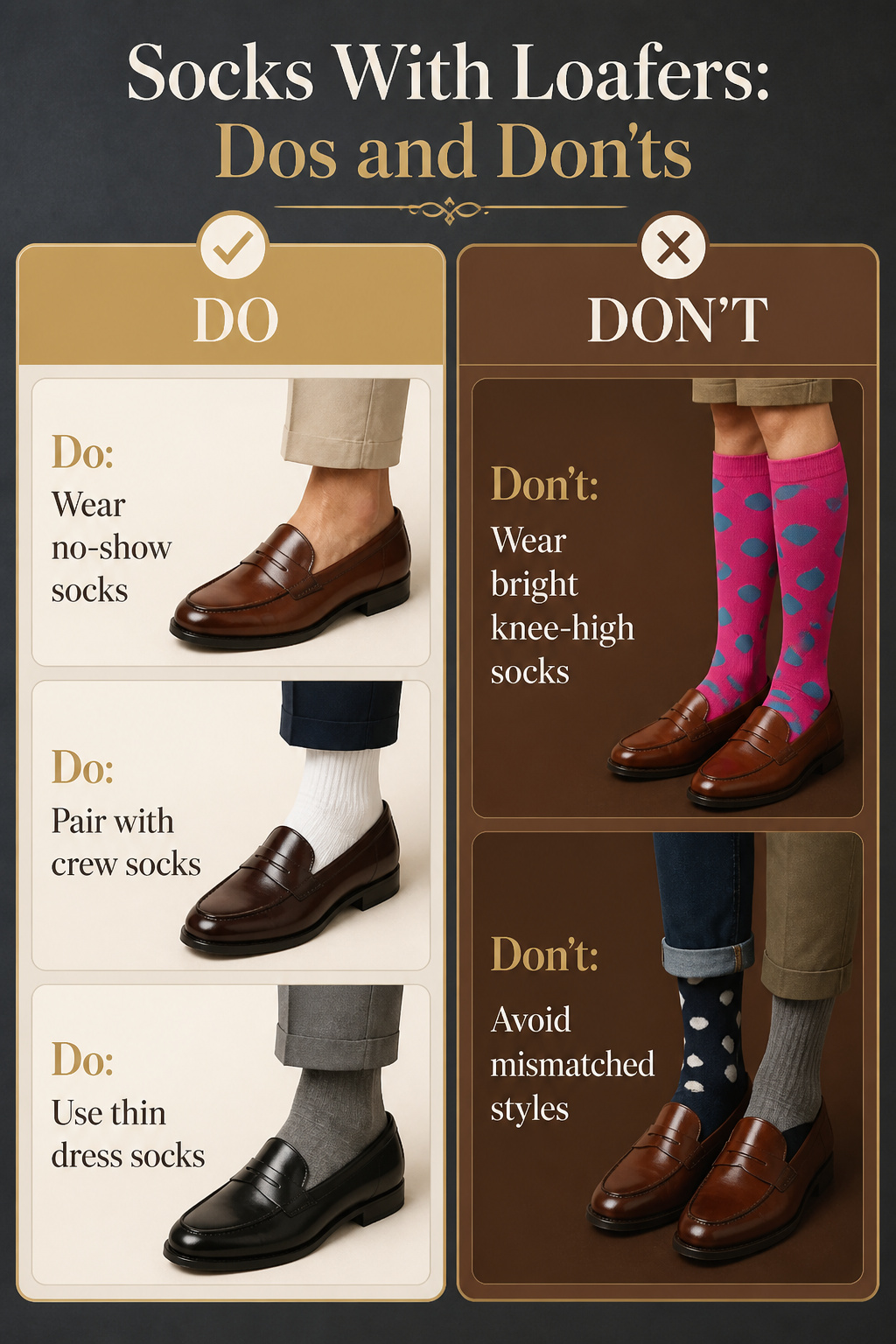
The question of whether to wear socks with loafers depends entirely on the look you’re after and the season. Each length carries a specific signal.
- No-show socks disappear entirely above the shoe line, giving that bare-ankle effect that reads casual and works best in warmer months. The comfort trade-off is real: a thin no-show keeps the foot from slipping and blistering without breaking the line of slim or cropped pants.
- Crew socks, especially crisp white ones, pull the look toward a classic collegiate or preppy territory. They create deliberate space between the loafer and the pant hem, which can also shift how long the leg appears visually. Colored crews add contrast and personality, though they read more playful than polished.
- Thin dress socks in a neutral tone bridge the gap for office settings or cooler weather when a bare ankle isn’t an option. They keep the outfit put-together without drawing attention downward.
For the bolder statement sock route (patterned, bright, or knee-high), see the Playful Socks Styling section earlier in this guide. The functional rule is simple: match the sock visibility to the formality of the rest of the outfit, and let the shoe’s leather finish lead the pairing.
Care Tips for Loafers

A pair of $300–$1000 loafers earns its price only if the leather outlasts the first season. The maintenance is straightforward but the timing matters.
- Clean every 10 to 15 wears, or sooner if dirt builds up. A quick brush-down after each wear keeps suede from embedding grime; leather gets the same wipe but less often.
- Condition leather with wax polish every 3 to 6 months. The leather dries out faster than most people expect, and once it cracks the shoe never recovers its shape.
- Insert shoe trees after each wear. Cedar pulls moisture and holds the toe box so the vamp doesn’t collapse inward.
- Rotate pairs and let each rest 48 hours between wears. The insole and lining need time to dry or the structure softens unevenly.
- Resole when the welt is intact but the tread is worn. Once the upper leather or the welt itself splits, replacement usually makes more sense than repair. A cobbler can judge which side of that line you’re on.
Frequently Asked Questions
What do you wear with loafers?
Loafers pair with almost everything: cuffed raw denim, tailored trousers with a slight to half-break, midi and mini dresses, Bermuda shorts, and full suiting. The shoe’s structure adds intention where sneakers would read leftover, and its slip-on ease works across casual outings, business casual offices, and semi-formal events.
Should you wear socks with loafers?
Yes, and the choice is deliberate. No-show socks give a bare-ankle look with cropped pants in warm months; crisp white crew socks channel collegiate prep; thin dress socks in subdued shades keep office outfits polished. Match the sock to either the loafer color or the outfit’s dominant tone, never let it float between the two.
Can you wear loafers with a dress or skirt?
Yes, and they read as intentional rather than a heel replacement. Midi and mini lengths work best; maxi skirts tend to swallow the shoe. A heeled loafer gives posture without wobble for long standing days, and horsebit hardware catches light against solid dresses without the noise of a full metallic shoe.
Are loafers in style?
Yes, and they have been for decades because they solve a real wardrobe gap: most shoes skew too casual for the office or too formal for the weekend. The current range runs from classic pennies and horsebits to chunky platforms and heeled versions, so the variety itself is the point rather than a single trend cycle.