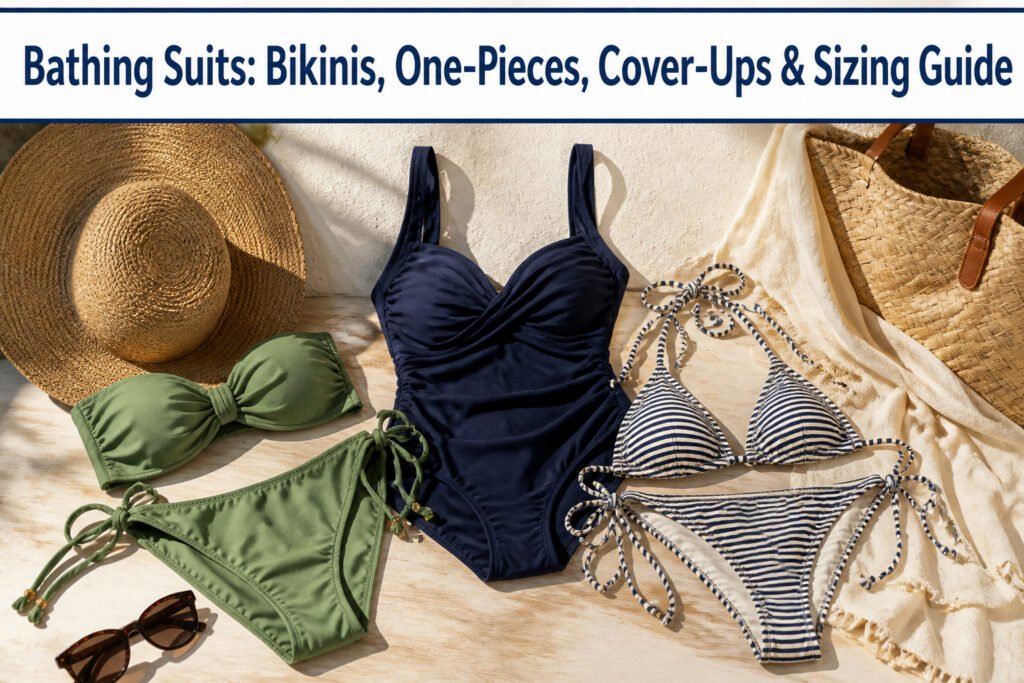
A bathing suit is any garment designed for swimming or sun exposure, from a string bikini to a full-coverage one-piece.
The catch is that sizing behaves differently in water; the same nylon-spandex blend loosens roughly half a size once saturated, which is why a dry fit that feels almost too snug is the one you want to buy.
Victoria’s Secret’s current SwimSatin line, with bikini tops running 32A through 40DDD and one-pieces crossing back into halter or strapless configurations, illustrates how much range matters when that initial tightness determines whether the suit stays put past the first wave.
Bikinis
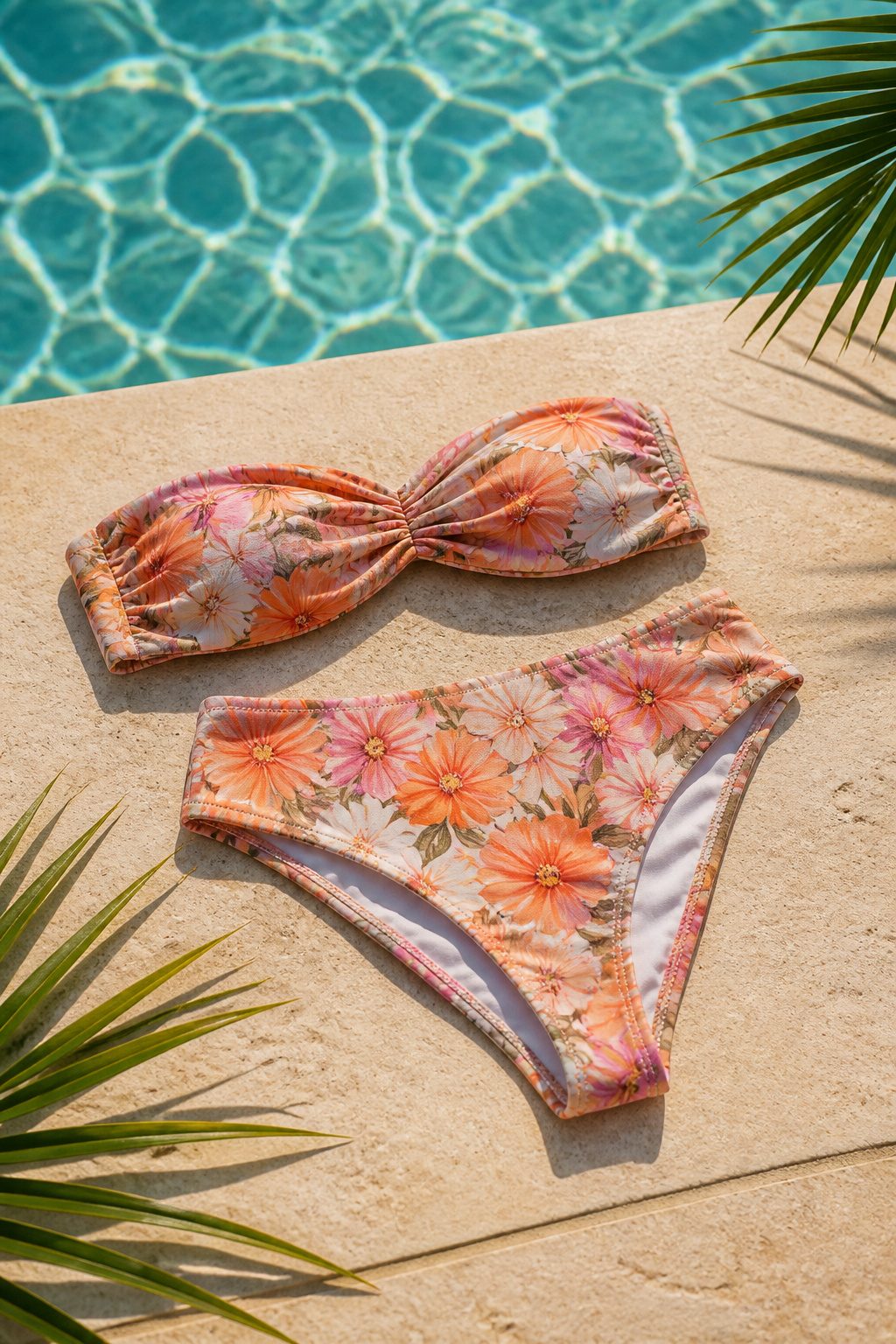
Two-piece suits reward the mix-and-match approach more than any other swimwear category. A bandeau top keeps tan lines clean, though the smarter versions ship with convertible straps for when you want actual support.
Halter cuts tie at the neck and adjust to most bust shapes without much fuss. For real lift, push-up styles with underwire and cup padding do the work.
Underwire tops alone, shaped like a standard bra, handle fuller busts with the same structure you’d expect from lingerie.
The Victoria’s Secret SwimSatin Shine Twist Push-Up Bikini Top runs $35.97, marked down from $59.95, with the matching high-waist cheeky bottom at $29.97, down from $49.95. Sizing spans XS through XXL, cups A to DDD, and bands 32 to 40.
That range matters: a 32B and a 38DDD shopper can both buy into the same set without hunting different collections.
One-Piece Swimsuits
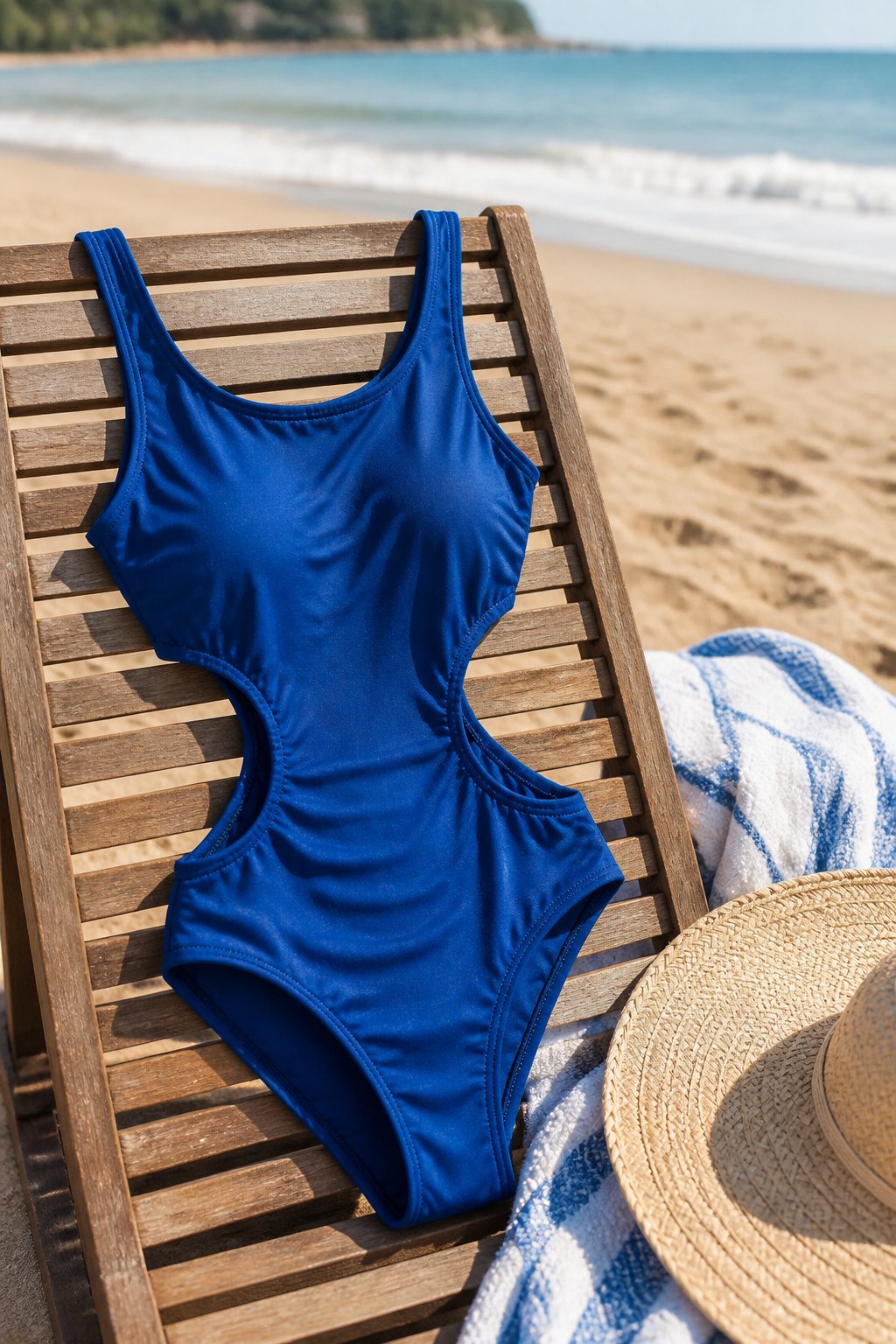
A classic one-piece still handles the water better than anything else. More fabric means no adjusting straps mid-lap, and the cut keeps you covered for volleyball or chasing kids through the surf.
The monokini splits the difference with side cutouts that read playful from the lounge chair but stay put when you stand up. Tankinis borrow the same coverage while letting you peel off the top without the full reveal.
For anyone who wants smoothing, shaping suits use targeted panels to streamline the silhouette without the squeeze of vintage girdle swimwear.
The Victoria’s Secret SwimSatin Shine Multiway One-Piece Cheeky Swimsuit sits at $59.97, down from $99.95, and the multiway straps matter more than the discount.
You can cross them, halter them, or go strapless, which turns one suit into three depending on the tan lines you’re willing to collect. The cheeky cut keeps it from looking matronly, though you’ll sacrifice some seat coverage for that.
I tend to reach for the classic leg line when I know I’ll actually swim; the higher cuts photograph well but ride up when you move.
Cover-Ups
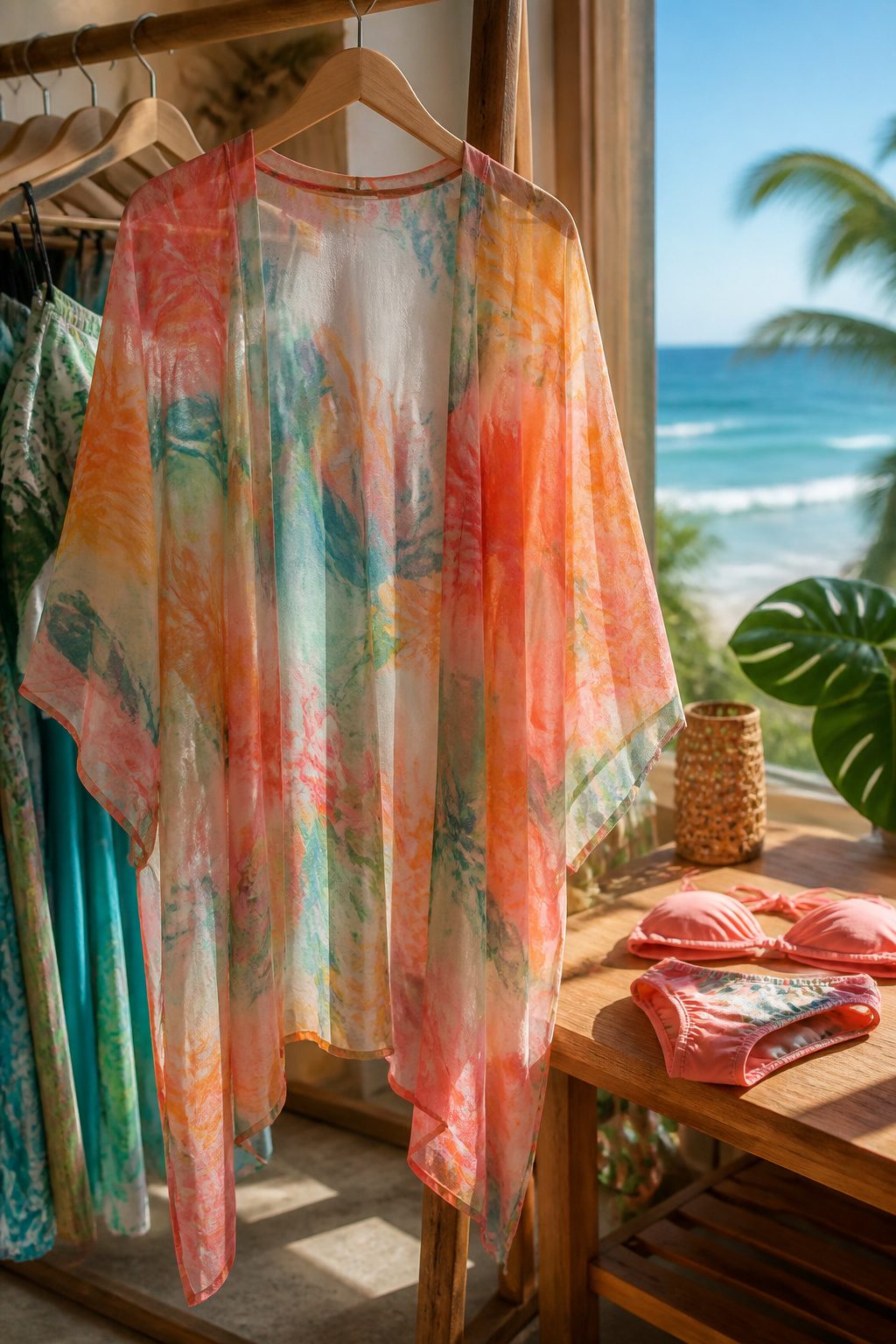
A cover-up is the piece that keeps you from walking into a beachside restaurant in nothing but a wet bikini.
Sarongs, crochet tops, and light beach dresses all do the same job: they dry fast, weigh almost nothing, and save you from changing in a cramped bathroom stall.
The best ones feel like wearing almost nothing but still read as dressed.
I used to pack full outfits for post-beach plans and never wore them. A long-sleeve linen shirt over a suit works, but a purpose-built cover-up breathes better and doesn’t cling where you don’t want it to.
The Victoria’s Secret collection runs to sarongs, crochet tops, and beach dresses, which gives you three ways to solve the same problem depending on how much coverage you actually want.
Sizing here is forgiving in a way swimsuits are not. You want loose, not structured.
If it touches your body anywhere the wet suit already does, it’s too tight and you’ll still feel damp. The light layer should help you dry quickly, not trap moisture against your skin.
Swim Accessories
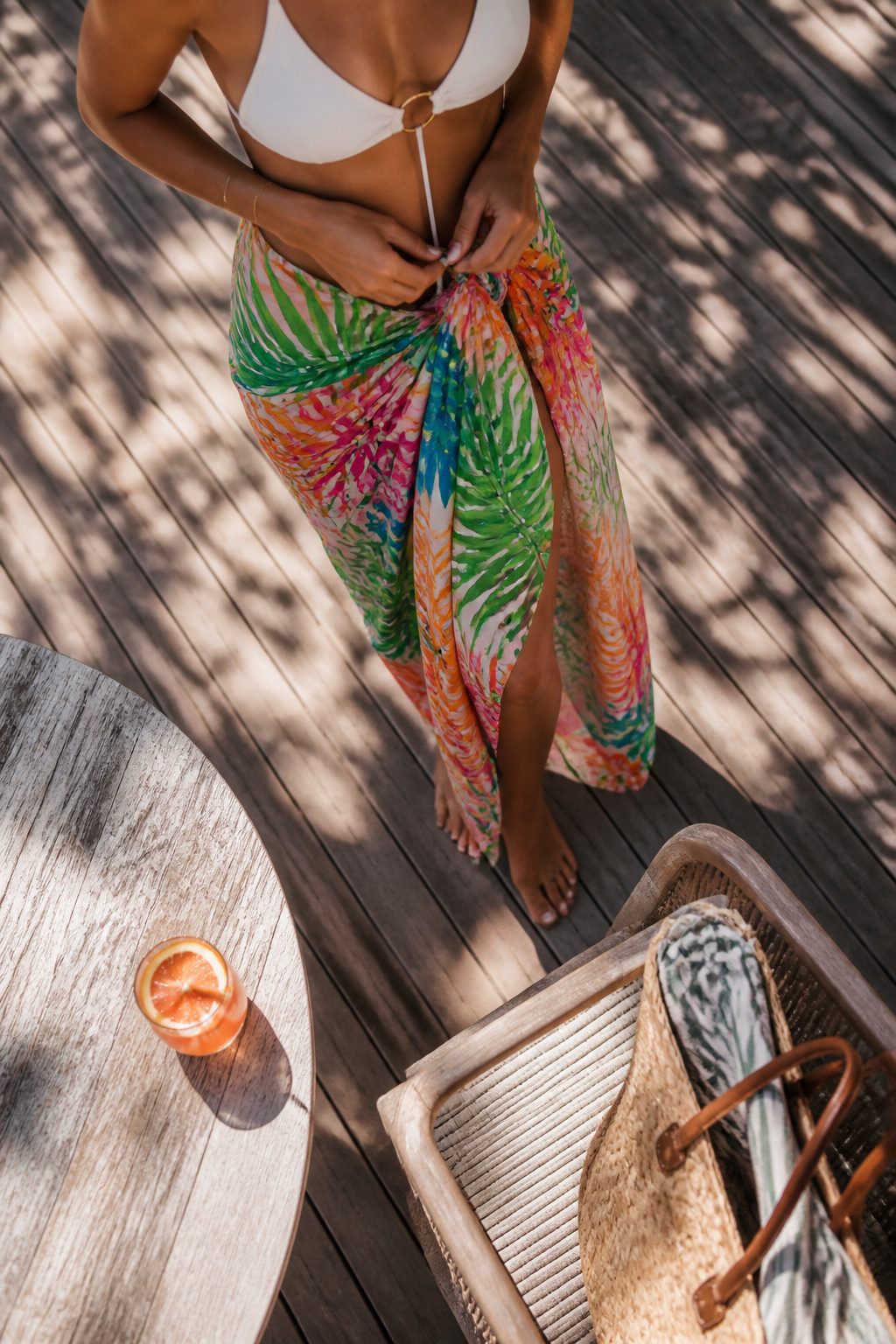
A sarong tied at the hip has saved more than one afternoon when the breeze turned sharp or the restaurant required more than a wet bikini.
The thin cotton dries fast and weighs almost nothing in a tote, which is why I keep one in the car even for pool trips that were supposed to be quick.
Beach dresses do the same job with less fuss: slip it on and the transition from sand to sidewalk takes about ten seconds.
Crochet tops work best over a suit that already has structure, since the open weave offers style without real coverage. The light, breezy layer is what keeps you comfortable once the sun drops or the air conditioning hits.
These pieces also extend how many hours a single swimsuit can wear. Morning swim, lunch at a boardwalk counter, a walk back to the car, all without a full change of clothes.
That’s the practical case for owning at least one cover-up even if you pack minimally for beach days.
Swimwear for Different Body Types
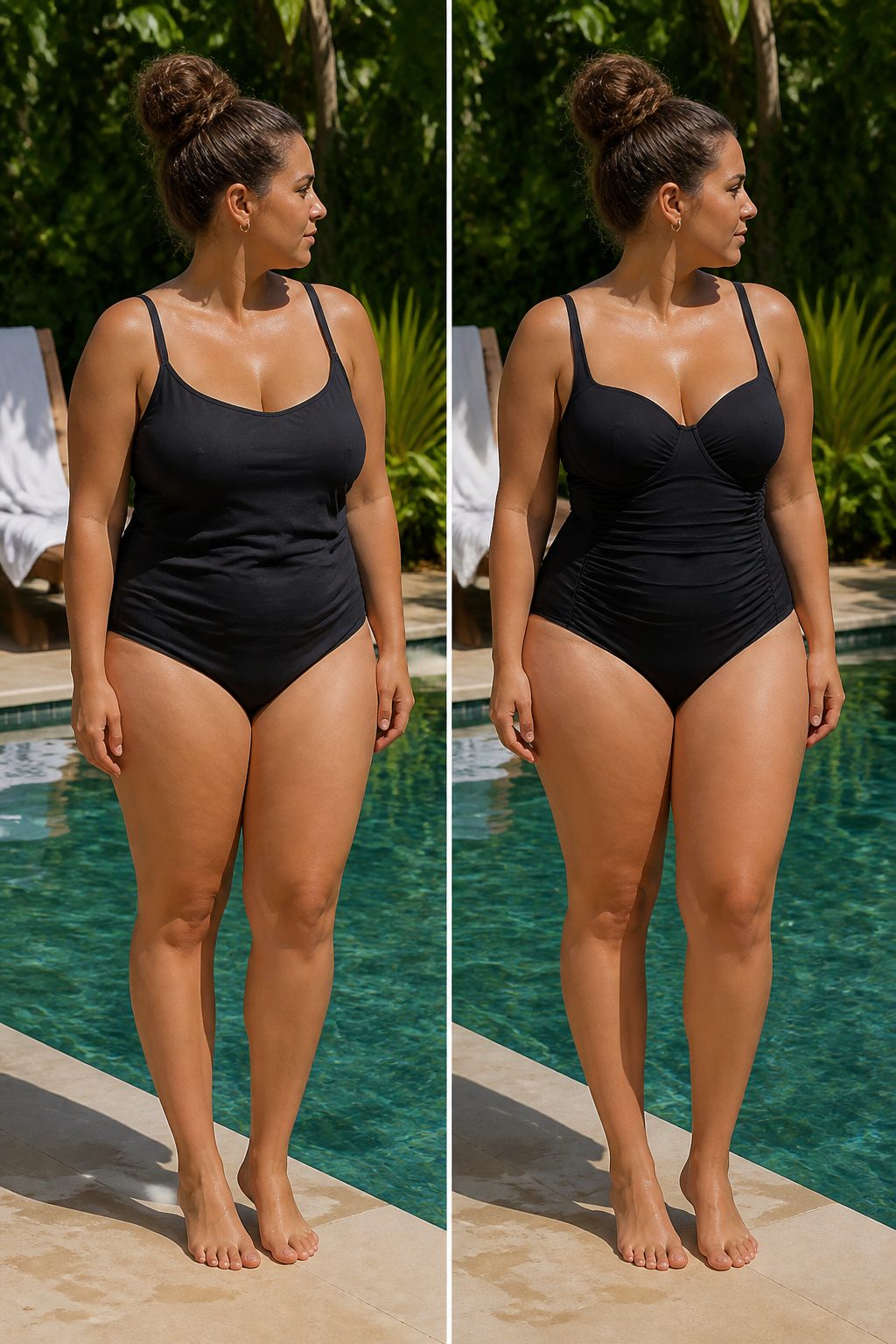
Body shape changes what "flattering" actually means in a bathing suit.
An hourglass figure usually gets the most mileage from defined waists and balanced coverage, while pear shapes often want visual weight shifted upward: lighter colors or details on top, cleaner lines below. Apple and straight builds invert that logic.
What flatters an apple tends to gathering or ruching around the middle, and straight shapes often need added curves through cut or pattern.
The right fit matters more than the right category. Two one-pieces in the same size can sit completely differently depending on torso length, strap placement, and whether the fabric has any stretch recovery.
A suit that gaps at the waist or rides at the hip is doing the wrong work for your shape, no matter what the label claims it flatters.
I spent enough time in fitting rooms to stop trusting silhouettes at face value. The wrap-style one-piece that looked sculptural on a hanger pooled awkwardly on my shorter waist.
The high-cut brief supposed to lengthen legs cut into a wider hip differently than the narrow one it was clearly drafted on. Testing three sizes of the same suit taught me more than any single "best for" list.
Swimwear Fit and Sizing
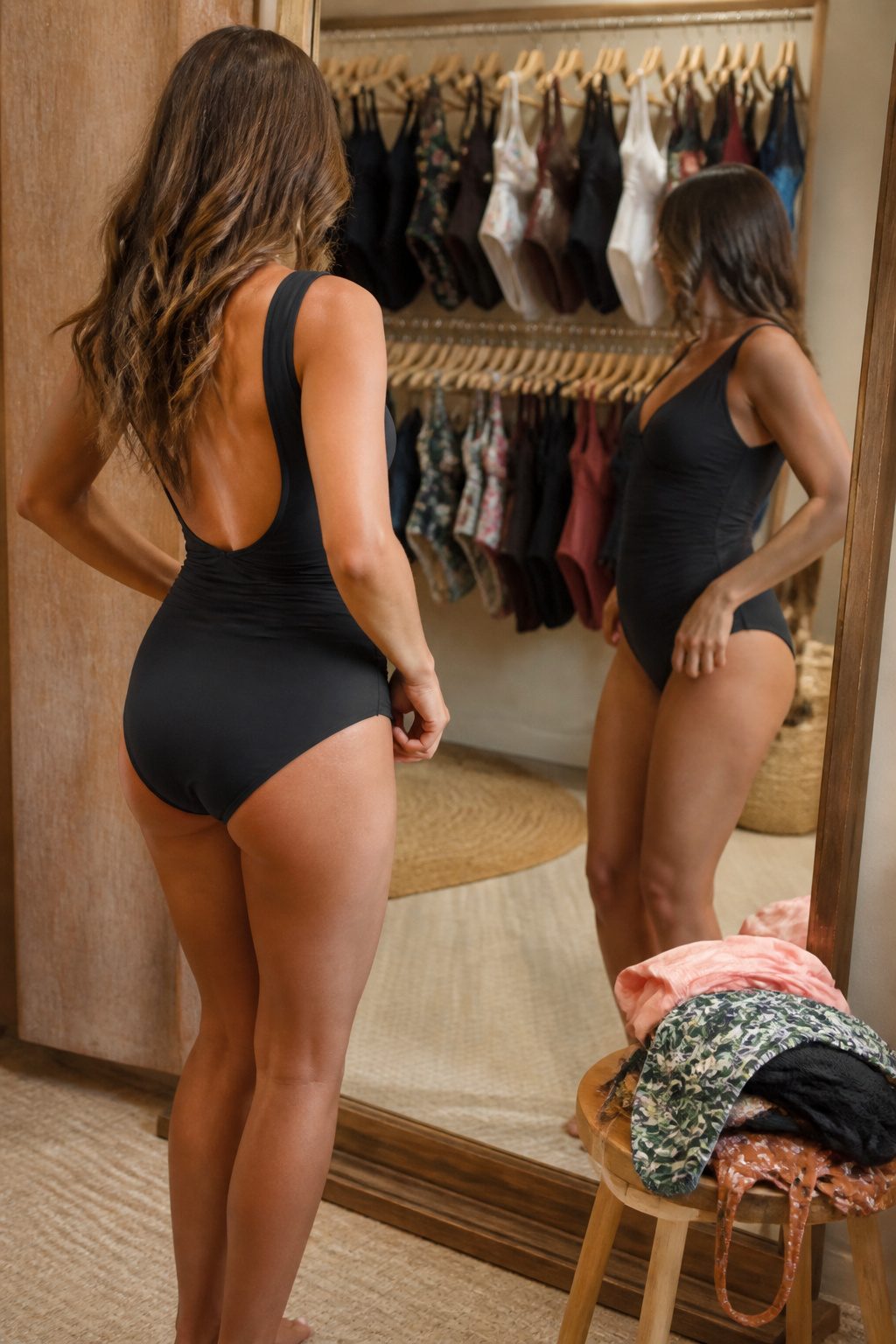
A bathing suit that fits right in the fitting room will feel almost too snug when it is dry. The fabric is engineered to loosen once it hits water, so that initial tightness is the suit doing its job.
Stick to your normal size rather than sizing up for comfort; go larger and you will be tugging at straps and adjusting seams all afternoon.
Trying on matters because a suit changes shape against your body in ways the hanger cannot predict. The bust line shifts, the leg opening rides higher or lower, the torso length either smooths or bunches at the waist.
A size that works in a dress or a pair of jeans maps directly onto swimwear; the labels use the same grading. The only adjustment to make is mental: expect compression at first, trust that water releases it.
Swimwear Trends
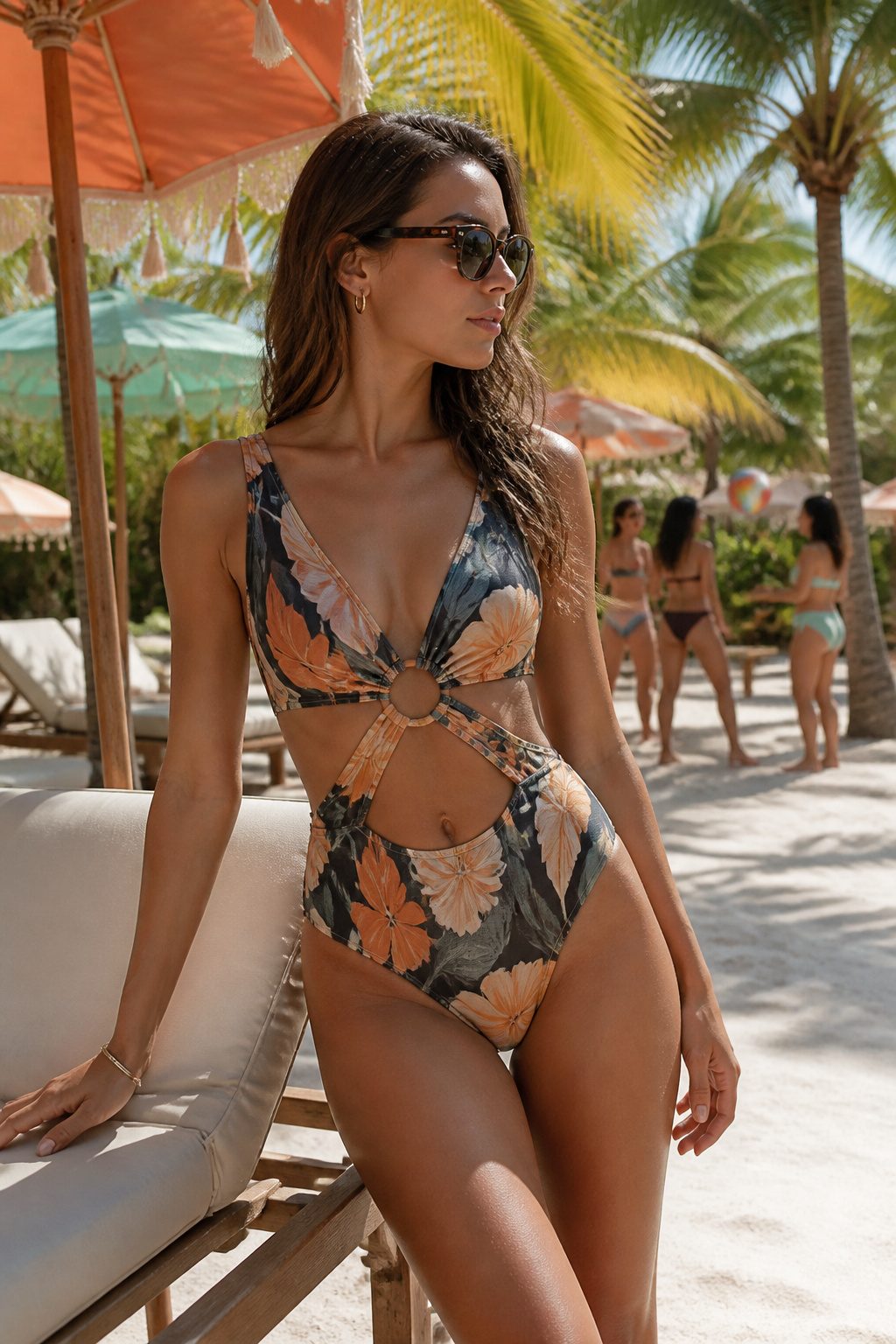
Classic cuts still dominate most racks, but the details keep shifting. A simple one-piece with clean lines carries the same ease it did decades ago, and the coverage works for anyone who plans to actually swim or move around.
Cut-outs on a monokini add interest without sacrificing that security, and tankinis split the difference: two-piece convenience with the look of one. Shaping panels have gotten subtler, smoothing without the heavy structure that used to announce itself.
What surprised me, looking through this season’s options, was how little the starting prices have moved. Bikini sets starting at $49 put a full Victoria’s Secret lineup within reach for a weekend trip or a full summer rotation.
Make a splash in timeless bathing suits you’ll keep season after season… our collection of swimwear offers a wide range of styles, sizes, and fits that celebrate every body.
That range matters more than the trend cycle lets on. A suit you reach for year after year beats three that sit in the drawer because the cut hit one summer and missed the next.
Finding Your Most Flattering Silhouette
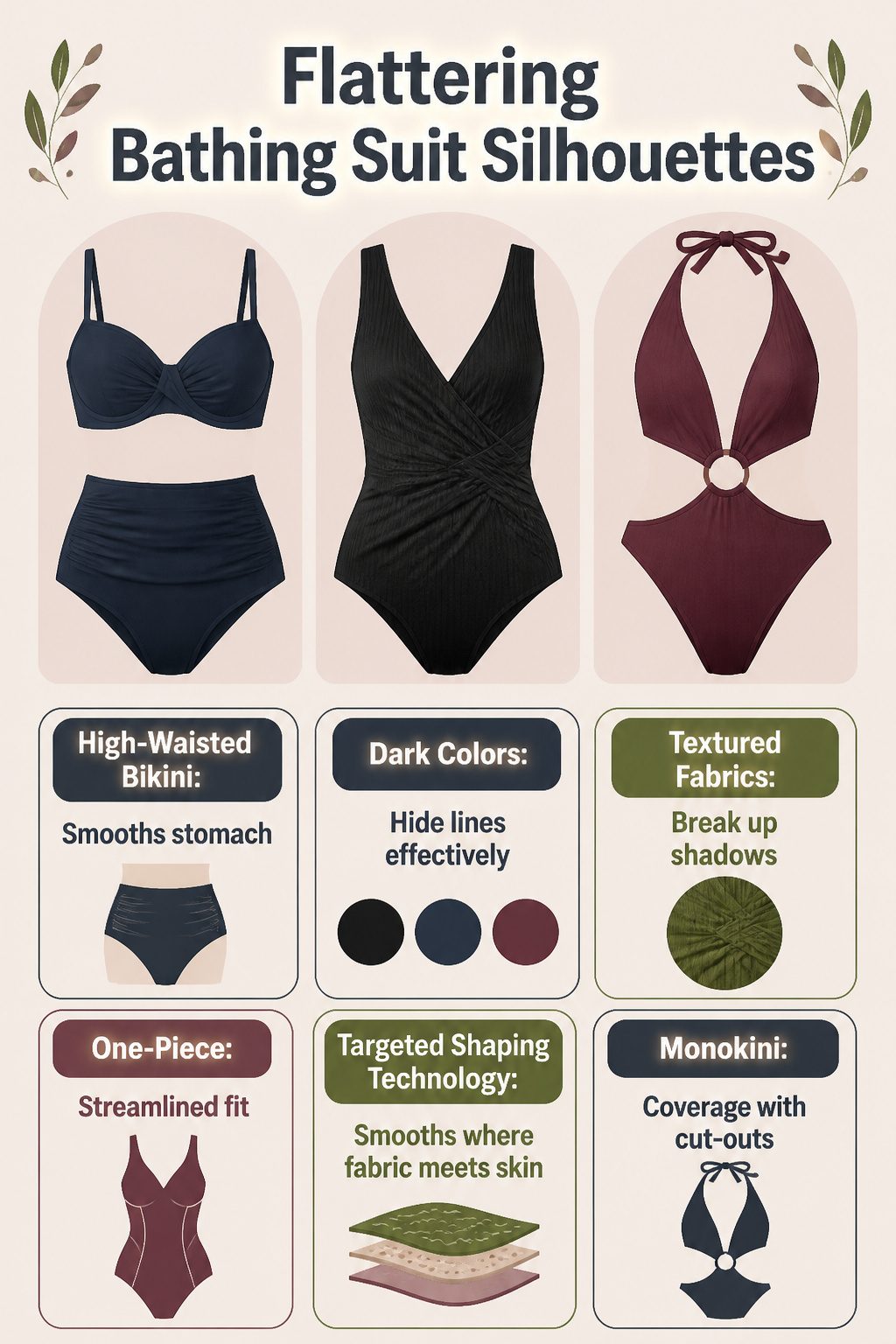
Streamlined elements do the actual work of making a bathing suit flattering, not the cut alone.
A high waisted bikini bottom smooths the stomach and cinches the waist where it sits, which is why I reach for that rise when I want clean lines without thinking about it.
Dark colors like black, navy, and deep shades hide lines rather than draw the eye to them, and ruched, ribbed, or textured fabrics slim by breaking up shadows across the body.
One-piece suits with targeted shaping technology go further, smoothing and streamlining where the fabric meets skin. The monokini plays a different game, offering the coverage of a one-piece with cut-outs that create shape through negative space rather than compression.
I skip the all-black default more often than I keep it, but the texture rule holds across every color I have tried.
How to Try a Swimsuit On
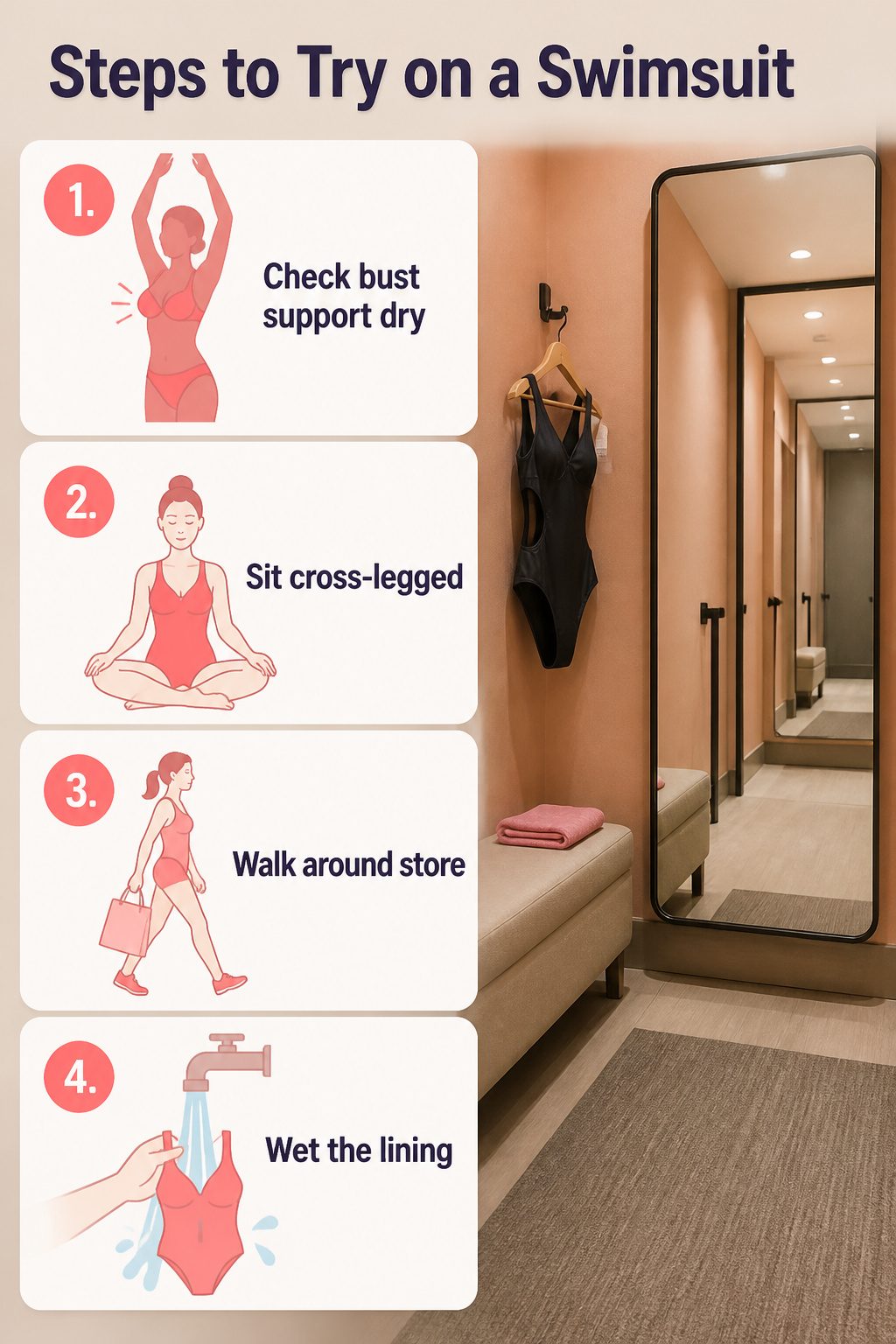
A swimsuit changes once it hits water, so what convinced me, reading through a dozen of these fit guides, is that the dry fitting matters more than most people bother with.
- Check the bust support dry. Lift your arms straight overhead. If the cups gape or the band hikes toward your neck, that looseness doubles once the fabric saturates. Suits with underwire or shelf lining should sit flush against your sternum without poking.
- Sit down cross-legged on the fitting room floor. The torso length reveals itself in this position; many one-pieces that look fine standing will pull uncomfortably at the crotch when you bend. The fix is usually sizing up or switching to a long-torso cut, not a different style entirely.
- Walk around the store for five minutes with the tags still on. Straps that feel merely snug now will dig after twenty laps. Red marks forming that quickly mean the elastic is too aggressive or the suit is too small.
- Wet the lining if the store allows it, or at least run it under a faucet at home before removing tags. Nylon-spandex blends loosen roughly half a size when saturated. A suit that feels perfect dry will sag dangerously once you swim; buy it firm, not comfortable.
What Changes Which Styles Sell
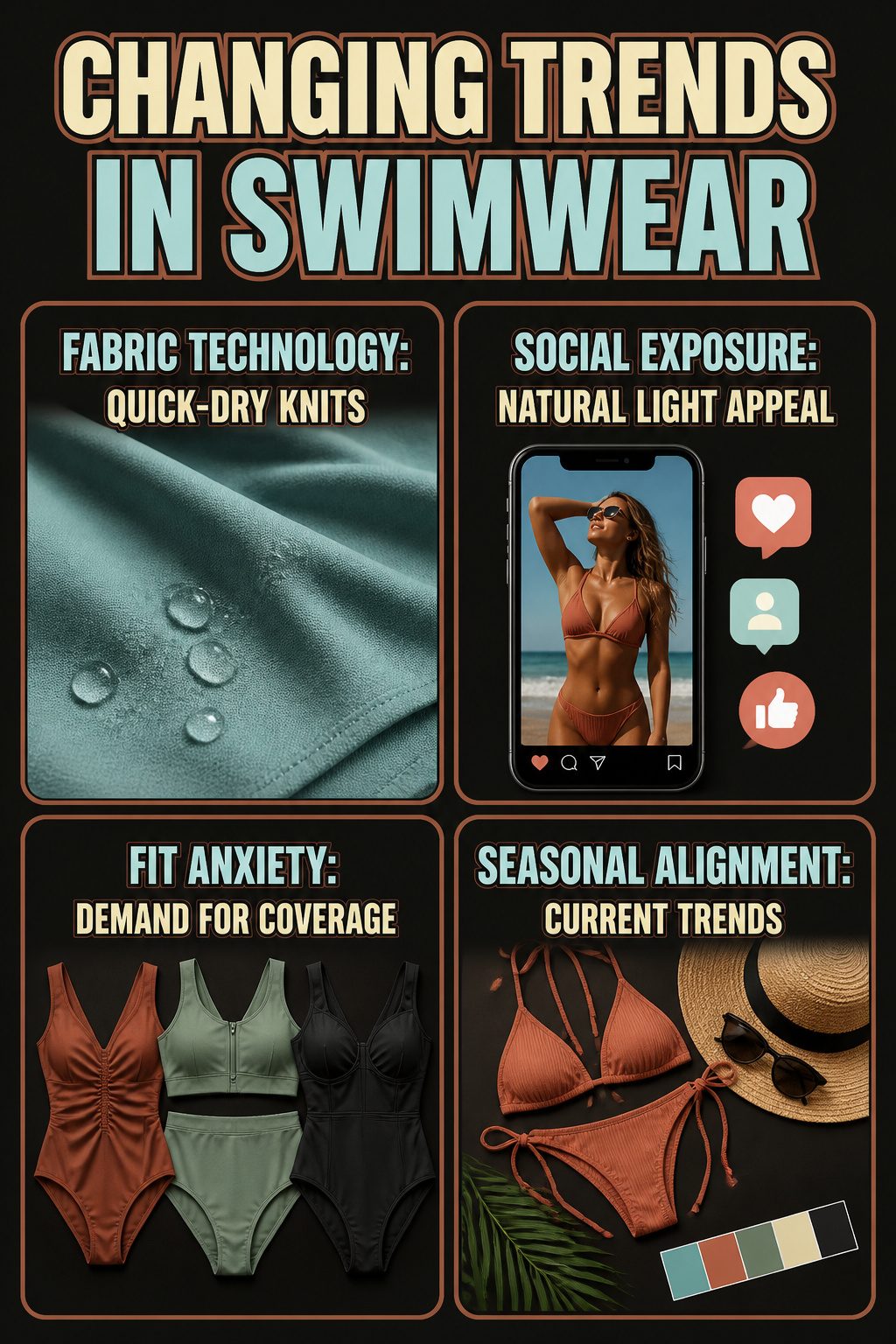
Trends in bathing suits turn on a few practical forces, and watching them shift season to season is what convinced me the market is less fickle than it looks.
Fabric technology moves first: a new quick-dry knit or a recycled fiber that actually holds its shape in chlorine can push a whole silhouette from niche to mainstream once enough people try it and talk.
Social exposure runs second, though not in the way marketing departments hope.
A cut that photographs well in natural light, that sits right when someone is standing and when they are mid-motion in a video, will outpace a technically better suit that dies on camera.
The third force is fit anxiety, which swings like a pendulum. After a run of minimal styles, demand for more coverage and structural support builds until someone solves the problem elegantly; then the cycle reverses.
What is selling right now reflects a moment where those three forces have temporarily aligned: performance fabric, camera-ready lines, and enough construction that most bodies do not have to fight the garment.
That alignment will break, probably within two seasons, when one element overshoots and the others lag.
Frequently Asked Questions
What is the most flattering swimwear?
The most flattering bathing suits use streamlined elements to smooth your silhouette. A high waisted bikini bottom cinches the waist and flattens the stomach, while dark colors like black or navy hide lines rather than draw attention to them.
Ruched, ribbed, or textured fabrics slim by breaking up shadows across the body, and one-pieces with targeted shaping panels go further by compressing where the fabric meets skin.
Is it better to size up or down in swimsuits?
Stick to your normal size. Bathing suit fabric is engineered to loosen once it hits water, so that slightly snug feeling dry is the suit doing its job.
Size up for comfort and you will spend the afternoon tugging straps and adjusting seams; the same grading system used for dresses and jeans applies here, with the only adjustment being mental.
How do I find the right swimsuit for my body type?
The right fit matters more than the category label.
An hourglass shape usually benefits from defined waists and balanced coverage, pear shapes often want visual weight shifted upward with lighter colors or details on top, and apple builds do well with gathering or ruching around the middle.
Two suits in the same size can sit completely differently depending on torso length, strap placement, and stretch recovery, so trying on beats trusting any "best for" list.