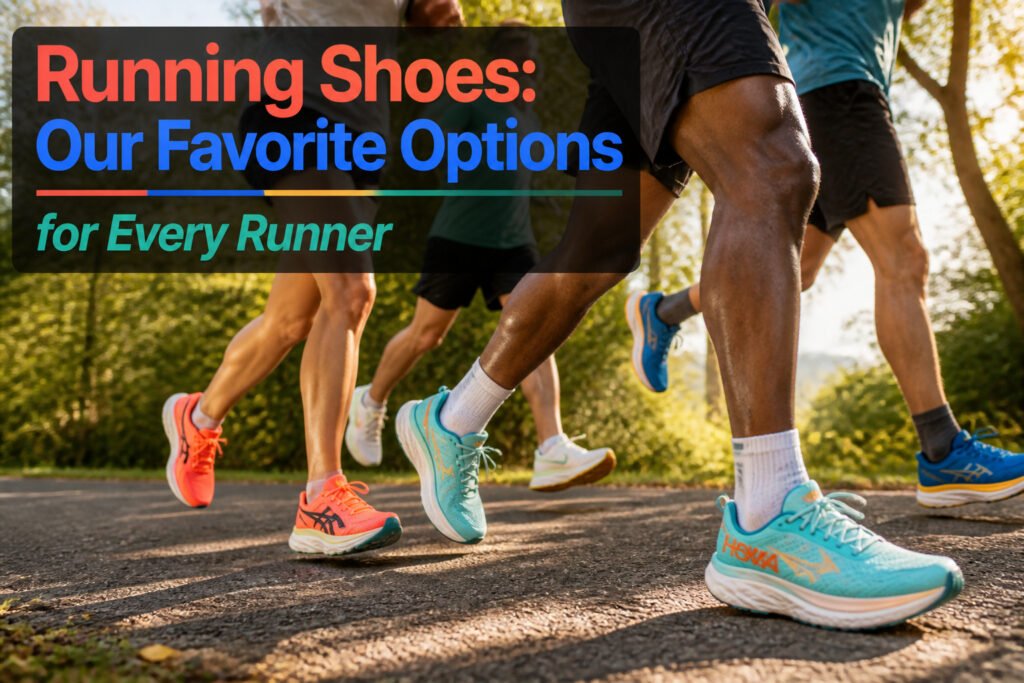
Running shoes are foam-and-rubber tools built to absorb road impact and return enough energy to keep a stride efficient over distance. The catch is that no single shoe handles every run well; a $140 Skechers Aero Razor rewards quick turnover with a carbon-infused wing plate, while a $175 Hoka Bondi 9 stacks 43 millimeters of foam to spare tired calves on recovery days. Match the shoe to the workout, or the wrong midsole will cost you more than the price tag.
Best Overall Daily Trainer
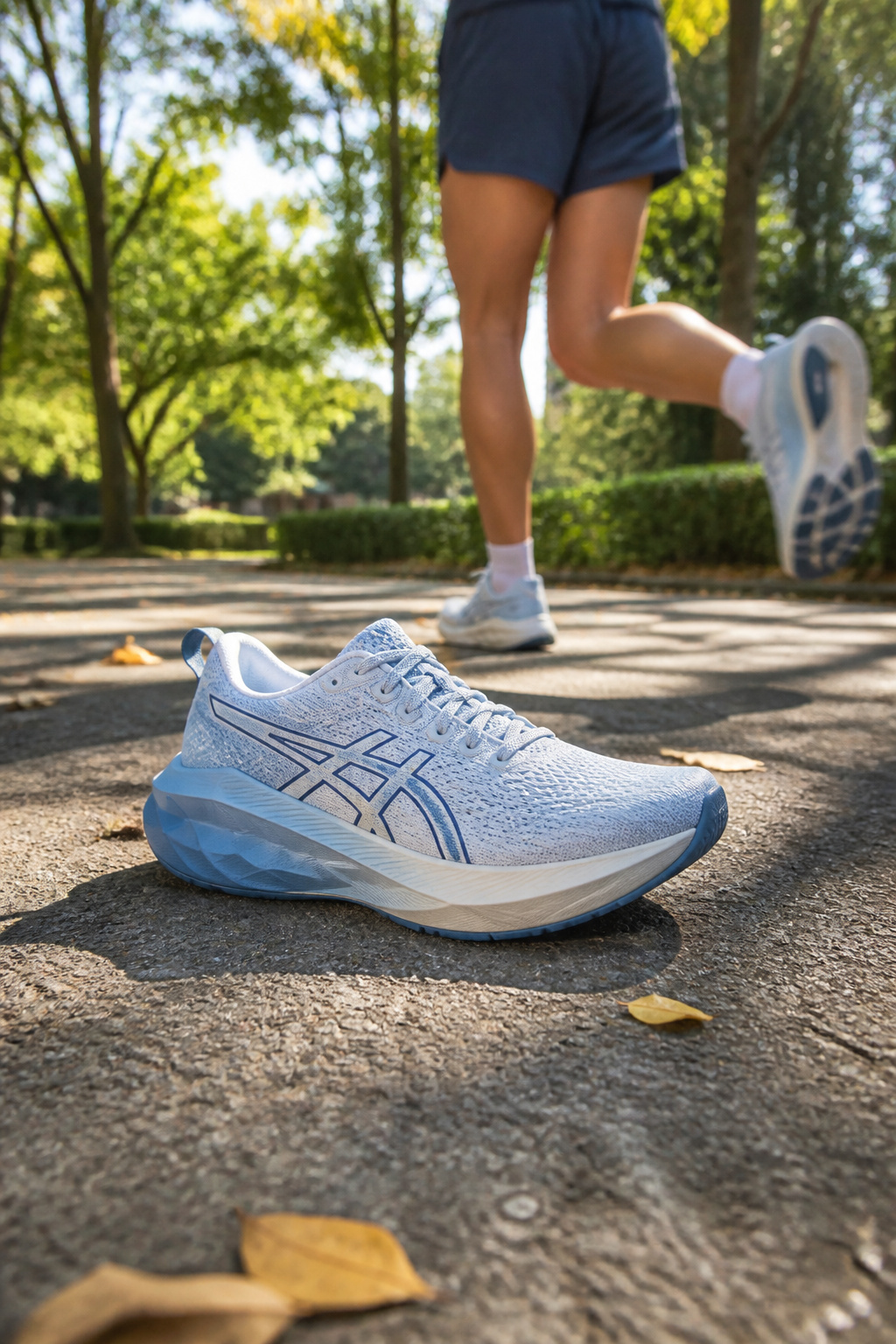
A shoe that can handle easy Tuesday miles and still pick up the pace on Saturday long runs without feeling like a compromise is the one most runners actually need in their rotation. The Asics Superblast 3 nails that brief at $210, with a men’s 9 weighing 8.4 oz and a women’s 10.5 at 10.5 oz. The stack sits at 46.5–38.5 mm with an 8 mm drop.
What makes it work is the new dual-density midsole: a 10 mm base layer of FF Blast+ foam for light stability, topped with a thicker slab of FF Leap, Asics’ newer A-TPU superfoam. The result is soft and energetic without the mushy feel that can suck efficiency out of faster efforts. One tester called the bounce "more spring than I was expecting," which matters when you’re trying to hold marathon pace on tired legs.
At that weight-to-cushion ratio, the Superblast 3 saves energy over longer distances. The woven mesh upper and padded heel collar also solved some comfort complaints from the previous version. The only real hit against it is audible footstrikes, and some runners who preferred the firmer Superblast 2 may find this one too plush. For most daily training, though, that plushness translates to less fatigue without sacrificing enough response to feel dead on tempo day.
Best Value Running Shoe
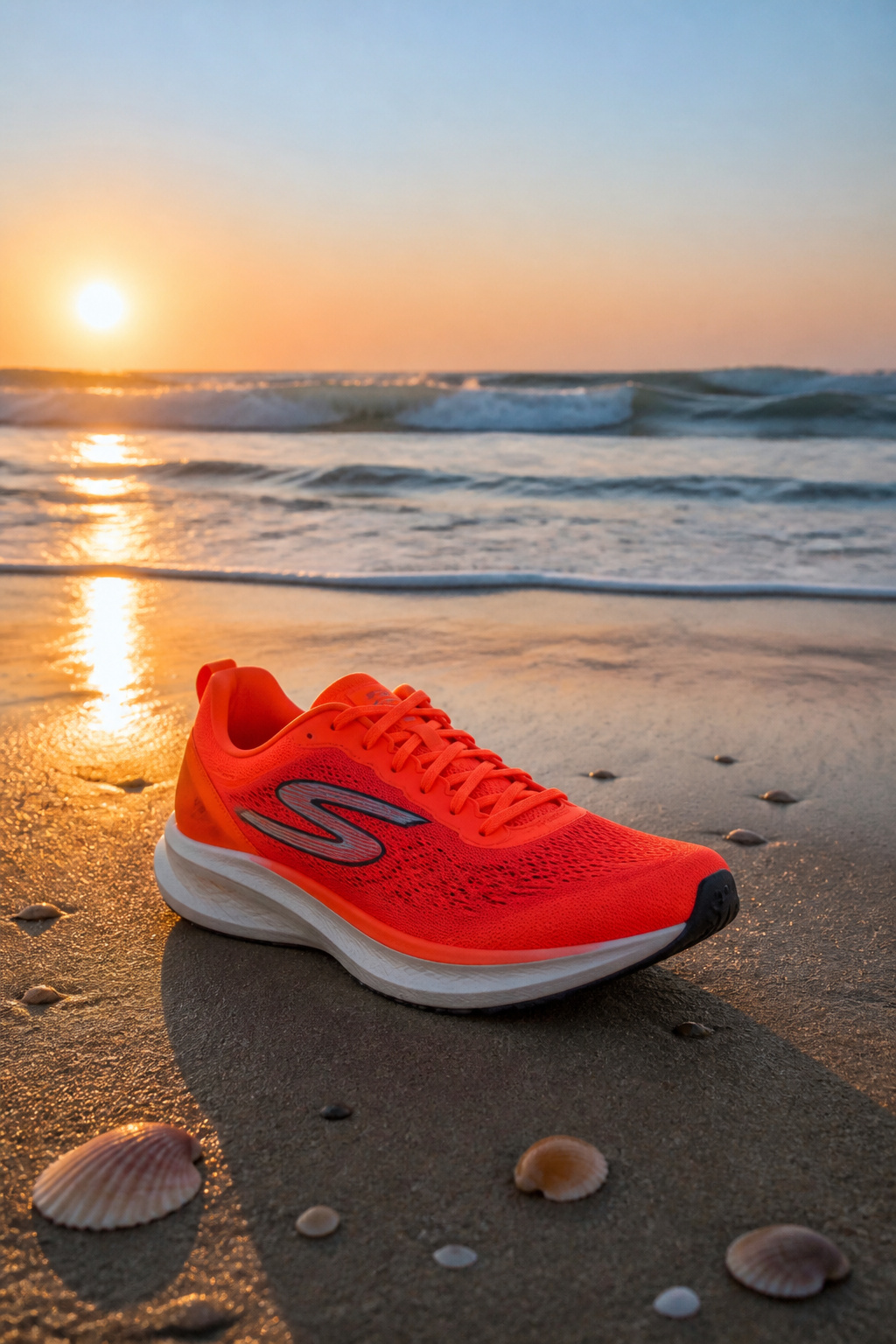
The Skechers Aero Razor lands at $140 with specs that should cost far more. Six point nine ounces in a men’s size 9, 5.6 in a women’s 7, and a 36–32 mm stack with a 4 mm drop put it in the same conversation as racers that sell for $190–$250.
What drains that price is not the foam. Skechers uses Hyper Burst Pro here, an A-TPU-based compound that also powers their super shoes, and the ride still feels snappy and light. A carbon-infused H-shaped wing plate sits inside the midsole for turnover help through toe-off, though the lower geometry keeps the whole shoe closer to the ground than most plated options. That smaller stack sacrifices some marathon-distance cushioning for a secure, connected feel that works better for tempos and 5K-to-half efforts.
The engineered mesh upper ventilates well and fits true to width, slightly long in the toebox without needing a half-size shift. Eyelets are laced with sawtooth laces that actually stay tied, a detail cheaper shoes typically skip.
Durability holds steady enough for regular training rotation. The foam is resilient, the outsole rubber placement is practical, and the upper has held shape longer than mesh in past Razor versions. Skechers also gained credibility here through actual racing lineage; Meb Keflezighi helped develop earlier Razors, and the line debuted the first supercritical midsole in a training shoe back in 2019.
Firmness is the tradeoff. Runners who want thick, bouncy recovery-day softness will find the Aero Razor too disciplined. Those who want efficient, quick turnover at a price that leaves budget for race entries spend $140 and run.
Best Cushioned Trainer
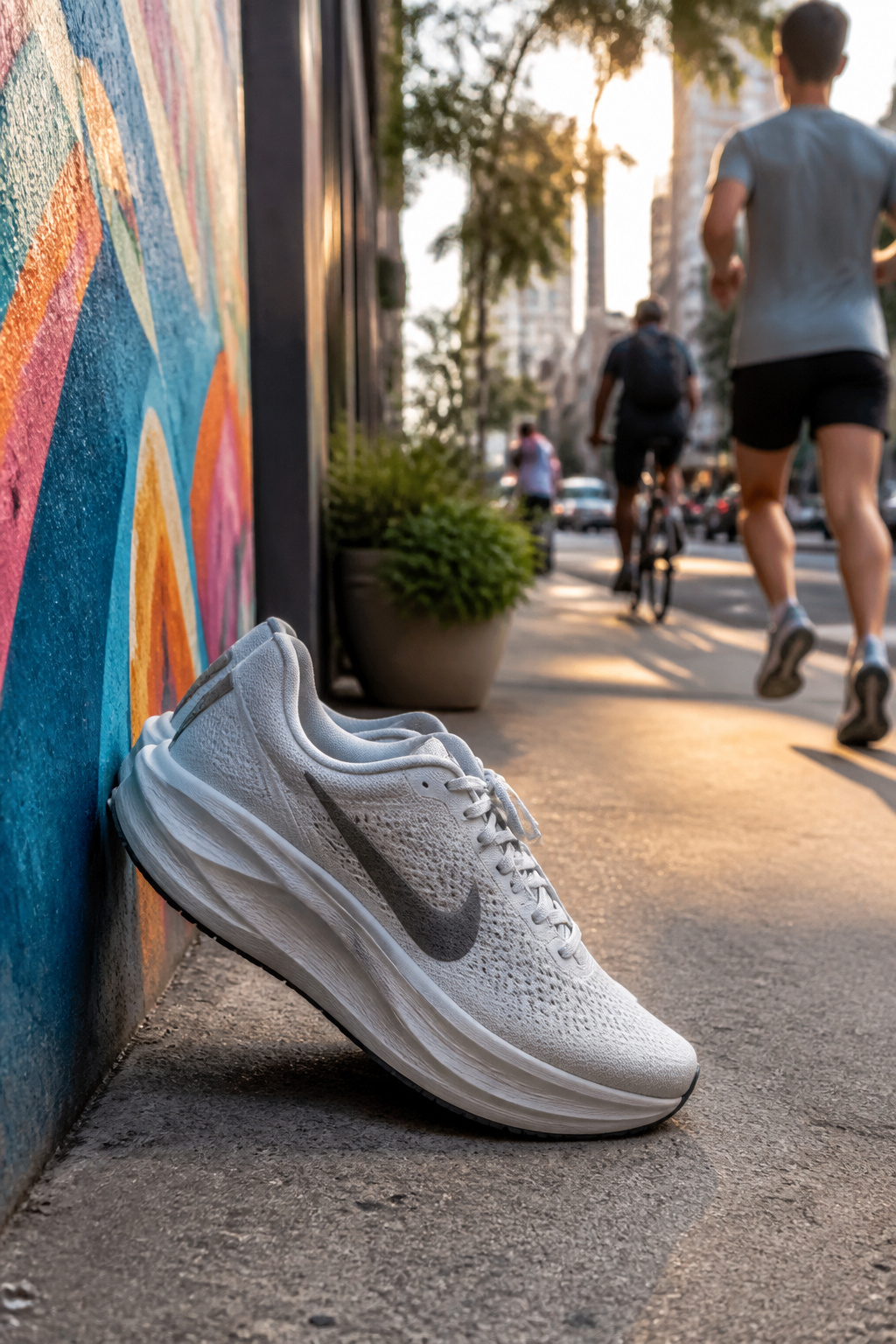
The Nike Vomero Plus lands at $180 with a 45–35 mm stack height and a 10 mm drop, weighing 10.3 oz for men and 8.5 oz for women. Every gram of that weight is doing something: a full midsole of ZoomX foam puts 45 millimeters of cushioning under the heel, which gives the kind of plush, pillow-like ride that heavy runners and high-mileage people on pavement genuinely need. The rebound keeps it from sinking into mush, and the rockered forefoot rolls through toe-off without the plodding feel that max-stack shoes often get stuck in.
That collar is overstuffed, the tongue is thickly padded, and the step-in comfort is immediate. One tester called out the width and foam rebound as the reason it feels stable despite the height.
Where it turns is speed. The same stack that absorbs shock on long easy runs becomes dead weight when you try to pick up the pace, and the shoe slaps loud against the road at faster turnover. It is not a liability for the target runner, but it is not a shoe that wants to do intervals. Think of it as a recovery-day and long-run specialist: maximum protection for the miles that beat you up, traded for the agility you would want on a tempo day.
Best Lightweight Trainer
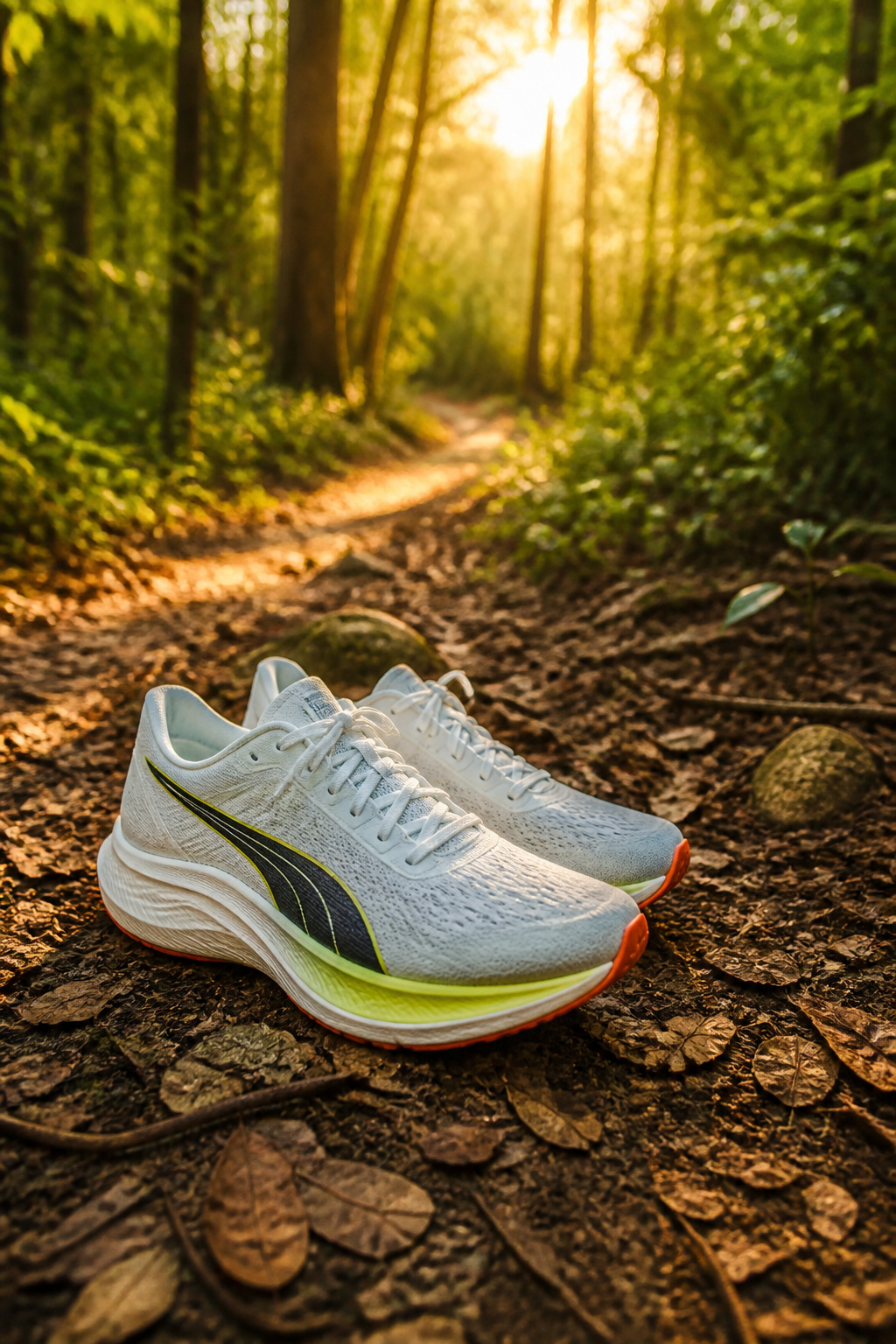
The Puma Deviate Pure Nitro lands at $150, with the men’s shoe weighing 7.8 ounces and the women’s 6.4 ounces. The stack height measures 38–30 mm, giving an 8 mm drop that sits in the moderate range without pushing you forward too aggressively.
Puma built this one around nitrogen-infused foam rather than standard EVA, and the difference shows up in how the shoe absorbs road impact while still pushing some energy back. The A-TPU-based midsole keeps the weight low without the glassy feel of a plated shoe, and the forefoot flexes with the metatarsals rather than resisting them. One tester who runs a specialty shop put it at the top of 2026 so far.
That plate-free construction is the trade. Runners who want structure and a platform that does the steering for them will find the Puma too passive. The runner who buys this gives up that guidance for ground feel and freedom, and accepts some uncertainty about how the foam holds up long-term. Compression wrinkles showed up early in testing, which is typical for A-TPU but worth knowing before you commit.
Best Running Shoe for Beginners
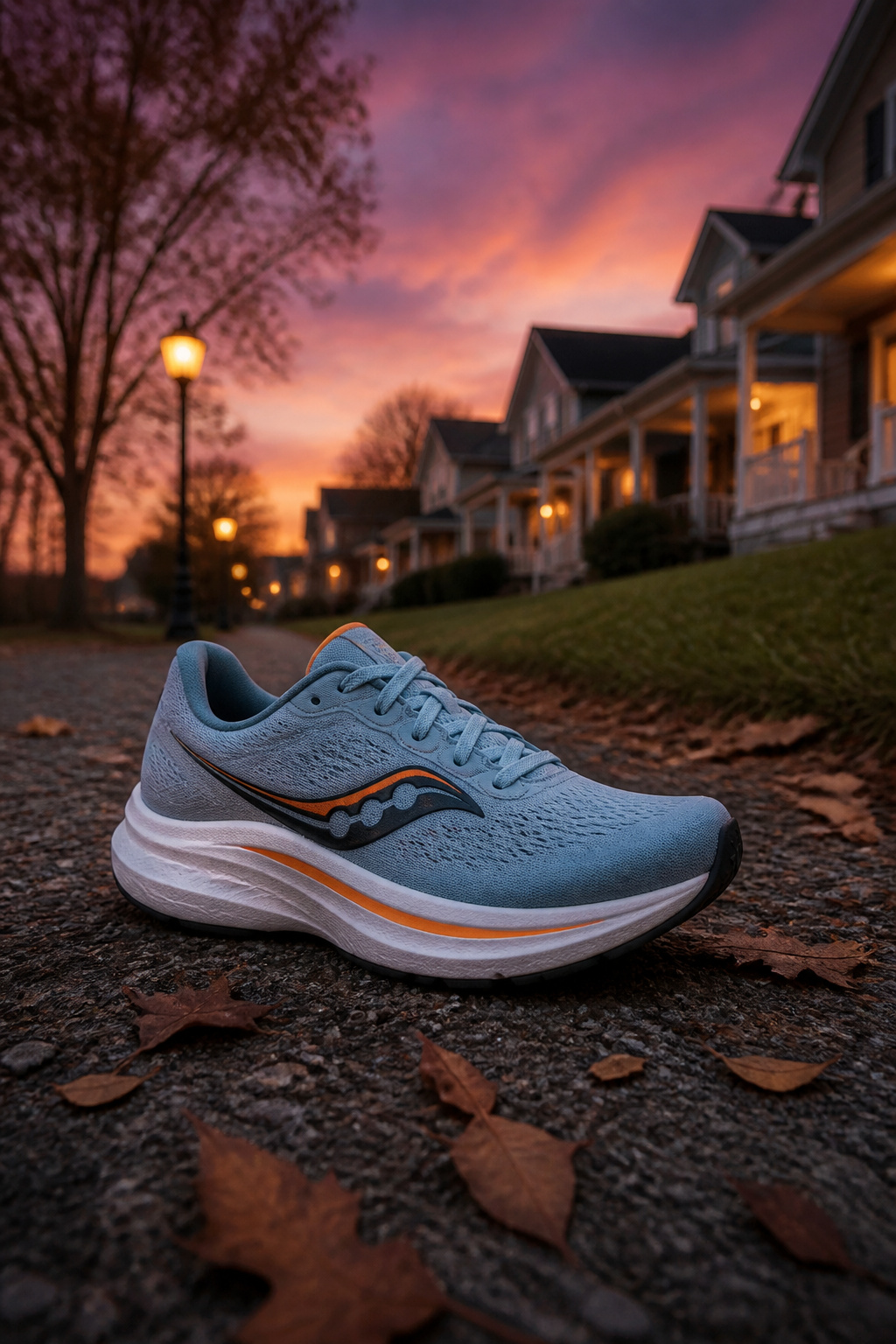
The Saucony Ride 19 at $145 is the shoe that keeps showing up when gear reviewers ask what they’d hand a friend who just finished Couch to 5K. Its numbers explain why: 9.54 oz in the men’s version, 7.45 oz in the women’s, with a 36mm stack and an 8mm drop that sits in the middle of what’s normal for road shoes.
New runners don’t need a shoe that fights them into form. They need one that lets them find form through repetition, and the Ride 19’s geometry backs that up. The platform runs wide and holds steady through a stride, so a heel strike or a slight pronation gets absorbed rather than punished. After fifteen years of watching running partners quit because their first shoe felt like equipment rather than a tool, the consistency here matters more than any single tech feature.
The cushioning lands in that zone that protects joints without disguising pavement completely. Too much softness teaches a new runner to ignore feedback; too little, and every four-miler becomes a negotiation with shin splints. The Ride 19 splits that difference well enough that most neutral runners won’t outgrow it before they know what they actually need next.
Best Stability Running Shoe
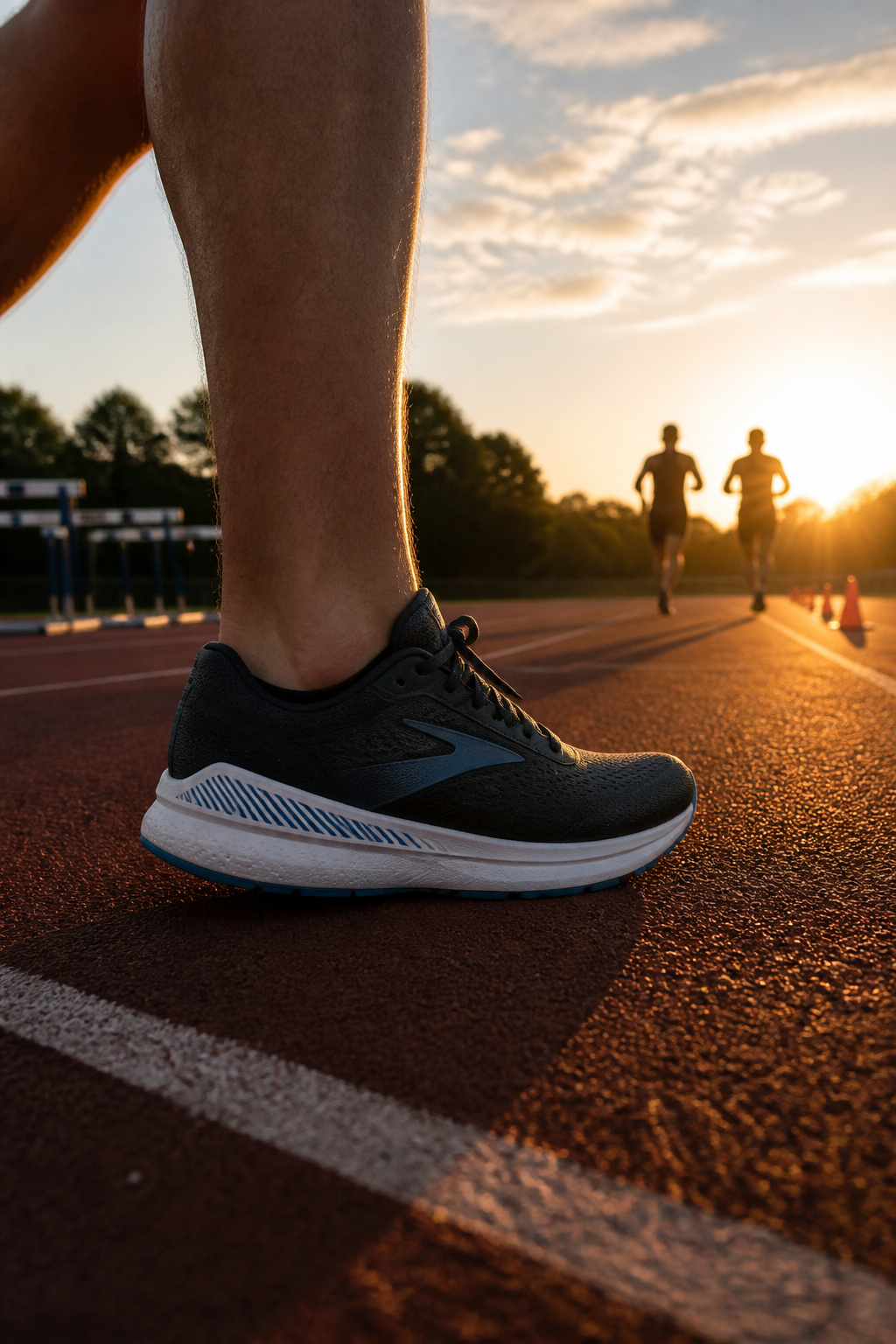
A dense foam zone built into the midsole at the cellular level guides the foot without the hard medial post older stability shoes used. The Brooks Adrenaline GTS 25, at $155, weighs 10.6 ounces for a men’s size and 9.5 ounces for women’s, with a 37–27 mm stack height and 10 mm drop. Overpronation shows up in uneven wear, the inside edge of the outsole worn smooth while the outside looks nearly new, and sometimes a persistent ache along the inner shin or arch that steady neutral shoes never fix.
I noticed the extra millimeters of nitrogen-infused DNA Loft v3, one in the heel and three in the forefoot, when testers described a softer ride than prior Adrenaline models without the shoe losing its sense of control. The GTS line has survived twenty-five iterations where competitors disappeared because Brooks kept the guidance subtle enough that neutral runners tired late in a long run do not feel punished by it. The padded heel collar divided testers, some calling it an acquired taste, but the overall package locks in as a daily workhorse that happens to correct rather than a correction device that grudgingly cushions.
Best for Long Runs

The Nike Structure Plus lands at $170 and handles 15-plus miles better than most trainers sold as distance shoes. At 10.8 oz for men and 8.7 oz for women, it sits in that zone where cushion and weight balance out: 42 mm of stack with a 10 mm drop gives enough foam underfoot that concrete starts feeling softer around hour two, not harder.
The Structure line built its name on support, and that stability matters more the longer you run. Fatigue steals form late in a long run; the built-in support system, visible along the heel, keeps the shoe from folding when your ankles start wobbling. ReactX and ZoomX together make the midsole responsive enough that I threw in surges during a 20-miler, which is the impatience talking. The PEBA-based ZoomX tempts you to speed up, but the shoe’s geometry reins that in. This is a distance tool, not a race flat; the Structure Plus earns its place on easy days and marathon buildup weeks where the goal is surviving the time on feet.
Best for Race Training
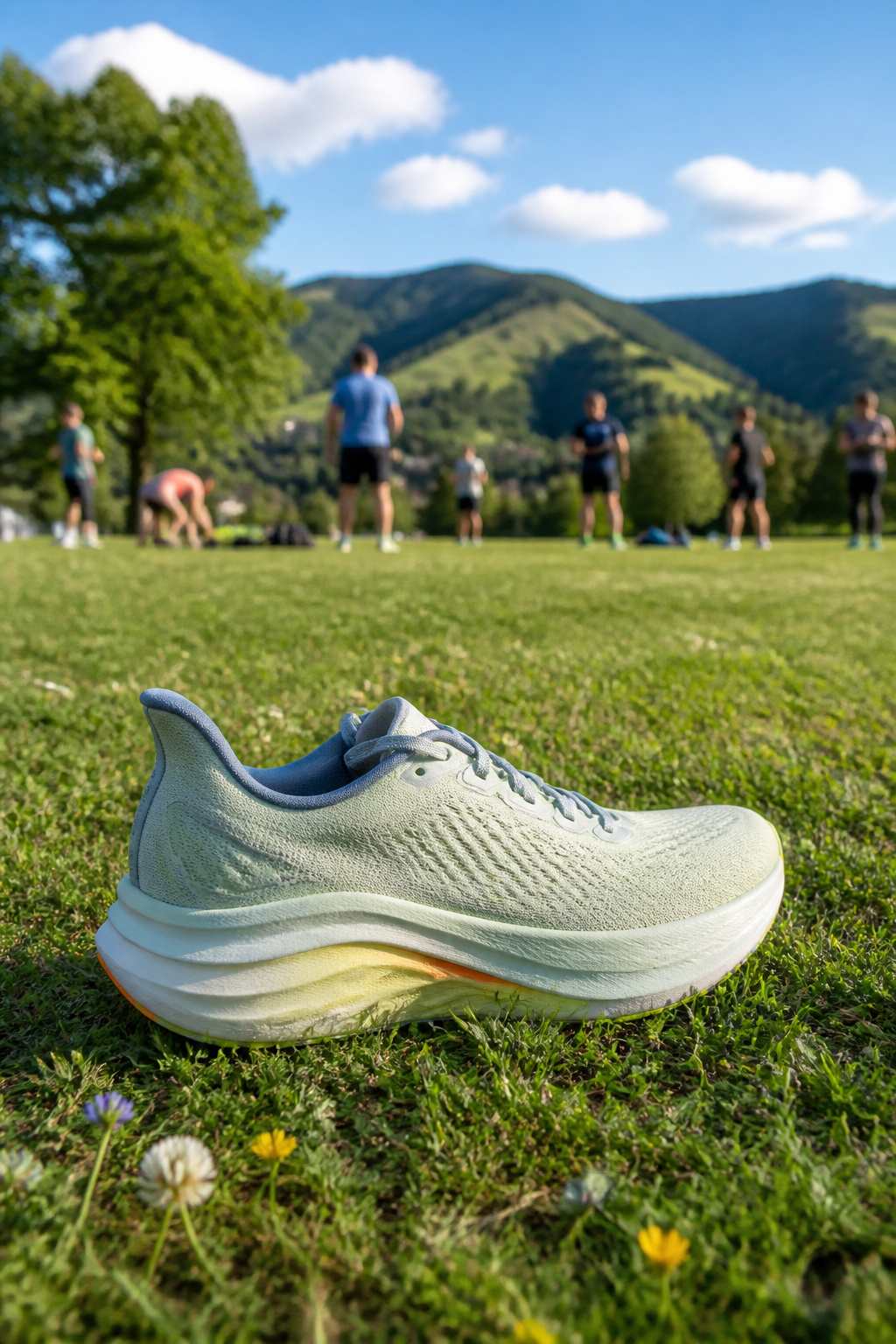
The Hoka Clifton Pro lands at $165 and fills the gap most runners actually need between a daily trainer and a full carbon-plated racer. At 10.4 oz for men’s sizes and 8.5 oz for women’s, it carries enough foam to matter, 42 mm stack under men and 38 mm under women, with that 8 mm drop staying consistent across both.
What separates it from the standard Clifton is the super-critically foamed EVA and a more aggressive Meta-Rocker angle. The plateless sole keeps legs fresh on long runs without the recovery tax of super shoes, while the ProGlide+ foam still has enough bounce to make tempo work feel sustainable. Progression runs, threshold sessions, and the occasional road race all sit in its wheelhouse.
The toe box runs slightly narrow. Runners with wider feet may feel pinky-toe rub over longer efforts, though in my reading this never escalated to real blistering or nail damage. It is a fit note worth trying on for, not a dealbreaker that disqualifies the shoe outright.
Best for Recovery Runs
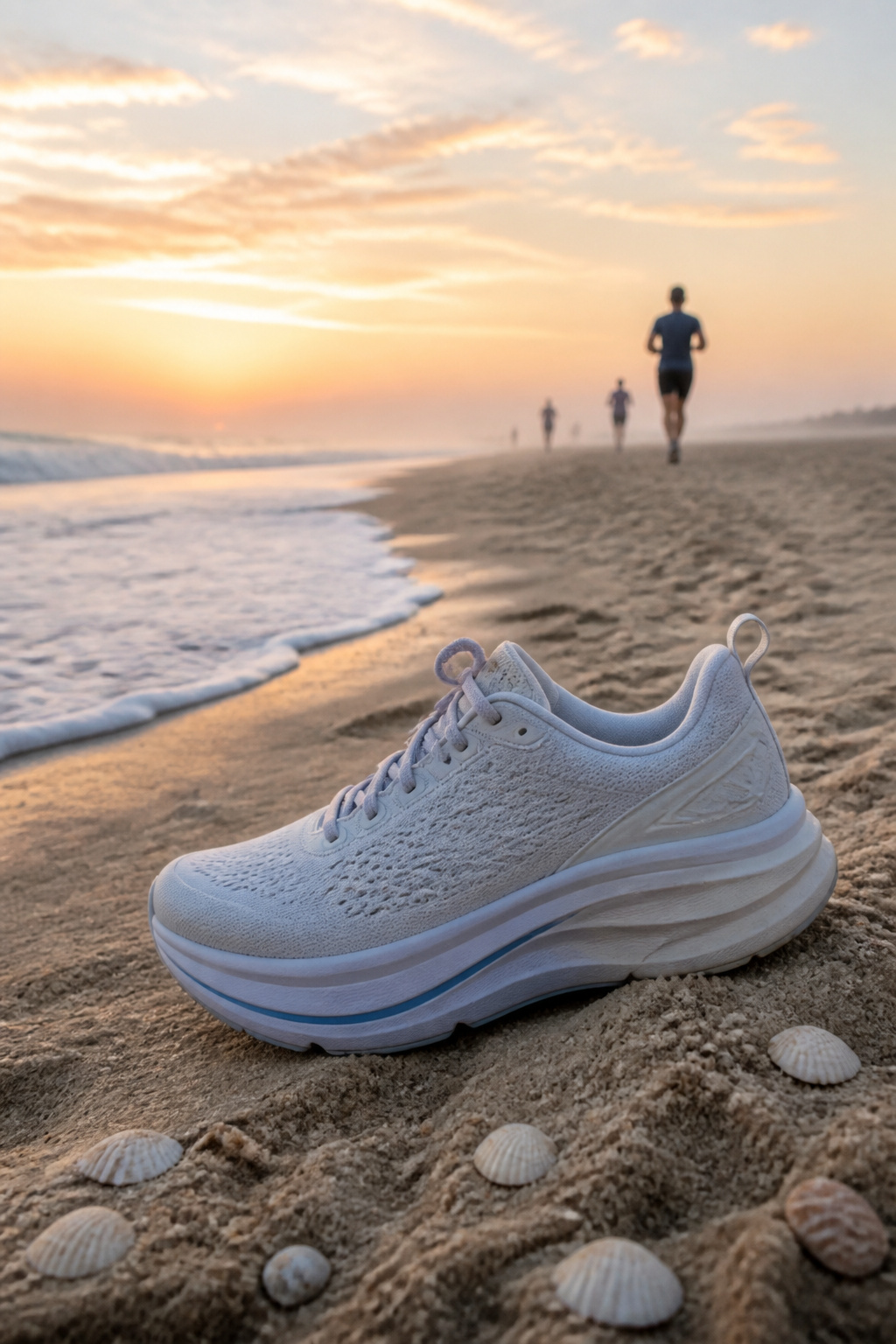
A recovery day means legs that already feel hollow, and the Hoka Bondi 9 at $175 banks on foam doing the work your calves refuse to do. The shoe weighs 10.5 oz in men’s sizing, 9.3 oz in women’s, with a stack height of 43 mm and 42 mm respectively plus a 5 mm drop. That towering midsole sits above a rocker geometry that rolls the foot forward rather than asking the ankle to push off through each step. On easy eight-milers the result is legs that stay quiet; the Achilles stops acting as a source of propulsion and starts acting like a passenger.
The catch arrives for runners whose whole history is firmer trainers. The Bondi lands squishy, almost offshore, and the first few outings can feel like running on a dock rather than a road. Hoka tightened the fit through the midfoot and raised sidewalls to tame the billow of earlier versions, but wide feet still get squeezed more than they did in the Bondi 8. Testers who disliked past iterations found this one finally tolerable; those who loved the old loose fit may not. Save it for days when the watch says easy and the legs agree.
Best for Speed Workouts
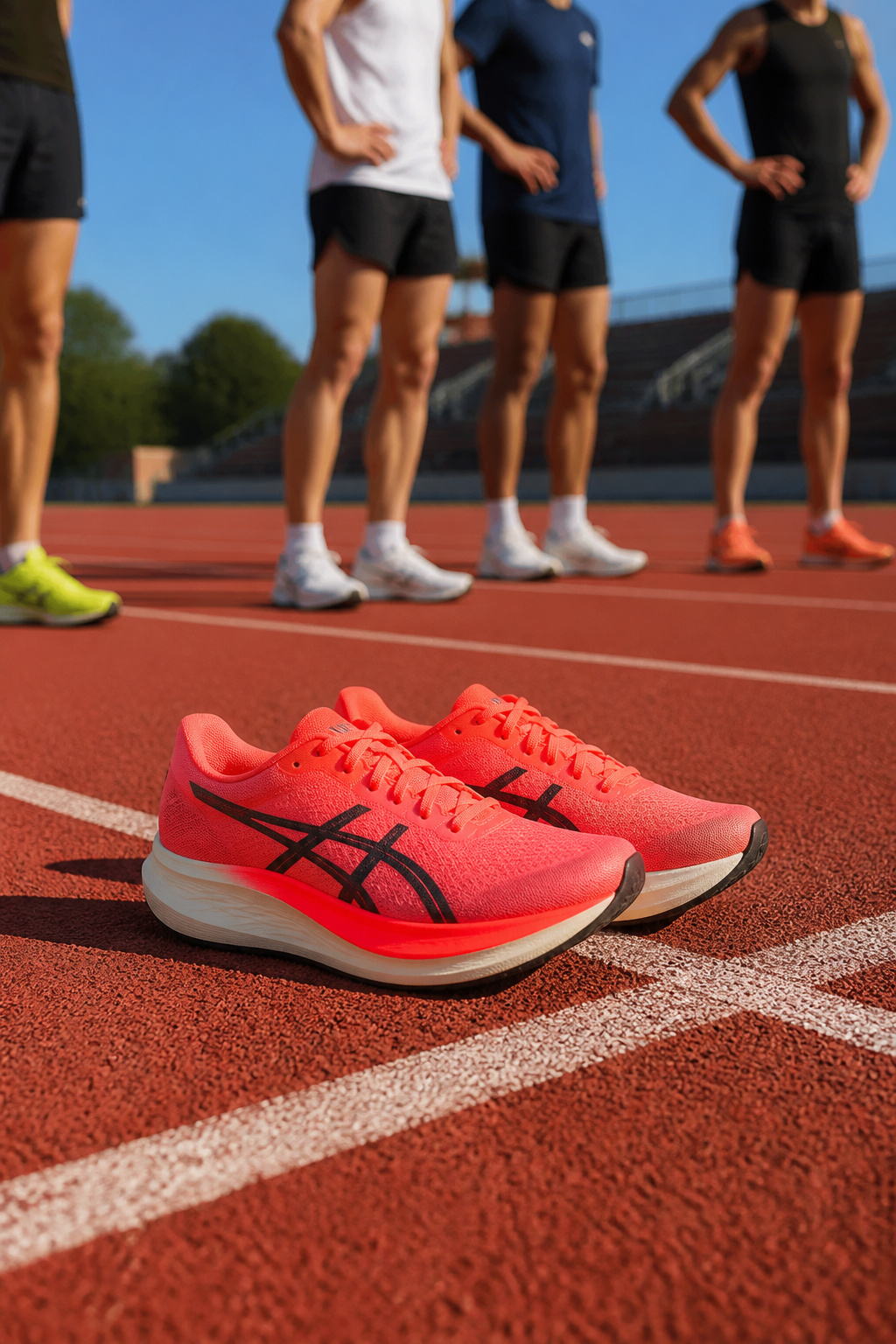
The Asics Magic Speed 5 fills a narrow slot that most weekly rotations lack: a shoe fast enough for interval days but forgiving enough that your calves do not hate you tomorrow. At $180, it costs what many full racers do, yet the 37.5–30.5 mm stack and 7 mm drop keep it usable in ways a racing flat simply is not.
What changed my mind about carbon plates was the specific foam pairing here. The top layer of FF Leap (A-TPU) gives the pop you want for turnover, but the stack height keeps landings from feeling like pavement is punching back. At 6.9 ounces, it is barely heavier than some flats I have worn that left me hobbling after twelve repeats.
Where this lands in a rotation matters. I would not rack up easy miles in it; the bounce is too tuned and the shoe too light to feel natural at shuffle pace. But it also is not the shoe I would pin a bib on for a PR attempt, not when true racers exist with stiffer plates and more aggressive geometry. The Magic Speed 5 lives in the middle ground: Tuesday track sessions, Thursday tempo segments, maybe a shorter race if you want speed without the next-day debt. Too soft for some, I have heard, and that is fair. If you want ground feel above all, a lower-drop trainer will serve you better. For the rest of us, this is the shoe that lets a hard workout stay hard without borrowing against the long run two days later.
Best Natural Ride

Altra built its name on two ideas: a toe box shaped like an actual foot and a heel that sits level with the forefoot. The Altra Experience Flow 3 keeps the wide forefoot but eases the drop to 4 mm, which is a real shift from the brand’s zero-drop heritage.
At $145, the shoe weighs in at 9 oz for men’s sizing and 7.5 oz for women’s, with a 32–28 mm stack height. The midsole uses EGO P35, a blend of polyolefin elastomer and Altra’s own EGO MAX compound. One tester noted the lower drop still reduces Achilles stress compared with Altra’s zero-drop models while encouraging a lighter heel strike and more forward-balanced stride.
What transitioning to lower drop actually feels like depends on patience. Over weeks, calves and Achilles adjust to paying more attention at landing; the Flow’s 4 mm drop splits the difference between that grounded flat-shoe feel and something a mainstream runner can pick up without a dedicated break-in plan. The flexible sole and roomy box still promote toe splay, and at 32 mm under the heel this reads as low-profile against the max-cushion trend without feeling stripped down.
A low collar is the tradeoff some testers noticed; it sit more on top of the ankle than wrapping it, so lock-in varies by foot shape.
How Running Shoes Should Fit
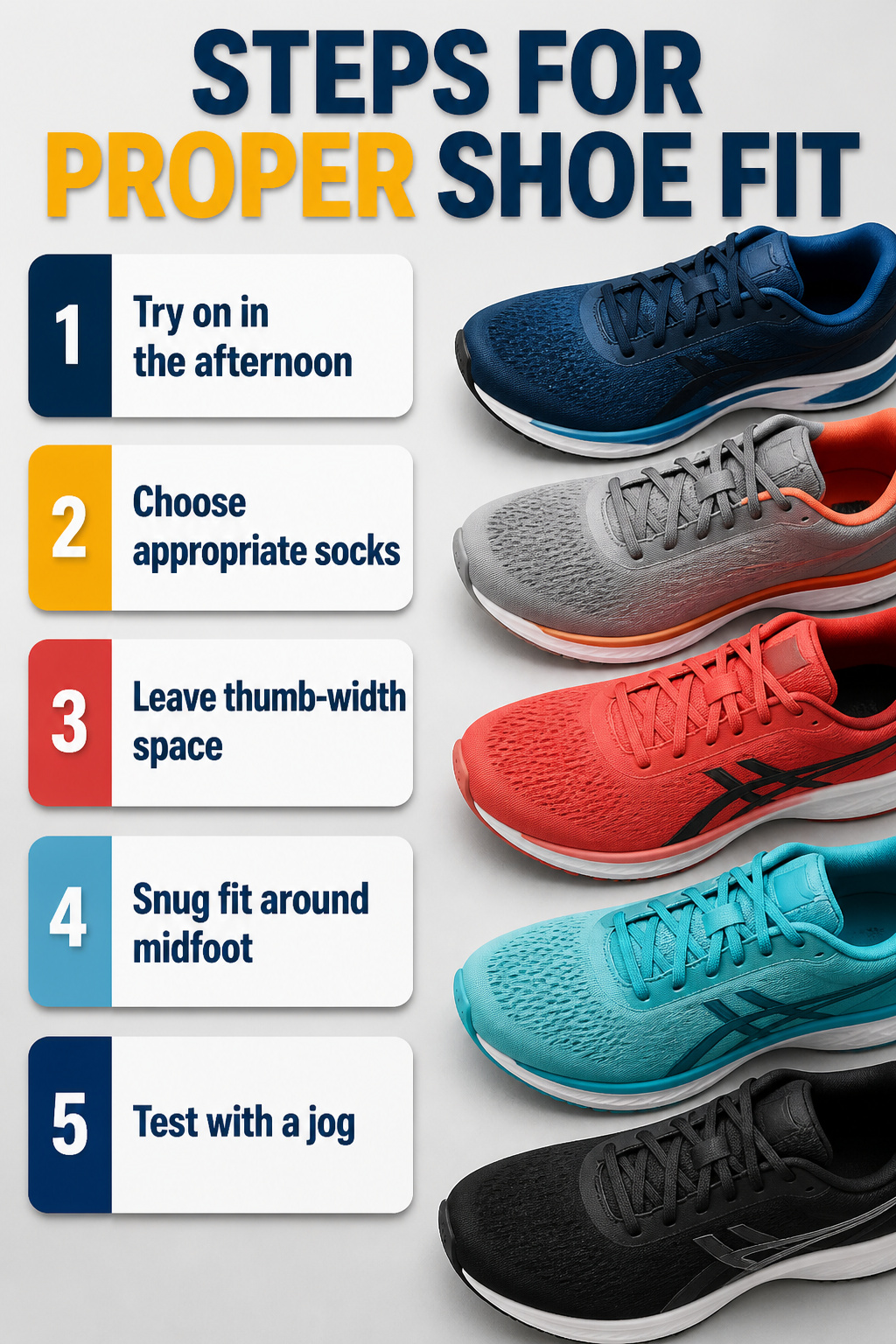
A running shoe that fits right locks the heel in place with no lift on push-off. The upper should wrap snugly around the midfoot so your foot feels secure from heel to toe without any squeezing or pinching. Up front, leave about a thumb-width of space between your longest toe and the shoe’s end. That room keeps black toenails at bay on downhills and lets the foot spread naturally as it swells.
The time of day matters more than most people expect. Feet expand after hours of walking around, so a pair that feels fine at 9 a.m. can pinch by 6 p.m. I always try shoes on in the late afternoon, the same socks I actually run in, not the thin dress pair the store hands out. The sock changes everything: a thick merino blend fills space differently than a paper-thin synthetic, and blisters start when that interface goes wrong. Walk the store, jog a few steps if they let you. Pinch anywhere, even a small one, does not break in. It breaks you.
Pronation and Shoe Types
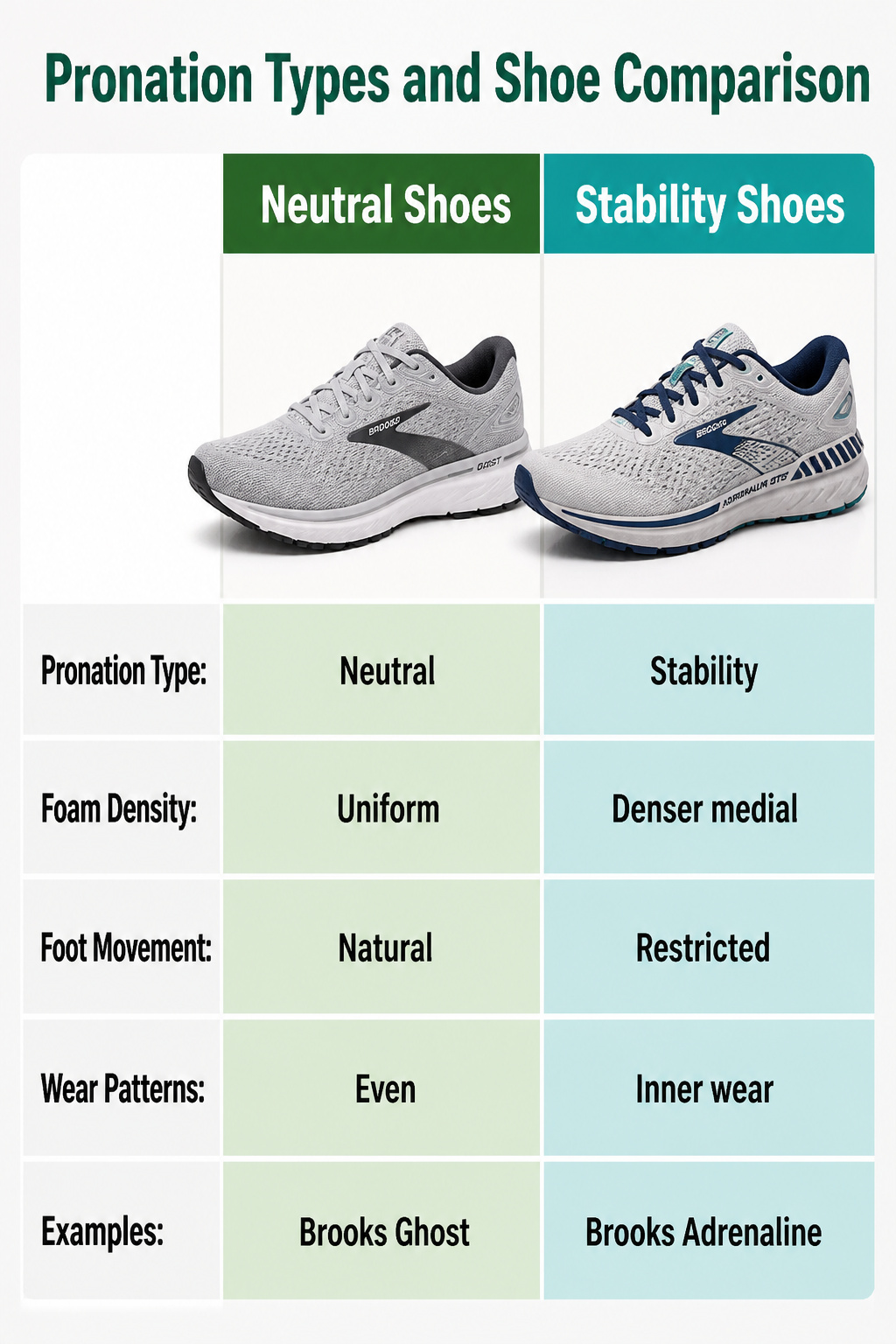
Pronation is the natural inward roll of your foot as it transitions from heel to toe with each stride. Every runner does it. The question is whether your roll stays within a healthy range or collapses too far inward, which is overpronation.
Running shoes fall into two camps. Neutral running shoes use the same foam density from heel to toe with no added posts or supports. They let your foot move naturally and suit runners whose pronation stays within that normal range. Stability running shoes add denser foam on the medial side, the inside edge, to resist that excessive inward collapse. The firmer foam compresses less and helps the shoe wear evenly rather than breaking down along the inner edge first.
Your own wear patterns tell the story faster than any store test. Flip over your current pair. If the inside heel and inside forefoot show noticeably more wear, or if the shoe tilts inward when you set it on a flat surface, you are likely overpronating.
If you do overpronate, you may need the extra support. That does not mean every runner with slight wear on the medial side must rush to stability models. Some neutral shoes, like the Brooks Adrenaline GTS line with its guide rails system, provide gentle correction without the intrusive feel of traditional posting. The Adrenaline GTS 25 uses dense foam bumpers on both medial and lateral sides, acting as guidance when fatigue makes your form erratic. At 10.6 oz in men’s size 9 and 9.5 oz in women’s size 8, with a 10 mm drop and 37 mm stack height, it handles daily miles without the harshness older stability shoes were known for. A heel-striker with high arches called it a standout in her rotation for exactly that balance: snug and supportive without being restrictive, comfortable across both sprints and longer efforts.
Running Shoe Lifespan

Replace running shoes after 300 to 500 miles of use, and the foam tells you when you’re close. Fresh midsole cushioning rebounds between strides with a springy push-off; compressed foam feels dense and flat underfoot, like the shoe forgot to respond. Your knees and hips usually notice first, but pressing a thumb into the midsole next to a brand-new pair confirms the difference.
Tracking mileage without an app takes maybe thirty seconds after each run. A small calendar notation, the lap button on a basic watch, or even tally marks on the shoebox lid all work. The important part is starting the count from day one, since guessing later always lowballs the real number.
Saving worn-down pairs for easy runs is the false economy that keeps physical therapists in business. The injury risk from dead cushioning costs far more than a replacement pair, and easy runs are already when form gets sloppy and small compensations turn into real problems. Retire them to dog-walking duty or the donation bin, not the rotation.
Road, Trail and Racing Categories
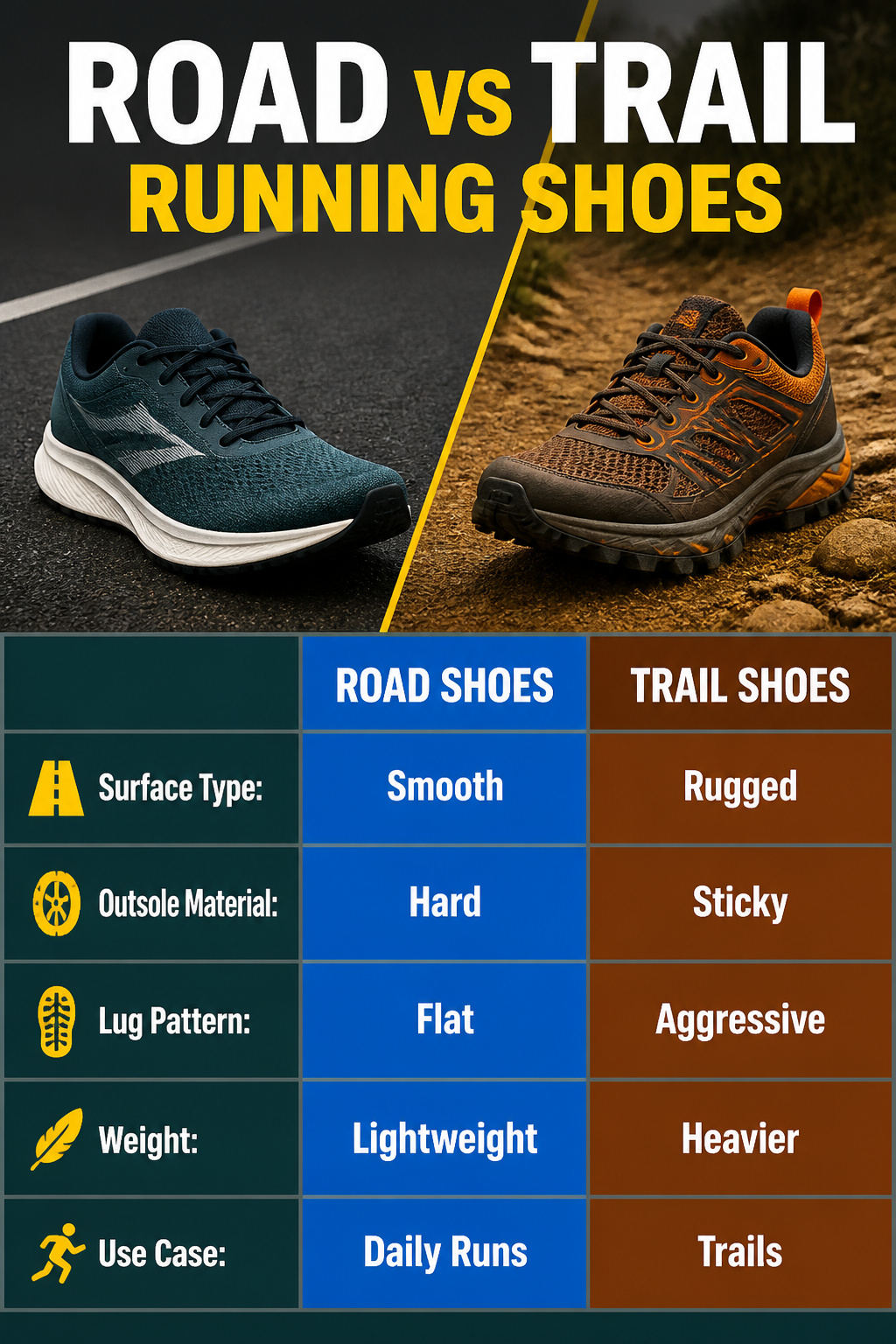
Road running shoes are built for smoother surfaces with harder rubber outsoles that resist abrasion on concrete and asphalt. Trail shoes switch to stickier compounds and aggressive lugs for grip on dirt, gravel, and mud, plus extra durability where the terrain chews through material faster.
The gap between categories has softened lately. Some daily trainers now handle light trail duty well enough that you might not need a dedicated trail shoe for the occasional packed-dirt path. The lug pattern and rubber compound are what actually change when you cross from road to trail: deeper lugs shed debris and bite on loose ground, while flatter, firmer road patterns keep contact consistent on predictable surfaces and last longer against pavement’s grind.
Racing shoes sit at the far end of the spectrum. They are minimal and lightweight by design, built to disappear on your feet when the gun goes off, but that same construction makes them less durable for daily training. Save them for race day.
Our staff and local wear-testers based these selections on fit, feel, and ride.
That testing across experience levels, gaits, and arch types means the category a shoe lands in was earned on actual runs, not marketing labels. For you, the practical split is simple: pavement, dirt, or starting line. Pick the tool for the surface you will actually cover.
Frequently Asked Questions
How should running shoes fit?
A running shoe should lock your heel in place with no lift on push-off, wrap snugly around the midfoot without squeezing or pinching, and leave about a thumb-width of space between your longest toe and the shoe’s end. Try shoes on in the late afternoon with the same socks you run in, since feet expand throughout the day and sock thickness changes the fit entirely. Any pinch you feel in the store will not break in; it will break you.
What is pronation?
Pronation is the natural inward roll of your foot as it transitions from heel to toe with each stride, and every runner does it. The problem is overpronation, when that roll collapses too far inward. Your current shoe’s wear pattern tells the story faster than any store test: if the inside heel and inside forefoot show noticeably more wear, or the shoe tilts inward on a flat surface, you are likely overpronating.
How many miles do running shoes last?
Replace running shoes after 300 to 500 miles of use. Fresh midsole cushioning rebounds between strides with a springy push-off; compressed foam feels dense and flat underfoot, and your knees and hips usually notice the difference first. Track mileage from day one with a calendar notation, watch lap button, or even tally marks on the shoebox lid, since guessing later always lowballs the real number.
Do I need stability shoes?
You need stability shoes if you overpronate, meaning your foot rolls excessively inward with each stride. Stability models add denser foam on the medial side to resist that collapse, while neutral running shoes use the same foam density throughout and let your foot move naturally. Some options like the Brooks Adrenaline GTS 25 provide gentle correction through guide rails without the intrusive feel of traditional posting, so slight wear on the medial side does not automatically mean you need a full stability build.
What are the differences between road and trail running shoes?
Road running shoes use harder rubber outsoles that resist abrasion on concrete and asphalt, while trail shoes switch to stickier compounds and aggressive lugs for grip on dirt, gravel, and mud. The lug pattern and rubber compound are what actually change between categories: deeper lugs shed debris and bite on loose ground, while flatter, firmer road patterns keep contact consistent on predictable surfaces and last longer against pavement’s grind. Some daily trainers now handle light trail duty well enough that you might not need a dedicated trail shoe for occasional packed-dirt paths.