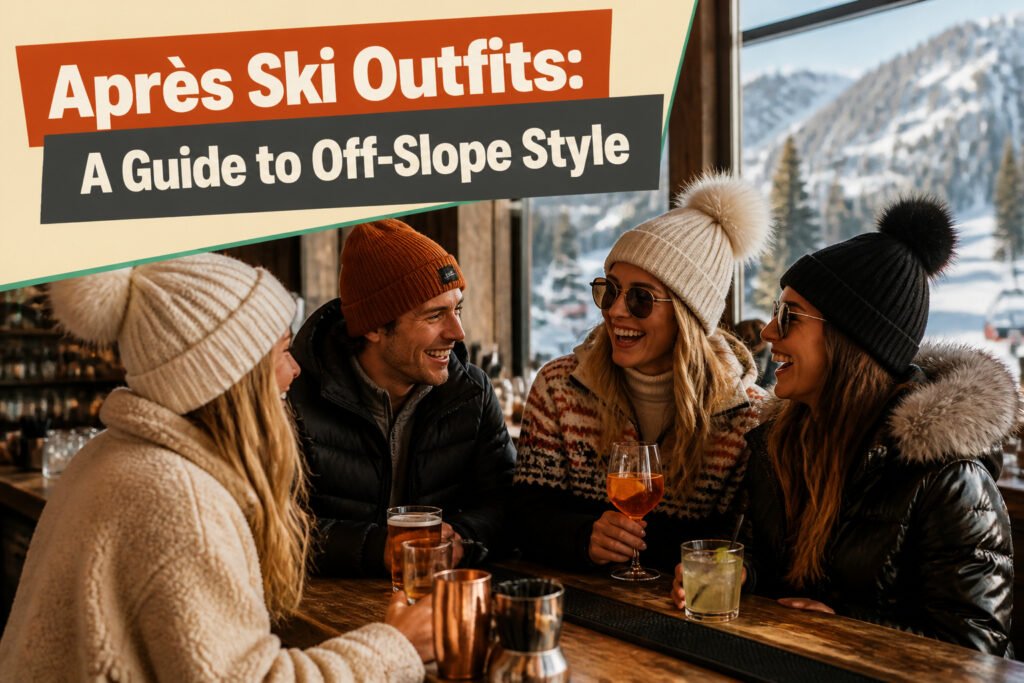
Après ski outfits are the clothing change, or strategic lack of one, that takes you from the last run to the lodge bar without looking like you just walked off the lift. The catch is the temperature swing: what works at fifteen degrees becomes a sauna at seventy, and damp cotton against cooling skin turns the afternoon into a shivering wait for the car. A $148 Lululemon Fast and Free thermal tight, fleece-lined without gym-class bulk, solves the leg problem; the coat you keep on, not the base layer nobody sees, is what answers "did you ski today" before you speak.
Cozy Layers
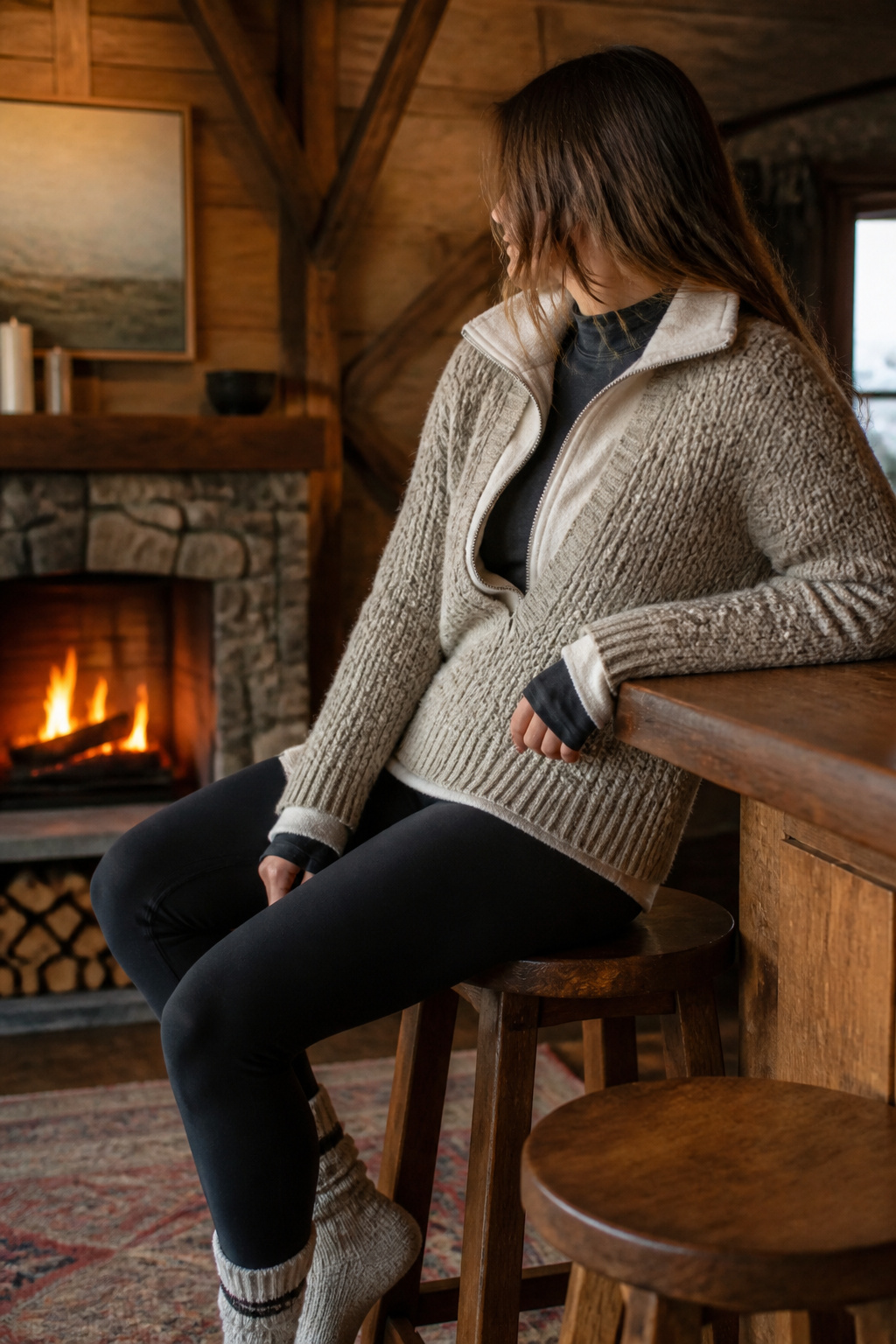
Merino wool base layers do the heavy lifting for après ski warmth without announcing themselves as ski gear. The fabric pulls moisture away from skin while you are still cooling down from the last run, then traps enough heat once you settle into a lodge chair. Synthetic blends work similarly and usually cost less, though they can hold odor after a long day. A midweight fleece over that base layer adds the structure that reads as intentional clothing rather than leftover sportswear. The collar and cuffs frame the face and hands in a way a jacket shell does not. A chunky knit sweater on top completes the look and lets you shed the fleece if the fireplace is cranking. The whole stack transitions from bar stool to village stroll without a full change of clothes, which matters when the locker room is a crowded bench and you would rather keep moving. Moisture-wicking fabric against skin is the non-negotiable layer; damp cotton against cooling skin turns a fun afternoon into a shivering wait for the car.
Stylish Outerwear

A tailored puffer does the heavy lifting in most après ski outfits. The slimmed-down silhouette, what Moncler built its name on, reads intentional rather than borrowed from the lift line. Obermeyer cuts theirs closer to the body too, which matters when the jacket stays on through drinks.
Faux fur coats trade technical credibility for presence. The Nour Hammour Evita runs $2,250; Max Mara’s gray teddy alternative hits $3,570. Both work because they signal the slope day is done without looking like costume.
Tailored vests solve the indoor problem that full coats create. Core warmth stays, overheating goes. Goldbergh builds this logic into their belted stirrup pants too, but the vest is what lets you sit through a meal without the jacket-off, jacket-on dance.
What reads as the outfit lives at the outermost layer. The base layer and leggings underneath could be flawless; nobody sees them past the door. The coat is the statement, the piece that answers "did you ski today" before you speak.
Comfortable Bottoms
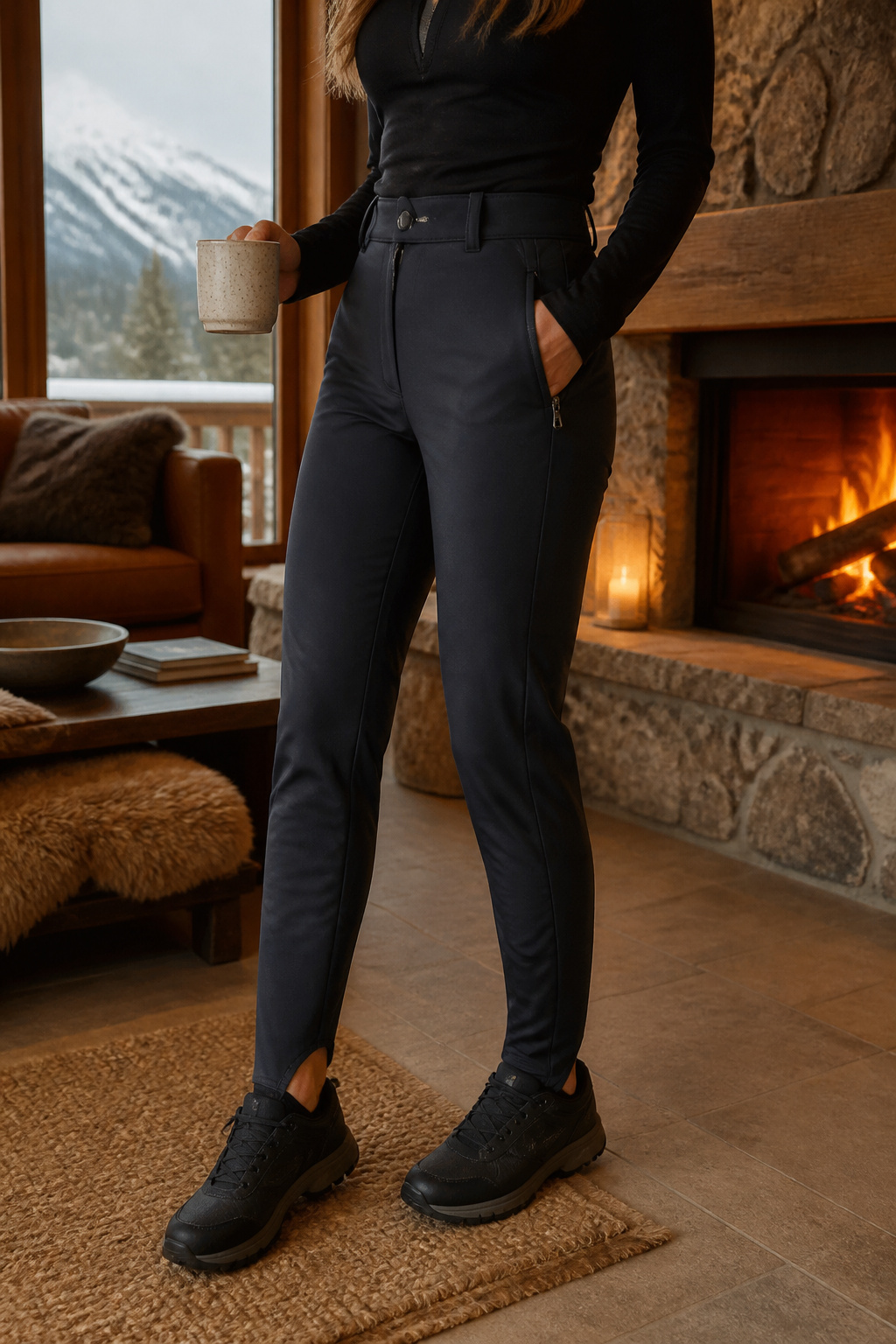
Thermal leggings solve the single biggest friction point in après ski outfits: the moment you leave packed snow for a heated lodge and your legs go from chilled to sweating. The Lululemon Fast and Free high-rise thermal tight at $148 is fleece-lined without the bulk that reads gym-class, and the high rise keeps the waistband in place when you’re walking through drifts then folding onto a low sofa by the fire. Slim joggers trade some of that outdoor insulation for a cleaner line that still reads relaxed at dinner; the sources note them specifically for transitioning to drinks without looking like you forgot to change.
Stylish ski pants with stirrup or belted details, like the Goldbergh Paris at $449, bridge the gap entirely. The stirrup keeps the hem locked under a boot for walking through snow, while the tailored cut and belt detail pass as intentional in a lodge bar. What convinced me, reading through the options, is that the best bottoms hide their technical function: fleece lining on the inside, no sportswear signifiers on the outside. The mistake is packing anything that works for only one side of that door.
Footwear

The right après ski boots make the difference between hobbling to the lodge bar and actually enjoying the walk. After hours locked in rigid downhill shells, feet need cushioning and arch support, not another rigid structure. Moon boots have staged a full revival for exactly this reason: their foam construction insulates while letting you feel like you’re walking on something other than a plastic cast. The shearling-lined slip-ons waiting by the fire work fine for indoor hours, but they fail the moment you step back onto snowy decking or an icy parking lot. What actually works is one pair that handles both surfaces without a costume change. The Xtratuf Ice 6-inch Nylon Ankle Deck Boot, lined with faux shearling and 200 grams of synthetic insulation, runs about $175 and uses a Glacier Trek Pro outsole specifically for grip on wet ice. The mid-high cut and waterproof membrane keep slush out, and you can cinch the laces tight enough for real support. Moon boots win on nostalgia and warmth; lug-soled boots win if you need to carry a tray of drinks across an icy lot without falling. Brunello Cucinelli and Grenson make sleeker leather options, though suede risks salt stains and Loro Piana’s hiking-inspired styles sit at a price point where function stops being the main consideration. Wool socks add the final layer, both for warmth and because they let you get away with a slightly looser fit after your feet have swollen from skiing.
Accessories
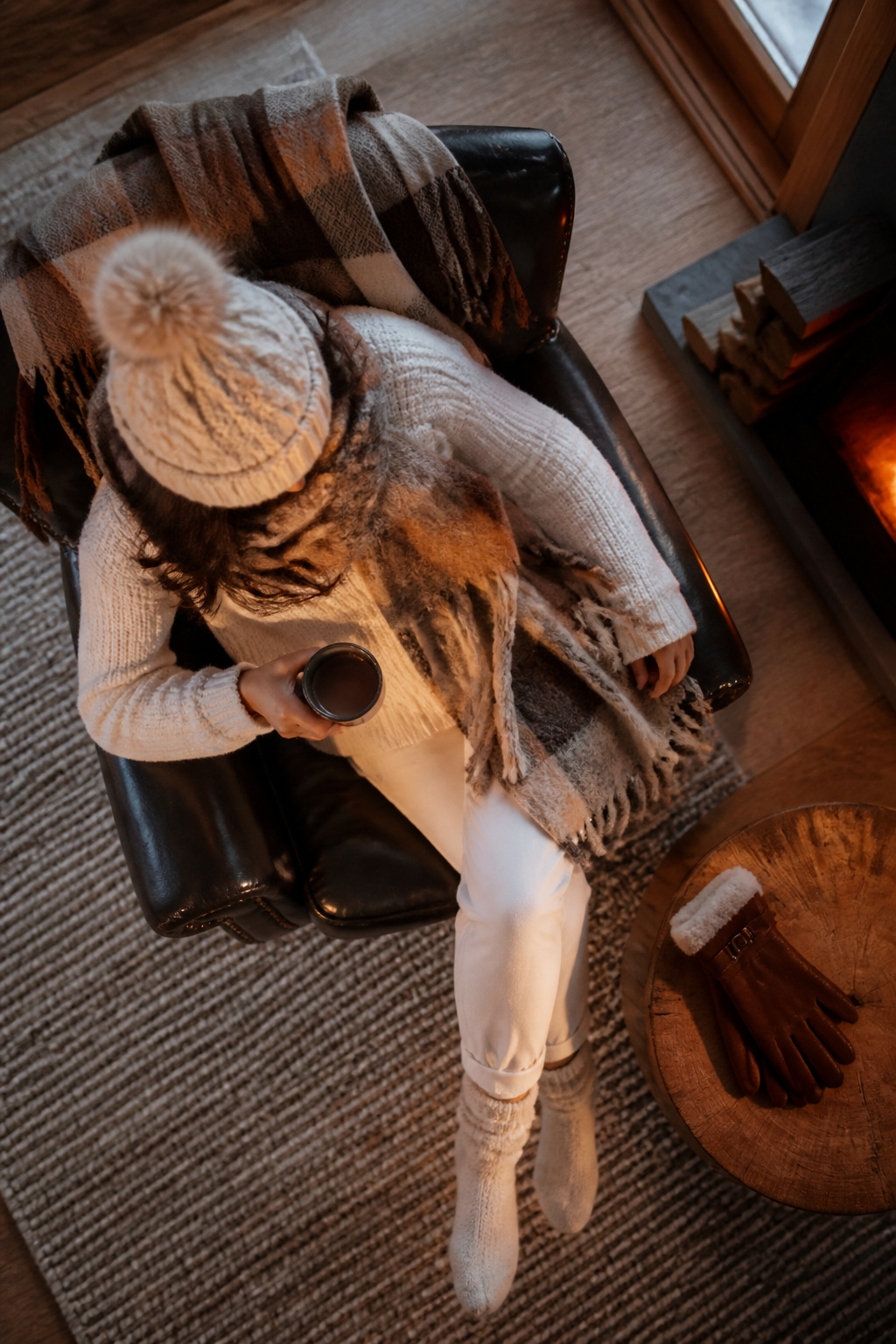
The right beanie does more than trap heat; it signals whether you came from the slopes or the city. A ribbed wool watch cap reads mountain-raised, while something in cashmere or with a subtle pattern shifts the same puffer coat toward dinner in the village. Scarves operate on the same principle. Lightweight merino or Escoral wool gives you insulation without the bulk that fights with lodge furniture, and the pattern you choose is where most people actually express taste. Gloves split the difference between utility and polish. Leather pairs from makers like Turnbull & Asser feel intentional in a way technical ski gloves never do, though you will want to keep a liner pair stashed if the evening wanders onto an outdoor patio.
Accessories are the safest place to spend on color or texture because swapping them changes the entire outfit without replacing it. A charcoal base with a rust scarf and cognac gloves reads considered; the same coat with all-black trim reads anonymous. Sunglasses matter more than people expect, that snow glare lingers past sunset, and a refined frame like Cutler and Gross finishes the look without shouting. The mistake is treating these as afterthoughts you grab from the ski bag. The gloves you raced in all morning have a different job than the ones you wear holding a glass by the fire.
Changing Out of Ski Gear
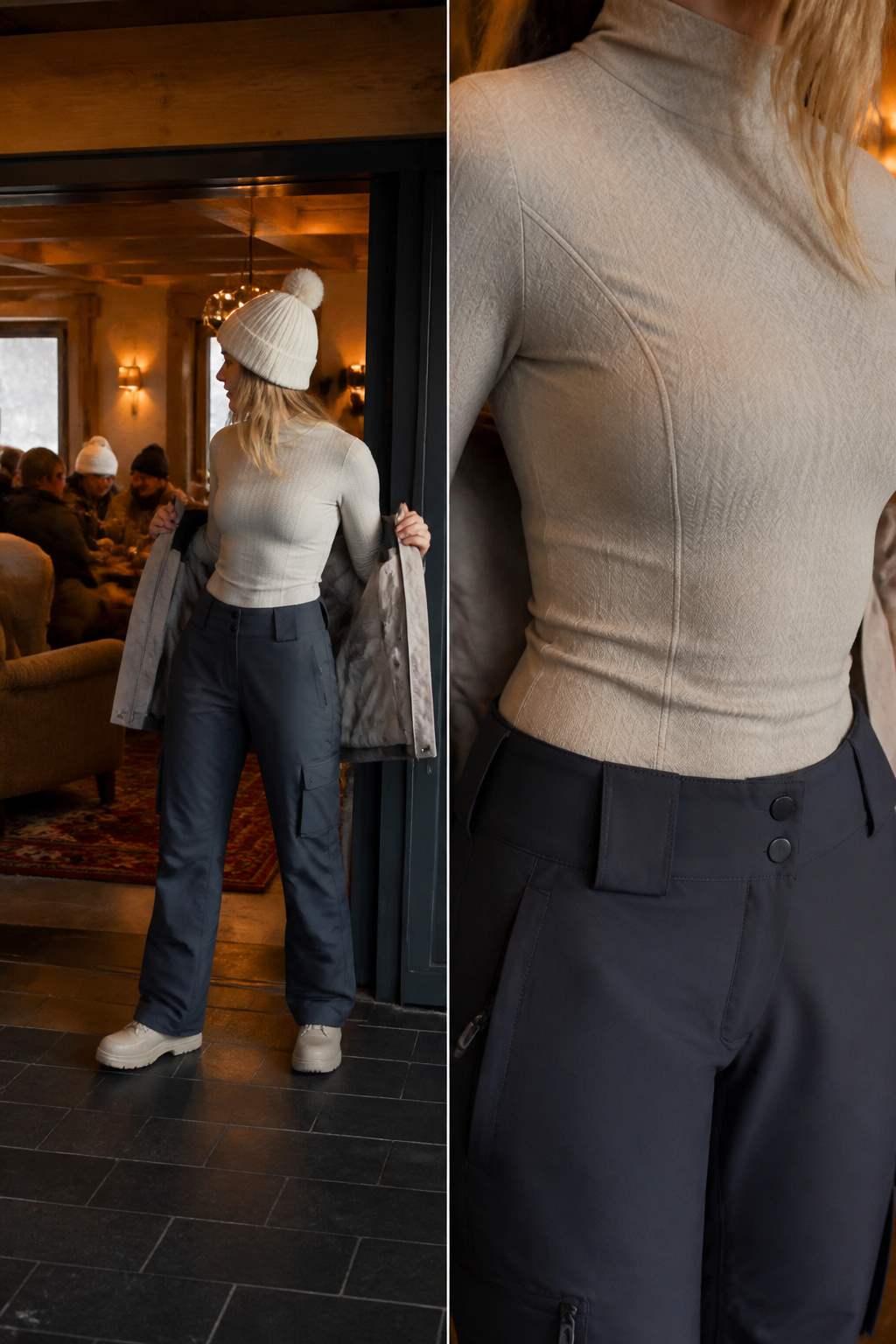
The real pressure hits around 3:45 p.m. when the last run ends and the lodge fills with people who somehow had time to shower. Most of us did not. The transition from ski gear to après ski outfits is less about a full change and more about strategic shedding. A soft sweater or fleece top layered under your jacket in the morning becomes the whole look once the shell comes off. That base layer you’ve been sweating in since 9 a.m.? It stays, hidden under something that reads as intentional.
What works is building the day in reversible layers. Think pants that look like streetwear but move like snow gear, or a puffer vest that works over a base layer at lunch and still looks right by the fire. The goal is walking into the lodge without looking like you walked straight off the lift, even when you did. Some skiers I know keep a lightweight merino top in a jacket pocket just for this moment. Others commit to the full outfit swap in a bathroom stall. Both approaches get you to the same place: warm, dry enough, and socially presentable without the fantasy of a hotel room between slope and social hour.
Color and Texture
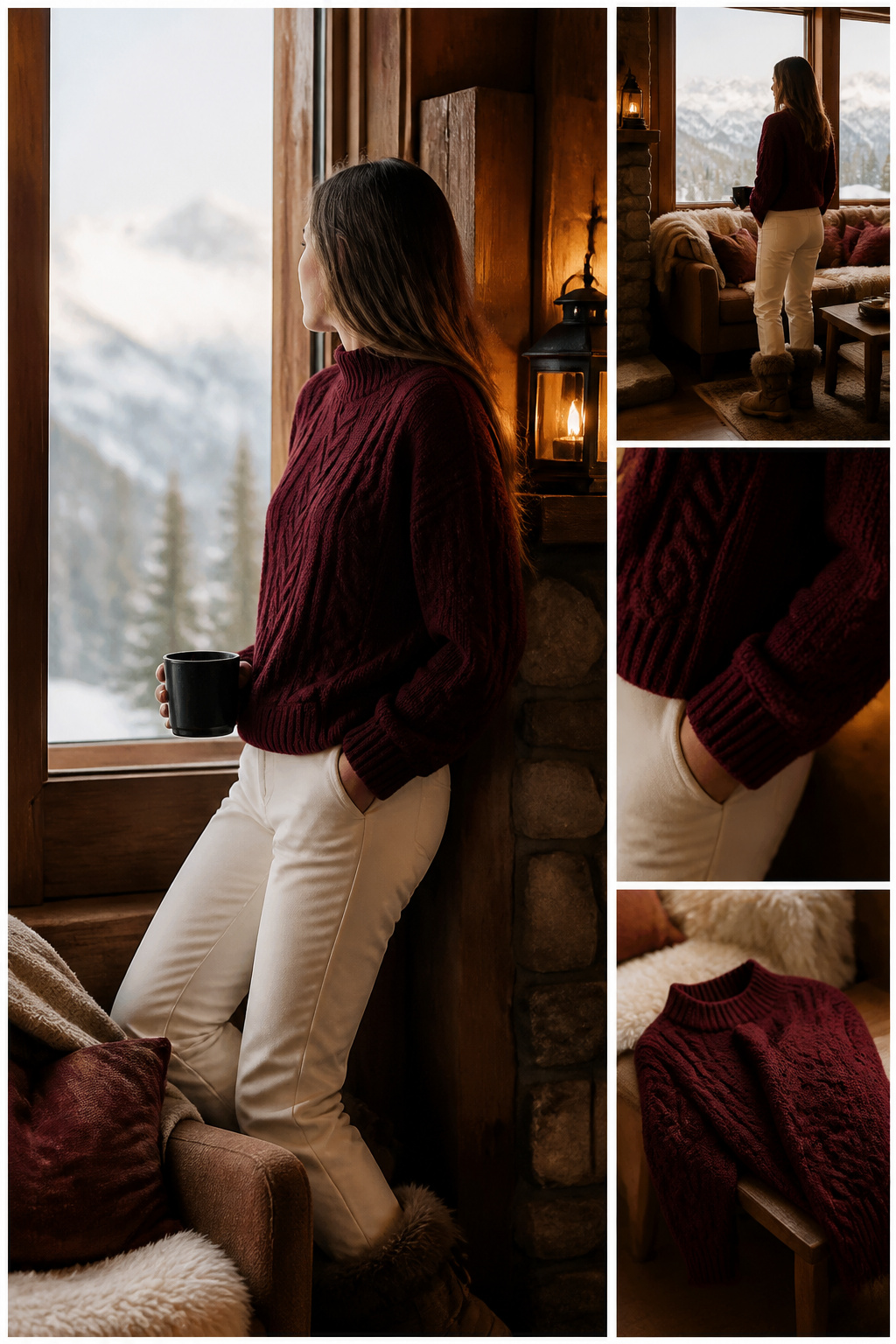
Burgundy, forest green, navy, and warm neutrals signal the shift from sport to social mode faster than any outfit change alone. After hours in neon technical gear, stepping into a cable-knit sweater in deep wine or mossy green reads as intentional, not leftover. The color change is the first cue that you have left the mountain behind.
Natural fibers carry that message further. Wool and cashmere add the visual weight and surface variation that polyester base layers lack. Pairing smooth merino with chunky cable knits, or sleek leggings against a brushed, oversized piece, builds depth without adding bulk. The textures catch firelight and lamplight differently than flat synthetics, which matters when most après hours happen indoors at golden hour or after dark.
Neutrals work as anchors, not defaults. A camel coat or oatmeal turtleneck lets one richer piece, a burgundy scarf or emerald sock, do the social signaling while the rest stays quiet. The balance is what keeps the look lodge-appropriate rather than costumey.
What Actually Works Indoors and Out

Moving from the parking lot into a packed lodge taught me the first real lesson about après-ski dressing: the outfit that feels perfect at fifteen degrees becomes a sauna at seventy. The mistake most people make is building for the outdoor walk and forgetting the indoor wait—for a table, for a drink, for the bathroom line that snakes past the fireplace.
Layers need an actual escape plan. A midweight fleece or soft merino base layer works as standalone loungewear once the puffer comes off, and that matters more than the bulk you carried up the mountain. I look for pieces that read as intentional when the shell is gone, not like stripped-off ski gear. Tailored fits beat oversized here; an athletic cut still says you meant to wear it, while baggy base layers look like you forgot to change.
Footwear carries the same indoor-outdoor tension. Moon boots handle snow-covered village paths and stay comfortable enough for hours inside, but shearling-lined slip-ons work better if you are barely leaving the lodge. The common error is choosing for one location and suffering through the other. After rigid ski boots, your feet want cushioning and arch support, not just insulation. Wool socks add warmth without the overheating that synthetic blends can trap.
Frequently Asked Questions
What should women wear for après-ski?
Cozy layers like merino wool base layers, midweight fleece, and chunky knit sweaters provide warmth without looking like leftover ski gear. A tailored puffer or faux fur coat serves as the statement outer layer, while comfortable bottoms such as fleece-lined leggings or slim joggers handle the transition from snow to heated lodge.
How do I style outfits off the slopes on a ski trip?
Build your day in reversible layers that work with the shell on and read as intentional once it comes off. Choose a midweight fleece or soft merino base layer that functions as standalone loungewear indoors, and pair smooth textures with chunky knits to create depth. Add accessories in burgundy, forest green, or warm neutrals to signal the shift from sport to social mode.
What’s trending in women’s après-ski outfits?
Statement puffers with slimmed-down silhouettes, soft fleeces, and athleisure-inspired layers are leading trends for 2025. Faux fur coats in teddy and shearling textures add presence for evening, while bold winter colors like deep wine and mossy green replace neon technical gear for après hours.